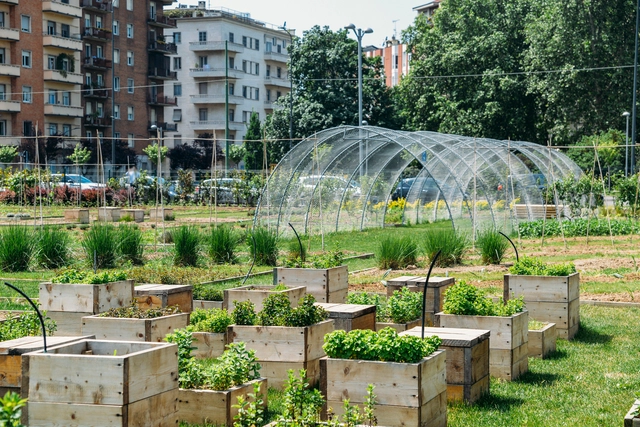
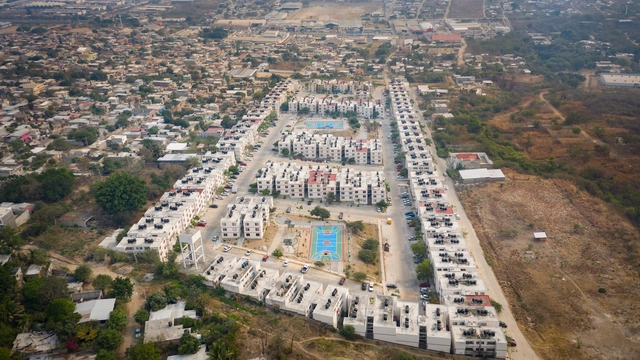
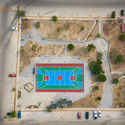
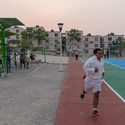
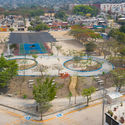
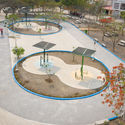
As part of an initiative by Infonavit to drive the recovery of three neighborhood parks in the city of Tuxtla Gutiérrez, Chiapas—“San Juan,” “Las Torres,” and “Canteras”—these housing developments lacked efficient infrastructure, resulting in a deteriorated urban image, high crime rates, and a complete lack of community ownership over public spaces. In response, T+E Arquitectos and Fracciona Arquitectura joined forces to transform these spaces, addressing the distinct requirements of each site.
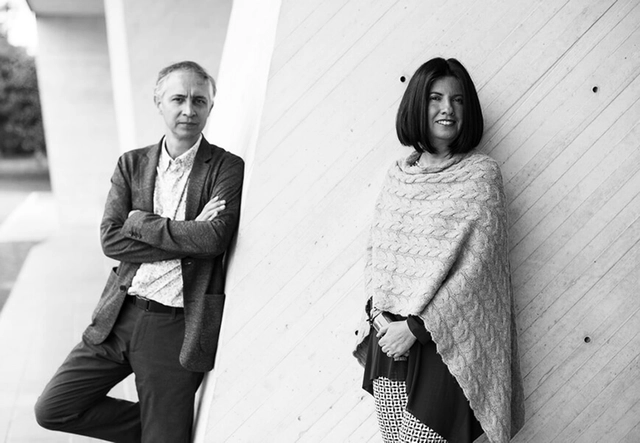
Daniel Bonilla y Marcela Albornoz. Image Cortesía de taller de arquitectura de bogotá
At the start of the lockdown period, ArchDaily conducted a series of interviews and talks in a more informal format. This allowed us to share a space via Instagram Live with some of the most influential contemporary architecture practices from our local sites and around the world.
Here, we present the conversation we had on our Colombian site with the founders of one of the country's most internationally and nationally renowned firms: Daniel Bonilla and Marcela Albornoz, leaders of taller de arquitectura de bogotá. Below is the transcript of our conversation.
When choosing the structural system for a house, several priority factors dictate the decision, with time and money being two of the most critical. While steel structures may not always be the most economical option, their prefabrication significantly accelerates construction times and, consequently, optimizes the overall budget. Moreover, they contribute to the project's aesthetic, providing lightness and a contemporary character.
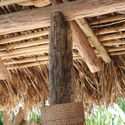
Construction inside Ekôa Park, in Morretes, Paraná. The project by Sem Muros Arquitetura Integrada is based on traditional knowledge and permaculture. Photo: Tomaz Lotufo
The stigma of rudimentary architecture, combined with the idealization of high-tech technology, relegates Indigenous building knowledge to a prehistoric imaginary. This pattern, which points to a single, unequivocal direction of progress, reveals the so-called coloniality of knowledge—a concept by Peruvian sociologist Aníbal Quijano that exposes the hidden side of modernity: the creation of hierarchies among peoples, keeping Latin America, and particularly its Indigenous populations, in a subaltern position. In other words, we tend to assume that the knowledge representing the future is produced in other lands, namely the Global North.
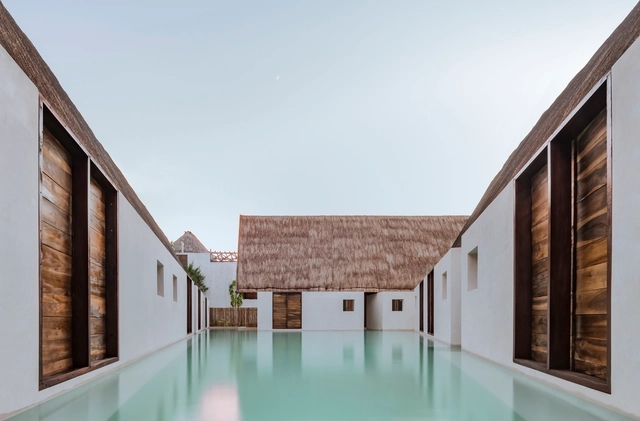
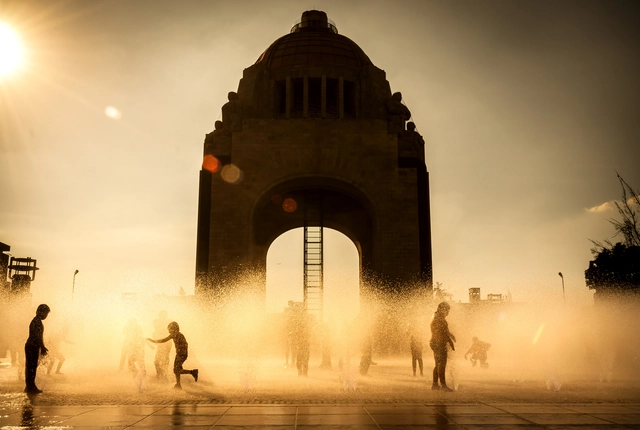
One of the most important factors in design is the site's specific climate. This can pose a challenge in extreme weather, where insulating materials are required to adapt to changing conditions. However, in the case of Mexico and its privileged climate, this factor works to the architects' advantage, allowing them to create microclimates and spaces that blur the transition between indoors and outdoors.
"Las Tres Esperanzas [The Three Hopes] are three constructive actions that make up the educational space where not only children and adolescents were and are shaped, but where we also formed ourselves as architects." These engaging opening words already reveal a journey which, as the result of a sequence, demonstrates that the threads of events are too complex to weave and understand from a single point of view.
For this reason, the sequence of diverse perspectives organized in this new book presented by Al Borde is so significant. It highlights not only a process—and a series of parallel events—but the singularity of a construction. It stands as testament to both the complexity, timeline, and unforeseen events, and the collaborative efforts, learning, and lessons that come with creating a work of architecture.
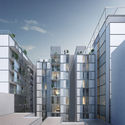
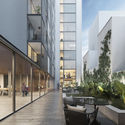
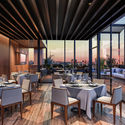
The architecture firm Hauser (Buenos Aires, Argentina), alongside architects Carlos Ferrater and Lucia Ferrater from OAB - Office for Architecture in Barcelona, has presented its project for Montevideo, titled "Alma Duc." The mixed-use building, located in the heart of the Uruguayan capital, will integrate various programs—housing, retail spaces, and a restaurant—seeking to address the consolidation and densification of the area. The project is already under construction and will represent Carlos Ferrater's first built work in South America.
In the daily routine of our conventional workday, we are influenced by many distractions that affect productivity, which have already become routine. However, now that we no longer lose time commuting and are restricted to activities we can do at home, we manage our time with more holistic priorities.
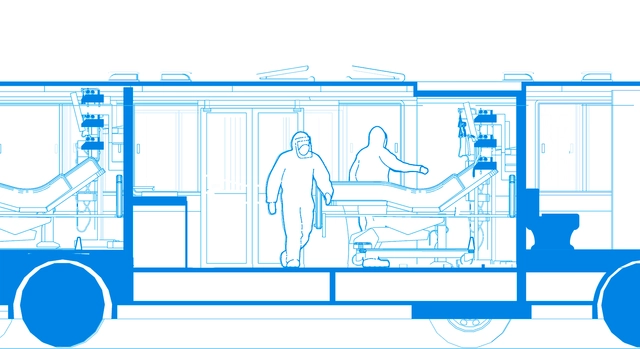
The Bogotá-based firm 57Uno focuses its practice on sustainability and has now channeled its creativity toward resilience and adaptability through Arquitectura en Tránsito (Architecture in Transit). This proposal aims to address the health emergency caused by COVID-19 by repurposing decommissioned buses from one of the primary contributors to poor air quality in the Colombian capital.
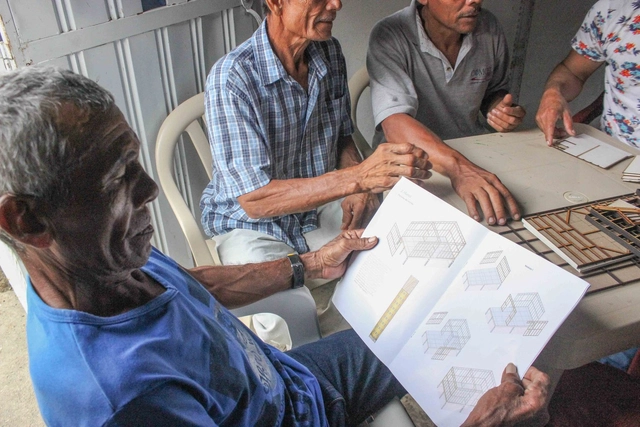
Social housing is one of the most compelling topics for our readers, representing a systemic challenge across most of Latin America. In Colombia, this challenge is even greater when it comes to rural social housing (known as VISR in Spanish), as inadequate infrastructure hinders dignified coverage throughout the country.
Originally published as "Caminando hacia la descolonización urbano-arquitectónica" in the third edition of Revista CLEA—an annual publication of the Coordinadora Latinoamericana de Estudiantes de Arquitectura (CLEA)—this article presents an introduction to the decolonization of spaces as a political, social, and methodological critique of the territorial, urban, and architectural praxis that has become established in our cities.
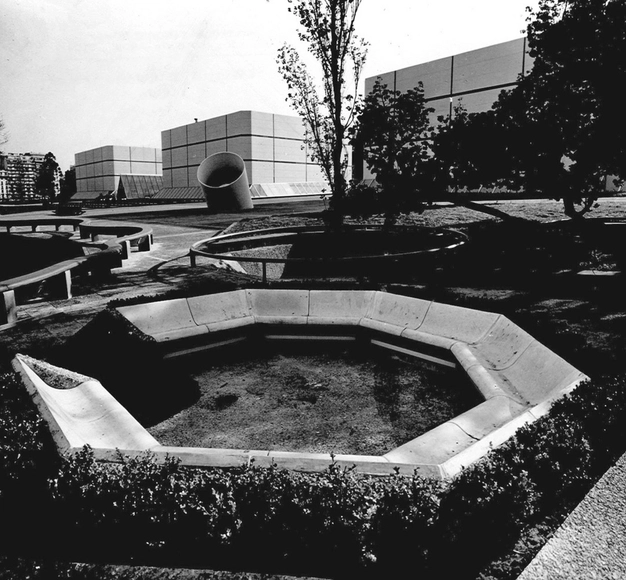
This article is part of a collaboration with the website coolhuntermx. It was originally published on February 2, 2020, under the title "Un parque moderno para Guadalajara" and written by David Lozano Díaz.
In 1971, architect Fernando González Gortázar, at 29 years of age, was commissioned to build González Gallo Park. This commission served a dual purpose: to commemorate the late former governor José de Jesús González Gallo and to provide a substantial new public space for the developing neighborhoods in eastern Guadalajara.
Earlier this month, the Observatory of Innovations for Sustainable Cities was launched. The project aims to gather information, proposals, and concrete examples of municipal initiatives and public policies that help improve people's quality of life and strengthen the environment. The initiative is a partnership between the Ministry of Science, Technology, and Innovations (MCTI), the United Nations Environment Programme (UNEP), and the Center for Strategic Studies and Management (CGEE).
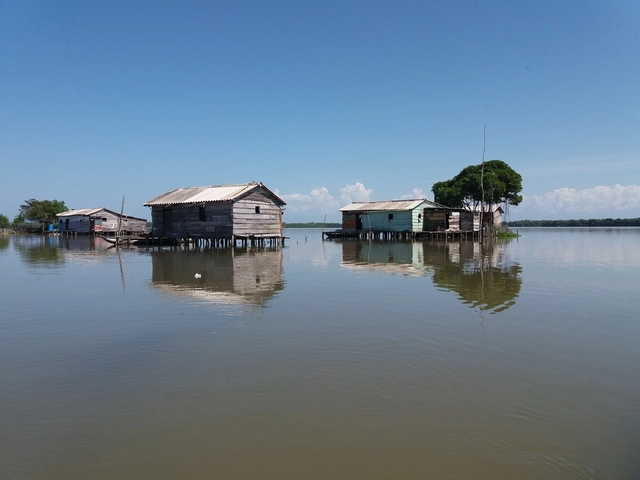
Stilt settlements have existed throughout the world wherever populations sustain their lives through constant interaction with water. In Colombia, the settlements of the Ciénaga Grande de Santa Marta, in the department of Magdalena, are a local benchmark that has endured since pre-Hispanic times. Today, these are informal dwellings, unrecognized in the official land registry. The Pontificia Universidad Javeriana and AGRA have shared their research, compiled in a book that supports the documented formalization of these dwellings using architectural representation standards, specifically by identifying the typologies of Nueva Venecia.
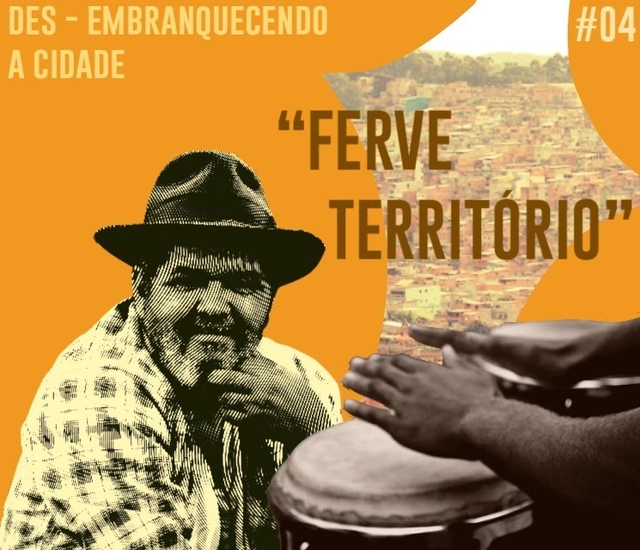
The Terra Preta Cidade collective is a space created from the desire of five Black women living in Salvador, São Paulo, Rio de Janeiro, and Belo Horizonte to bypass geographical distance in order to promote and celebrate coming together. Emmily Leandro, Gabriela Gaia, Luciana Mayrink, Malu de Barros, and Natalia Alves give shape and voice to this exercise of creating a shared virtual territory—which is as much a political statement as an aesthetic one—through the podcast Des-embranquecendo a Cidade, which reaches its fourth episode with the theme: "Boiling Territory — Permanent Steadfastness."
https://www.archdaily.com/1123679/de-whitening-the-city-number-4-territory-boils-permanent-steadfastnessTerra Preta Cidade
This article is a contribution from the Medellín-based firm El Taller de Arquitectos, who share their experience in structuring their practice by understanding and approaching architecture competitions as commissioned projects. Read on to explore their insights.
https://www.archdaily.com/1123680/el-taller-de-arquitectos-how-to-approach-architecture-competitions-as-commissions-in-colombiaEl Taller de Arquitectos
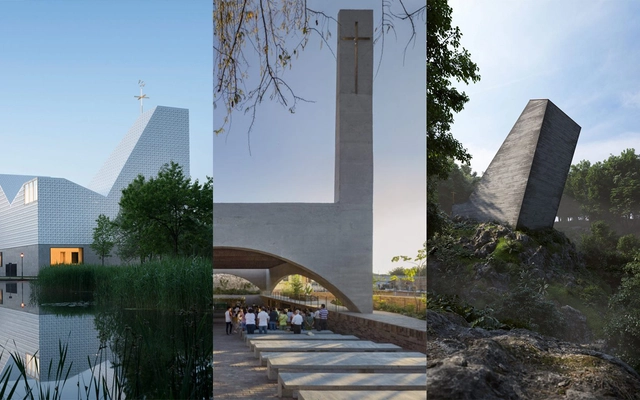
For the seventh time, the Frate Sole Foundation has launched the 2020 edition of the International Sacred Architecture Award, open to all professionals who have designed a church over the last decade (since October 4, 2010) within Christian denominations.
"La Ciudad como Texto" (The City as Text) was the theme of the Arqfilmfest panel discussion, where designer Carola Ureta detailed her project focusing on public space and its transformations: facades, historical figures, and walls serving as a canvas to immortalize the social sentiment following Chile's October 2019 social uprising.
https://www.archdaily.com/1123663/santiago-after-october-the-city-as-text-by-carola-uretaArchDaily Team
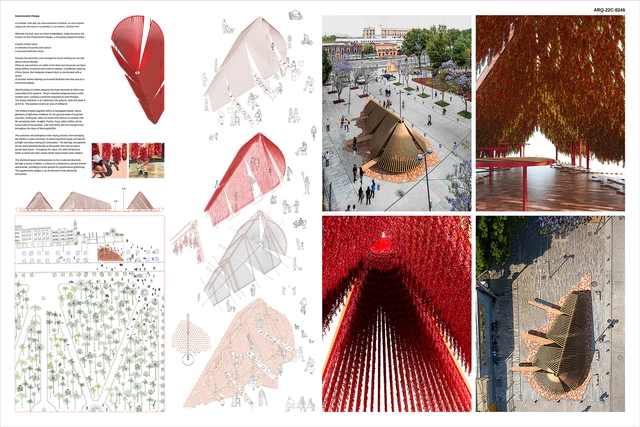
For the fifth time, the MEXTRÓPOLI Architecture and City Festival held the Arquine No. 22 | MEXTRÓPOLI Pavilion 2020 competition. On January 13, from 10:00 a.m. to 3:00 p.m., the jury—composed of Tatiana Bilbao, Ruth Estévez, Carlos Facio, Alberto Odériz, Saidee Springall, and Alejandro Tapia (as technical juror)—met at the Arquine offices to evaluate the 292 submitted proposals out of the 389 registered.
https://www.archdaily.com/1123664/results-22nd-arquine-competition-mextr-poli-pavilion-2020ArchDaily Team
Clásicos de Arquitectura: ATC Argentina Televisora Color / Manteola, Sánchez Gómez, Santos, Solsona, Viñoly, Sallaberry y Tarsitano. Image Cortesía de Archivo MSGSSS
Architect Javier Sánchez Gómez, founding partner of the firm MSGSSS—renowned for projects such as the ATC Argentina Televisora Color building—passed away on Sunday, February 9, at the age of 83.
Photo by Fernando Stankuns on Visualhunt / CC BY-NC-SA
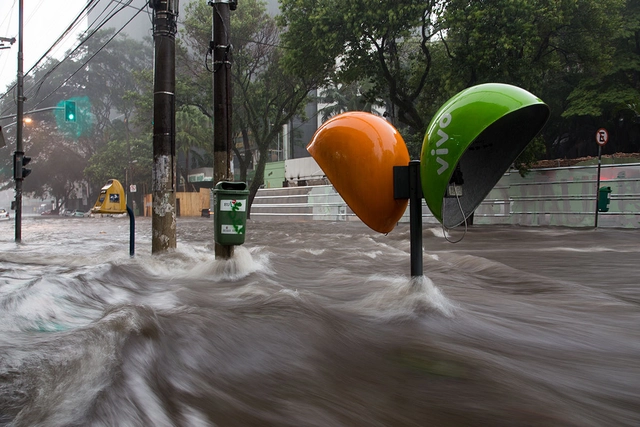
Recent floods in Belo Horizonte and other cities in Minas Gerais have alarmed residents. Videos showing the force of the torrents dragging cars and toppling structures shocked the entire country. This state of emergency was not confined to Minas Gerais. Much of the Southeast faced heavy rains, causing widespread disruption. In Espírito Santo, for instance, more than 5,000 people were forced to leave their homes, while São Paulo was placed on high alert for flooding. Meanwhile, in Rio de Janeiro, an algae bloom in water sources led to the opposite extreme: a water crisis triggered by the poor quality of the water reaching people's taps.
https://www.archdaily.com/1123688/natural-infrastructure-can-prevent-disasters-like-the-floods-in-minas-gerais-and-sao-pauloWRI Brasil
Located on the Mexican border as the southern gateway to the United States, Ciudad Juárez encompasses a territory that blends multiculturalism, migration, and resilience. Together, these elements form a phenomenon of hybrid roots that, over decades, has shaped “border culture.”
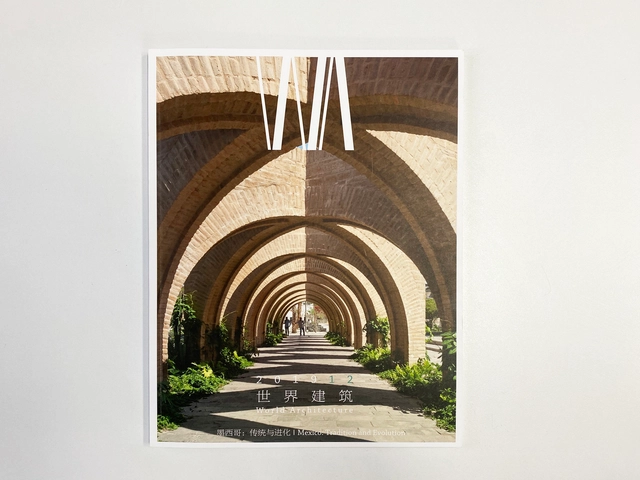
An exclusive issue dedicated to Mexican architecture is the theme of the latest edition of World Architecture (WA) magazine in China, curated by the ArchDaily team. Published by Tsinghua University since its founding in 1980, World Architecture magazine is one of the largest and most prestigious architectural publications in China.
Yesterday, November 9, 2020, marked the opening of the 22nd Pan-American Architecture Biennial of Quito (BAQ2020), held online. As one of the most highly anticipated architectural events nationally and internationally, this edition features a robust program of 28 panel discussions, 4 keynote lectures, 4 interviews, and other exclusive content accessible via the microsite designed for the event. Additionally, a broad cultural program includes interventions in eight buildings and two exhibitions.
https://www.archdaily.com/1123674/the-pan-american-architecture-biennial-of-quito-2020-opens-with-a-presentation-by-momoyo-kaijimaArchDaily Team
The third generation of the Bogotá-based firm Bermudez Arquitectos spoke with ArchDaily during the quarantine, discussing various aspects of their practice, their contributions to academia, and the challenges of working in a studio with a family legacy. Read the transcript of the Instagram Live below.


.jpg?1596481113&format=webp&width=640&height=580)
.jpg?1596481113)