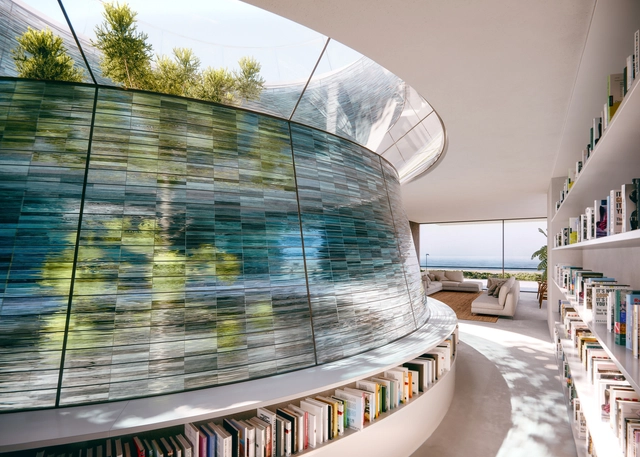
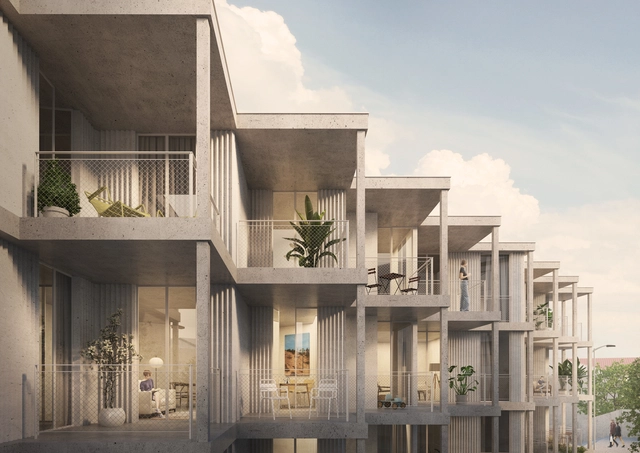
Foster + Partners has just begun construction on “The Edge,” its inaugural project in Uruguay. Situated along the Rambla Tomas Berreta in Montevideo’s Carrasco neighborhood, the scheme extends along the coastline to the eastern borders. Encompassing 60 meters of shoreline, the development includes eight residential units that form around a circular courtyard enclosed in glass, each offering unique views of the water.
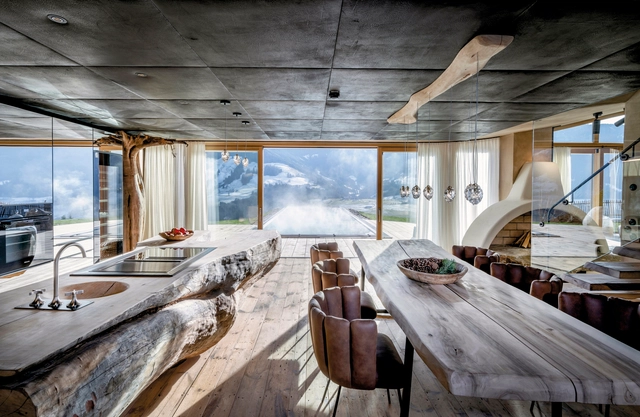
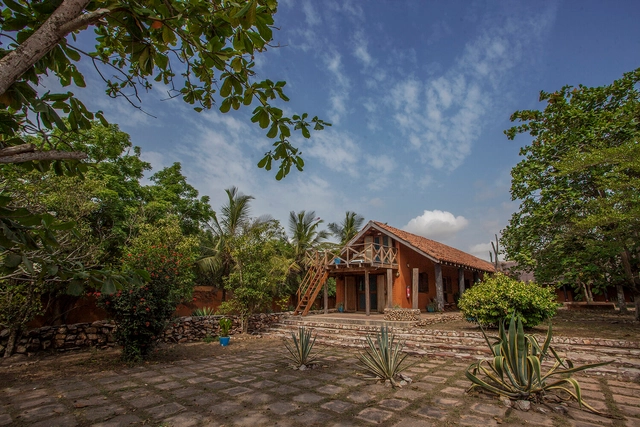
Located in the municipality of Leogang in the Salzburgerland province, Austria, the Priesteregg Premium Eco Resort resides on a plateau at a height of 1100 meters. Opened in 2009, the resort comprises 15 chalets and three villas, and is surrounded by lush mountain pines, Alpine roses, and bilberry bushes. This setting offers relaxation and breathtaking views of the Leogang Steinberg Mountains, the Steinernes Meer with the Hochkönig, and Kitzbühl Schieferalpen.
The resort's development has been influenced by traditional agricultural land use, leading to a conservationist approach. This includes sustainable energy concepts, support for regional producers, and the use of natural materials in the entire resort. In the three villas, the W2 Manufaktur studio and architect Ulrich Stöckl have curated interiors that blend rustic Alpine style with modern luxury, featuring products from Dornbracht. Each villa uniquely combines natural materials, natural features, and a variety of the brand's fittings and fixtures.
Videos
Turning waste into beautiful flooring. Image Courtesy of Bolon
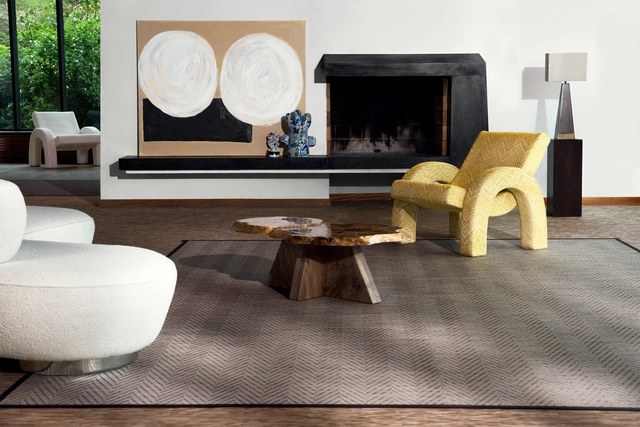
In contemporary architecture, recycling has evolved from a desirable to an unavoidable necessity. This change is mainly due to the growing climate crisis, accentuated by the constant presence of waste (for which no use has been found beyond the initial one).
This approach has stimulated the creation of innovative materials to reuse waste in various contexts. A notable example is the case of woven flooring and rugs, where Bolon took a step forward in 1949 by transforming textile waste into stylish products. Since then, they have continued to innovate in materials, fusing the traditional flooring branch with sustainable creative design.
https://www.archdaily.com/1014951/walk-on-waste-weaving-waste-into-stylish-floorings-and-rugsEnrique Tovar
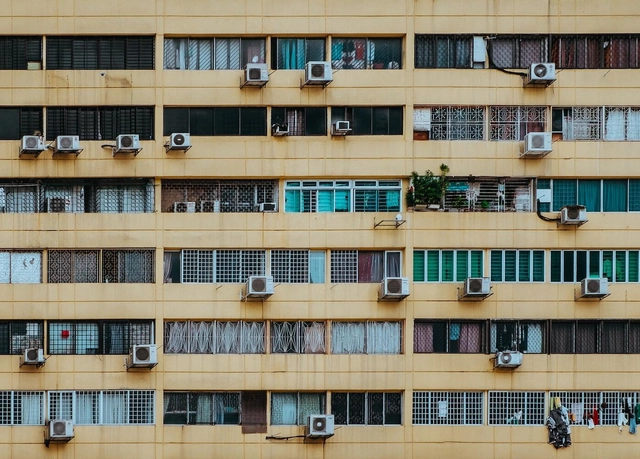
Between now and 2050, worldwide installation of cooling appliances, like air conditioning, is projected to triple, resulting in a twofold increase in energy consumption. This reliance on such devices, often seen as exacerbating global warming, poses a paradox: how can we fightrising temperatures in cities while simultaneously contributing to them through our dependence on these solutions?
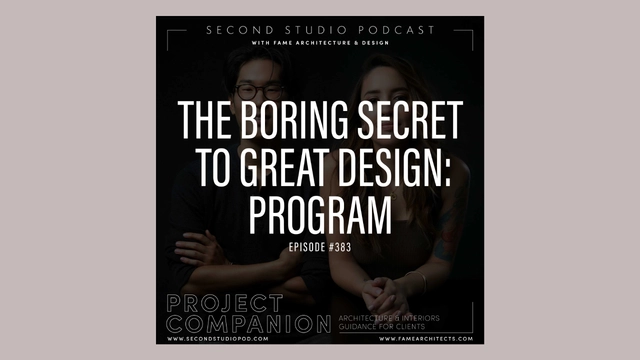
The Second Studio (formerly The Midnight Charette) is an explicit podcast about design, architecture, and the everyday. Hosted by Architects David Lee and Marina Bourderonnet, it features different creative professionals in unscripted conversations that allow for thoughtful takes and personal discussions.
A variety of subjects are covered with honesty and humor: some episodes are interviews, while others are tips for fellow designers, reviews of buildings and other projects, or casual explorations of everyday life and design. The Second Studio is also available on iTunes, Spotify, and YouTube.
This week David and Marina of FAME Architecture & Design discuss architecture program. The two cover what program in architecture means, why it is important, how it is developed and implemented, and examples of leveraging program for creative design.
https://www.archdaily.com/1015372/the-second-studio-podcast-program-as-the-secret-to-great-architectureThe Second Studio Podcast
Alero Olympio (1959-2005) was an architect and builder known for an intimately ecological approach to architecture. Born in Ghana, she divided her practice between Ghana and Scotland. She focused on work that prioritized people and was sincerely committed to social and environmental sustainability, prioritizing using locally sourced materials.
Her work legacy includes physical buildings like the Kokrobitey Institute, her advocacy for earthen constructions, research on sustainable forestry products, and so much more. However, a gap exists in the institutionalized archives of her work, leading to the current ongoing efforts to build a comprehensive archive of her contributions. The 2024 Womxn in Design and Architecture (WDA) annual conference organized by Princeton University School of Architecture made a significant contribution. It featured exhibitions, seminars, and panel discussions that reflected on Alero Olympio's legacy and examined the architectural insights her work continues to offer.
Confronting the passage of time is a constant challenge in architecture. The ephemeral nature of humanity often drives us to construct structures capable of resisting not only the years but also external factors like weather, operational wear, and even human interaction. Whether through imposing monuments, iconic contemporary buildings, or the use of highly durable materials, our architectural vision and legacy can be preserved.
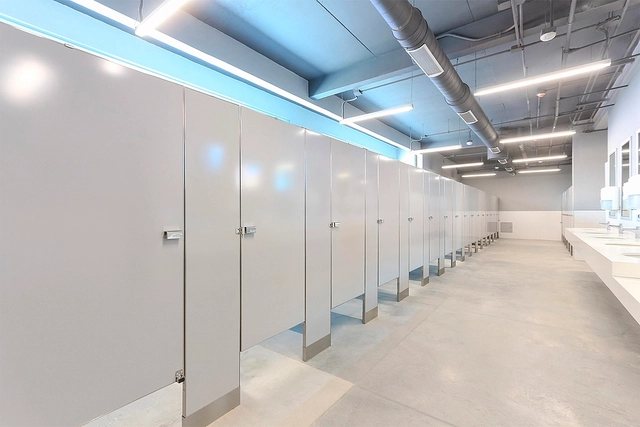
Stainless steel is a prime example of resistance to the passage of time and environmental factors. Its durability has made it popular in various applications, ranging from facades to cafeteria furniture and restroom partitions. The latter are widely used in public restrooms in airports, schools, and social clubs—typologies subjected to high traffic that require stainless steel combined with finishes providing reinforced, anti-corrosive protection, such as the anti-graffiti finish developed by Sanilock. This results in more durable and resilient partitions.
https://www.archdaily.com/1136181/anti-graffiti-restrooms-partitions-and-accessories-for-high-traffic-buildingsEnrique Tovar
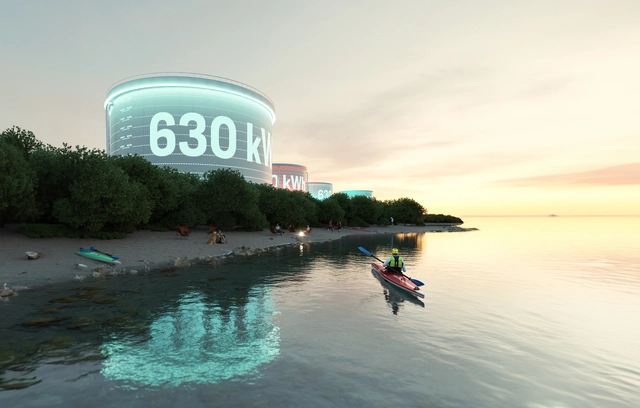
Courtesy of Carlo Ratti Associati | Water Battery Park
Carlo Ratti Associati has just revealed its designs for a waterfront green energy park in Trieste, Italy. Initially a disused petroleum refinery, the initiative seeks to bridge the gap between the city’s industrial past and a sustainable future by repurposing oil storage tanks into renewable energy solutions. Dubbed “water batteries,” the repurposed oil storage tanks are linked to the Adriatic Sea.
Nicolay Boyadjiev. Image Courtesy of re:arc institute
Over the past years, I've had the chance to engaged with architects and others who are leading impact-driven, cultural, and institutional initiatives, who recognize architecture's role in enhancing quality of life in the built environment and offer frameworks to achieve this. Amidst current global challenges and waning focus on the common good, such institutions are increasingly vital.
During a recent trip to Copenhagen, World Architecture Capital, I delved into the re:arc institute, a newly established nonprofit philanthropic association. Operating at the intersection of climate action and architecture philanthropy, it funds grassroots solutions serving as viable examples to tackle this, with transferable insights. With a "learning by doing" ethos, their Practice Lab conducts a global survey to identify and support practices in bringing prototypes to life. I sat down with Nicolay Boyadjiev, Practice Lab lead, to explore this innovative institutional model and its transformative impact on architectural practice.
Last week, we announced the 15 finalists for the 2024 ArchDaily Brasil Building of the Year Award, which celebrates the best of Lusophone architecture, inviting our readers to choose their favorite projects built in Portuguese-speaking countries. The day has come to announce the winners of ODA 2024.
In every city, urban housing projects represent most of the built environments, reflecting an intricate weave of societal needs and architectural visions. This roundup of unbuilt projects submitted by the ArchDaily Community offers a lens into the dynamic interplay between design constraints and creative opportunities. From the revitalization of urban fragments to the exploration of innovative construction methods, architects navigate a terrain shaped by sustainability imperatives, community inclusivity, and evolving urban dynamics.
The diversity of unbuilt urban housing projects showcased here underscores the breadth of architectural interventions, featuring commitments to sustainability and inclusivity. From projects featuring new building materials such as wooden construction systems to those created to maximize sunlight or engage the larger community, this week’s curated selection showcases unbuilt collective housing projects from around the world.
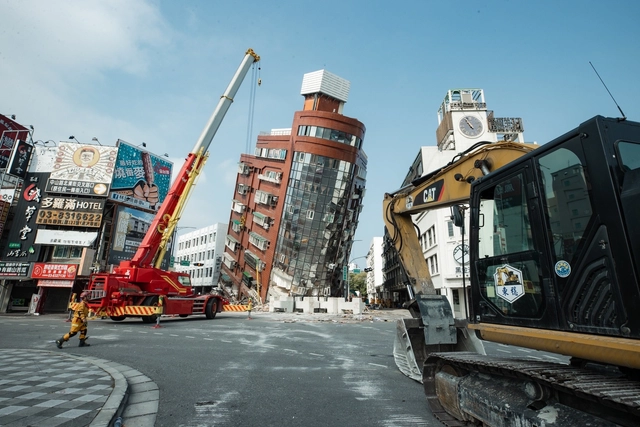
On April 3, Taiwan was hit by a 7.4 magnitude earthquake, the strongest one in 25 years. According to the latest reports, nine people have been killed, and at least 900 others have been injured by damaged buildings and landslides on the island. The seism was centered off the eastern coast of Hualien County, severely damaging buildings, some leaning at severe angles. However, the country’s strict building codes, developed in the past two decades in response to the area’s intense seismic activity, have prevented even more extensive damage and loss of life.
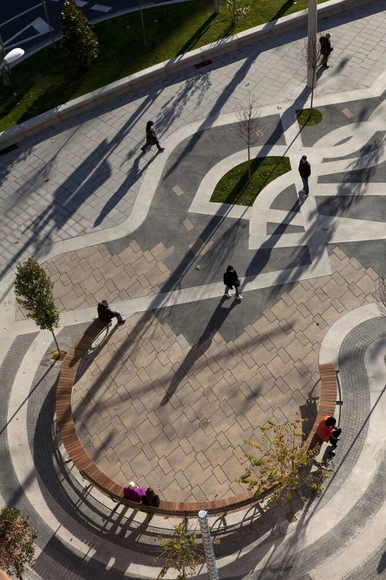
Concrete, in its various facets, exhibits an interesting duality thanks to its aesthetic and technical qualities, which have been explored by architects and designers in different typologies and contexts. On the one hand, reinforced concrete displays the strength and durability required for large-scale construction, efficiently withstanding adverse weather conditions. On the other hand, the malleability of stamped concrete allows it to elegantly adapt to complex shapes and imprint patterns on the surface, utilizing texture and pattern to cultivate a distinct atmosphere within the built environment.
Stamped concrete has gained prominence due to its durability and versatility, offering options and designs that adapt to different architectural styles. However, while we are familiar with its use and applications, specifying it requires a meticulous approach to ensure optimal results. Below is a practical guide covering the essential considerations from Melón Hormigones for specifying this innovative material, from pattern selection to proper care and maintenance.
https://www.archdaily.com/1078784/practical-guide-and-essential-considerations-for-specifying-stamped-concreteEnrique Tovar
Italian architect and industrial designer Gaetano Pesce has passed away at the age of 84, as announced today on the creator's official Instagram page. Known for the famous UP5 Chair (2000) by B&B Italia which can be compressed like a sponge, and the Organic Building in Osaka, Japan (1993), with a vertical garden irrigated by a complex, computer-controlled hydration system, Pesce dedicated over six decades to his craft, accumulating a portfolio that spanned architecture, product design, and art.
During Milan Design Week 2024, a monographic exhibition titled "Nice to See You" showing at Biblioteca Ambrosiana, is set to feature unreleased works of Gaetano Pesce. Additionally, Gaetano was presenting "L’Uomo Stanco" an outdoor installation in Piazza San Pio XI.
For some, it may be terrifying to think that we inhabit a sphere orbiting the Sun, whose core has temperatures of up to 6,000°C and all human activities are located on the Earth's crust, the smallest layer in thickness, in the so-called tectonic plates. These plates float on the mantle, more precisely in the asthenosphere, and sometimes collide, causing earthquakes. As we can see in this interactive map, earthquakes are much more frequent than we imagine, with dozens occurring daily around the world, many of them unnoticed. But some are extremely potent, and when they occur near urban areas, they are one of the most destructive forces on Earth, causing death and damage to the built environment.
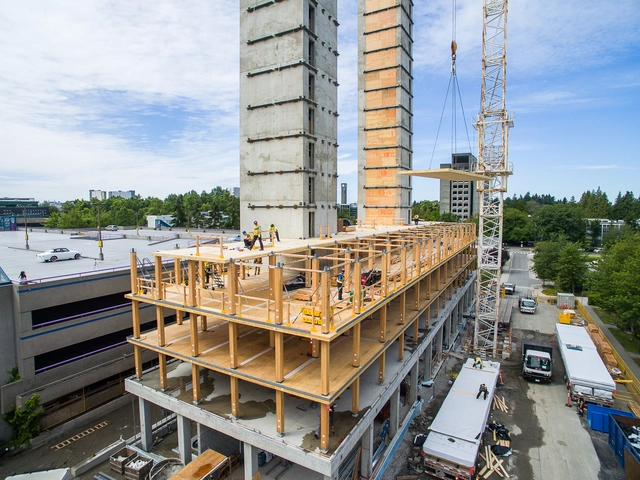
With the advancement of research, tests and experiments in engineering, countries and regions with tectonic activities already have the knowledge to reduce the danger of death and damage caused by these events. Some solutions and materials work better in the event of an earthquake. Wood is one of them.
Flexibility has become a distinctive feature of contemporary interiors, driven by factors like the evolution of architectural programs and the progressive reduction of interior spaces, among others. This transition has shifted interiors from static to dynamic, aiming to achieve a state-of-the-art balance in space configuration. This sentiment is well encapsulated by Ricardo Bofill's statement that "architecture is the art of structuring space."
Considering the intricacies of interiors, it is essential to foster versatile spaces, aided by elements such as multipurpose design and flexible furniture. However, a challenge arises: while these strategies redefine the boundaries and dynamic essence of interiors, aspects like acoustics are often overlooked, which has become crucial in environments such as offices, conference rooms, schools, auditoriums, etc. Therefore, improving acoustics becomes essential to create functional multipurpose interiors. In that sense, Skyfold’s operable walls are an interesting alternative, as their solutions can serve as both soundproofing barriers and design pieces.
https://www.archdaily.com/1014623/movable-walls-the-transformative-effect-of-retractable-and-folding-partitionsEnrique Tovar
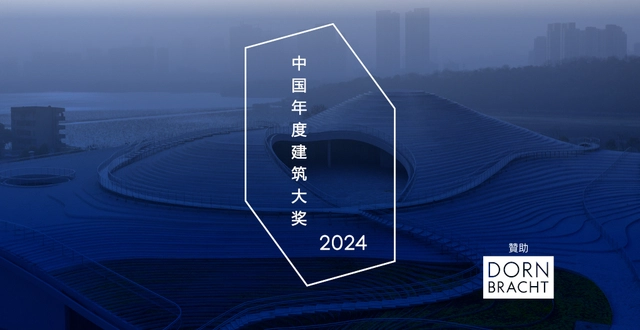
Another year, another successful ArchDaily China Building of the Year Awards! With more than 50,000 votes gathered over the past weeks, the results of the 2024 edition are in! Once more, the award has proved to be the largest architecture prize centered around people’s opinion. Crowdsourced, the most relevant projects of the year were nominated and selected by our readers.
The Tomie Ohtake Institute and AkzoNobel have just released experimental videos about the three winning projects in the Professional category of the 9th Tomie Ohtake AkzoNobel Architecture Prize. The films feature Casarão 28, the Quebradeiras de Babaçu Reference Center, and the São Benedito Route.
https://www.archdaily.com/1078767/instituto-tomie-ohtake-releases-films-about-the-winning-projects-of-the-9th-tomie-ohtake-akzonobel-architecture-prizeArchDaily Team
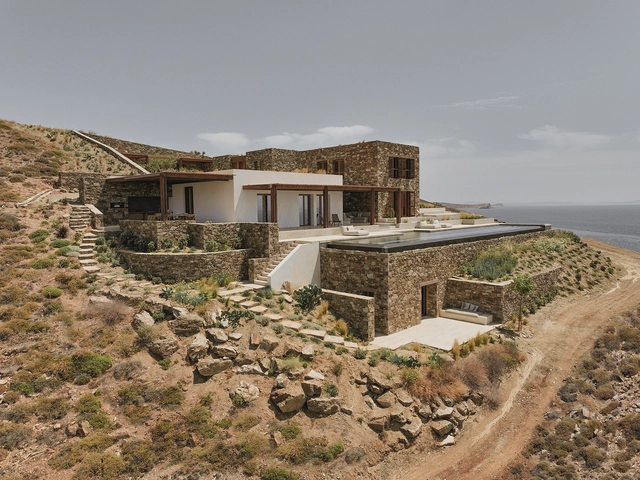
Sloped terrain offers a tantalizing prospect for developers. With breathtaking views over either natural or urban landscapes, often without the realistic possibility of being overlooked by future development, a parcel of land on a slope provides a high reward. However, whether it’s the extra excavation involved to cut and fill or cantilever out on a flat surface, the complications of water drainage, or the loss of light and difficulty of access at the front of the property, building on sloped terrains is not without its difficulties.
But it’s not necessarily the angle of the site that’s most at fault, it’s the shape of the building. By splitting up a multi-story structure and repositioning – possibly even disconnecting – each level, projects designed to comply with the existing topography by applying multiple ground levels can reduce the amount of excavation required. The split floor plan can also help to improve access and natural light and increase both interior and exterior space.
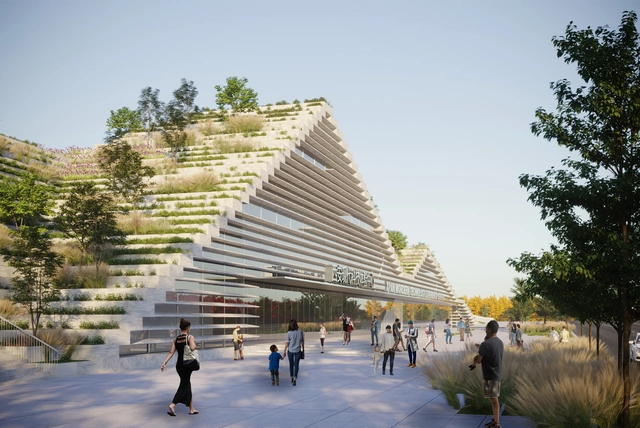
The satellite practice of Stefano Boeri Architetti in China has won the tender for the Culture CBD Modern Technology Experience Centre in Xi'an, the capital of the Chinese province of Shaanxi. The new technology-focused museum is set to become a hub for scientific and cultural exchange. The winning project takes inspiration from the area's natural landscape, characterized by a tortuous system of rivers and mountains, as well as the culture of the ancient city of Xi’an.
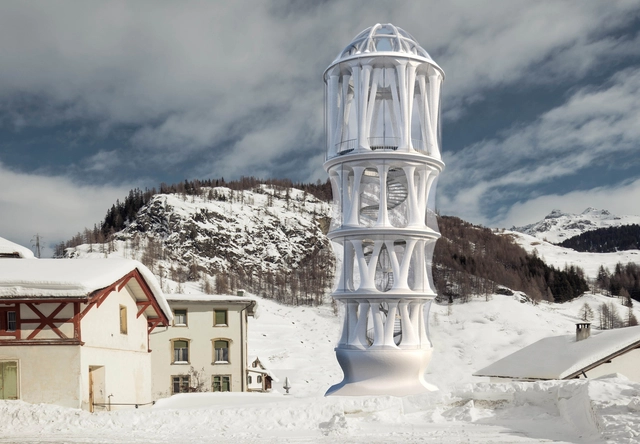
Construction has just begun on the Tor Alva, or the White Tower, the world’s largest 3-D printed tower. Designed by architects Michael Hansmeyer and Benjamin Dillenburger and printed with concrete by the technology university ETH Zurich, 8 out of 32 structural columns have been completed. Nestled in the village of Mulegns in the Swiss Alps, the White Tower is designed as a venue for music and theater events. Standing at 30 meters, the design features 32 distinct Y-shaped columns, each boasting a pattern of textured details.
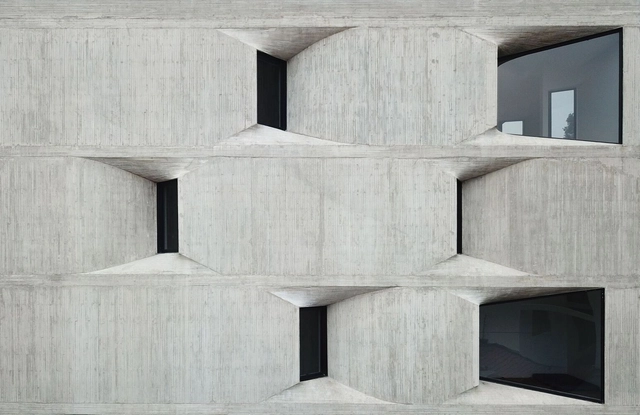
Formally, transparency usually takes the shape of a window, a door, a curtain wall, or a skylight. These are commonly created through rectangular punched openings or in the form of glass curtain wall systems or translucent screens. The following projects play with traditional notions of transparency and window-making in playful and unconventional ways. They create visually striking facades and dynamic relationships between their exterior and interior. They filter light and frame views through their glazing and opening articulation to craft memorable architectural experiences.
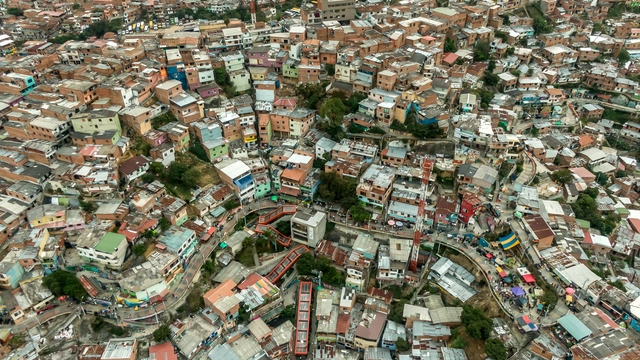
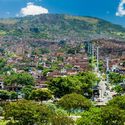
CityMakers, The Global Community of Architects Who Learn from Exemplary Cities and Their Makers, is working with Archdaily to publish a series of articles about Barcelona, Medellin, and Rotterdam. The authors are the architects, urban planners, and/or strategists behind the projects that have transformed these three cities and are studied in the "Schools of Cities" and "Documentary Courses" made by CityMakers. On this occasion, Victor Restrepo, Coordinator of CityMakers in Medellin, presents his article "Medellin: A Case Study".
Medellín stands as an inspiring example for many cities worldwide. It is a city that transitioned from deep collective fear to hopeful enthusiasm for urban and social life characterized by quality and coexistence. The city's crisis has always been associated with violence and drug trafficking. However, this crisis is more structural and profound, it responds to many more factors, some of which are associated with the accelerated growth of its population, as in many Latin American cities.
We invite you to participate in the 2024 ArchDaily Brasil Building of the Year Award. In its eighth edition, we task our readers with the responsibility of recognizing and rewarding the projects that have had the greatest impact on the profession. By voting for the finalists, you become part of an unbiased network of jurors recognizing the most relevant projects built over the past year in Portuguese-speaking countries. Only a few days remain before the voting stage closes, which will select the three main winners of the 2024 ArchDaily Brasil Building of the Year Award from among the 15 finalists.
Registered users can vote for their favorite project once a day. The voting stage closes on April 3 at 11:59 PM (Brasília time GMT-3).
https://www.archdaily.com/1078757/last-days-to-vote-for-the-finalists-of-the-2024-archdaily-brasil-building-of-the-year-awardArchDaily Team