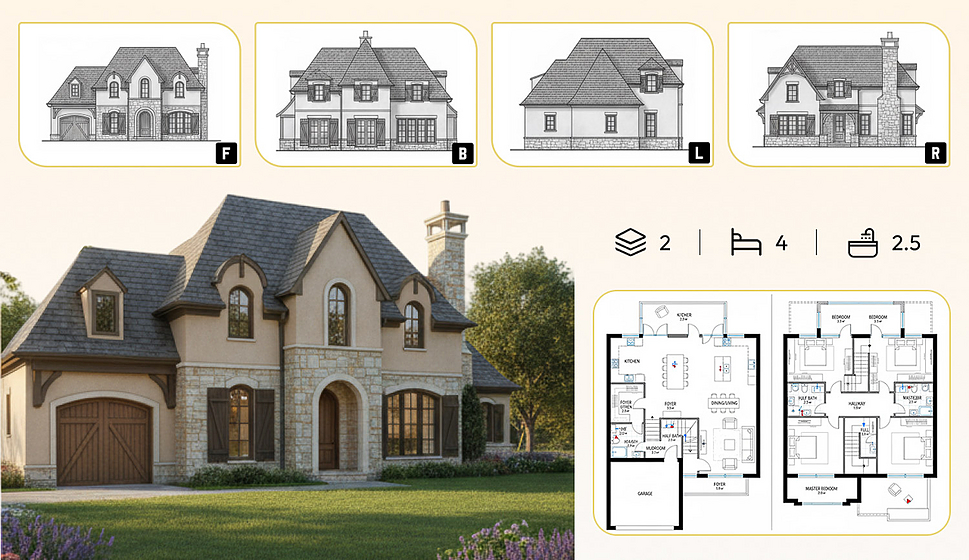
This guide covers a workflow that moves from project parameters to generated floor plans, 3D perspective views, exterior design exploration, and site context visualization, using AI tools in place of preliminary CAD and rendering work.
This guide covers a workflow that moves from project parameters to generated floor plans, 3D perspective views, exterior design exploration, and site context visualization, using AI tools in place of preliminary CAD and rendering work.
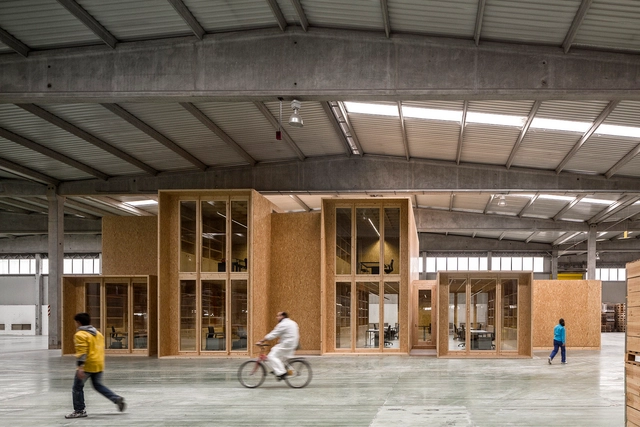
Driven by necessity, various building types have changed their use. Churches that are now libraries, abandoned warehouses turned into cultural centers—and while much has been written on the subject, from N. John Habraken's 1970s Open Building concept to Adamo Faiden's contemporary From Mixed-Use to Diff-Use, today we are experiencing, more than ever, a compelling global debate surrounding housing adaptability. Is it necessary to dedicate so much square footage to offices when, during the pandemic, we realized that a large portion of work can be done remotely? This was one of the central questions during the lockdowns of recent years.
Undoubtedly, buildings are on the radar for what we can do with them in the near future—especially as the climate crisis enters the equation. "The greenest building is the one that is already built," says Carl Elefante. Adaptive reuse and adaptability will surely be the defining terms on the lips of architecture professionals worldwide. Thus, it is time to reflect further on how design can address this challenge.
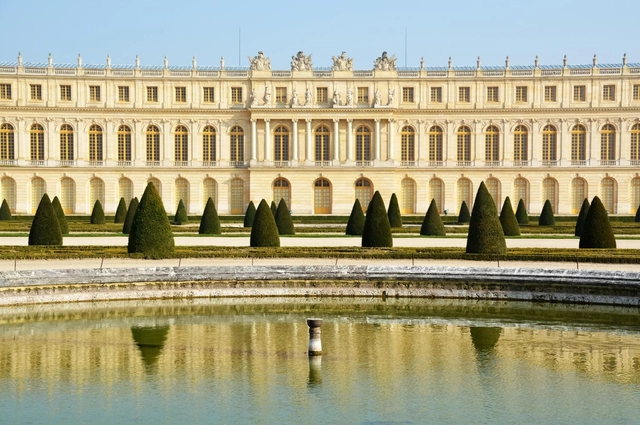
Located near Paris and symbolizing the power of French absolute monarchs, the Palace of Versailles was originally built between 1610 and 1643 as a rural hunting retreat for King Louis XIII of France. Over time, the residence was expanded and refined, becoming a small chateau in 1634. Its transformation into a grand, luxurious palace and a display of royal opulence began during the reign of Louis XIV, known as the Sun King.
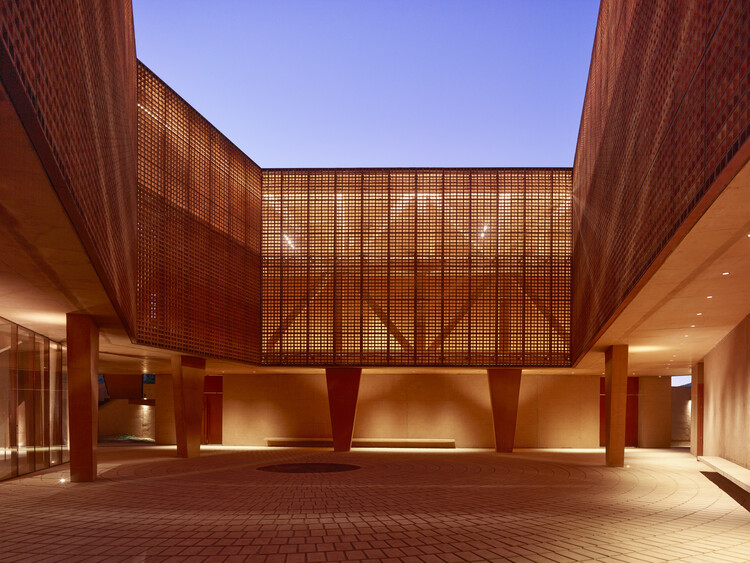
.jpg?1624381640 "Interamerican University / Boyancé Arquitectura + Edificación. Image © Manolo R. Solis")
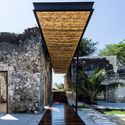

Campeche is a state located in southeastern Mexico on the Yucatán Peninsula, bordering the states of Yucatán, Quintana Roo, and Tabasco, and facing the Gulf of Mexico. Additionally, Campeche is one of the three states that define the political border with Guatemala. Covering 57,924 km², it is the third least-populated state in the country. Its capital and most populous city is San Francisco de Campeche.

This week’s job openings come from two design firms based in Beijing and Shenzhen: Origin Architect and JKP Architects. Specializing in different scales and themes, both practices are active across various architectural fields and are seeking like-minded architects to join their teams.
"Domingos Libro" is presented by Carmelo from Enorme Studio, where every two weeks, he delves into forgotten architectural publications, books, and architecture magazines from the 60s, 70s, and 80s that have the most interesting stories behind them.
In this new episode, he discusses the catalog of the exhibition "Houses For Sale," published by Rizzoli and B.J. Archer in 1980. Through the Leo Castelli Gallery, one could purchase the designs for eight houses by renowned architects (Emilio Ambasz, Peter Eisenman, Vittorio Gregotti, Arata Isozaki, Charles Moore, Cesar Pelli, Cedric Price, and Oswald M. Ungers), upending the traditional "client commissions architect for their dream home" relationship.
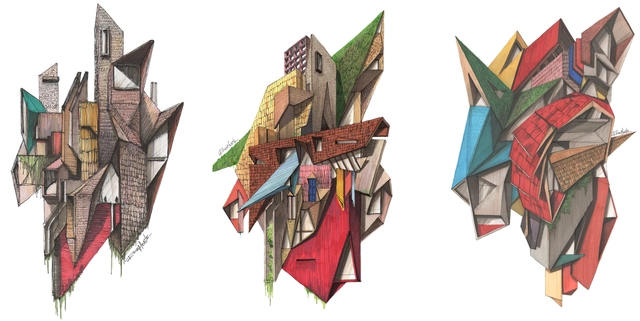
Following the release of "Architectural Classics," a series of iconic architectural classics depicted in axonometric views, Diego Inzunza—the Chilean architect and visual artist behind Rosamente—now shares a collection of 22 drawings created in 2021 in collaboration with 16 architects from five countries, including Cristian Danke, David Carcamo, Anita Catricura, Roberto Ibáñez, Rodrigo Ortiz, Charlotte Bazonnard, Javiera Muñoz, Sofía Montealegre, Juan Pablo Santamaría, Tom Gardner, Joel R, Sergio Pita, José Tello, Francisco Guerrero, José Tomás Infante, and Camilo Carrascal.
The title of this new series is “Abstract Architecture,” featuring conceptual drawings that revolve around architecture, nature, and alternative graphic narratives.
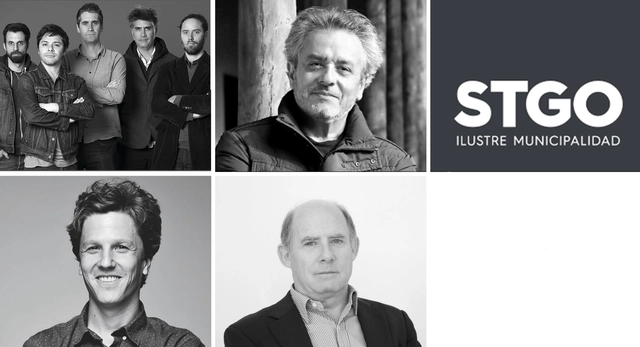
Raimundo Lira, Cristián Izquierdo, the Architecture Directorate of the Municipality of Santiago, José Rosas, and the group Elemental have been honored with the 2021 AOA Medals, a biennial award recognizing professionals, offices, and public or private entities that have been instrumental to the development of national architecture.
The awards ceremony took place during the Annual Assembly of the Association of Architecture Offices (AOA), where the new directors were announced, and president Mónica Álvarez de Oro presented an account of her first year in office.
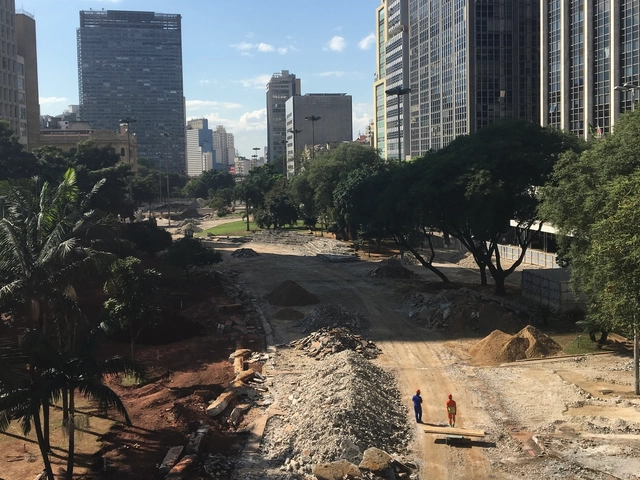
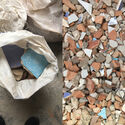
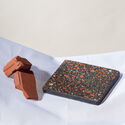
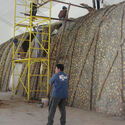
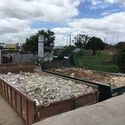
How can waste become a resource? Or rather, when did waste stop being a resource? Why does contemporary architecture still build as if our buildings were great titans that will survive different eras and adversities? These are all questions that cross the mind of a recent architecture graduate. One of the current challenges of architectural production in a metropolis like São Paulo is understanding that, after demolition, the building does not disappear. What does our National Solid Waste Policy indicate?
Although latent, this issue is still rarely debated within academia, a space that should be constantly proposing alternatives to our way of life. And even when it is debated, where is the benefit to the public? How can we disseminate these lessons? Education is still the key to getting our future back on track.

The following article is a contribution from architecture students at the Universidad Nacional de Colombia, Manizales campus. Juliana García Valencia, Alejandro Jaramillo Alzate, and Manuel Felipe Rincón Medina share their experience developing 'Casa Urbana de Montaña 1950 - 1970', the two-volume project that won first place in the research, theory, and criticism category of the IV Colombian Biennial of Architecture Students.
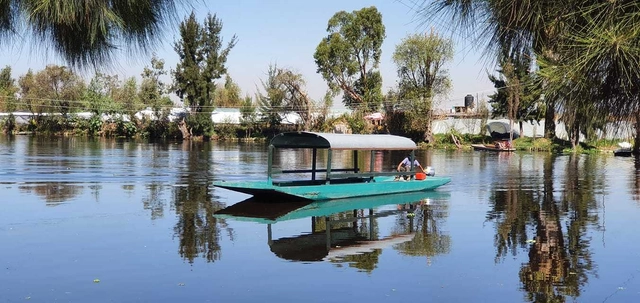
REDES is an organization whose work focuses on the Xochimilco and Milpa Alta areas of Mexico City. They seek to address environmental challenges to improve quality of life and support conservation in the region. We spoke with Elsa Valiente—Executive Director and Founder of REDES Restauración Ecológica y Desarrollo AC—about efforts to revive chinampa production in Mexico City and conserve water in Xochimilco.

"Domingos Libro" is hosted by Carmelo from Enorme Studio. Every two weeks, he delves into forgotten architectural publications, books, and architecture magazines from the '60s, '70s, and '80s that carry the most fascinating backstories.
This new episode is a holiday special focusing on the December 1971 issue of Architectural Design magazine and the "12 Cautionary Tales for Christmas" proposed by Superstudio.

This week, we feature job openings from two leading practices in the Yangtze River Delta: Senshang Design in Hangzhou and DYML Architecture in Shanghai. Active across various architectural sectors with their distinct styles, both firms are looking for talented designers to join their teams.
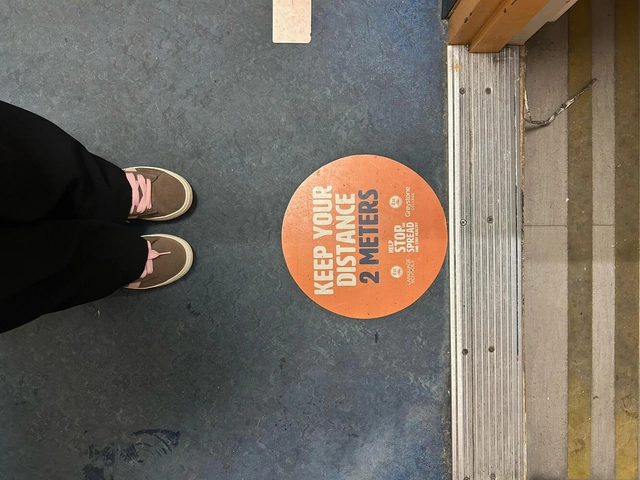
Today we live in a post-pandemic world, where human connections and our awareness of the fragility of existence have been subtly redesigned. More than just habits, it was urban and architectural space itself that learned to breathe differently, striving to accommodate an uncertain era. Today, we walk in the serenity of the "almost normal," yet the scars of that time still whisper through the streets, shapes, and silences—delicate survivors of a recent past that insists on remaining.

For millennia, clay has been the foundation of walls, facades, and claddings. There is likely no other human-made material with as extensive a history as the brick. Its enduring presence in architecture is explained not only by its technical attributes but also by its social impact, construction efficiency, and deep-seated cultural role in how cities are built.
In Chile, the brick-making tradition has historically shaped residential development, becoming a material associated with stability, permanence, and security for families. Against this backdrop, Cerámica Santiago celebrates 45 years in business, establishing itself as a leading national benchmark in the development of ceramic building products, driven by a vision that recognizes the social role of housing in the country's urban development. Since its inception, the company has sought to integrate traditional ceramic craftsmanship with modern industrial processes, innovative design, and evolving technical demands.
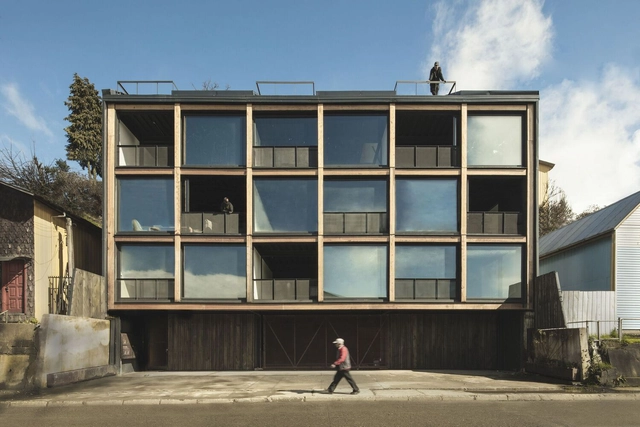
Every regulation is born with a clear intention: to establish a starting point. It is a way of setting a minimum baseline, bringing order to what was perhaps previously assumed implicitly or lacked a common framework. However, like everything involving architecture—and especially our way of living—these frameworks also evolve: they expand, adjust, and become more detailed around new sustainable housing models. This is precisely the case with the new thermal regulations in Chile, which do not emerge from scratch but rather as part of an ongoing process that has steadily integrated new energy efficiency criteria within the General Ordinance of Urbanism and Construction (OGUC).
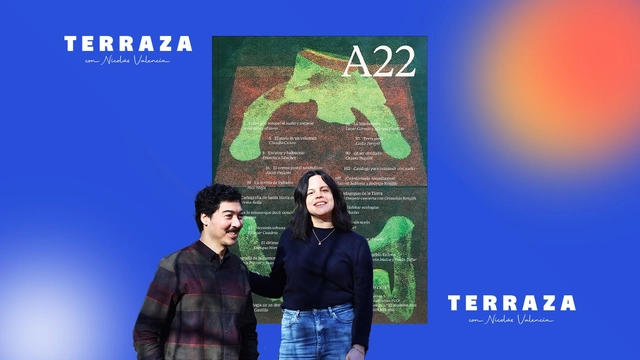
Nicolás Valencia speaks in Lima with Peruvian architects Mariana Jochamowitz and Nicolás Rivera about Revista A of the Pontificia Universidad Católica del Perú and their participation in the 2024 Ibero-American Biennial of Architecture and Urbanism with the workshop "Climax, Fanzine for a Community in Crisis."
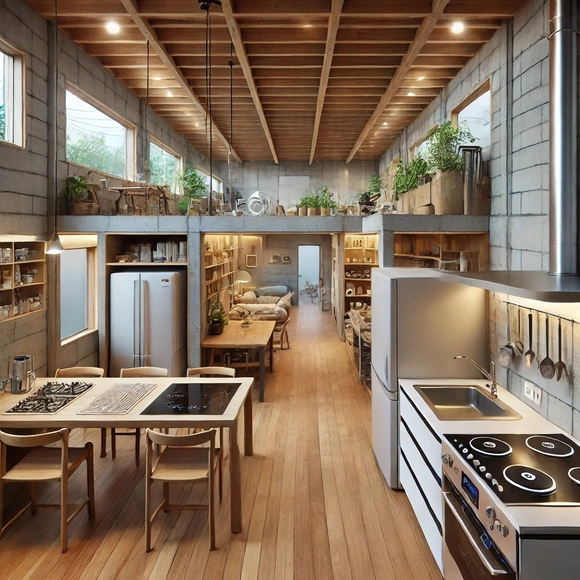
For many households in Latin America, fossil fuel- and biomass-based stoves and heaters, such as natural gas or wood, are an affordable and accessible option. However, these appliances present significant challenges: they are a source of greenhouse gas (GHG) emissions, contribute to indoor air pollution, and highlight the need for policies that promote a cleaner residential energy matrix. These challenges become even more urgent considering that 2024 was the hottest year on record, with a 1.5°C increase over pre-industrial levels driven by record GHG emissions from human activity, thereby underscoring the importance of adopting sustainable solutions across all sectors worldwide, including residential.
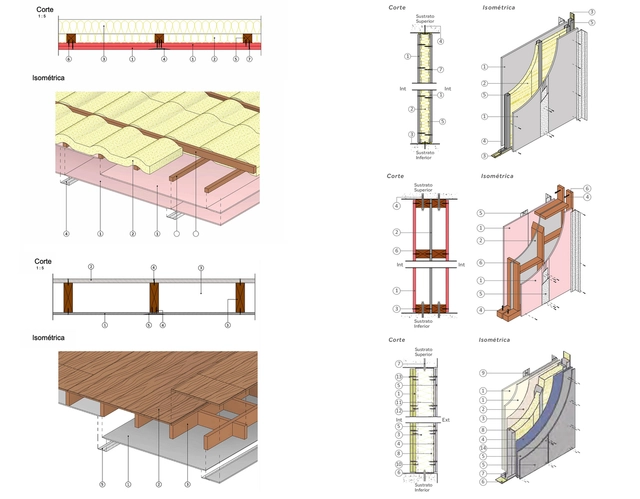
In construction, every task requires specific tools and every need calls for a unique solution. Factors such as building typology, construction requirements, waste generation, execution times, and context directly influence the quality and complexity of the work, making it essential to base specification decisions on these criteria. Traditional methods can hinder this process due to their rigidity and limitations, necessitating more efficient and flexible approaches that adapt to the specific demands of each project. This is especially common in residential, hotel, and hospital projects, where speed and performance are essential. In these cases, lightweight dry-construction solutions—using Volcanita boards or fiber cement over lightweight metal framing—offer an effective, high-performance alternative, enhancing functionality and, consequently, the user experience.
We invite you to participate in ArchDaily en Español's Building of the Year Award. In its sixteenth edition, we give our readers the responsibility of recognizing and rewarding the projects that have had the greatest impact on the profession. By voting, you become part of an unbiased network of jurors recognizing the most relevant projects built in Latin America and Spain over the past year. Only a few days remain before the closing of the nomination stage, which will select the 15 finalists for ArchDaily en Español's 2025 Building of the Year Award.
Registered users can vote for their favorite project once a day. The nomination stage ends on April 1 at 23:59 (GMT-3).

Over the past few decades, the Architecture, Engineering, Construction, and Operations (AECO) industry has been undergoing an unprecedented digital transformation. Since the days when designs were drawn exclusively on paper—a reality that lasted until the early 1980s—the field has passed significant milestones, first with the adoption of CAD (Computer-Aided Design) and, more recently, BIM (Building Information Modeling). Now, a new transition is underway, promising to be even more profound. Artificial Intelligence (AI), which until recently seemed confined to laboratories or futuristic concepts, is beginning to play a practical and strategic role in how we design, build, and manage our buildings and cities.

Architecture will never cease to pursue functionality, as it lies at the core of its essential principles. Alongside this condition are factors such as aesthetics and operability, which also influence how contemporary design is valued. Over time, the concept of functionality has evolved, extending beyond problem-solving and efficiency to connect with the creation of experiences. As a result, the quality of an environment depends as much on its design as on how its elements and systems articulate to generate an overall experience of inhabiting. In this sense, innovation means conceiving fluid and intuitive environments where every component helps make the experience natural and safe—something especially relevant in everyday spaces such as bathrooms.

Nicolás Valencia talks with Chilean architect Romy Hecht, Dean of College UC and author of El alma del verdor de Santiago, (Orjikh Editores, 2025), where she explores the nature of the landscape in Chile's capital, examining its origins and identifying the key figures responsible for cultivating exotic species and designing planting geometries that, once rooted, shaped Santiago's identity and character.
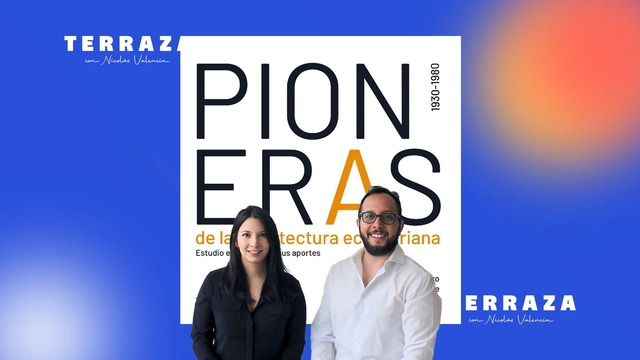
Nicolás Valencia talks in Quito with architects Verónica Rosero and Néstór Llorca, who, alongside María José Freire, co-authored Pioneras de la arquitectura ecuatoriana, published by Trama Ediciones in 2021 and winner of the publications category at the 2022 Pan-American Architecture Biennial of Quito.
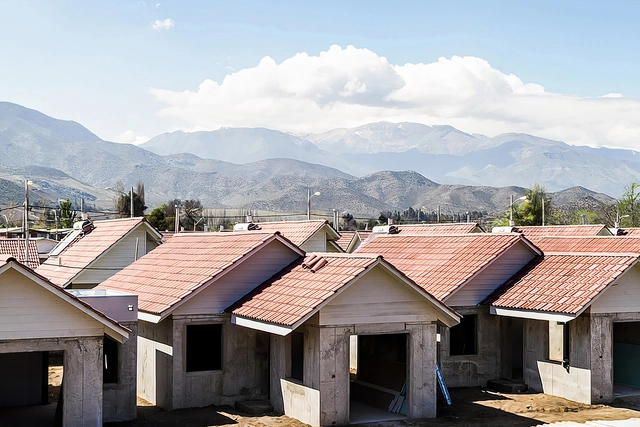
In the quest to find innovative solutions to achieve carbon neutrality in construction, identifying, addressing, and managing emissions is of vital importance. Doing so enables a deeper understanding and analysis of each stage of the production process and the life cycle of materials. Optimizing construction processes, minimizing fossil fuel use, adopting renewable energy, and recovering recycled materials are just some of the many strategies available to advance this transformation. Melón has taken the initiative to develop a Product Carbon Footprint calculator to deliver more sustainable products and construction solutions, actively contributing to the fight against climate change.