1. ArchDaily
  2. Articles

Articles

Carbon Emission Quantification Tools Applied to Buildings: A Guide to Assist in the Selection

Subscriber Access | 

In recent years, the decarbonization of buildings and cities has gained increasing prominence both internationally and nationally. Among the key driving forces is the public sector, through various ministries such as the Ministry of Mines and Energy (MME), the Ministry of Science, Technology, and Innovation (MCTI), the Ministry of Cities (MCID), and the Ministry of the Environment and Climate Change (MMA), which implement different policies, programs, and legislation. Financial institutions like development banks—such as the World Bank and the Inter-American Development Bank (IDB)—and international organizations, including the United Nations (UN), have also played pivotal roles in mobilizing the resources needed to enable the increasingly urgent reduction of carbon emissions.

How to Design Floating Stairs?

Subscriber Access | 

Negotiating height differences comfortably and using space efficiently is the primary function of stairs. Their invention is not attributed to a single individual or specific civilization; rather, they evolved independently across various cultures throughout history. The earliest evidence of staircases is found in ancient Mesopotamia, Egypt, and the Indus Valley Civilization, with notable examples including the Mesopotamian ziggurats and the Great Pyramid of Giza. The Greeks and Romans further refined the design, and during the medieval period, spiral staircases became common in castles for defensive purposes. The Renaissance introduced even more elaborate and decorative examples crafted from stone, marble, and, later, iron and steel. In modern times, innovations in concrete and precast components emerged, reflecting advancements in materials and engineering. Floating staircases, for example, have become a major trend by visually expanding spaces and enhancing natural light within an environment. They are characterized by an elegant, minimalist design where the treads appear to float in midair without visible support, anchored to a single wall.

Zero-Emission Universities: Lessons for Sustainable Construction in Latin America

Subscriber Access | 

The global commitment to net-zero emissions and climate change mitigation presents a monumental challenge for the construction sector—an industry that currently accounts for nearly 40% of global CO₂ emissions, a figure projected to continue rising. Adopting sustainable practices is crucial to improving environmental conditions, with primary objectives including optimizing thermal comfort and reducing energy consumption in buildings. How can we achieve this if not through collective learning and knowledge sharing among different professionals and workers in the sector?

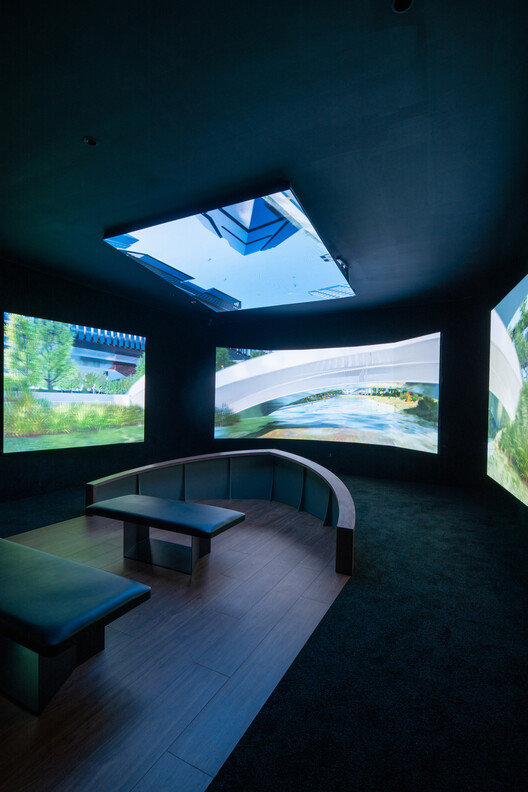
Zero-Emission Universities: Lessons for Sustainable Construction in Latin America - Image 1 of 4Zero-Emission Universities: Lessons for Sustainable Construction in Latin America - Image 2 of 4Zero-Emission Universities: Lessons for Sustainable Construction in Latin America - Image 3 of 4Zero-Emission Universities: Lessons for Sustainable Construction in Latin America - Image 4 of 4Zero-Emission Universities: Lessons for Sustainable Construction in Latin America - More Images+ 1

The artisanal beauty of timber slats: durability, aesthetics, and solar control in facades

Subscriber Access | 

Certain materials offer a wide range of uses, and wood is one of them. This noble material can take on various roles: structurally in tectonics, as flooring in finishes, or even as functional and decorative elements in furniture. Depending on its application, wood adopts a distinct narrative. In facade design, its integration lends a unique character, as it not only contributes to the building's identity and aesthetics but also plays a crucial role in its functionality.

When discussing facades and wood, screens and timber batten patterns are recurring elements. Through this concept—in contrast to modular systems—highly customizable combinations can be created for each project, conveying a unique, artisanal beauty tailored to the intended design. Furthermore, wood offers remarkable qualities in terms of sustainability, solar control, weather resistance, and energy efficiency. Together, these qualities allow the facade to function as a dynamic interface between interior and exterior, also mediating between light and shadow, as well as views.

How to Implement the New D.S. No. 1 Standard and Reduce Energy Consumption

Subscriber Access | 

Public lighting plays a fundamental role in modern cities and has evolved considerably throughout history. In Ancient Greece and Rome, rudimentary methods such as torches and oil lamps illuminated some streets. During the Middle Ages, castles and European city streets used oil lanterns and, later, candles. A significant breakthrough came with the invention of the gas lamp in the late 18th century, first used for public lighting in London in 1807, which improved street visibility and helped reduce crime. Thomas Edison’s invention of the electric lamp in 1879 revolutionized public lighting, and incandescent lamps began replacing gas, providing more efficient and safer illumination.

Architectural Association Visiting School explores the subjective tectonics of Rio de Janeiro

Subscriber Access | 

The Architectural Association Visiting School (AAVS) Rio de Janeiro workshop interrogated
tectonics within Rio's post-colonial, urban, and tropical context. Each year, the workshop questions, celebrates, and experiments with a characteristic element of local architecture.

Architectural Association Visiting School explores the subjective tectonics of Rio de Janeiro - Imagen 1 de 4Architectural Association Visiting School explores the subjective tectonics of Rio de Janeiro - Imagen 2 de 4Architectural Association Visiting School explores the subjective tectonics of Rio de Janeiro - Imagen 3 de 4Architectural Association Visiting School explores the subjective tectonics of Rio de Janeiro - Imagen 4 de 4Architectural Association Visiting School explores the subjective tectonics of Rio de Janeiro - More Images+ 7

Boundless Spaces: 4 Architectural Projects That Embrace the Outdoors

Subscriber Access | 

In an era where we spend most of our time indoors, contemporary architecture offers an innovative approach: dissolving the barriers between inside and outside. This fusion, now an iconic feature of many current projects, reflects a growing desire to live in harmony with nature, promoting a synergy that transcends walls and restores the human connection to the natural environment. Large windows framing landscapes and the use of biophilic design principles blur the boundaries between interior and exterior, creating flexible, light-filled spaces where nature is incorporated into the architectural design. This integration stems from meticulous design choices made possible by technological advances—such as high-performance glazing and smart systems—that enable this connection without sacrificing comfort or energy efficiency.

Can Global Architecture Still Reflect Local Identity?

 | Sponsored Content

The accelerating rise of a homogenized, worldwide aesthetic is forcing creators to confront a critical reality: design trends are effortlessly transcending geography, but local identity is paying the price. The fifth episode of the Room For Dreams podcast tackles a head-on investigation into whether a boundaryless market is quietly erasing design diversity. Recorded live at Milan Design Week 2026 in cooperation with INDX|GLOBAL, host Claire Broadka of designboom sits down with Sachi Gupta, Shilpi Sonar, Krithika Subrahmanian, and Sumit Dhawan to map out the reality of the borderless creator.

Architecture, cinema, and virtual reality in Steven Spielberg's Ready Player One

Subscriber Access | 

Cinema is an excellent tool for stimulating discussions and reflections on the spaces we inhabit, deeply engaging with architecture and urbanism through sets and locations. Films can address current issues within these fields of study and integrate them into their narratives, opening pathways for new debates.

The 2018 feature film Ready Player One, directed by Steven Spielberg, raises a series of questions about urbanism, social relations, contemporary cities, environmental conflicts, and how new technologies can interfere with an individual's relationship with public spaces. This article explores how these factors manifest in our daily lives and shape new concepts of the city. 

Architecture, cinema, and virtual reality in Steven Spielberg's Ready Player One - 1 的图像 4Architecture, cinema, and virtual reality in Steven Spielberg's Ready Player One - 2 的图像 4Architecture, cinema, and virtual reality in Steven Spielberg's Ready Player One - 3 的图像 4Architecture, cinema, and virtual reality in Steven Spielberg's Ready Player One - 4 的图像 4Architecture, cinema, and virtual reality in Steven Spielberg's Ready Player One - More Images+ 7

Modal Transitions: Bicycle Parking at Stations in the São Paulo Metropolitan Area

Subscriber Access | 

Metropolises in developing countries share the same mobility challenges: low service quality in public transportation, unequal accessibility, high rates of traffic accidents, congestion, and environmental pollution. There is widespread inequity in accessibility, safety, and comfort within transport conditions that reproduces and perpetuates socio-spatial inequality (VASCONCELLOS, 2000). This is a product of the historical urbanization process of the Metropolitan Region of São Paulo (RMSP), which shaped a territory characterized by income-based residential segregation, concentrated job markets, and an uneven distribution of transport infrastructure (VILLAÇA, 1998). Dating back to the 1950s, policies at the federal, state, and municipal levels favored automobile use. Consequently, this resulted in the low quality and inefficiency of road-based public transit and the sluggish expansion of the high-capacity rail system.

5 Priorities for Cities After COP26

Subscriber Access | 

Without tackling urban challenges, we cannot solve the climate crisis. The central role of cities is undeniable: they account for 75% of energy-related greenhouse gas emissions. Urban choices influence and can drive change across all systems that must be decarbonized and made resilient, from transportation to food and energy production. As the 2018 report by the Intergovernmental Panel on Climate Change showed, cities—with their concentration of people, economic activity, and infrastructure—are among the most powerful levers we have to drive decarbonization and build resilience quickly enough to meet the targets of the Paris Agreement.

The Best Brazilian Apartments of 2021

Subscriber Access | 

The Best Brazilian Apartments of 2021 - Imagem 1 de 4The Best Brazilian Apartments of 2021 - Imagem 2 de 4The Best Brazilian Apartments of 2021 - Imagem 3 de 4The Best Brazilian Apartments of 2021 - Imagem 4 de 4The Best Brazilian Apartments of 2021 - More Images+ 16

Designing a limited space like an apartment can be a genuine challenge. Creating new layouts and projects over what has already been imagined by someone else is an exercise that demands a keen eye and respect for the existing structure. In addition to this, there is the need to bring character to the space through interior design without overlooking spatial functionality, ensuring the best possible quality of life for its residents. 

How parking affects urban mobility

Subscriber Access | 

Over the decades, the evolution of urban mobility has directly impacted not only the quality of travel but also the quality of life of everyone living in urban areas—especially those who are socioeconomically vulnerable. In the search for alternatives that can make travel more comfortable, safe, and efficient, managing automobile use combined with improving access to public transit, walking, and cycling is essential. But how does the supply of car parking spaces negatively affect mobility?

Brazilian Houses: Facades That Highlight the Charm of Wood

Subscriber Access | 

Wood is an incredibly common material in the construction industry, utilized across various stages and for multiple purposes. Below, we explore its potential to shape residential facades through 17 examples of Brazilian houses.

Brazilian Houses: Facades That Highlight the Charm of Wood - Image 1 of 4Brazilian Houses: Facades That Highlight the Charm of Wood - Image 2 of 4Brazilian Houses: Facades That Highlight the Charm of Wood - Image 3 of 4Brazilian Houses: Facades That Highlight the Charm of Wood - Image 4 of 4Brazilian Houses: Facades That Highlight the Charm of Wood - More Images+ 13

Is the end of reinforced concrete near?

Subscriber Access | 

Reinforced concrete is the most widely used building material in the world. In Brazil, the nation's greatest architectural icon, Oscar Niemeyer, was passionate about the material, claiming it was the only one capable of giving shape to his sinuous curves.

Builders love concrete, making it the most widely used construction material in the world–but the production of the cement used in most concrete accounts for 8% of global greenhouse gas emissions.

Ugly is the new beautiful: why we should democratize beauty

Subscriber Access | 

For designers and architects, ugliness has historically not been something to strive for. Culturally, however, we are increasingly weary of perfection.

Following decades of designs that behaved in similarly simple and orderly ways—particularly during the twentieth century, with the rationalism and purity of Modernism—we now long for expressions that are less sanitized and, at the same time, more human.

The Natural Disasters in Minas Gerais and What Architecture Has to Do with It

Subscriber Access | 

Summer in the Southern Hemisphere, particularly in the region between the tropics and the Equator, is marked by high humidity, heavy rainfall, and high temperatures. Alongside these summer storms, Brazil also contends with a series of severe events such as flooding, landslides, and dam failures. Over the years, the concentration of these events between November and March has become increasingly common. Their occurrence is directly linked to seasonal summer rains, but also to the country's ongoing economic activities.

The Natural Disasters in Minas Gerais and What Architecture Has to Do with It - Image 1 of 4The Natural Disasters in Minas Gerais and What Architecture Has to Do with It - Image 2 of 4The Natural Disasters in Minas Gerais and What Architecture Has to Do with It - Image 3 of 4The Natural Disasters in Minas Gerais and What Architecture Has to Do with It - Image 4 of 4The Natural Disasters in Minas Gerais and What Architecture Has to Do with It - More Images+ 2

5 Facts and Trends That Will Shape the Environmental Agenda in Brazil in 2022

Subscriber Access | 

Will 2022 place Brazil on the path toward the economic transition needed to meet climate goals and keep the long-term target of net-zero emissions by 2050 viable? There is still a window of opportunity for the world to limit warming to 1.5°C, but countries' lack of ambition so far has made this scenario increasingly costly to achieve. Each passing year adds urgency, and science has made it clear that decisions made this decade will define the planet's climate balance.