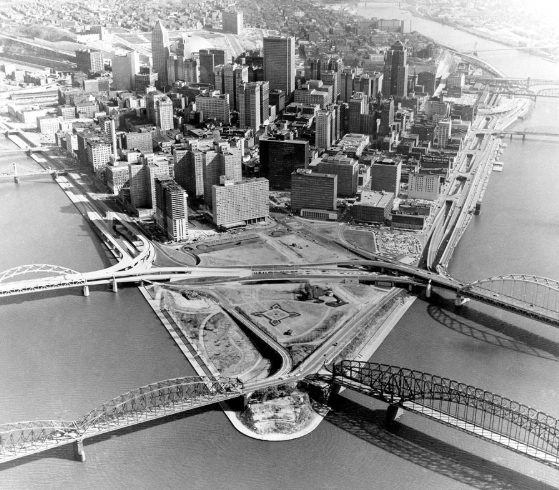
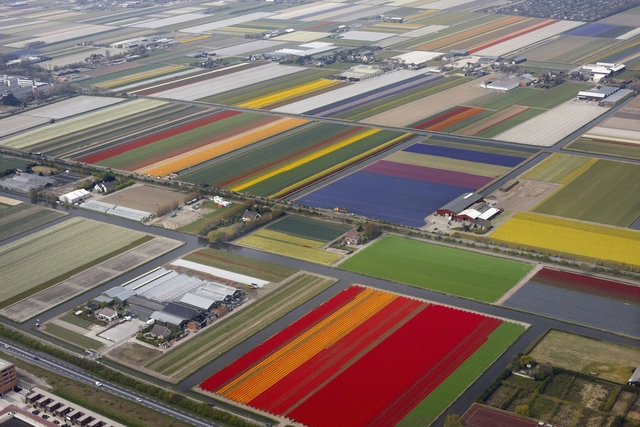
In February 2020, the Solomon R. Guggenheim Museum will present an exhibition titled “Countryside, The Future.” The brainchild of a team led by Rem Koolhaas and AMO, the exhibition will mark the latest chapter in one of Koolhaas’ fields of study from recent years; the impact of an increasingly urbanized world on the non-urban areas “left behind.” This investigation is for good reason.
https://www.archdaily.com/925800/what-will-the-countryside-be-for-when-we-all-live-in-citiesNiall Patrick Walsh
The 12th São Paulo International Architecture Biennale took over two of the most iconic public buildings in the capital of São Paulo. A major exhibition featuring works from various parts of the world remains open until December 8 at the Centro Cultural São Paulo (CCSP), while Sesc 24 de Maio has been occupied by a dozen installations and devices designed specifically for the building and its surroundings.
Here, we present the 10 devices that transformed the space of Sesc 24 de Maio, creating tension and establishing narratives in one of the most intensely used public spaces in downtown São Paulo. The works are divided into the three axes guiding the Biennale: Everyday Tales, Everyday Materials, and Everyday Maintenance.
In the popular imagination, *cortiços* (tenement houses) represented the worst of urban housing in Brazilian cities. Deeply rooted in the national culture and immortalized in Aluísio Azevedo’s classic novel, *cortiços* were depicted as unsanitary, dilapidated dwellings where disease proliferated, the margins of society lived, and landlords exploited tenants with extortionate rents.
For the most part, rubber isn’t considered a conventional building material – at least not to the same extent that materials like wood, concrete, or glass are. But rubber is commonly used in interiors for flooring of extraordinary color or brightness, and even more unexpectedly for exterior facades with unique aspects or upholstery effects. This functionality is motivated by unique advantages such as smoothness, elasticity, durability, and color consistency.
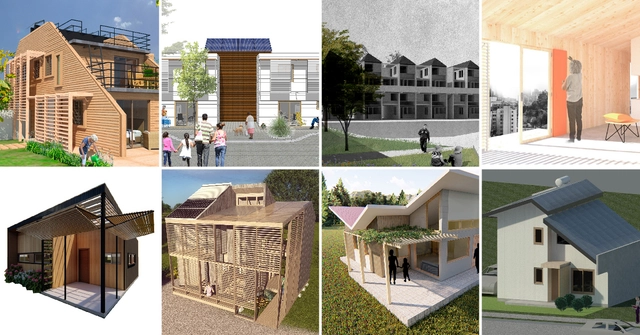
Construye Solar 2019 will exhibit eight sustainable social housing units in Santiago, designed and built by universities from across Chile. The initiative, according to the organizers, aims to "spark innovation in social housing construction, addressing the inherent challenges of pursuing sustainable innovation on a limited budget."
https://www.archdaily.com/1120893/university-teams-from-construye-solar-2019-showcase-their-innovationsArchDaily Team
The digital revolution coupled with the unforeseen environmental, economical and social challenges our world face today, urge architecture to shake much of the traditions and basis upon which it operated for the last decades, if not centuries.
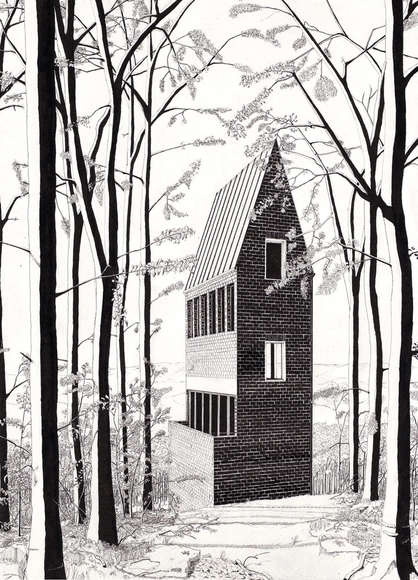
Denis Andernach, Turmhaus, 2010, Ink on paper, 14 1/8 x 18 7/8 in
A century on, the compelling idea that Modern architecture emerged like some blindingly white, crystalline and disruptive phoenix from the darkness, death and destruction of the First World War is, perhaps, a familiar one. And, yet, the charcoal sketches and chiaroscuro montages Mies van der Rohe made during and after the epochal competition for the Berlin Friedrichstrasse Skyscraper of 1921-22 retain the power to catch the eye, provoke and disturb in our own era of overwhelming imagery much of it produced by and with computer programs.
What is so very remarkable about these century-old visionary drawings is that they portray a future building type - verging on the ethereal and more or less impossible to realize at the time - in the earthiest of drawing materials. It had been a stroke of genius to use charcoal to evoke an architecture of lightness rising from the embers of the trenches that would revolutionize the way we shaped tall buildings and with them our city streets. Such is the power of drawing by hand.
CCTV Headquarters in Beijing, China. A massive structural cantilever, dozens of meters off the ground, required designing the project as a symbiosis between architecture and engineering. Photo credit: rudenoon on Visual hunt / CC BY-NC-ND
Begin by imagining a composition of mostly vertical elements. Between them, ovoid shapes float, intertwined. Condensing this (in)formal schizophrenia, there is a translucent cubic envelope sliced horizontally into six equal parts. An iconic Cartesian coordinate system contaminated by amorphous bubbles.
By now, you’ve likely heard about real-time rendering for architectural visualization and how it’s changing the way designs are presented. With real-time rendering, you can edit your design and see the changes updated instantly, at full quality, and you can produce animations and panoramas in minutes instead of days. Real-time rendering also opens the door to immersive experiences like 360° videos and virtual reality.
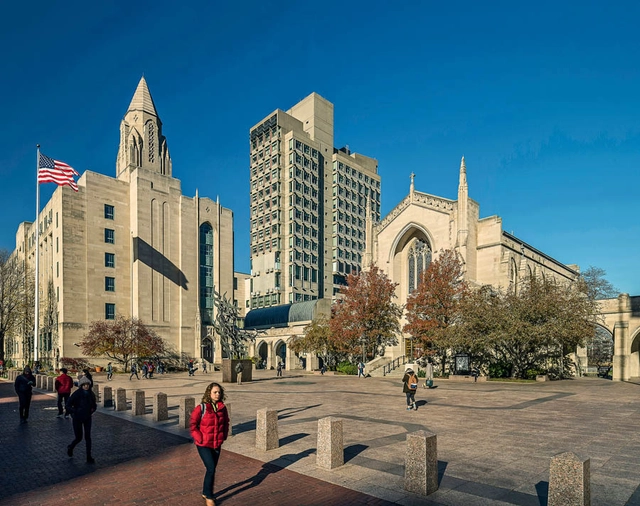
In 1964, the Law Tower at Boston University opened, whereupon it quickly ran afoul of students and faculty. The building, which was designed by Josep Lluís Sert, was unaccommodating and averse to modification. In a bid to rectify these problems, Boston firm Bruner/Cott both renovated and added to the tower in 2015. Courtesy Richard Mandelkorn
Through his campus work, Sert left an incredible built legacy on the Boston area. But his buildings have taken some getting used to.
In hindsight, it seems a bit odd that a Catalan architect with a penchant for concrete buildings and jaunty accents of color—he liked to say, “It’s good to see a parrot against an elephant”—ever held sway over Brahmin Boston and nearby Cambridge. It was midcentury, and he was Josep Lluís Sert, Barcelona-born, a great devotee of Le Corbusier, and dean of the Harvard University Graduate School of Design (GSD) from 1953 to 1969.
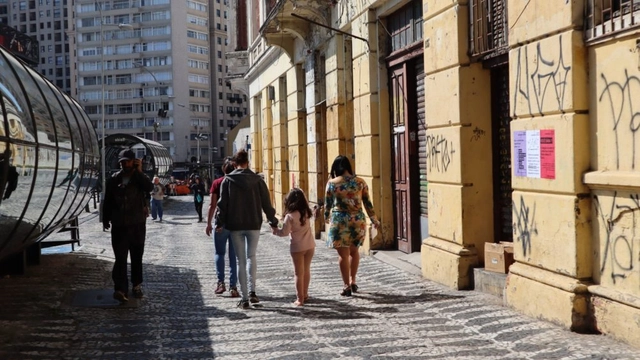
Have you already crossed the street out of fear today? As a woman, what is your greatest fear when walking down the street? How would you feel safer? With the goal of reflecting on how we can plan more egalitarian cities for everyone, the firm amb ateliê, in partnership with architects Fernanda Linero and Beatriz Teixeira, launched this initiative across various neighborhoods in Curitiba. The project ci.da.de; substantivo feminino (city; feminine noun) is part of the 3rd Biennial Architecture Exhibition for Curitiba.
The Latvian city of Riga, the largest between the three Baltic states, is undergoing a cultural and urban renaissance. The city's pedestrian-only Old Town is a UNESCO World Heritage Site with several museums, cultural centers, and restaurants, attracting thousands of new visitors every year.
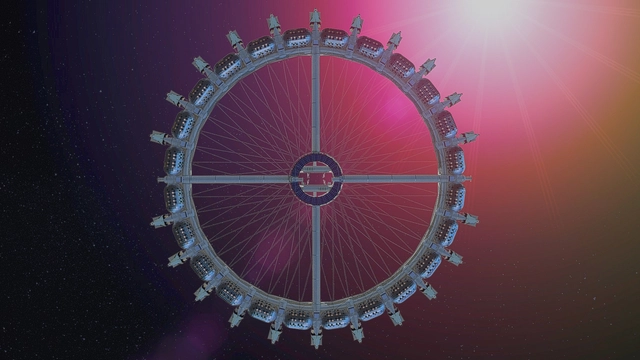
As California makes strides in sustainability, the Von Braun Space Station is taking rather large steps for humankind. Exploring the great unknown does not have to mean abandoning our planet — it can mean just the opposite. In fact, this space station could be our most monumental step toward a sustainable future.
https://www.archdaily.com/925493/sustainability-in-space-what-california-green-building-standards-and-the-von-braun-space-station-have-in-commonSienna Mae Heath
Ruins are defined as structures, architectural remains, or constructions that have been partially or completely lost due to various factors (such as natural disasters, war, depopulation, abandonment, and lack of maintenance). They manifest as the material and tangible presence of a past era, representing the historical paradigm in which they were conceived and built. Their appeal lies in their ability to freeze a temporal plane different from current reality within the present, serving as a condensation of the ideals, interests, aspirations, questions, and challenges of a specific era. With this in mind, we present below a selection of 10 archaeological sites and ruins you can visit in Argentina.
Videos
Courtesy of Richard John Seymour & 3RW Arkitekter
The various practices of mankind over the past decades have taken a huge toll on the environment. People of all nationalities, interests, and career backgrounds have been trying to find means to heal the wounded landscapes and shed light on the environmental crisis.
Directed by BAFTA-nominated film director Richard John Seymour and produced by Norwegian design firm 3RW arkitekter, Landscape Healing is a cinematic documentary that follows the journey of a diverse group of people who have been setting a paradigm for humanity's greatest challenge: the rewilding of our planet back to a sustainable level.
What happens when the sensor-imbued city acquires the ability to see – almost as if it had eyes? Ahead of the 2019 Shenzhen Biennale of Urbanism\Architecture (UABB), titled "Urban Interactions," ArchDaily is working with the curators of the "Eyes of the City" section at the Biennial to stimulate a discussion on how new technologies – and Artificial Intelligence in particular – might impact architecture and urban life. Hereyou can read the “Eyes of the City” curatorial statement by Carlo Ratti, the Politecnico di Torino and SCUT.
Nowadays materials are requested to play a more engaging role in the digital society.
They can be customized down to their molecular properties and this capacity has an enormous impact on related fields of science, but they also need to be interpreted in their meaning thanks to our ‘semantic capital’, as Luciano Floridi said.
We cannot reduce materials to their property and performances as, as humans, we use them to interpret the world, they are our continuously changing material culture to find an equilibrium between nature and built environment.
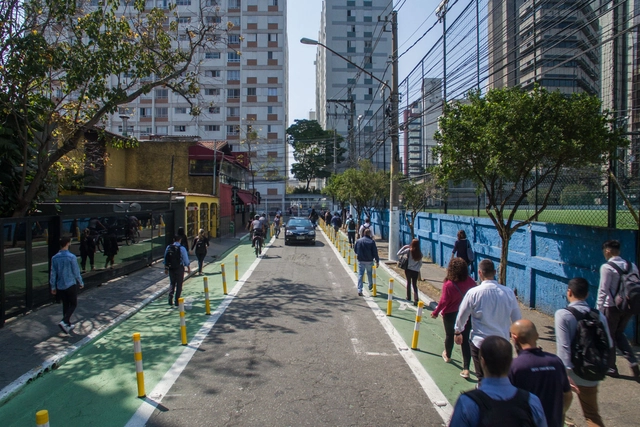
The environment affects behavior, just as behavior affects the environment. This is one of the core propositions of environmental psychology, a field that studies the interrelationship between human behavior and the surrounding environment, whether built or natural. If the environment has the power to influence our choices and habits, then it is possible to design it to encourage more sustainable choices. And complete streets offer a way to do just that.
.jpg?1569867443&format=webp&width=640&height=580)