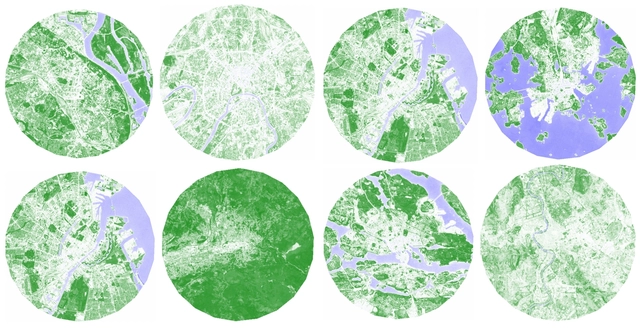
With a growing global trend of rural to urban migration, a focus on an understanding of parks, gardens and general green space in city centers is more important than ever. While a move to an urban center can offer improved access to employment, schooling, healthcare and cultural opportunities, it can come at a cost of increased stress and noise and decreased access to open space, fresh air and nature. For urban and forestry researcher Phillipp Gärtner, this raised the question of which European capital cities have the greenest space.
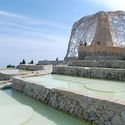
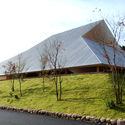
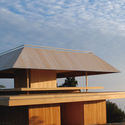
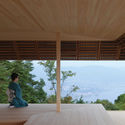
In this extended interview from the Louisiana Channel, Japanese architect and experimentalist in sustainable architecture Hiroshi Sambuichi explains how he integrates natural moving materials—sun, water and air—into his architecture. A rare symbiosis of science and nature, each of his buildings are specific to the site and focus on the best orientation and form to harness the power of Earth’s energy, particularly wind. Two of his projects displayed in the video, the Inujima Seirensho Art Museum and the Orizuru Tower, force a contraction of air to make it flow faster and circulate with you through the building, while the Naoshima Hall takes a more sensitive approach due to the nature of the building, reducing the wind’s velocity as it passes.
As a trailblazer of Brazilian Modernism, Oscar Niemeyer is celebrated for his bold, sinuous forms, and his use of the “the liberated, sensual curve.” Paul Goldberger described it best when he wrote that “Niemeyer didn’t compromise modernism’s utopian ideals, but when filtered through his sensibility, the stern, unforgiving rigor of so much European modernism became as smooth as Brazilian jazz.”
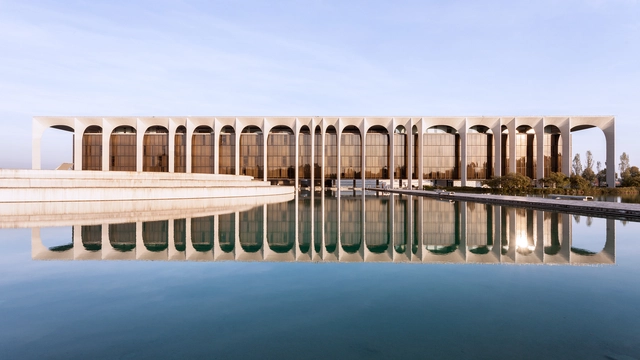
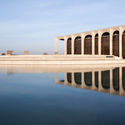
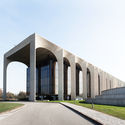
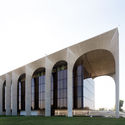
When Georgio Mondadori, chairman of the Italian publishing house Mondadori, commissioned Niemeyer to design the company’s new headquarters in 1968, he wanted the building to look like the Itamaraty Palace (also known as Palace of the Arches) in Brasília. Niemeyer agreed, but given his playful spirit, he deliberately deviated from the earlier design and proceeded to build what he would later identify as his favorite of the projects he completed in Europe. Read on to see a striking set of sixteen photographs of the Mondadori building by Milan-based photographer and visual artist Karina Castro, who was commissioned by Mondadori to capture their headquarters over 40 years after the building's completion.
“Beauty,” as Umberto Eco tells it, “has never been absolute and immutable but has taken on different aspects depending on the historical period and the country.” So how is beauty defined today in our increasingly globalized world? Perhaps a more interesting question to ask is whether arriving at such a conclusion remains relevant to our society.
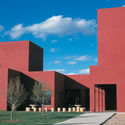
As the son of famed Mexican architect Ricardo Legorreta, and now the leader of the firm which he joined under his father in 1989, Victor Legorreta is one of Mexico’s most visible architects. In this interview, the latest in Vladimir Belogolovsky’s “City of Ideas” series, Legorreta discusses the complexities of following in the footsteps of his father and how, in his view, good architecture is made.
Vladimir Belogolovsky:What kind of projects are you working on at this moment?
Victor Legorreta: We work on a variety of projects—about 60 percent are in Mexico and the rest are abroad. Mexico City is increasingly becoming a vertical city in its attempt to reverse its tendency of growing into an endless and dysfunctional sprawl. We are working on several mixed-use towers with retail, entertainment, restaurants, offices, and residential uses in a single building to enable people to find everything they need within easy reach, to lessen the pressure on traffic, which in the city is now among the worst in the world. We are also working with The Aga Khan Foundation on two projects—a university in Tanzania and a hospital and university in Uganda.
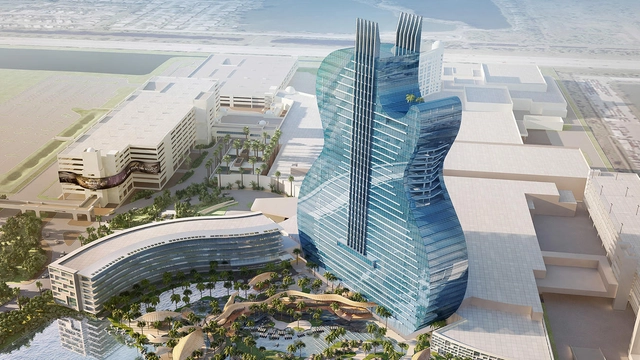
The 450-foot-tall hotel will boast more than 600 rooms, around half of the complex’s total, plus a 41,000-square-foot spa and a few restaurants. At the tower’s base, guests can swim underneath waterfalls in plunge pools, relax in private cabanas, and partake in water sports in a giant artificial lake. Right now, the existing Seminole Hard Rock Hollywood hotel has almost 500 rooms, as well as a casino, meeting space, restaurants, and a lagoon pool.
The main objective of the BambooU build and design course is to promote bamboo as a green building material, and to provide tools to architects, designers, builders, engineers, and carpenters from all over the world to value this material and increase its use.
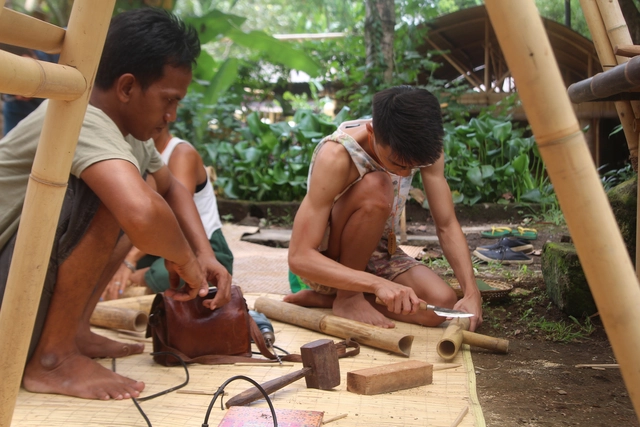
The 2017 version of the course invited its participants to be part of a basic carpentry workshop, in which Indonesian artisans—led by I Ketut Mokoh Sumerta—taught them to build the base of a simple structure in Bamboo, without using other materials and by experimenting with the cutting and joining of different pieces.
See the process of this construction below.
https://www.archdaily.com/883566/learning-basic-bamboo-joinery-with-indonesian-carpentersAD Editorial Team
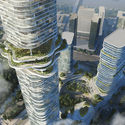
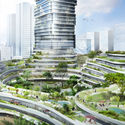
Büro Ole Scheeren has revealed the design of a landmark new development for Ho Chi Minh City that will feature three skyscrapers rising from a mountainous landscape of vegetated terraces and vibrant public spaces. To be known as “Empire City,” the development aims to embody “a symbiotic vision of nature and living” within the space of Vietnam’s capital city.
While the amount of information about architect salaries in specific countries and cities is abundant, there are many discrepancies between different sourced when it comes to country-to-country comparisons. Having a global overview of architect salaries is also tricky to get because of the many variables that go into the equation. You need to take into consideration the position, experience, size of firm, location, not to mention the relationship between earnings and living costs and various tax, insurance and legal differences among different countries.
https://www.archdaily.com/883722/which-countries-pay-the-highest-salaries-for-architectsLidija Grozdanic for Archipreneur.com
DailyDose—one of ArchDaily'sfive favorite daily newsletters of 2017—have published a collection of drawings submitted as part of an open competition to sketch a composition of just five lines. To celebrate the milestone of their 1000th newsletter which has, over the course of the last five years, delivered 34,297 collected images to inboxes around the globe, one work (by Roberto de Oliveira Castro) will be made available as a limited edition framed artwork by Desplans.
Humans are adaptable animals; we have evolved to adjust to, and survive in, many difficult and extreme conditions. In some cases, these extremes are natural, while in other modern cities extreme living situations are created by us, and we are forced to accept and adjust. Here is a list of extreme settlement conditions: some challenging, some wonderful and all of them offering a fascinating insight into how we occupy the planet in 2017.
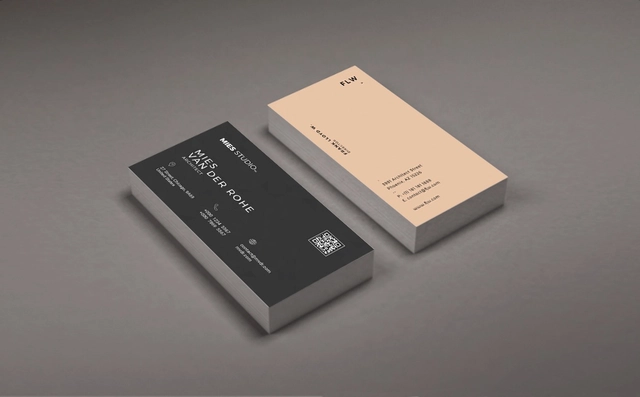
Designing a business card might seem to be a straightforward endeavor but if you've ever tried your hand at designing one from scratch, you've probably wished there was a graphic design consultant around. With this in mind, we've rounded up some classy minimalist templates that will help you take the guesswork out of what to include on your calling card. From ace border spacing and text placement to snazzy (and free!) font recommendations, these downloadable business card templates are ready for you to plug in your information. These templates also serve as an invaluable jumping off point if you're looking for some inspiration for your own designs.
https://www.archdaily.com/883208/free-business-card-templates-for-architectsAD Editorial Team
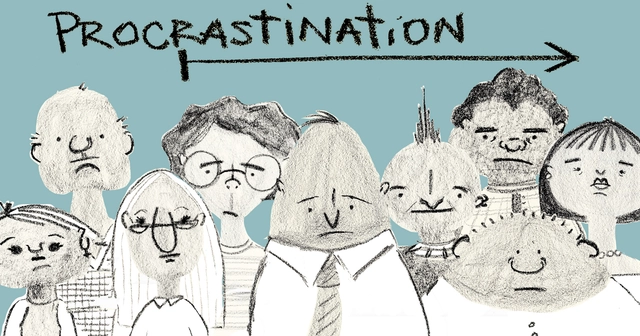
In a hilarious TED talk by world-famous blogger Tim Urban, the procrastinating brain is explained using three squiggly characters: Rational Decision Maker, Instant Gratification Monkey, and Panic Monster. For most of us who procrastinate without fail, the Monkey dominates while the Decision Maker suffers. Panic Monster enters the moment a deadline looms dangerously close—and that’s when all the actual work is done, amid much grumbling, self-loathing and lofty promises of never procrastinating again. But of course, we fail to keep our promises and the wheel keeps turning!
While the internet is full of lists and guides on how to stop procrastinating, for quite a lot of people, those somehow just don’t help at all. And while deadlines, as Urban points out, work for some in terms of getting the work done sooner or later, “long-term procrastination” affects those who must set their own deadlines—think business owners, PhD students, or freelancers. So, how do you get yourself to stop? You don’t! What you need to master is John Perry’s concept of “structured procrastination”—the same concept that Piers Steel earlier explained as “productive procrastination.” Read on for some advice gleaned from pro-procrastination literature.
https://www.archdaily.com/883297/how-to-use-structured-procrastination-to-get-the-best-out-of-your-bad-habitsZoya Gul Hasan
In this essay British architect and academic Dr. Timothy Brittain-Catlin presents the work of Space Popular, an emerging practice exploring the meaning of and methods behind deploying virtual reality techniques in the architectural design process.
Architectural practice, especially in the UK, is moving fast into a realm where history plays as much a part as medium. But the ways in which architects work have been transformed entirely from those of the past, generating a fundamental conflict: how in practice does design through virtual reality use history? In the earliest days of fly-throughs we all realised that we could show our work to clients in a way that even the least plan-literate could understand. We could develop details three-dimensionally and from different angles, even representing different times of day. But what next? How do we engage historical knowledge and experience of buildings?
Videos
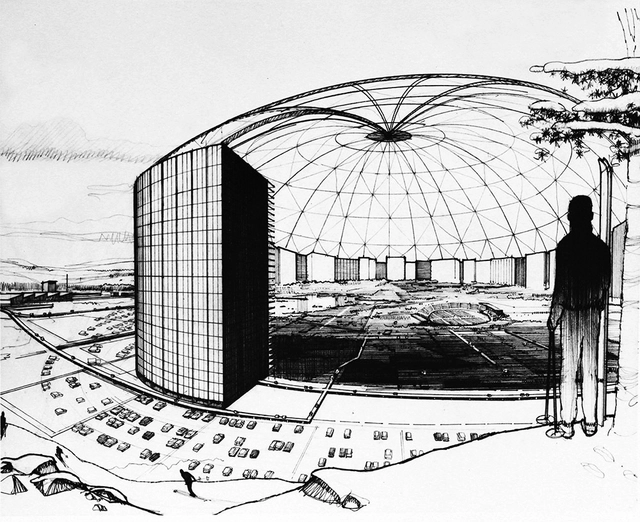
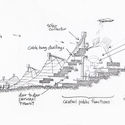
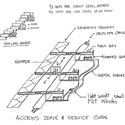
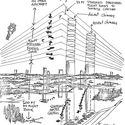
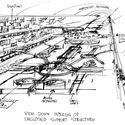
Conceptual drawing of MXC’s primary domed enclosure, proposed to be a mile wide in early discussions, but eventually scaled back. Image Courtesy of The Experimental City Documentary
The Minnesota Experimental City (MXC)—a utopian plan for the city of the future that was decades ahead of its time, and yet is surprisingly little-known—was the brainchild of the urban planner and technocrat Athelstan Spilhaus. Spilhaus was a man who saw science as the solution to the problems of the world, and became a public figure presenting his ideas of utopia in everyday life through his comic strip "Our New Age." During the mid-1960s, he conceived an ambitious plan to condense his ideas into a prototype for future cities that would be both noiseless and fumeless, accommodating America's growing population and their by-products.
A new documentary,The Experimental City, explores the development, and ultimately, failure of the MXC's vision for future settlements. Using retro film clips, it takes us back in time to a period where Spilhaus' predictions of computers that can fit into your home and remote banking appeared more of a fantasy than reality. The film is directed by Chad Freidrichs (known also for his 2011 film The Pruitt-Igoe Myth) and was premiered at the Chicago Film Festival, in conjunction with the Chicago Architecture Biennial. Several further screenings will be taking place across the country, including at DOC NYC on November 16th.
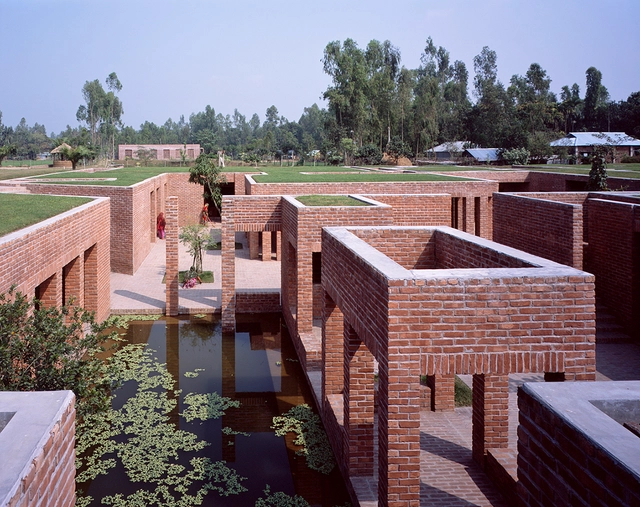
Simplicity is the intent, monastic is the feel. – Kashef Chowdhury
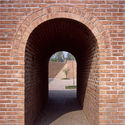
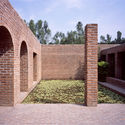
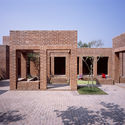
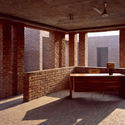
Kashef Mahboob Chowdhury/URBANA’s Friendship Centre in Gaibandha, Bangladesh, seems like a project that is not so much built up in the landscape, but carved out of it. A labyrinth of arches, courtyards, pavilions, and pools, all carefully crafted from handmade bricks, define the space of a facility for a charitable organization—Friendship NGO—who work with remote communities with limited opportunities.
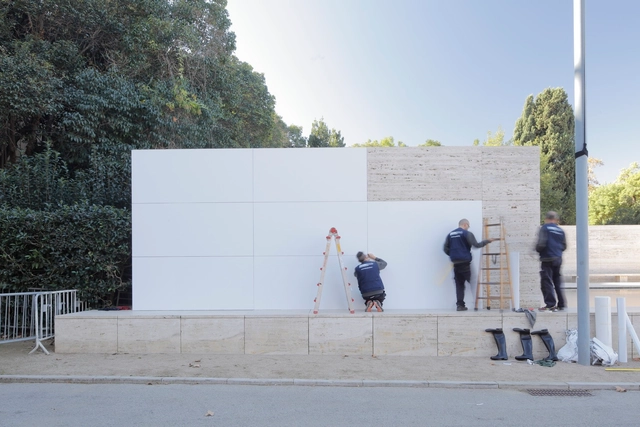
Mies van der Rohe’s Barcelona Pavilion is being transformed into a “1:1 scale model” of itself in a new exhibition designed by Anna and Eugeni Bach titled “mies missing materiality.”
Over the next week, the iconic structure – the longest standing temporary pavilion in modern architectural history – will be completely covered with white vinyl, obscuring the beautiful marble, travertine, steel, chrome, and glass for which it is recognized.
The project sets to prompt discussion about the role of material in the original design, as well as the symbolism of the white surface within modern architecture.
The much-anticipated LouvreAbu Dhabi, designed by Jean Nouvel, opens this week in the United Arab Emirates. The project has enormous significance as a transnational partnership between the French and Emirati governments, and is set to become a center for art and learning in the Gulf region. Located on Saadiyat Island and surrounded by the sea, the museum comprises twenty three permanent galleries and exhibition spaces, a Children's Museum, an auditorium, and a research center – all connected together by waterfront promenades and a vast, shimmering dome.
https://www.archdaily.com/883202/jean-nouvels-louvre-abu-dhabi-photographed-by-laurian-ghinitoiuAD Editorial Team























.jpg?1510084039&format=webp&width=640&height=580)