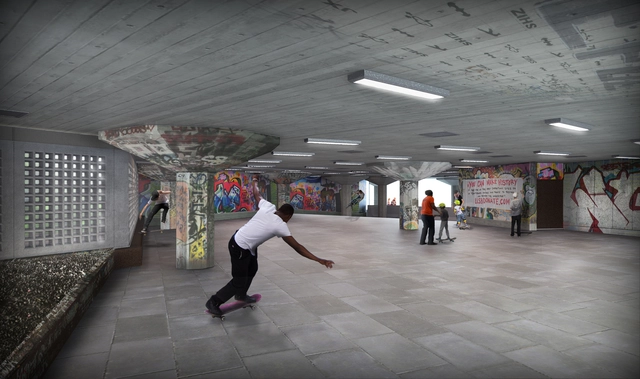
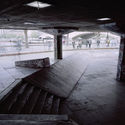
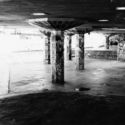
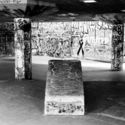
The Southbank Undercroft, which lies beneath the Queen Elizabeth Hall along the River Thames in London, has been the subjectof muchdebate in recent years following a proposed closure and redevelopment in 2013. Long Live Southbank, an organization born out of this threat of expulsion, gave the diverse community who call the space home a voice. After 17 months of campaigning, they were successful in ensuring the Undercroft was legally protected and fully recognized as an asset of community value. Since then, the group of activists has begun another groundbreaking journey.
In partnership with Southbank Centre, Long Live Southbank recently launched a new crowdfunding campaign to restore the legendary Undercroft. The restoration project will cost £790,000 and is set to open in 2018, improving Londoners’ access to free creative spaces in the heart of the City. These types of space are becoming increasingly rare and the restoration effort reflects a desire to celebrate the authentic cultural sites that make London the vibrant landscape it is.
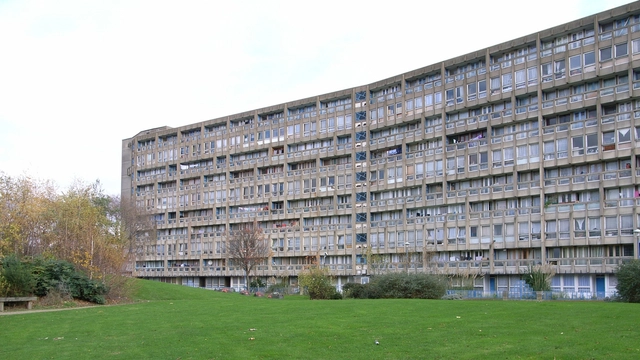
The three-story section will consist of both the exterior facades and interiors of a maisonette flat, one of the signature typologies of the development and a defining example of the Brutalist movement in architecture.
In addition to their videos, #donotsettle’s Wahyu Pratomo and Kris Provoost tell extended stories about the buildings they visit through an exclusive column on ArchDaily: #donotsettle Extra. In this installment, the duo brings you to the newest design by OMA, Rijnstraat 8 in The Hague, The Netherlands. Saskia Simon and Kees van Casteren from OMA explained the architecture of Rijnstraat 8 to #donotsettle while touring the building.
This project, which houses a variety of Dutch government agencies, is an example of a spatial alteration that occurred as result of political and organizational changes. However, given the existing structure by architect Jan Hoogstad, OMA has transformed the architectural experience of the building from within.
It is safe to say that architects, academics, critics and even the public have been arguing about the merits of architectural style for centuries. Even during the course of my own career, the more general style categories of contemporary-vs-traditional have continued in an unabated battle. For better or worse, contemporary has generally won out as the default position for most schools and publications, probably because of the sheer visual entertainment value it offers, and the lucrative merits of its two stepchildren, branding and advertising.
I’d like to propose another position: that certain enduring principles of art, rather than any temporary style—and, remember, they are all temporary—should be our real architectural goal. This presumption means you must be agnostic when it comes to style and put aside any notion of an ideological stance regarding the right or wrong of your architectural preferences. There are those, of course, who say that to imagine that “my art” is better than yours, or even that I can define real art in the first place, is a fool’s errand.
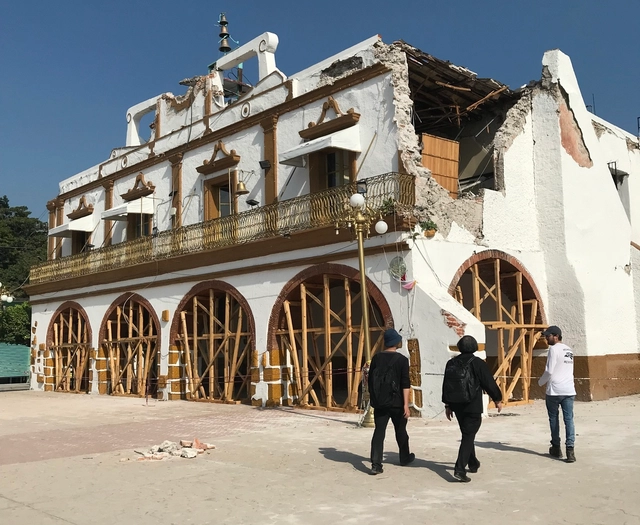
Last week, Mexico received a visit from 2014 Pritzker Prize winner Shigeru Ban, who, following September’s devastating earthquakes, reached out to the country in order to offer support through his experience with humanitarian projects.
Following ten years of multinational collaboration between France and the Emirate of Abu Dhabi, Jean Nouvel's Louvre Abu Dhabi opens this week to the public. Located on Saadiyat Island and surrounded by the sea, twenty three permanent galleries and exhibition spaces, a Children's Museum, an auditorium, and a research center are connected by waterfront promenades which weave beneath the building's iconic dome.
Amazon’s open call for bids for its new headquarters, HQ2, closed last month, but in the months leading up to the final decision in 2018, analysts will continue to flood the internet with detailed studies evaluating who they believe should be the winner. In other words, the mirror-mirror-on-the-wall game for cities is just starting to warm up.
Earlier, ArchDailyreported on the data-driven approach adopted by Moody’s Analytics which projected Austin, TX as the winner. But another study by IT education company Thinkful now points towards Washington DC as the city most likely to make the cut. So what makes Washington DC the fairest of them all? Read on to see how data science techniques helped analysts at Thinkful with this prediction, what kind of approach they adopted, and how it differed from that of Moody’s Analytics.
https://www.archdaily.com/882976/amazon-hq2-study-by-data-science-experts-names-washington-dc-as-ideal-host-cityZoya Gul Hasan
As most architecture students and practicing architects find out, all-nighters are (ironically) the stuff of nightmares. They're a last resort when the project is due and you have run out times you can say "I’ll do that tomorrow." All-nighters should be avoided at all costs as they can have many negative effects on your mind such as decreased concentration and reduced long-term memory. Even your body can suffer too; pushing yourself to the limit as you fight tiredness and work as much as physically possible will weaken your immune system and can cause circulatory problems from sitting down for 20 or so hours straight.
In a previous article, we have discussed the many ways in which you can avoid pulling an all-nighter so you don’t have to be as sleep deprived. But sometimes things just don't go to plan, and you may feel that working through the night is the only option. Read on for tips and tricks that should make your all-nighter slightly more bearable (if that's at all possible).
If you were to identify, categorize and map the 21st century’s emergent architectural practices from the world over, all on one diagram, what would it look like? Considering how the current architectural landscape consists of several different approaches, attitudes and political stances, how would you map them without being too reductive? And how would you ensure that out of hundreds of emergent practices and firms across the globe, you don’t leave anyone out? Perhaps the Global Architectural Political Compass V 0.2 could offer a clue.
Created by Alejandro Zaera-Polo and Guillermo Fernandez-Abascal, the diagram is part of an ongoing inquiry into “the state of the art in (global) architectural practice” [1]. In 2016, Zaera-Polo explored the subject in a comprehensive essay for El Croquis titled “Well into the 21st Century” in which he set down the framework for 11 political categories that now form the compass diagram.
https://www.archdaily.com/882843/have-your-say-on-the-landscape-of-emerging-practices-with-the-interactive-architectural-political-compassZoya Gul Hasan
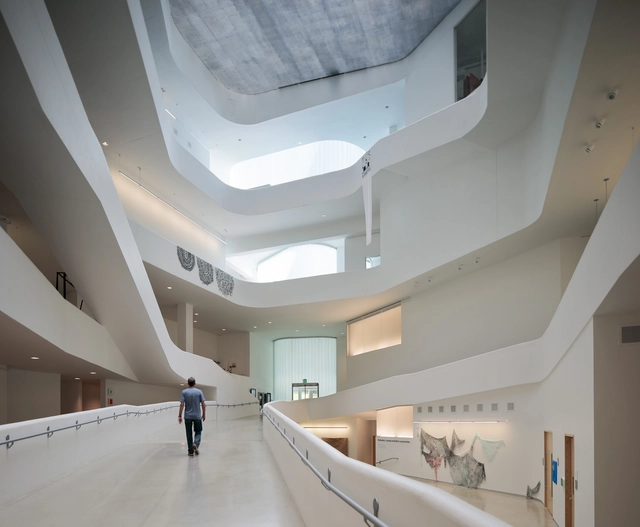
Deeply rooted in the phenomenological ideas of Maurice Merleau-Ponty, Steven Holl’s architectural philosophy is centered on human experience, materiality, and a thorough engagement with the site or context. But more than his experiments with space and material, he is best known for his mastery over what is perhaps his favorite material, or medium: natural light.
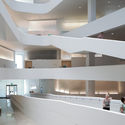
His design for the Visual Arts Building at the University of Iowa, seen here through the lens of photographer Aaron Dougherty, is one of his projects that best explores these concerns. Clad in weathering zinc and stainless steel, the four-story building houses studios, teaching spaces, galleries and faculty offices for all visual arts departments—from Ceramics, Jewelry Design and Sculpture, to Printmaking, Painting, Video Art, and 3D Design.
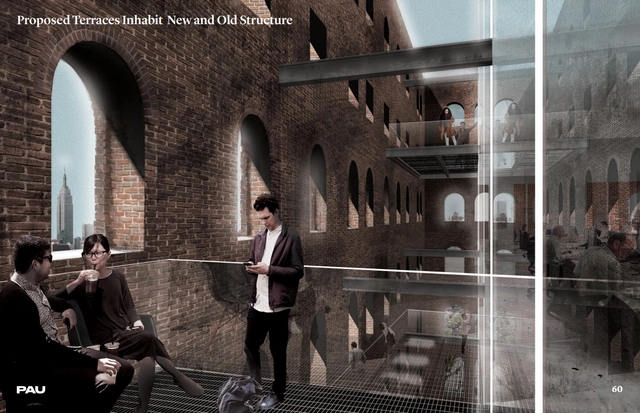
The New York City Landmarks Preservation Commission (LPC) has asked PAU to take its plans for the Domino Sugar Refinery back to the drawing board. While reactions from the public and commissioners were warm on the whole, commissioners debated whether the building, which has sat vacant for more than a decade, is a ruin or “armature” as Practice for Architecture and Urbanism (PAU) claimed, or whether the structure could—or should—be treated like an adaptable building.
Essentially, PAU intended to use the facade as a mask for a glass office building. Instead of sitting right up against the old brick, the new building would be set back ten feet from the old, and workers could get outside and up close to the original walls via metal latticework terraces poking through the glass envelope. The approach, explained founding principal Vishaan Chakrabarti, would preserve the bricks by equalizing the temperature and humidity on both sides while allowing the architects flexibility within a challenging original structure. A round-arched glass roof would dialogue with the American Round Arch windows that define the facade, while on the ground floor, the designers proposed a through-access from the Kent Avenue smokestack to the park and water that would be open to the public.
Oh my. Where to begin? My first impulse was just to move on and shake my head in wonder, perhaps, that a well-established designer and architectural thinker would wish to publish an article so dyspeptic. It is, after all, a common pattern: the young pranksters of yesteryear, once their hairlines have started to recede, transform into schoolmasters as befitting their recently-acquired academic sinecures. It’s all just part of the normal generational cycle that keeps a culture moving forward. Business as usual.
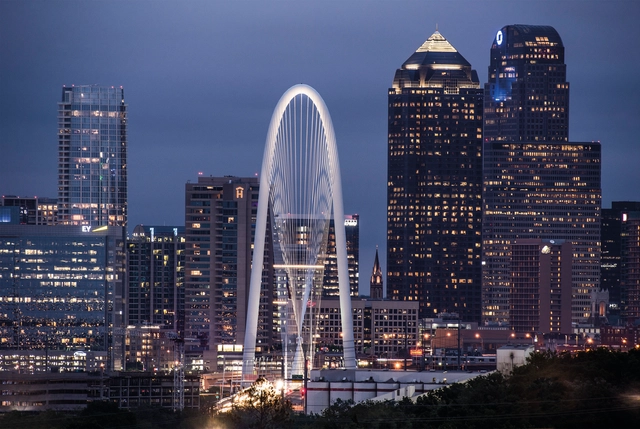
Increasingly close collaboration between architects and engineers has caused an explosion in bridge design over the last few decades, resulting in structures that are both bold yet rational. As a result, cities have exploited bridges as great monuments of design, to foster pride in the residents and promote themselves as a destination for tourists. These ideas have inspired photographer Greig Cranna as he travels the world, capturing the elegance of today's bridge infrastructure.
Cranna has been documenting some of his stunning photography on Instagram, collating it over the past 20 months into a forthcoming book, Sky Architecture—The Transformative Magic of Today's Bridges. In capturing these entrancing structures, the photos show the impact of the bridges as an addition to the landscape and revel in their contemporary silhouettes and designs.
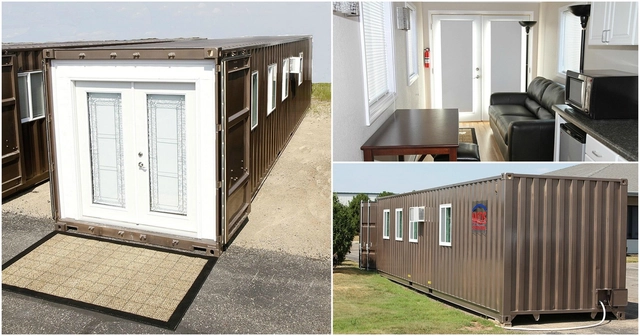
The conversion of shipping containers to living spaces is not a new concept—but being able to purchase them online and have them delivered by e-commerce giant Amazon is. Deliveries by the Seattle-based (and seemingly endlessly expanding) company are becoming a staple for most American households: dogs have never barked so much at the postman, porches have never been so littered with empty boxes, and never before has almost every product on the market been available from one place without even having to leave the house.
In spite of this consumer revolution, homes on demand constitutes new territory for the platform. So what does it look like when an entire house is delivered on the back of a truck?
2017 has been an amazing year in the field of technology for architects. Most excitingly, we’ve seen an exponential growth in our fascination with virtual and augmented reality. Various types of innovative technology for architects are rolled out so regularly, we find our architect clients wondering where to begin.
Which of the many tech developments are merely gimmicks that will disappear as fast as they arrived, and which are here to stay, becoming permanent fixtures within professional practice? We’ve compiled a list of 10 pieces of technology for architects that will differentiate your firm from the competition in the studio and on the construction site.
Architecture, as all architects like to remind everyone, can be a stressful profession. Long days, late nights, indecisive clients, too-decisive clients, permit issues, legal issues, software problems, contractor problems... all combine to generate a high-pressure work environment. So, when architects get a chance to let loose and relieve some of that pressure, they really let loose. Here are a few moves to get you dancing like an architect:
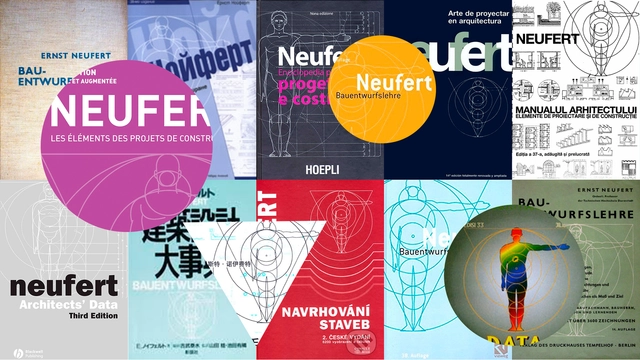
In this excerpt from Reinier de Graaf's new book Four Walls and a Roof: The Complex Nature of a Simple Profession (Harvard University Press), the all-pervasive work and pedagogical practice of Ernst Neufert is put under the spotlight. Was he an architect, a teacher, or something larger than both? In examining Neufert's ardent pursuit of the "norm", De Graaf sheds light on the impact and enduring legacy of the author of Architect’s Data.
His built output—a few industrial complexes, some housing projects, and the Quelle Mail Order headquarters in Nuremberg—is not much to speak of, but his name is known to every practicing architect: Ernst Neufert, author of Architect’s Data, more commonly referred to as Neufert. [1] If the importance of an architect equals the extent to which his work lives on in others, Neufert is the most important of the twentieth century. There is probably no architect who has not used Neufert, whether as a didactic tool or as a volume of references. It contains all the necessary information to design and execute works of architecture. Neufert is enduringly popular. As of 2016, it is in its forty-first German edition, has been translated into seventeen languages, and has sold over 500,000 copies. [2]
https://www.archdaily.com/881889/neufert-the-exceptional-pursuit-of-the-normReinier de Graaf
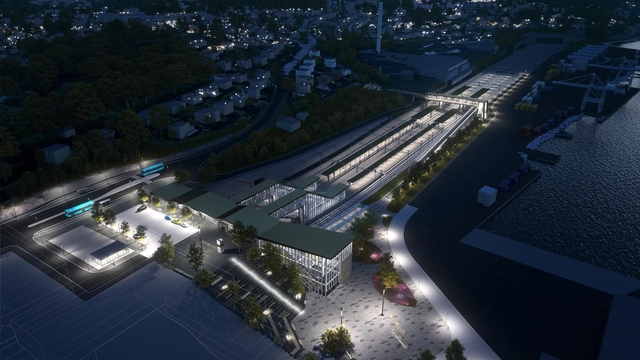
For a disruptive, 10-kilometer-long rail project that won’t even break ground until 2019, public officials and local residents of Moss, just south of Oslo, Norway, have been given an unusually vivid preview that, in the past, only the designers would have seen at this stage.
“We set up a showroom in the city where the public can come to view the project in a theater setting, and the feedback has been quite nice,” says Hans Petter Sjøen, facility management coordinator for Bane NOR, the year-old, state-owned company responsible for developing, operating, and maintaining the Norwegian national railway infrastructure. “Project members also have been receptive. They tell us that they have seen dimensions on the big screen that they did not see in person.”






.jpg?1510054144&format=webp&width=640&height=580)
.jpg?1510054144 "© Roland Halbe")



.jpg?1510054144)