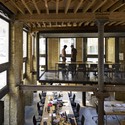
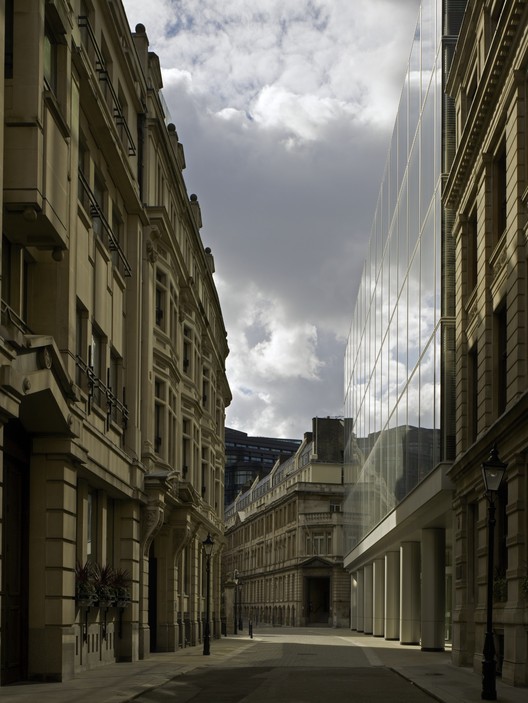
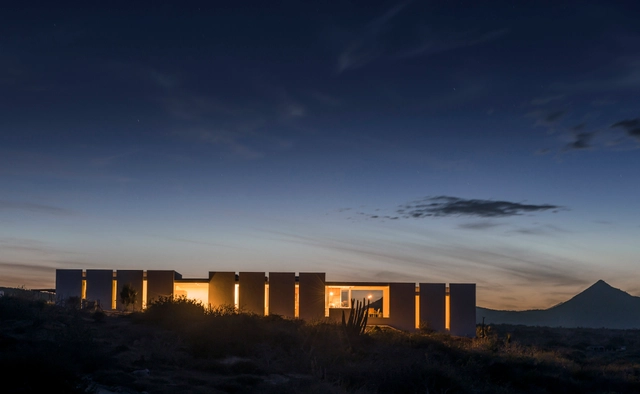
In the following interview, presented by ArchDaily Materials and originally published by Sixty7 Architecture Road, Canadian firm Campos Leckie Studio defines their process for designing site-specific, beautiful architecture that speaks for itself. Enjoy the firm's stunning projects and read the full interview after the break.
We asked Michael Leckie, one of the principals of Vancouver-based Campos Leckie Studio, about the importance of discovery in design and the textural differences between projects. Your website states that your firm is committed to a rigorous process of discovery. How do you explain that to clients?
Process is extremely important in our work. When we meet with clients we do not immediately provide napkin sketches or an indication of what form the work will ultimately take on. Rather, we focus on the formulation of the ‘design problem’ and the conditions that establish the basis for exploration and discovery. These contextual starting points include the site, program, materiality, budget, as well as cultural reference points. This is challenging for some clients, as our culture generally conditions people to expect to see the final product before they commit to something.
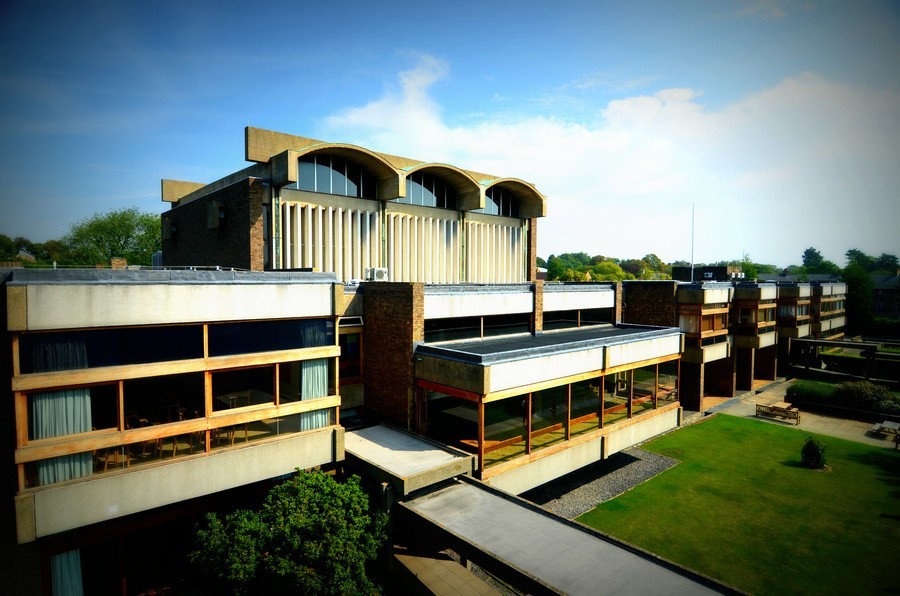
Fifty years ago Churchill College Cambridge opened its doors. In contrast to the historic Colleges, with their medieval Gothic and Neo-Classical buildings corralled behind high walls, this was in an almost rural setting on the outskirts of the city, modern in design, and Brutalist in detail.
The 1959 competition that brought the College into being is considered by many to be a watershed moment in British Post War architectural history. It brought together 20 names, young and old, all practicing in Britain, all working in the Modernist and more specifically the nascent Brutalist style. It was a “who’s who” of British architecture at the time, including the Smithsons, Hungarian-born Erno Goldfinger, Lasdun (then in partnership with Maxwell Fry, Jane Drew & Lindsay Drake, and formerly with Russian émigré Lubetkin), Lyons Israel Ellis and Robert Matthew (one half of the Royal Festival Hall team, who teamed up with Johnson Marshall). None of these made the shortlist of four.
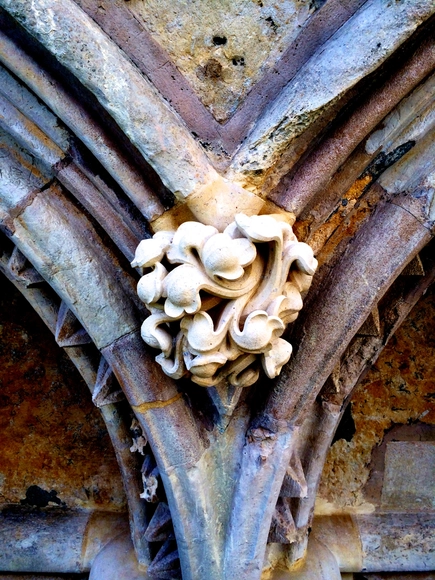
In an age when 1:1 3D printed buildings are becoming ever more commonplace from the Netherlands to China, it's important to pause and assess the existing built fabric of our cities, towns and villages. If we want to maintain and preserve them whilst protecting the inherent craft imbued in their construction, the importance of nurturing and promoting these skills should be recognised.
In the UK, the Heritage Skills Hub(HSH) push to see "traditional building skills, conservation, restoration and responsible retrofit" included within all mainstream built environment courses. In a recent conversation with Cathie Clarke, CEO of the HSH, we discussed the obstacles faced by an organisation dedicated to conserving and teaching skills like stonemasonry, roof thatching, glass making, traditional brick construction to a new generation.
Acting as the centerpiece for MoMA's Warm Up music festival on Saturdays throughout the Summer, the temporary structure will provide shade, seating and water until September 7th. Read on after the break for more on the design.
Soft, spongy, and delicious on pizza, mushrooms have approximately as much to do with structural engineering as alligators or lawnmowers. Or so we thought, until architect David Benjamin of New York firm The Living walked into our offices with a brick grown from fungi.
This brick was the key to his concept for an entry to MoMA PS1’s Young Architects Program competition. Every year, the museum commissions a designer to build a centerpiece for its popular outdoor Warm Up concert series.
If architectural design competitions are where brave, innovative ideas rise to the top, The Living’s mushroom tower (official name: Hy-Fi) checked all the right boxes. In addition to the novelty factor, mushroom bricks offer a host of sustainability benefits. The raw materials needed to produce them — mushrooms and corn stalks (waste material from farms) that the spores feed on — are as eco-friendly as they come. Bricks can be grown in just five days, and the process produces no waste or carbon emissions. When the structure is taken down at the end of the summer, they can be composted and turned into fertilizer.
https://www.archdaily.com/520763/arup-engineers-explain-how-the-moma-ps1-yap-winners-grew-ten-thousand-mushroom-bricksMatt Clark and Shaina Saporta
CTBUH, the organization best known for its Tall Building Awards, has announced the winner of its inaugural Urban Habitat Award: OMA / Ole Scheeren's The Interlace in Singapore. The jurors, including Studio Gang Architects' Jeanne Gang, praised the apartment complex, which includes communal gardens and spaces on the roofs and in between the apartment blocks, for responding to its tropical context and "integrating horizontal and vertical living frameworks."
CTBUH Jurors also recognized Rogers Stirk Harbour + Partners' NEO Bankside as a finalist. Read more about the The Interlace and NEO Bankside, after the break.
Material Minds, presented by ArchDaily Materials, is our new series of short interviews with architects, designers, scientists, and others who use architectural materials in innovative ways. Enjoy!
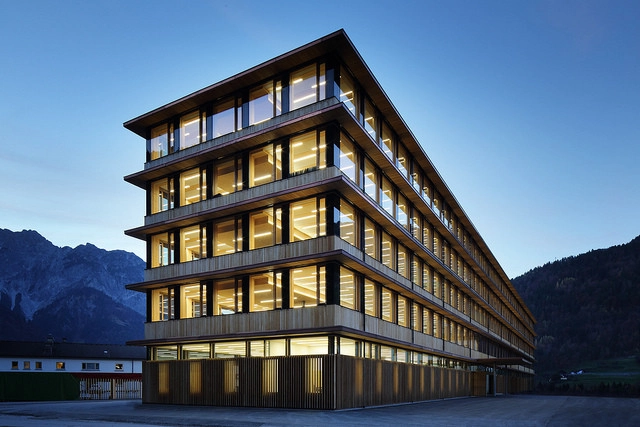
Wood. The United States is the largest producer of the natural resource in the world. But yet we rarely see it in commercial, high-rise construction. So we asked a wood expert -- Rebecca Holt at Perkins+Will, an analyst for reThink Wood's recent Tall Wood Survey -- to tell us about its potential benefits.
AD: Why is wood a material architects should use in taller buildings?
There are lots of reasons to consider wood – first it has a lower environmental impact than other traditional choices like concrete and steel. Wood is the only major building material that is made the by sun and is completely renewable.
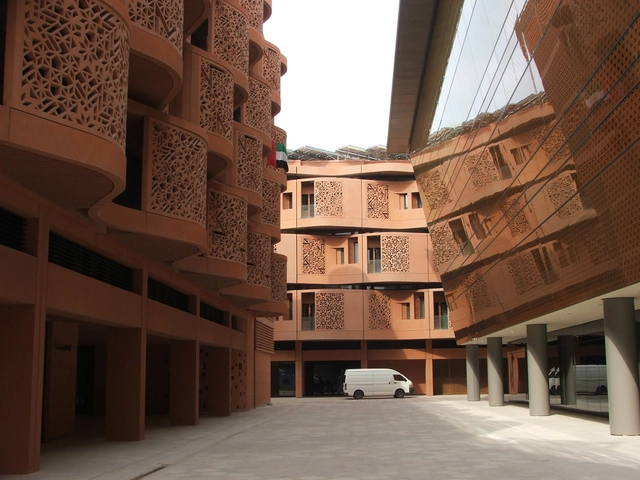
The Middle East has historically been known for many things — sustainability not being one of them. The clash of Western values with the harshness of the local climate can often wedge sustainability between a lot of sand and a hard place. Though there is a broad critique of the unsustainable attributes of the region’s development path, for years there has been a shining exception: Masdar City in the United Arab Emirates, seventeen kilometers east-south-east from the city of Abu Dhabi.
Masdar City exists as an urban development project run by the renewable energy company Masdar, who has committed $15 billion to making Masdar City the planet’s most sustainable new city. Unlike Abu Dhabi, a city which unthinkingly follows antiquated models and Western building principles, Masdar City has a wealth of potential to offer the world of green urban planning - something the world sorely needs.
But Masdar City is certainly not without its share of critics. On first approach, the concentrated development, located in the center of six square kilometers of empty space, does little to awe, especially in comparison to the sprawling wave that is Abu Dhabi. Thanks largely to the global financial recession, buildings currently comprise less than 10% of the area committed to the urban experiment. Even today there is a group of onlookers that suggest Masdar City may just be a mirage after all.
However, this broader view is not necessarily synonymous with the bigger picture.
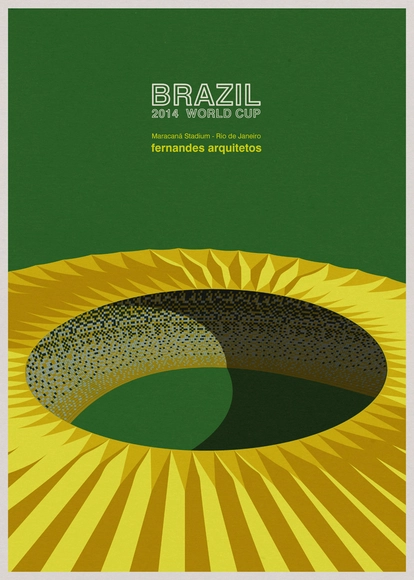
In celebration of the Brazil World Cup, architect and illustrator André Chiote has created a series of illustrations featuring the tournament's most iconic stadiums. Comparing the social importance of these stadiums to cathedrals, Chiote believes that "the new architectural objects are landmarks in the cities that will perpetuate in the future as a cultural and social legacy," and there are few better ways to envision this legacy than to treat the structures with his abstracted, colorful aesthetic - in Brazilian green and yellow, of course. Check out the full illustration set after the break.
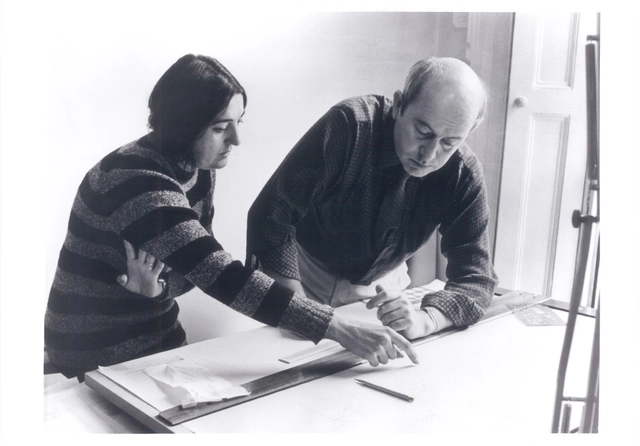
Sheffield born Alison Gill, later to be known as Alison Smithson, was one half of one of the most influential Brutalist architectural partnerships in history. On the day that she would be celebrating her 86th birthday we take a look at how the impact of her and Peter Smithson's architecture still resonates well into the 21st century, most notably in the British Pavilion at this year's Venice Biennale. With London's Robin Hood Gardens, one of their most well known and large scale social housing projects, facing imminent demolition how might their style, hailed by Reyner Banham in 1955 as the "new brutalism", hold the key for future housing projects?
When one wants to consider the future of any form of activity, one is tempted to extrapolate trends from current conditions. One translates signs from the present onto the shape of things to come. The conditions of a given moment, however, may be too circumstantial, and one should be particularly aware of their transient nature. This is the dilemma one obviously faces when considering ‘the future of European architecture’.
At the time the European Union Prize for Contemporary Architecture - Mies van der Rohe Award commemorates its 25th anniversary, the European project from which this Prize emanates – and to which it owes its symbolic meaning and promoting purpose – is itself at a crossroads.
In between austerity measures, the South and North divide, growing unemployment, a feeling of impoverishment and insecurity, and the apparent unsustainability of the Welfare State model, which had given the region prosperity after World War II, Europe itself seems to be facing a pivotal, if transient moment.
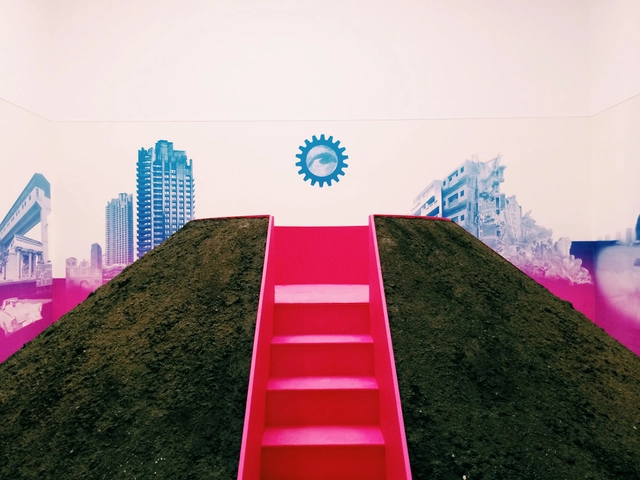
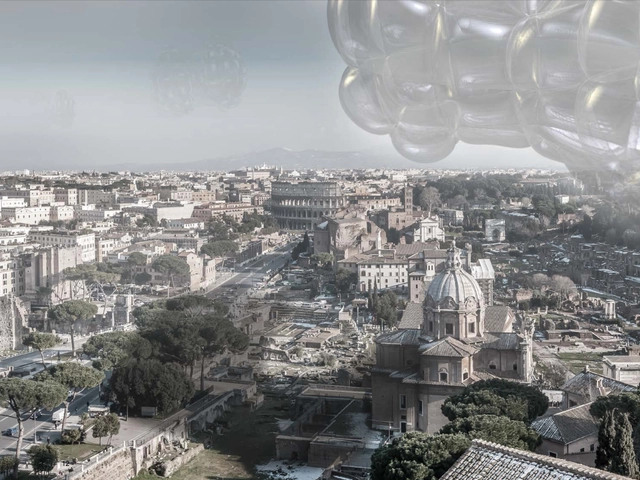
The British Pavilion at the 2014 Venice Biennale takes the large scale projects of the 1950’s, 60’s and 70’s and explores the "mature flowering of British Modernism at the moment it was at its most socially, politically and architecturally ambitious but also the moment that witnessed its collapse." The exhibition tells the story of how British modernity emerged out of an unlikely combination of interests and how "these modern visions continue to create our physical and imaginative landscapes." To those who know the UK's architectural heritage, this cultural and social history is delivered in a way which feels strangely familiar, whilst uncovering fascinating hidden histories of British modernity that continue to resonate in the 21st century.
Material Minds, presented by ArchDaily Materials, is our new series of short interviews with architects, designers, scientists, and others who use architectural materials in innovative ways. Enjoy!
Arthur Andersson of Andersson-Wise Architects wants to build ruins. He wants things to be timeless - to look good now and 2000 years from now. He wants buildings to fit within a place and time. To do that he has a various set of philosophies, processes and some great influences. Read our full in-depth interview with Mr. Andersson, another revolutionary "Material Mind," after the break.
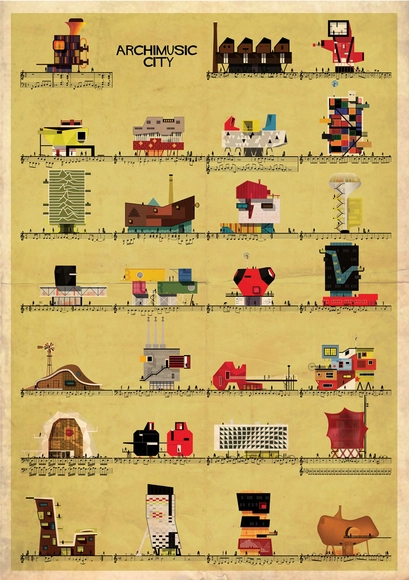
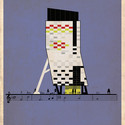
Federico Babina's released his latest series of illustrations: Archimusic, architectural representations of 27 songs, from Miles Davis to Michael Jackson to Amy Winehouse. See all 27 after the break!
Project example from MIT OpenCourseWare's Geometric Disciplines and Architecture Skills: Reciprocal Methodologies by Isabel Collado and Ignacio Peydro. Image Courtesy of Luisel Zayas-San-Miguel
Learning doesn't necessarily need to be formal – or expensive for that matter. Thanks to the Internet and some generous benefactors, you can further your education for free from the comfort of your own home. Top schools such as MIT and Harvard University are affiliated with free online learning resources, allowing people from all over the globe to connect and audit courses at their own pace. In some cases, these services even provide self-educators with proof for having completed courses. Keep reading after the break to check out our round-up of four free online learning resources.
How can the city be reinvented to save the world? Chinese business magnate Zhang Yue and Finnish professor Eero Paloheimo are two men with very contrasting answers to this loaded question. Zhang Yue's answer puts trust in pre-fabricated, high-density vertical development, whereas Paloheimo envisions a built-from-scratch, clean-tech sprawling utopia. Their grand ideas, met with both skepticism and excitement, are documented in a new film by Anna-Karin Grönroos. To watch the trailer and learn more about the bold proposals, continue after the break.
Courtesy of University of Washington Department of Architecture website, http://arch.be.washington.edu/
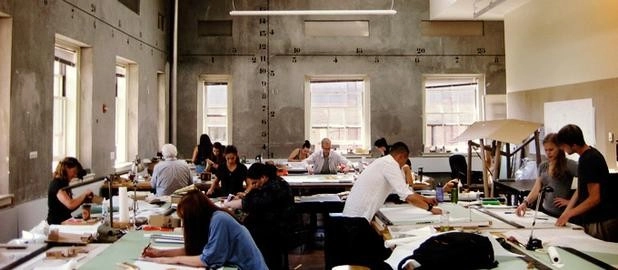
In a posthumous 1990 essay “A Black Box: The Secret Profession of Architecture”, Reyner Banham warned of architecture’s corrosive trend toward insulating itself from discussions outside of the discipline. Decades later, architecture finds itself in an even more dire state of affairs. Despite a transformed global context, the same paternalistic model of studio culture that has existed since the Beaux Arts remains in place. “Studio culture”, as currently practiced, promotes an outdated and parochial understanding of how design knowledge is produced, valuing expertise over synthesis and image over process and practice.
It also affects the health and wellness of students. Over ten years ago, the AIAS (American Institute of Architecture Students) and NAAB (National Architectural Accrediting Board) created a new requirement for accreditation, requiring all schools to address these precise concerns through a written policy on studio and learning culture. However, many schools of architecture across the country still do not educate students about this policy nor seem to follow it.
While there are certainly creative strengths and a generalized camaraderie fostered by traditional studio models, they do not adequately prepare students for navigating the global present. We believe there is an urgent need to reconfigure the institution of studio in order to address the pressing academic and professional issues of our time. We are putting forth what we feel are the guiding principles which must inform a progressive studio culture: agency, balance, flexibility, diversity, interactivity, interdisciplinarity, and sustainability. It is our hope these principles spur debate and much needed action for fundamentally transforming studio culture.
https://www.archdaily.com/515146/7-ways-to-transform-studio-culture-and-bring-it-into-the-21st-centuryLori Brown & Joseph Godlewski
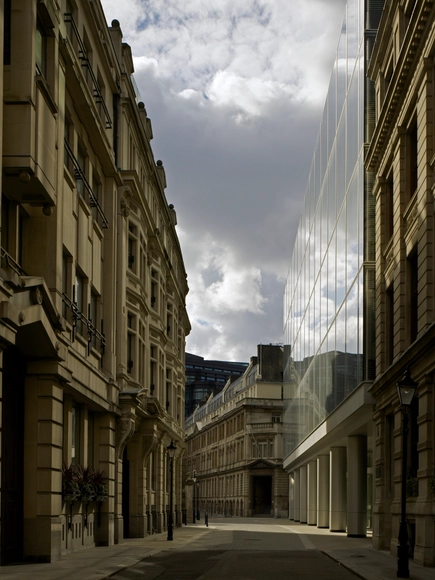
It's clear that architecture inspires and impassions Timothy Soar - not only has the UK photographer spent most of his life visiting and capturing great architectural works, but - unlike most photographers, or architects for that matter - he also speaks eloquently about the architecture that inspires him. Describing his favorite building, AHMM's Yellow Building, he tells us it "delivers exquisite simplicity out of a complex lattice. The building has a lyrical poetry in the way it wraps and folds itself around the occupants – deft, confident and generous. It is one of London’s great spaces."
Moreover, Soar believes deeply that his architectural photography does more than merely idealize built forms; not only do his images enable the architects he works with to "refine and amplify" the ideas within their built works, and thus aid them in defining their next work, but it also seeks to advocate architecture for all: "My work as a photographer is predicated on a desire to [...] to be an advocate for design that elevates, to help construct an argument where good design isn’t an occasional, rare and special thing but an everyday, routine and expected event." Read the whole interview and see more of Soar's fantastic images, after the break




Iwan_Baan.jpg?1403819134&format=webp&width=640&height=580)