Award-winning architect Nicolas Valencia is the former Head of Editorial at ArchDaily, leading a global editorial team ---- @nicolasvalencia.cl | nicolasvalencia.cl | hellonicolasvalencia@gmail.com
The three main pedestrian walkways in the historic center of Santiago, Chile, are set to be remodeled. The Municipality of Santiago announced this with the launch of a public competition seeking proposals for the Ahumada-Puente, Huérfanos, and Estado-21 de Mayo walkways.
This initiative marks the 40th anniversary of the transformation of Ahumada Street into a pedestrian walkway—an artery that currently sees over two million people pass through daily and connects Santiago's Plaza de Armas with the Alameda, the Chilean capital's main east-west thoroughfare.
Videos
Amanita Muscaría / Miriam Alonso + Patricia Ramos + Paula Mena. Image Cortesía de Península
The fifth edition of Concéntrico, the international architecture and design festival in Logroño, Spain, will invite reflection on the urban environment and the city through architecture and design proposals in various formats.
The upcoming edition will take place from April 26 to May 1, 2019. In addition to this announcement, the festival has opened calls for three competitions for participation at three of the festival's sites.
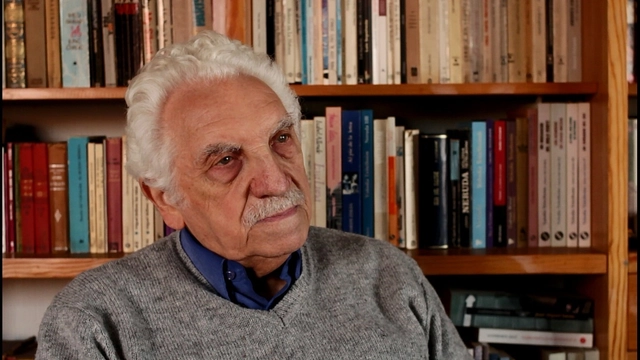
Humberto Eliash, architect, academic at the Universidad de Chile, and former vice dean of the university's Faculty of Architecture and Urbanism, is the new President of the Colegio de Arquitectos de Chile. This was ratified following the first meeting of the national board on January 12, after the online voting held among members throughout Chile last December.
Although the position of national President is determined by an internal agreement of the board of directors, historically the candidate with the highest majority takes office. Eliash—with 21.5% of the valid votes cast—was widely expected to secure the position, as ArchDaily en Español reported a few weeks ago.
Identity, memory, and ways of living are the main themes explored by Chilean architect Nicolás Norero in his new personal podcast, where he converses with prominent architects from across the Americas, such as Chilean Mathias Klotz, American Rick Joy, and Mexican Frida Escobedo.
"My goal is to talk with people I admire and respect. Memory, identity, and ways of living are intangible concepts, but in my view, they are fundamental to our discipline," Norero told ArchDaily. "Through a biographical lens, we understand how architects develop their own language and a unique way of doing things," he adds.
What began as a project to promote Paraguayan art has turned into a compelling showcase for local architecture. This is how The Society Paraguay was born in 2014, a collective currently made up of Mauricio Paiva, Salma Abraham, Leonardo Méndez, and Verónica Díaz de Vivar.
"Our beginnings stemmed from the desire to produce, document, and disseminate information on the architectural, artistic, and design worlds in Paraguay," the founders explain in a conversation with ArchDaily en Español. Although it is currently a purely digital project, they explain that their goal is to complement it "with printed material that can achieve a broader reach."
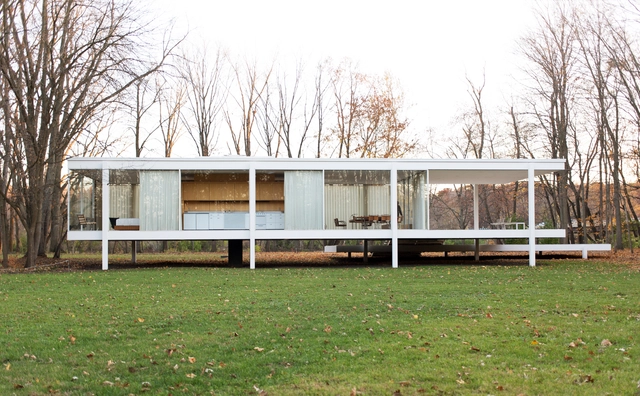
If you are taking your first steps in Revit, or would like to understand its practical integration with BIM, the following tutorial will be of great help. The course was developed by Mexican architect Alan Rodríguez Carrillo, who published a step-by-step tutorial on his YouTube channel to model the famous Farnsworth House, designed by Mies van der Rohe in the 1940s, in Revit .
Divided into six videos, the tutorial explains in detail how to model columns, walls, floors, doors, furniture, facades, ceilings, lighting, and even the visualization options for one of the Modern Movement's most iconic projects in Revit.
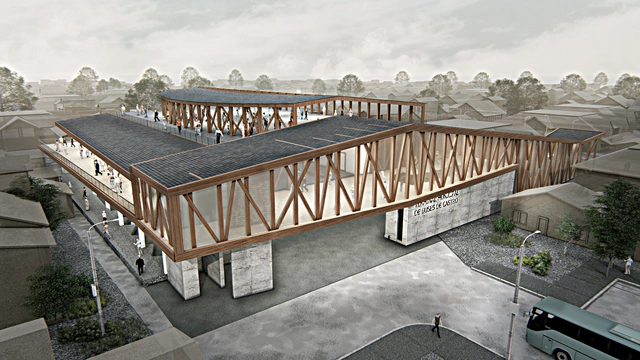
The Chilean firm Biourban Arquitectos has been awarded the design of the new bus terminal in Castro, located in the far south of Chile. The project will be situated in the historic center of the main city on Chiloé Island and will feature parking, a supermarket, a shopping mall, and an urban viewpoint.
"Part of the challenge of the new concession is to leverage the social and urban benefits of being in the heart of the city, with excellent accessibility to all basic services," the authors state.
With the aim of "reducing response times and streamlining the processing of certificates, permits, and final approvals," Chile will launch a digital platform called DOM en Línea, as reported by the newspaper La Tercera.
Currently, every municipality, regardless of size, has a Municipal Works Department (DOM). This department is responsible for ensuring compliance with local urban planning and construction regulations. Consequently, the DOM is tasked with authorizing new construction projects through an in-person, paper-based process; therefore, the DOM en Línea platform will allow these procedures to be completed online.
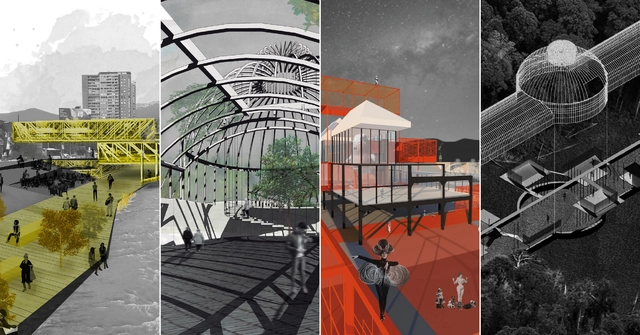
As part of Semana UTEM 2018 in Chile, the **Infraestructuras en Obsolescencia** (Obsolete Infrastructures - WIO) workshop brought together 21 teams from the Faculty of Architecture at the Universidad Tecnológica Metropolitana (UTEM). These teams developed design proposals to intervene in seven obsolete structures in Santiago, ranging from a currently closed pedestrian bridge to a dilapidated train station.
Featuring international guests Luis Tombé (Colectivo720, Colombia) and Walter Leone (Leone Arquitectura, Venezuela) —who also participated in the CONTRAPOSICIONES lecture series and delivered keynote addresses at the Colegio de Arquitectos de Chile—, each team comprised seven students from different years of the architecture program, guided by two faculty advisors.
Last November, the Comptroller General of Chile ordered the halt of construction of the so-called vertical ghettos in the municipality of Estación Central (Santiago). In response, on Friday, December 14, a group of real estate developers filed a series of injunctions against the resolution, while the Chilean Chamber of Construction raised concerns regarding the suspension of projects, as reported by the Chilean newspaper El Mercurio.
At the same time, the Colegio de Arquitectos de Chile (Chilean Association of Architects), the Association of Architectural Offices (AOA), the Association of Works Directors and Municipal Works Department Professionals of Chile, the Association of Independent Reviewing Architects of Chile, and the National Association of Independent Reviewers issued a document obtained by El Mercurio. In it, they claim they "have seen [their] right to practice their profession with confidence affected [...] due to the legal uncertainty currently facing our field."
As Line 3 of the Santiago Metro begins its trial run on its way to becoming the Chilean capital's sixth line, other cities are starting studies to install cable cars and improve train frequencies. Meanwhile, biodiversity is celebrating great news. This and more in this edition of La ciudad chilena en la prensa, the ArchDaily section where we bring you updates on Chile's major cities.
Under the title “More Living, More Humanizing,” the 14th Spanish Biennial of Architecture and Urbanism (BEAU) presented the winning projects of its latest edition today, Thursday the 19th, in Santander. This exhibition, housed in a temporary pavilion in Santander's Pereda Gardens, showcases the works selected in the categories of Panorama of Works, 2nd Research Exhibition, and 7th Thesis Projects Exhibition.
The Norman Foster Foundation is one of 21 institutions and individuals awarded Spain's 2018 Gold Medal for Merit in Fine Arts. Granted by the Spanish government through the Ministry of Culture and Sport, the distinction recognizes those globally who "have stood out in the field of artistic and cultural creation, or have rendered outstanding services in the promotion, development, or dissemination of art and culture, or in the conservation of artistic heritage."
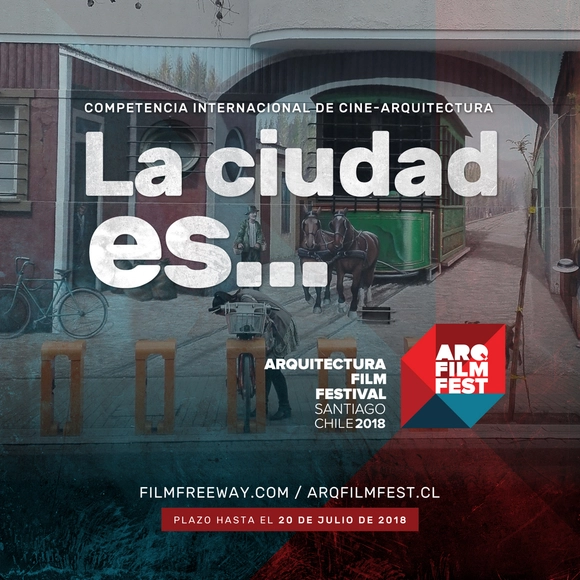
The call for entries for the international film competition on architecture, the city, and urban life—"The city is..."—organized by the Santiago Architecture Film Festival (ArqFilmFest), closed successfully with the submission of 1,518 audiovisual productions from around the world.
According to the organizers, they received more than 100 films from the United States (183), Iran (166), and India (160), and over 50 from Turkey (79), the United Kingdom (74), Italy (60), Brazil (58), and France (50), among many other countries across all continents.
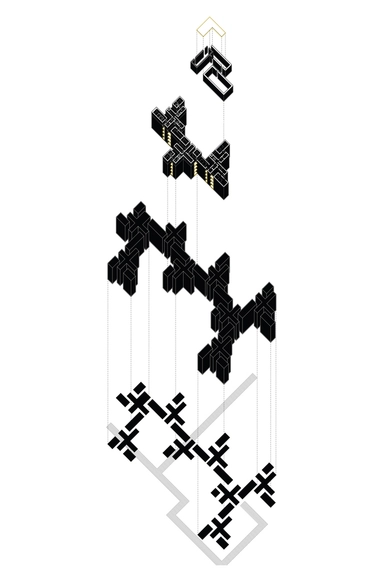
A City Made of Rooms - OM Ungers. Image Cortesía de Workshop y simposio internacional “De la Villa a la Célula”
The international workshop and symposium “From the Villa to the Cell,” held at the School of Architecture of the Pontificia Universidad Católica de Chile between April 2 and 20, focused on social and collective housing, understood not only as vital to the city, but as an eminently architectural problem. The workshop featured local tutors Alejandra Celedón, Álvaro Arancibia, Tatiana Carbonell, and José Manuel Monge, alongside international guests Sam Jacoby (AA/RCA, London), Francesco Marullo (UIC, Chicago), and Max Kahlen (AA, London).
As the organizing team explains, "we questioned the definition of the word 'villa,' which has been used to designate very different kinds of architecture: from the 'Palladian villa' to the villa as a housing development, and the villa as a collective project; the workshop will build its own definition. Through the idea of the “cell,” the project sought to challenge the concept of “minimum housing,” viewing it no longer individually or as an isolated architectural object, but through the ideas of Karel Teige, who as early as 1932 proposed understanding this problem not as a scaled-down version of the dominant minimum-housing typology, but as a spatial transition toward a collective mode of habitation."
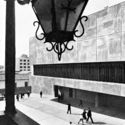
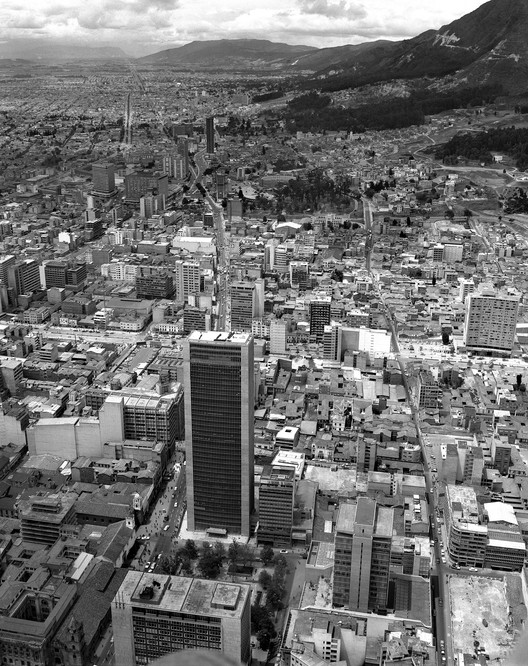
Driven by a shared interest in cities, architecture, and photography, the FORM+ research group at the Universitat Politècnica de Catalunya (UPC) and ArchDaily en Español established an editorial partnership in 2018 to showcase the research of FORM+, following the recent publication and exhibition Bogotá en la mirada de 10 fotógrafosheld in the Colombian capital.
Through this collaboration, our Spanish-speaking readers discovered the work of pioneers of urban and architectural photography, drawing on research by curators María Pía Fontana (UdG), Miguel Mayorga (UPC), and Margarita Roa (USB, Cali), all members of the FORM+ group. "Photography is a form of intellectual and sensory mediation with the world, expanding our perceptual experience and renewing our visual sensitivity: an instrument to learn how to look, a resource for the creative imagination, and a means to recognize space and the built environment," the curators explained.
At the end of last November, we published the winners of the second call for graduation thesis projects in Colombia, which received 70 proposals from 14 cities and 29 universities. Ultimately, nine projects cleared all three evaluation stages, standing out for addressing pressing issues, presenting rigorous research, and proposing challenges for both urban and rural contexts, much like in 2016.
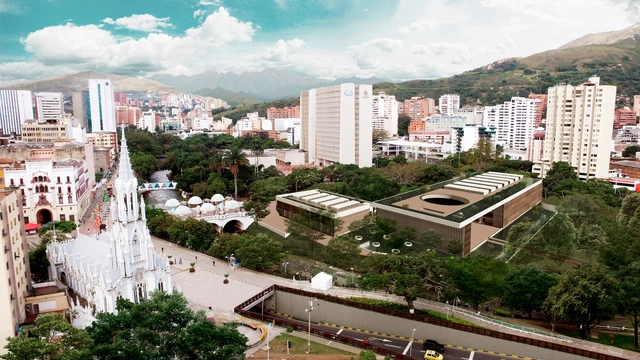
Here, we take an in-depth look at the Paseo Bolívar Cultural Integration Center, a proposal developed by Ángela Puerta Gaviria and Carolina Delgado Quintero, both graduates of the Universidad del Valle in Cali.
Videos
Work / Proyecto Habitar. Image via Proyecto Habitar
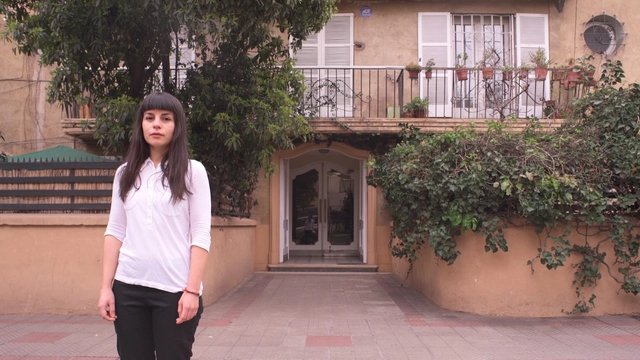
Across nine episodes, the series Proyecto Habitardelves into the privacy of homes to explore the reality of housing in Chile. Through the perspective of its protagonists, the series explores a range of housing-related issues, as directors Joaquín Mora and Verónica Wüst aim to spark a long-overdue discussion.
"Housing is a crucial issue that will soon come to the forefront, as we live within an economic system that raises various challenges we must discuss as a society," Mora comments.
This time, we invite you to watch three new episodes of the series: health, work, and occupation.