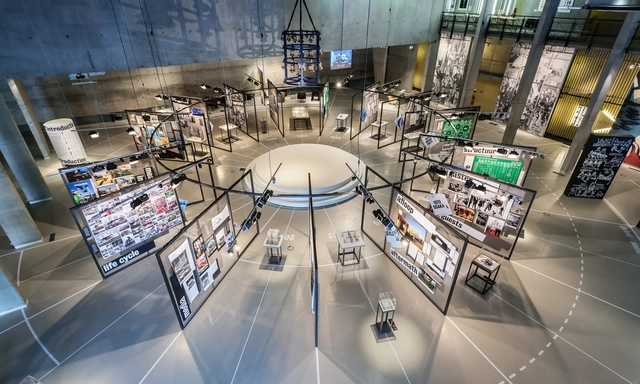
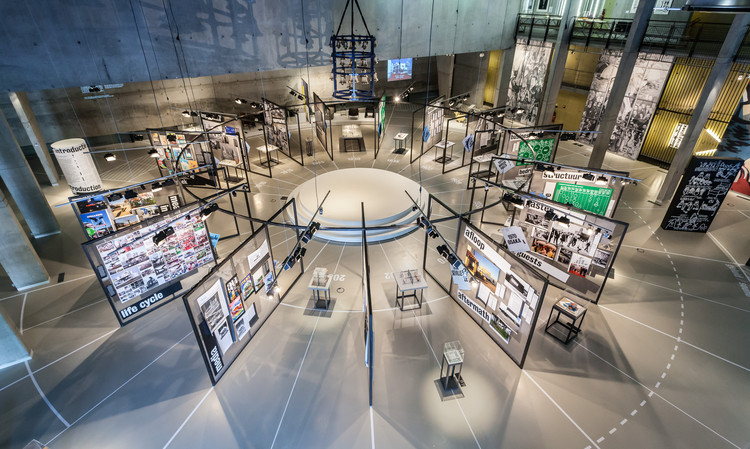
Now at the halfway point of the six month long World Expo in Milan, in which 145 countries are participating in a concentration of national spectacle surrounding the theme of "feeding the planet," Rotterdam's Nieuwe Instituut (HNI)—the centre for architecture in the Netherlands—is exhibiting an altogether more reflective display of national civic pride.
Rotterdam, which was blitzed and decimated during the Second World War, is a place well suited to host an exhibition whose underlying theme centres on the fragile, often precarious notion of national self-image. Following the war Rotterdam was forced to rebuild itself, carving out a new place on the world stage and reestablishing its importance as an international port. Now, seventy years later, Rotterdam is a very different place. In demonstrating just how delicate the construction of a tangible national identity can be this latest exhibition at the HNI offers up a sincere speculative base for self-reflection.
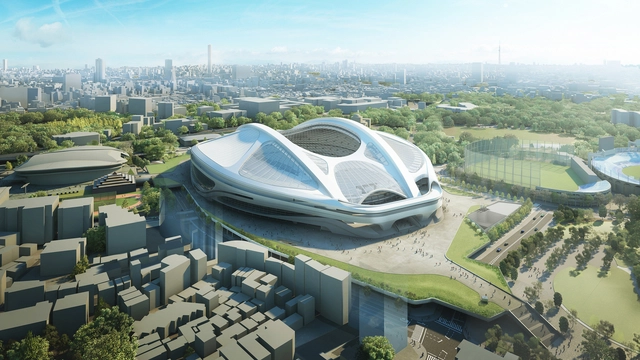
Following the news in 2012 that Zaha Hadid Architects had won a competition to design the 80,000-seat Tokyo National Stadium as a centerpiece for the 2020 Tokyo Olympics, Japan’s Prime Minister has announced that the plans are to be scrapped. Citing spiralling costs as a key reason, Shinzo Abe has declared that the stadium, which was set to replace the existing Kasumigaoka National Stadium, would not be completed in time for the 2019 Rugby World Cup nor the 2020 Olympic Games as originally planned.
The way our buildings and public spaces are planned has a significant impact on our quality of life. In the latest edition of The Urbanist, Monocle 24's weekly "guide to making better cities," Tom Edwards and his team explore urban accessibility and inclusivity: from how best to create and incorporate inclusive design, to a cab service in Hong Kong which has been designed especially for wheelchair passengers. They also discover what happens when technology and sound come together to create a map of the city, and why New York has introduced mental respite centres.
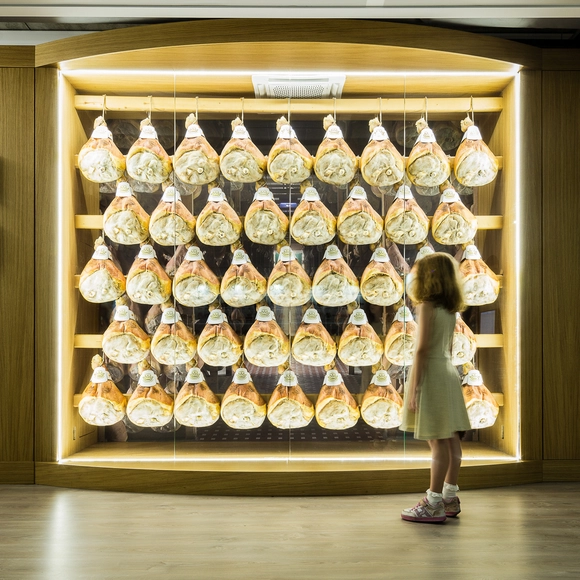
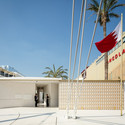
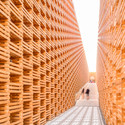
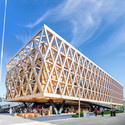
Darren Bradley, an architectural photographer and Instagrammer (@modarchitecture) based in San Diego, has shared a definitive collection of photographs from the 2015 World Expo. Each pavilion in the 1.1million square metre exhibition area, located just outside of Milan, is showcasing the best of their technology which offer "a concrete answer to a vital need: being able to guarantee healthy, safe and sufficient food for everyone, while respecting the planet and its equilibrium."
The Royal Institute of British Architects (RIBA) have revealed the six projects that will compete for the 2015 Stirling Prize, the award for the building which has made the greatest contribution to British architecture over the past year. Following a rigourous system of regional awards (all of which you can see on ArchDaily), the shortlist has been picked from a handful of nationally award-winning projects.
Rogers Stirk Harbour + Partners, having previously won the prize in 2006 for the Barajas Airport in Madrid and in 2009 for the Maggie’s Centre at Charing Cross Hospital, has been nominated four times before. They are joined by Allford Hall Monaghan Morris (AHMM), Niall McLaughlin Architects, and Heneghan Peng Architects, who have each made the shortlist before. This is the first year that McInnes Usher McKnight Architects (MUMA) and Reiach and Hall Architects have been shortlisted. The winning project will be announced on the 15th October 2015 at a ceremony in London.
See this year's full shortlist and read extracts from the judges' citations after the break.
This edition of Section D, Monocle 24's weekly review of design, architecture and craft, travels to Indonesia’s third city Bandung, where former architect and current Mayor Ridwan Kamil "is transforming public space." The show also takes a tour of three early 20th-century apartment buildings in Montreal, and hears from Neri & Hu Design and Research Office in Shanghai.
The online lecture, similar to the podcast, is an easy, often entertaining way of absorbing knowledge and the opinions of thinkers and practitioners from around the world. We've gathered together some of our favourite sources for watching architectural lectures online. Ranging from Barbaralee Diamonstein-Spielvogel's famous American Architecture Now interviews with Frank Gehry in 1980 and Robert Venturi and Denise Scott-Brown in 1984, to Sir Peter Cook speaking at Frankfurt's Staedelschule in 2012, these open-source films provide invaluable insights into architects and architects throughout recent history.
The Royal Academy of Arts in London have launched a new international ideas competition which aims "to refocus attention to the huge potential of the brownfield sites that still exist across London." 'Brownfield' sites, or those earmarked for potential building development that have had previous development on them, are plentiful in the UK capital. This competition seeks "speculative ideas [which] make the most of these missing pieces in London’s urban jigsaw."
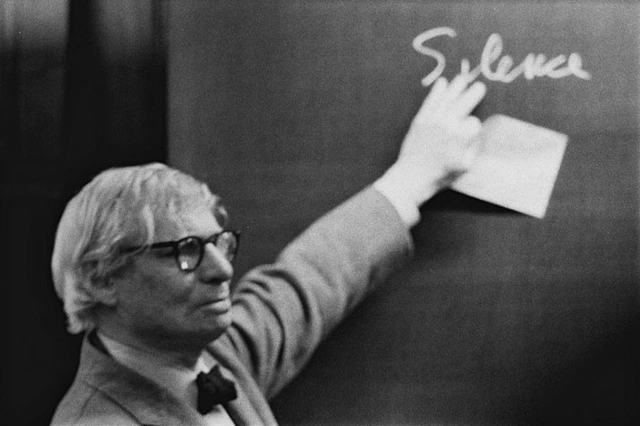
Sigurd Lewerentz, Architect (1885-1975). Image Courtesy of Park Books
Sigurd Lewerentz is one of Europe's greatest, relatively unsung 20th century architects. He was educated as a mechanical engineer at Chalmers University of Technology in Gothenburg, but it was an architectural apprenticeship in Munich that set him on his career path — a path that "led him to be revered as one of Sweden’s most eminent architects." This sought after reprint of Janne Ahlin's seminal monograph has now been made available once again.
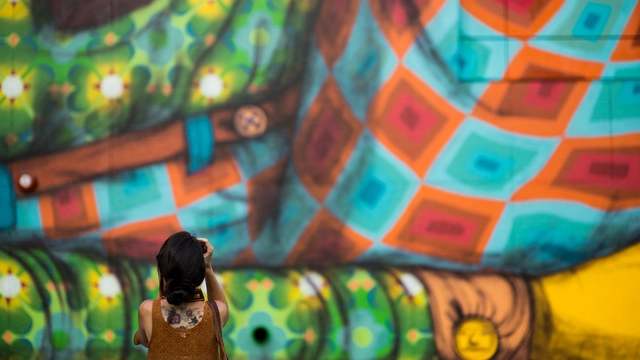
Metropolitan Graffiti Art. Image Courtesy of Monocle
In the latest edition of The Urbanist, Monocle 24's weekly "guide to making better cities," the team tackle the illegal city and look at how our cities are dealing with those who are bending the rules. From Portugal to Albania to Brazil, Andrew Tuck and his correspondents explore how crime and illegality have become ubiquitous in our urban environment, from informal settlements and illegal housing, street art and rough sleeping, to the more sinister impact of inner-city organised crime.
Article 25, the charity which designs, builds, and manages projects to provide buildings for some of the world’s most vulnerable communities, have announced that late last month "the Managing Director [...] was made aware by its bank of irregular account activity." They have stated that a full investigation was immediately launched and the trustees have since "uncovered what appears to be a systematic falsification of financial statements that have hidden multiple unapproved payments, which are believed to be in excess of £200,000" (€280,000 or $310,000 USD). They have announced that William Golding, the office manager and book keeper, "was absent on Monday June 29 and has been uncontactable since then."
The UK is in the midst of a housing crisis, the intricacies of which were detailed by Rowan Moore earlier this year. For decades the typical British housing stock has been of relatively poor quality, proliferated by developer-led consortiums and characterised by ruthless cost-efficiency for maximum profit. From this formula comes nothing but a monotony of off-the-shelf constructions which have, over time, become a national benchmark. These houses – often built of brick, boxy in form, and using as little space in the facade for openings – are commonly dark, spatially inadequate, and far below the standards that should be being aimed for. It’s like living in a well-appointed cave.
Alice Theodorou, a graduating masters student from London'sRoyal College of Art, has developed a project which attempts to combat the challenges that London is set to face over the next 10,000 years. Her scheme factors in projections for population growth and then decline, rising sea levels, stricter energy targets, material depletion, future space exploration and, most interestingly, language obsolescence.
A competition proposal by Alexander Culler and Danny Travis, placed second in Blank Space's recent Fairy Tales competition, is now the subject of a Kickstarter campaign asking whether there is "a way to use architectural drawing to tell a story that was easy enough for everyone to understand?" The team behind the Beautifully Banal comic-zine are now seeking to transform their competition entry into a full-scale publication in order to "combine the intricacies of architectural drawing types with a form of story telling that allows those outside of the field to gain a new appreciation for the buildings and structures that occupy the world."
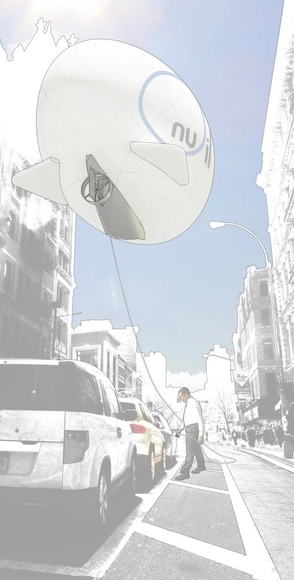
Winning Entry: Nu Oil / Felix Yang and Thomas Noussis. Image Courtesy of Combo Competitions
Filling Station(s), the latest ideas-based challenge organised by Combo Competitions, asked participants to "rethink refueling" in a competition which sought to re-imagine the ubiquitous filling station. The historical rise of this 20th century typology, from simple fuel dispensers to palatial rest-stops on the highway, grew with the proliferation of the car and became symbols for societal progression, personal status, and "a bright future." Although the number of vehicles worldwide "surpassed one billion in 2010, there has been a steady decline in filling stations since the end of the last century." As such, perhaps this is the time to start to rethink how these fragments of the international mobility infrastructure operate?
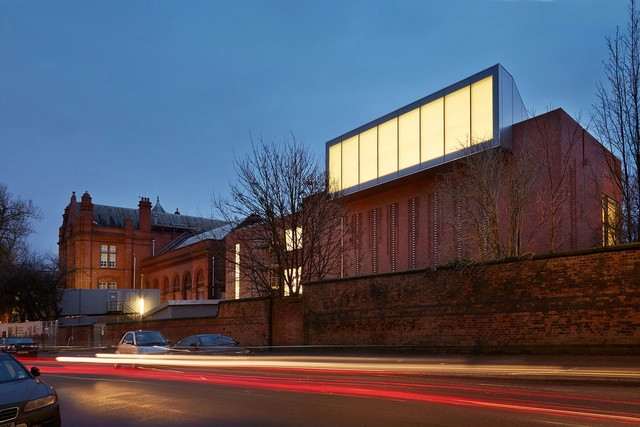
The acclaimed Whitworth Art Gallery in Manchester, northern England, has been named by the Art Fund as the 2015 Museum of the Year. The project has been hailed by the jury as "one of the great museum achievements of recent years," citing its "transformation – architecturally, curatorially, and as a destination" – as a key reason for its success. The building, which has been received well by critics, was comprehensively restored and extended by MUMA (McInnes Usher McKnight) and re-opened to the public earlier this year. Since then it has seen record-breaking visitor numbers, partly due to the appeal of the building and partly due to "the creativity and originality of its outreach programmes during closure."
In the latest episode of Monocle's Section D, Josh Fehnert talks to Ben van Berkel, co-founder and principal of Amsterdam-based UNStudio, about London's new Caneletto residential tower. The office, which was founded in 1988, has completed projects around the world ranging from Rotterdam’s Erasmus Bridge to the Mercedes-Benz Museumin Stuttgart. With over 81 built projects, and 54 currently in progress (including Raffles City in Hangzhou and Scotts Tower in Singapore), London’s Canaletto Tower (which is due to be completed in 2015) marks the practice’s first major project in the UK. The tower, located at the confluence of two London districts — Islington and Shoreditch — marks a significant moment for the Dutch practice's œuvre.
The Royal Institute of British Architects (RIBA)’s Future Trends Survey for May 2015 continues to show widespread consistency in comparison to March and April, with the workload index remaining "remaining virtually unchanged" at +37 from +36 last month. The private housing sector, which remained strong last month, fell slightly to +34 from +38 while the public sector moved into negative territory for the first time since July 2014. The RIBA claim that "respondents anticipate public sector spending on building projects to be flat at best over the coming quarter." However, the forecasts for the commercial sector rose to +21 from +15 last month, and the community sector forecast "made a recovery from its recent decline" rising to +4 from -3 in April.







_Alan_Williams_4.jpg?1436984252&format=webp&width=640&height=580)
_Edmund_Sumner_2.jpg?1436983825 "NEO Bankside, SE1 (London) / Rogers Stirk Harbour + Partners. Image © Edmund Sumner")
_Hufton___Crow_3.jpg?1436984036 "University of Greenwich Stockwell Street Building, SE10 (London) / Heneghan Peng. Image © Hufton + Crow")
_Hufton___Crow_11.jpg?1436984174 "University of Greenwich Stockwell Street Building, SE10 (London) / Heneghan Peng. Image © Hufton + Crow")
_David_Grandorge_3.jpg?1436983553 "Maggie’s Lanarkshire / Reiach and Hall Architects. Image © David Grandorge")
_Alan_Williams_4.jpg?1436984252)

_James_Bailey_(7).jpg?1436860605&format=webp&width=640&height=580)