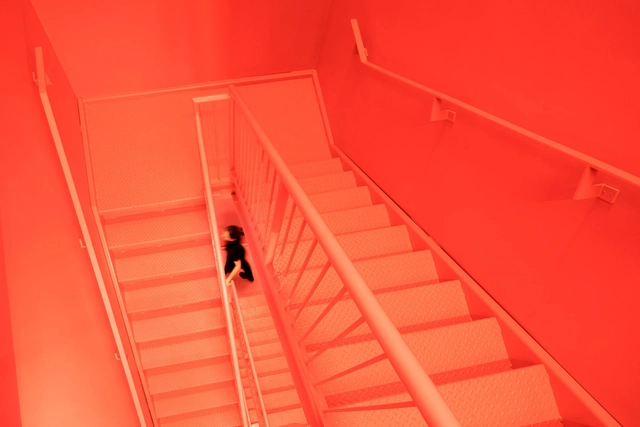
Just as the colors of an abstract painting or photograph can produce a certain mood, so can the colors of a building or room profoundly influence how the people using it feel. Physiologically, study after study has shown that blue light slows the production of melatonin, keeping people more alert or awake even at night. Psychologically, people associate certain colors with certain feelings due to cultural symbols and lived experiences – for example, they might perceive the color red as menacing or frightening because of its connection to blood.
Altogether, the way a room is colored can have complex effects on how its users feel, while a façade can be perceived in dramatically different ways depending on how it is colored. Below, we summarize the emotional associations of every color, assessing their differing effects as each is used in architectural space.
https://www.archdaily.com/930266/how-color-affects-architectureLilly Cao
The Shard / Renzo Piano Building Workshop | ArchDaily. Image via Middle Section
Architecture and engineering as we know it today are two distinct higher formations, which share similar scopes and which, therefore, have moments of intersection, but also preserve fundamental differences. Even though this overlapping of activities results in a lack of consensus both in relation to the history of the professions and current professional practice, it is important to highlight the differences and specificities that characterize each of these professions today.
It's not uncommon to see housing complexes integrate commercial spaces at the ground level, but the challenge of mediating between the private and public realm on a smaller scale, especially with the rise of the home office, has forced architects to explore all aspects of the structure, from the topography it sits on, to the direction of light and wind, to the design and organization the domestic space. This interior focus explores different design solutions that show how architects and interior designers transformed their projects from a living space into a mixed-use typology, taking into account privacy, flexibility, functionality, and predefined spatial requirements.
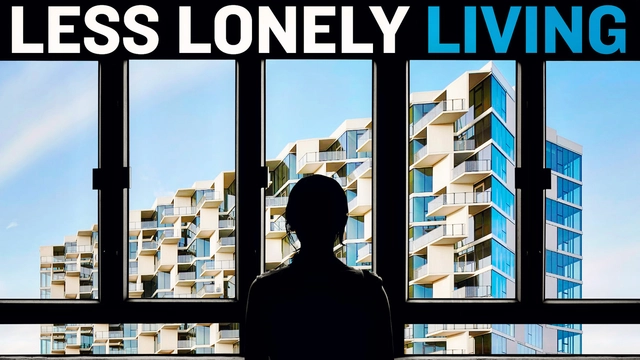
Data shows that many more people are living alone, but the surprising fact is that living alone does not necessarily correspond with an increase in feelings of loneliness. Architecture has been evolving towards increases in privacy and private space for centuries. This video looks at architectural designs that attempt to reverse those trends by designing living scenarios that incorporate more opportunities for public engagement. These include Studio Gang’s City Hyde Park project in Chicago with its angled balconies. But the video goes deeper to look at examples that radically rethink residential architecture, its construction, design, and inclusion of public space.
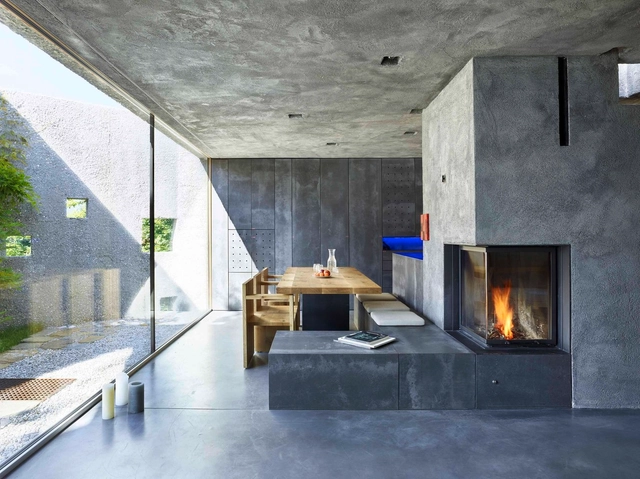
Concrete is not purely a structural element. As we demonstrated in an article about kitchen projects using concrete countertops, the material is gaining significant traction in the world of residential furnishings and fixtures. To further exemplify this, we have curated a list of several projects that use concrete benches to create beautiful moments inside and outside the home.
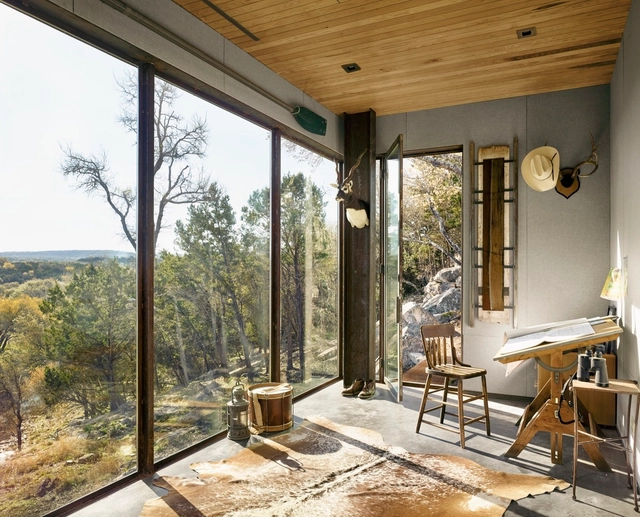
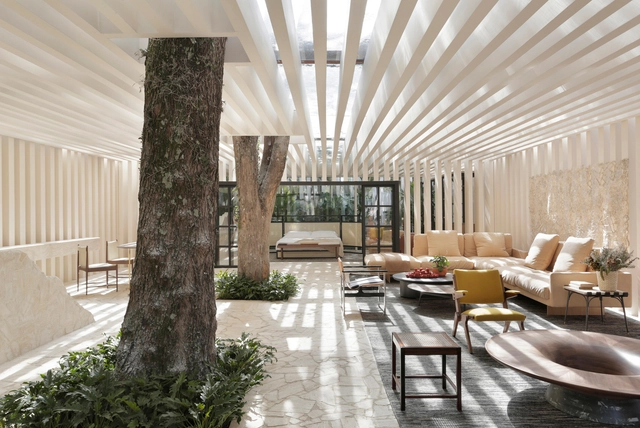
We love to fill our houses with wonderful creative decoration that brings us pleasure every time we enter a room. It’s these decorative features that transform a house into a home. But for those houses lucky enough to be surrounded by captivating landscapes, why shut out all that natural decoration only to replace it with interior imitations?
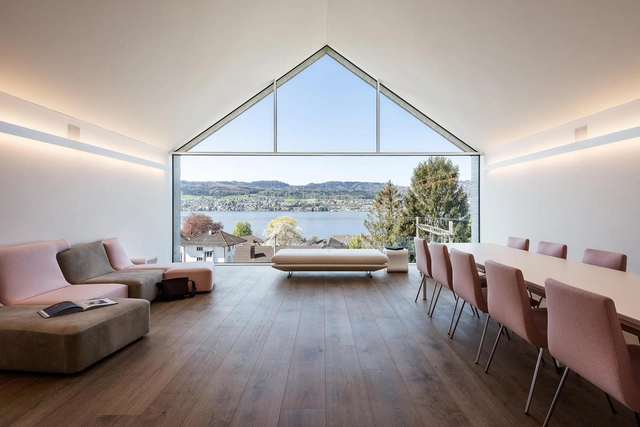
Using either glass partitions or ground-flush, floor-to-ceiling sliding glass panels, by inviting the environment in, specifiers can connect interior and exterior spaces for a deeper connection with nature, allowing the local landscape itself to become the largest interior in the home. Here is a selection of residential projects that use the latest innovations in sliding windows to form a relationship with the surrounding landscape:
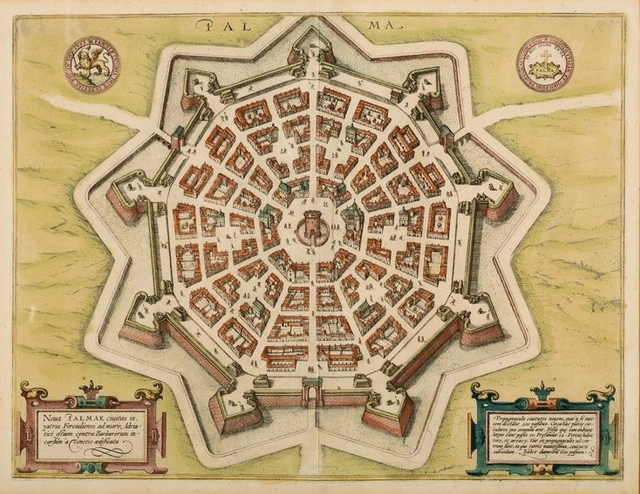
The concept of an “ideal city” is something that is often talked about today, as we look towards the future and think about what aspects of urban life we feel are most important for residents to thrive in a healthy community. However, ideal cities were conceived during the Italian Renaissance, as planners and architects prioritized rationale in their designs focusing on human values, urban capacities, and the recursive waves of cultural and artistic revolutions that influenced large-scale planning schemes.
Bringing the latest contemporary furniture from Milan Design Week straight to Shanghai, B&B Italia curated the setting at Villa 17 in Amanyangyun, an impressive Chinese antique architecture.
After reading and compiling all the messages received, both from construction professionals, as well as students and those interested in architecture, it is time to present the main points of view. Thank you very much for your opinions!
Much has been said about circularity in the construction industry. Inspired by nature, the circular economy works in a continuous process of production, resorption and recycling, self-managing and naturally regulating itself, where waste can turn into supplies for the production of new products. It is a very interesting concept, but it faces some practical difficulties in everyday life, whether in the demolition / disassembly process, or in the correct disposal of materials and waste; but mostly due to the lack of technologies available to recycle or give new use to construction materials. About 40% of all waste generated on Planet Earth comes from civil construction, and a good part of it could be recycled. Concrete is an especially important material because of its large carbon footprint in production, its ubiquity and massive use, and also because of the difficulty of recycling or reusing it.
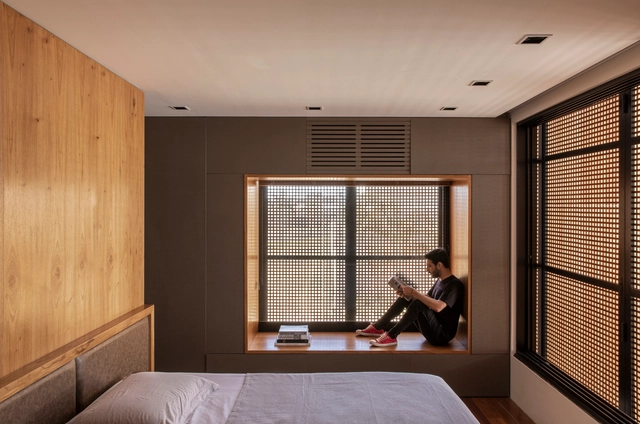
As one of the most intimate spaces of a residence, dormitories have had their use adapted over the years, especially after the Covid-19 pandemic. A space for relaxation that also needs to fit furniture, decorations and harmonize with the architecture. Here's a selection of ideas to get inspired and redesign your bedroom.
Aiming to provide inspiration, knowledge and tools, and always seeking to "empower all who make architecture happen to create a better quality of life" we summarise this year's topics by presenting the publications that most impacted our readers. Goodbye 2021, Hello 2022!
The security and dignity of a good-quality home is one of the most important and liberating qualities in society. For people experiencing financial or social pressures, many countries offer some form of public or social housing system. While there is no fixed definition for social housing, it often involves the design, construction, and allocation of housing by government authorities, or non-profit organizations.
Just as social housing systems differ throughout the world, so too does the architecture of social housing. A government’s outlook or priorities for social housing provision, which can differ between capacity, cost, sustainability, or urban regeneration, all contribute to unique responses by architects and designers. Below, we identify six systems from countries around the world, complete with architectural examples.
If “nature” and “architecture” are commonly conceived as opposing entities, representative of human encroachment on the primordially physical image of the world, under which conditions do these two fundamental factors form a strong liaison and which is the ensuing by product? Can this often ignored bond between culture and nature be unearthed and put to light by the use of photography?
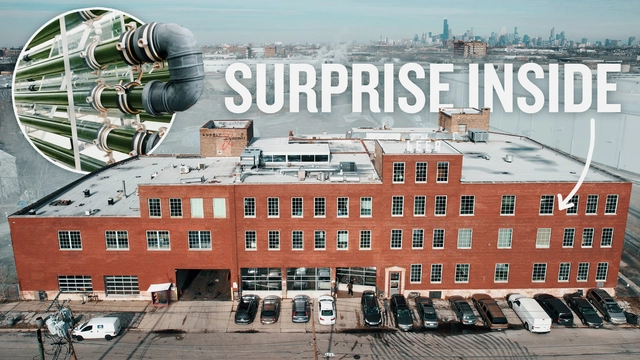
Adaptive Reuse is an important aspect of managing a sustainable existence. Buildings contain massive amounts of embodied energy and the more we can adapt and repurpose them, the better. Buildings are also repositories of collective memories and histories. As we modify them, these layer in new and interesting ways. This video explores the topic through the case study of ‘The Plant,’ a food incubator in Chicago housed within a former pork processing facility. The building’s location and existing infrastructure made it a perfect candidate for its new purpose. John Edel, the founder of the Plant, has also made every effort to showcase the building’s history and to honor its heritage throughout the process of adaptation.
Biodiversity has become ubiquitous in project descriptions as yet another mark of the design's environmental accomplishments. The increasing focus on sustainability, the standard inspired by the UN Sustainable Development Goals, prompts a deeper understanding of what biodiversity in urban environments means and how can architecture and urban design actively contribute to it. With species extinction rates soaring and urbanization over natural land continuing, cities become an essential factor in sustaining biodiversity, and the following explores how the built environment can foster multi-species habitats.
With a production inspired by the legacy of Sérgio and Claudio Bernardes, from Rio, Bernardes Arquitetura is “fruit of a history that spans three generations with more than a thousand projects”. Created in 2012 by Thiago Bernardes, the office has over 7 partners and branches in Rio de Janeiro, São Paulo and Lisbon.
The problem with being a deliberative writer is that pretty much everything has already been penned by the time you’re ready to write about something. Such is the case with the 2021 ChicagoArchitecture Biennial (CAB): The Available City. There have been several well-written, insightful essays about the CAB by Zach Mortice, Anjulie Rao,Marianela D’Aprile, and others, so it would be foolish to travel the landscape they have so expertly traversed. Instead, I’m offering a trip through this edition of the CAB, which concluded a successful and significant run on Saturday, down a road less traveled.
https://www.archdaily.com/974746/breaking-the-dead-paradigm-for-design-exhibitionsCraig L. Wilkins
How to spark productivity through technology in the digital age? Recently, XKool Technology, a leader in AI applications for the architecture industry, held a new product launch of "Plan Deep" to kick off a new round of evolution in architecture technology capabilities.
Information about XKool's newly released intelligent design products is included in this article, as well as the upcoming DigitalFUTURES Tutorial Session to be presented by XKool on January 8, 2022, where you're invited to experience the collaboration between architecture and technology up close.
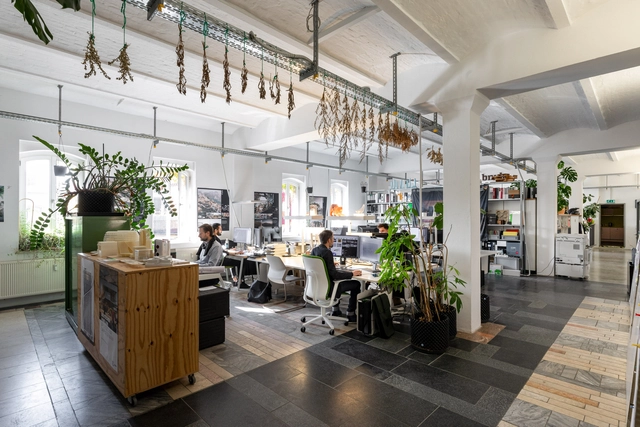
Documenting diverse architecture and design studios, Goodwin captured 13 different office spaces in Berlin, including Hesse, LAVA, JWA, Tchoban Voss, Richter Musikowski, Barkow Leibinger, FAR frohn&rojas, studio Karhard, Jasper, Kleihues + Kleihues, Graft, Bundschuh Architekten and Sauerbruch Hutton.
Architecture grows from context. In campus planning, an institution or organization outlines a strategy for longer term land use and the immediate context. As SCUP outlines, campus design can be nurturing, inviting and stimulating. "It can be the physical manifestation of an institution’s mission, a reminder of the promise and potential waiting to be unleashed." Today, campus design encompasses integrated approaches bringing open space, buildings, circulation and utility together.
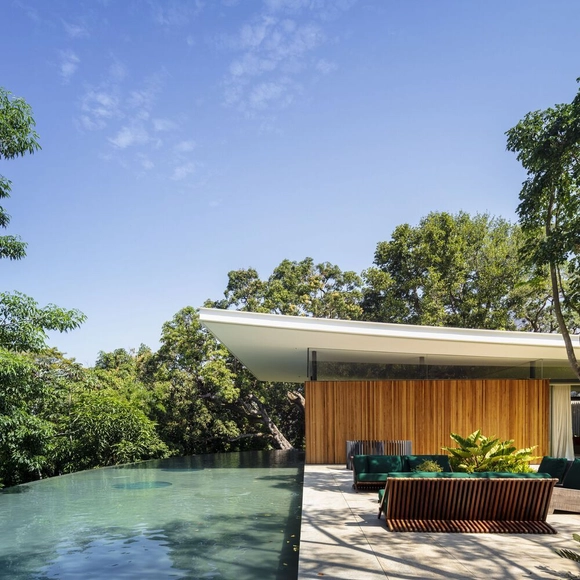
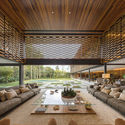
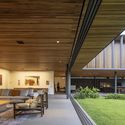
Intense integration between the built environment and its natural context: this is the premise that surrounds the projects of Jacobsen Arquitetura, from Rio de Janeiro. Founded 45 years ago, the office emerged from the union between architects Paulo Jacobsen and Cláudio Bernardes, who worked together until Bernardes' death in 2001. After that, Paulo joined forces with Thiago, Cláudio's son, starting a new office. The partnership with Thiago Bernardes fell apart in 2012, giving rise to the formation of Jacobsen Arquitetura, whose partners are Paulo and Bernardo Jacobsen (Paulo’s son) and Edgar Murata.
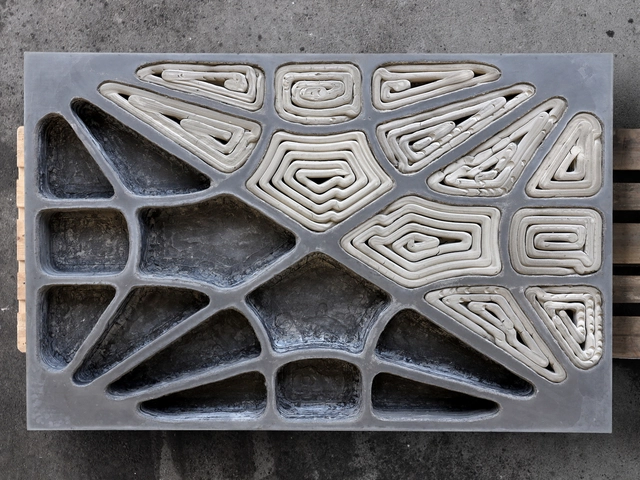
With the aim of generating a significant impact on the responsible and sustainable consumption of resources and energy in the construction industry, ETH Zürich in collaboration with FenX AG is using foam 3D printing (F3DP) to manufacture geometrically complex formwork for the construction of special elements in concrete.
Cavatina Concert Hall by Cavatina. Image Courtesy of Cavatina
The diversity of civic spaces in cities and rural areas have continuously showcased how strongly they explore human connections regardless of program, construction technique, scale, and geography. Ranging from educational facilities and museums, to art centers, libraries, religious halls, and memorials, these projects have enriched urban fabrics with cultural programs that have provided members of the community with places to learn, entertain, create, and unwind.
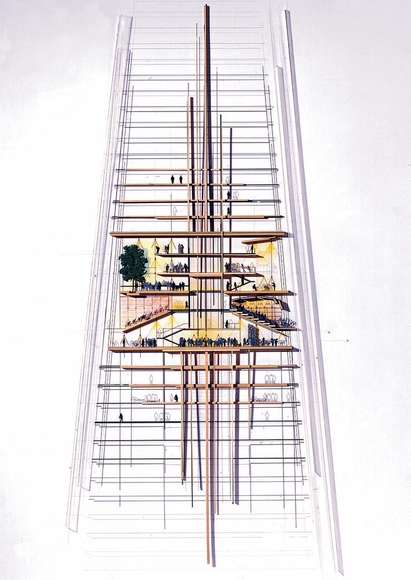
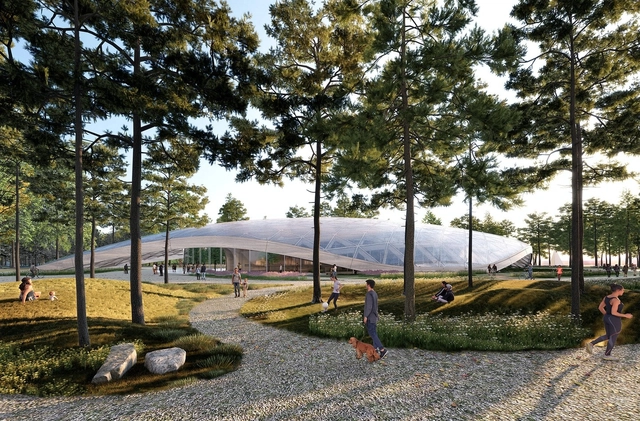
This week’s curated selection of Best Unbuilt Architecture highlights cultural projects submitted by the ArchDaily community from across the world. From a water management system that targets the natural crises in Egypt to a structurally intertwined memorial in the United States, this round up of unbuilt projects showcases how architects responded to the contextual and spatial needs of their projects through innovative and local solutions. The article also includes projects from Italy, China, Uruguay, Poland, Iran, Hungary, Russia, and the United Kingdom.










.jpg?1639435789 "© Wen Studio")



.jpg?1579214206&format=webp&width=640&height=580)
.jpg?1579212615 "St-Agatha-Berchem Sustainable Social Housing / Buro II & Archi+I. Image © Filip Dujardin")


.jpg?1579214206)











_-_West_Elevation.jpg?1641304390 "So Close , So Far Cultural Center by Shahab Shariat. Image Courtesy of Shahab Shariat")
