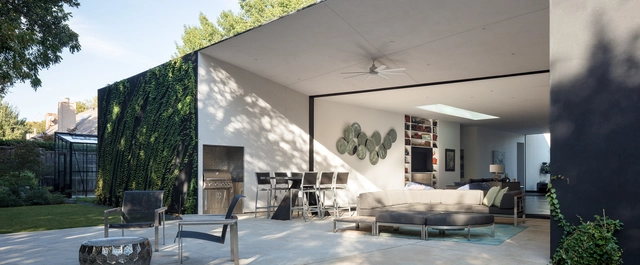
Another year, another crop of homes featuring fresh, contemporary architecture, striking décor, and seamless transitions between inside and outside spaces. Peruse our picks below to find the inspiration you need to make indoor-outdoor living part of your next home design.
The Midnight Charetteis an explicit podcast about design, architecture, and the everyday. Hosted by architectural designers David Lee and Marina Bourderonnet, it features a variety of creative professionals in unscripted and long-format conversations that allow for thoughtful takes and more personal discussions. Honesty and humor are used to cover a wide array of subjects: some episodes provide useful tips for designers, while others are project reviews, interviews, or simply explorations of everyday life and design. The Midnight Charetteis available for free on iTunes, YouTube, Spotify, and all other podcast directories.
On this episode of The Midnight Charette podcast, hosts David Lee and Marina Bourderonnet are joined by Elizabeth Timme & Helen Leung, Executive Directors of LA-Más to discuss their organization, maintaining non-profit status, aiding communities through policy and architecture, social responsibility in design, and more.
https://www.archdaily.com/922505/la-mas-executives-on-non-profit-organizations-aiding-communities-and-social-responsibility-in-designThe Second Studio Podcast
Proyecto Pabellón de Cataluña en la Bienal de Venecia 2017. Image Cortesía de Institut Ramon Llull
Avanti-Avanti Studio is a design studio dedicated to the development of creative communication strategies, particularly specialized in “Design for All.” Founded by Alex Dobaño (graphic designer and member of the Design For All Foundation) and Elvira Muñoz (architect), the duo leads a multidisciplinary team of professional people in communication, design, and technology, and work with companies and institutions specialized in leisure, tourism, culture, museums, and cities. They describe their practice as a meeting point, where professionals from different fields come together for every new venture, to ensure that the built environments are suitable and inclusive for anyone experiencing them.
We talked to Alex, founder and creative director of the studio, to learn more about their work and the importance of introducing the Design for All concept in the integrated space design projects.
Once the construction of an architecture project is finished, it's time to install the claddings that will make up the visible faces of the interior spaces. Wallpaper –an efficient way to bring color and design into rooms – is generally specified according to the square meters we want to cover, so we must start by calculating the area of each surface with great precision.
This task can be easy on clear walls with standard dimensions, but it can generate mishaps or unnecessary expenses in more complex designs. We present some tips to make an estimate as accurate and efficient as possible.
It's very likely that you are reading this text in an interior space with the lights on. For most people, modern living entails spending most of the day in closed rooms, bathed in a sum of artificial and natural lights. Yet while artificial light has afforded mankind incalculable possibilities, it has also caused some confusion in our bodies, which have evolved for thousands of years to respond to the stimuli of sunlight in the day and darkness at night. This responsiveness to natural light is called the circadian rhythm or cycle, and describes the 24-hour biological cycle of almost all living beings. Circadian rhythms are primarily influenced by light reception, but temperature and other stimuli also play a role in the process.
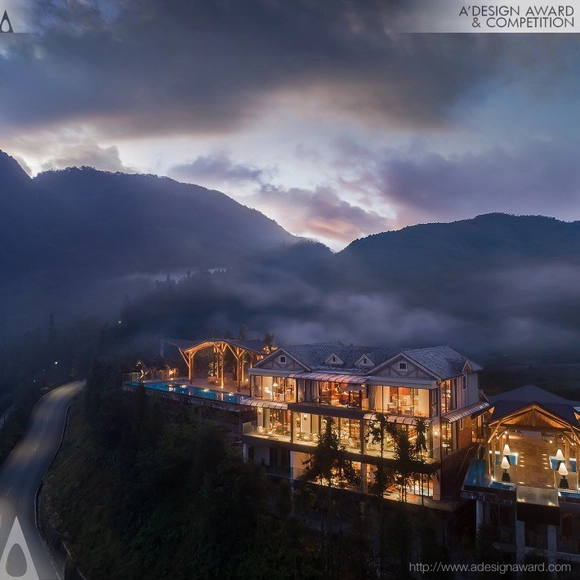
The A’ Design Award is an international award whose aim is to provide designers, architects, and innovators from all architecture and design fields with a competitive platform to showcase their work and products to a global audience. Among the design world's many awards, the A' Design Award stands out for its exceptional scale and breadth; from 2018-2019, over 2,000 individual designs from 106 countries received awards in 98 different design disciplines. This year's edition is now open for entries; designers can register their submissions here.
Griffin founded the consultancy Urban Planning for the American City, which she complements with her pedagogical work at Harvard University’s Graduate School of Design.
Since its emergence with the cultural turn in the 1970s and ’80s, spatial justice has become a rallying cry among activists, planners, and plugged-in architects. But as with many concepts with academic origins, its precepts often remain elusive and uninterrogated. Though some of this has changed with the advent of city- and place-making discourse, few are doing as much to lend articulation, nuance, and malleability to spatial justice as Toni Griffin. A Chicago native, Griffin practiced architecture at SOM for nearly a decade before leaving the city to work as a planner in Newark and Washington, D.C., among other municipalities. In 2009, she founded the consultancy Urban Planning for the American City, which she complements with her pedagogical work at Harvard University’s Graduate School of Design. There, she runs the Just City Lab, which, through research and a host of programs, aims to develop, disseminate, and evaluate tools for enhancing justice—and remediating chronic, systematized injustice—in America’s cities. But what form could justice take in the U.S. context, and how can architects and designers help? Metropolis spoke with Griffin about how focusing on inclusivity and embracing interdependence and complexity are parts of the answer.
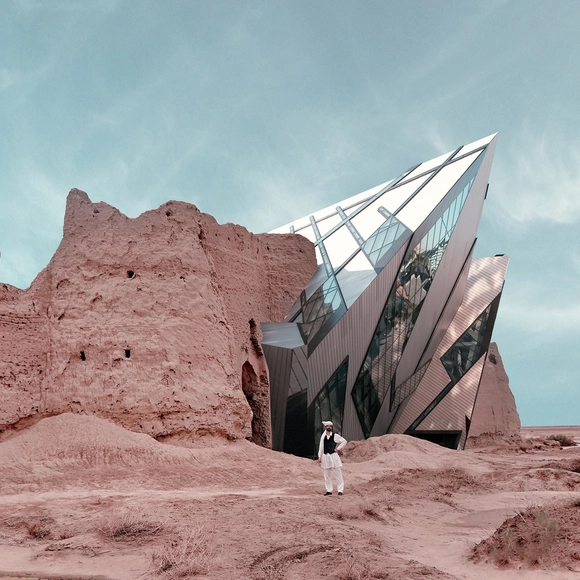
There is often a debate on whether architects and engineers should restore old buildings and preserve what is still standing as a token of the past, or completely demolish them and introduce contemporary designs and features. In Iran, the remains of historic monuments, some of which are World Heritage Sites, have yet to know their fate, as restoration strategies remain uncertain.
As part of his Retrofuturism series, Iranian architect Mohammad Hassan Forouzanfar selected a few pre-Islamic castles across Persian towns, and merged them with contemporary landmarks, bringing about a new definition of architectural restoration.
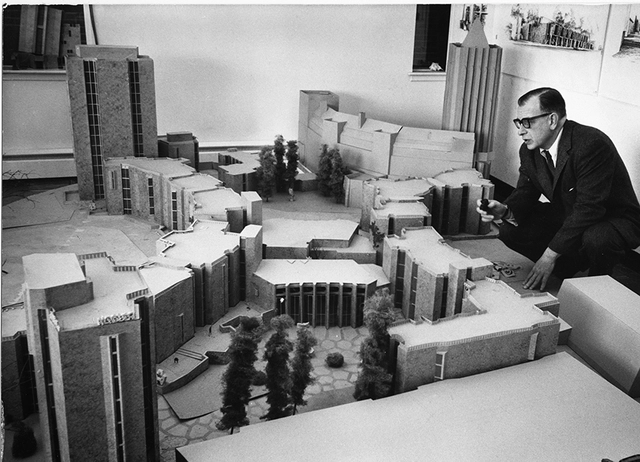
Photograph of Eero Saarinen with two Yale residential colleges. From "Living on Campus: An Architectural History of the American Dormitory". Image Courtesy of Metropolis Magazine
Modernism in Pittsburgh. Central Park. Space settlements. Interwar typography. What do these topics all have in common? They are the subjects of a new batch of architecture and design books released this past year – books that constitute Metropolis Magazine’s spring/summer edition roundup of architecture’s newest and most exciting publications.
https://www.archdaily.com/922326/new-architecture-and-design-books-to-read-this-summerLilly Cao
Modern architecture, visible in contemporary production, is usually related to the use of guidelines established by Le Corbusier's five points of architecture. Despite being widely known and debated for years, these points continue to be revisited and rethought in projects from various places and contribute to the creation of interesting buildings in various programs.
Architect and educator Astra Zarina wasn’t just the teacher of Tom Kundig, Ed Weinstein, and Steven Holl (who designed ‘T’ Space); she was also an advocator for public spaces, cohesive urbanity, and the communities that these attributes fostered. ‘T’ Space’s newest exhibit Rome and the Teacher, Astra Zarina celebrates Zarina’s life and teachings in the context of recognizing overlooked pedagogical figures, particularly women. A recent article by Metropolis Magazine describes this exhibit in detail and with it, Zarina’s own life story.
https://www.archdaily.com/922753/t-spaces-new-exhibit-celebrates-the-overlooked-history-of-an-influential-female-architect-and-educatorLilly Cao
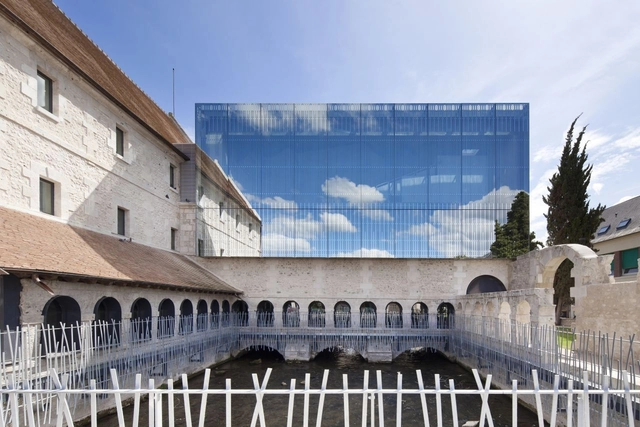
When an extension on an existing historical building is requested, often architects opt for glass, transparent and reflective interventions. Some decide to stay neutral and subtle when dealing with an older structure, while others choose a bold and outspoken design to manifest their contemporary character. With each project having its own conceptual motivation and reasoning, the outcomes are different and diverse.
Read on for some relevant examples, each responding to a different program.
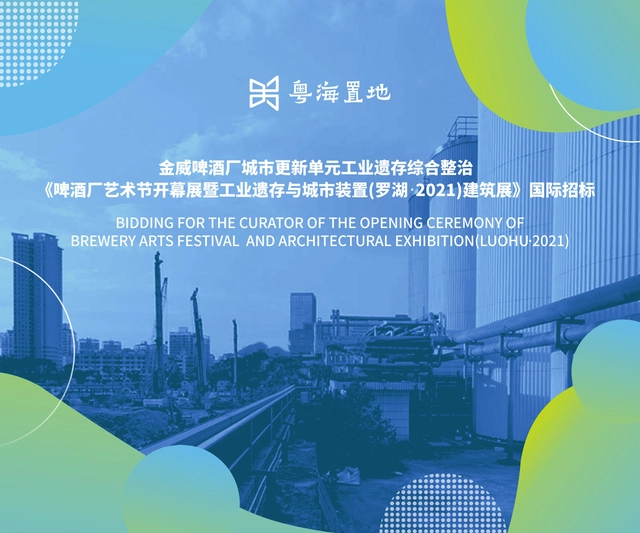
The Opening Ceremony of Brewery Arts Festival and Architectural Exhibition (Luohu•2021) is a plan to fulfill the future vision for the comprehensive improvement of the industrial heritage of Kingway Brewery’s urban renewal unit. The project has attracted much attention as Shenzhen’s first case where urban renewal contributes to industrial heritage preservation and activated renovation on land.
https://www.archdaily.com/922658/publicity-of-the-bid-evaluation-result-for-brewery-arts-festival-and-architectural-exhibition-luohu-star-2021Milly Mo
What happens when the sensor-imbued city acquires the ability to see – almost as if it had eyes? Ahead of the 2019 Shenzhen Biennale of Urbanism\Architecture (UABB), titled "Urban Interactions," ArchDaily is working with the curators of the "Eyes of the City" section at the Biennial to stimulate a discussion on how new technologies – and Artificial Intelligence in particular – might impact architecture and urban life. Hereyou can read the “Eyes of the City” curatorial statement by Carlo Ratti, the Politecnico di Torino and SCUT.
Based on research conducted as part of the Computational Design (CoDe) degree at the University of New South Wales in Sydney, we argue that large-scale rapid urban developments in combination with vast amounts of data are beyond human comprehension and consequently need to be synthesized when designed.
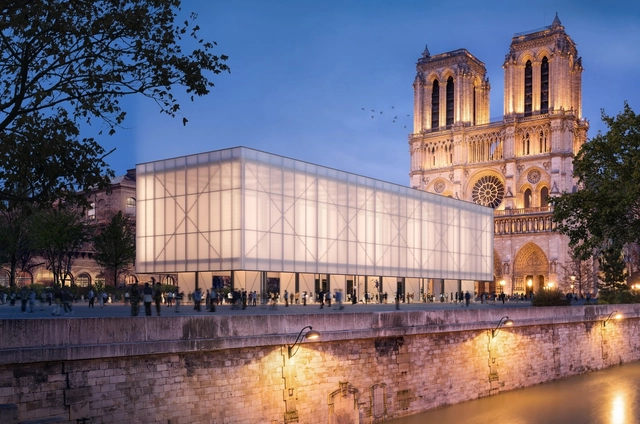
Pavillon Notre-Dame. Image Courtesy of Brick Visual
Design:ED Podcast is an inside look into the field of architecture told from the perspective of individuals that are leading the industry. This motivational series grants unique insight into the making of a successful design career, from humble beginnings to worldwide recognition. Every week, featured guests share their personal highs and lows on their journey to success, that is sure to inspire audiences at all levels of the industry. Listening to their stories will provide a rare blueprint for anyone seeking to advance their career, and elevate their work to the next level.
Art Gensler founded Gensler in 1965 in San Francisco. Art successfully grew his three-person design studio into the World’s largest architecture firm. He is a Fellow of both the American Institute of Architects and the International Interior Design Association, and a professional member of the Royal Institute of British Architects. Art is also the author of “Art’s Principles” a book which focuses on the tough business lessons he has learned from over 50 years in the architecture profession.
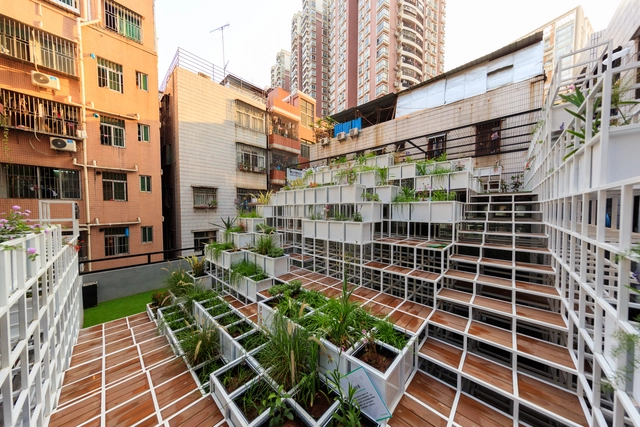
Normally the efforts of the construction industry are aimed to design permanent and durable spaces. However, on some occasions creating temporary spaces can be of great help, not only when providing fast assembly infrastructure after the effects of a natural disaster, but also when activating residual or abandoned spaces in our cities. To exemplify the potential of these interventions, we present thirteen successful temporary public spaces.
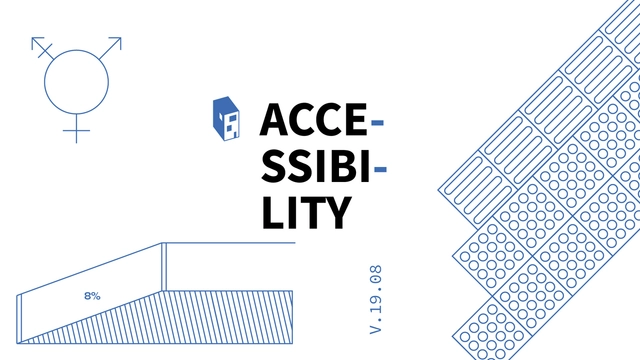
In architectural spheres, “accessibility” is often directed at the end-user, and the imperative act of designing spaces, buildings, and entire cities along the principles of “universal design.” An increasingly central aspect of architecture, spurred by legislation such as the 1990 Americans with Disabilities Act (ADA), the ethos of accessible architecture was well captured by architect Ronald Mace, quoted in a 1997 New York Times editorial asking “if we’re not designing for human beings, who are we designing for? Let’s design all things, all the time, for everyone. It’s where we’re headed.”
https://www.archdaily.com/922509/archdaily-topics-august-accessibilityNiall Patrick Walsh
Terrazzo is a mix of a concrete mixing base with natural stone fragments; it is characterized for being an extraordinarily resistant and versatile material. Since its frequent use some decades ago, this material has been rediscovered by architects and is used more and more often in works nowadays. Aside from the natural stones, this cement mixing base can include unused elements from construction – nails, bricks, and chunks of wood – resulting in very interesting final products.









.jpg?1565290135 "Modern Sampran Wangprom Office / Apostrophy's. Image © Sitthisak Namkham")
















_Giraffe_Technology.jpg?1565000247&format=webp&width=640&height=580)