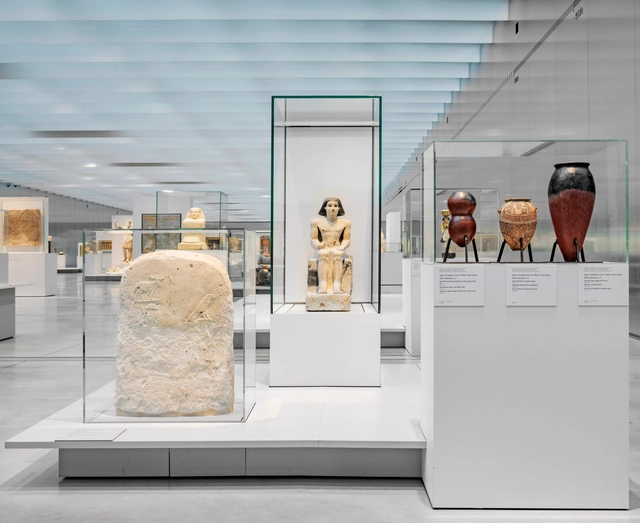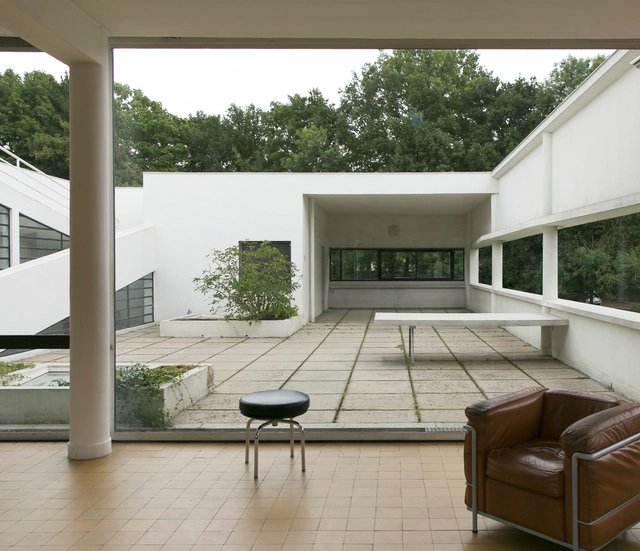
World Heritage Site is the title given to specific places on the globe (landscapes, cultural routes, cities, or architectural structures) by the United Nations Educational, Scientific, and Cultural Organization, or UNESCO, as a way to recognize their natural or cultural relevance and to encourage their preservation. Up to 2019, 1121 places in over 167 countries have been declared World Heritage Sites, of which 869 are cultural, 213 natural and 39 are mixed category.
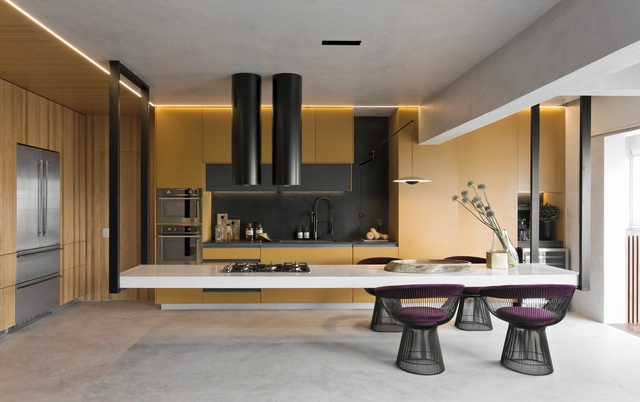
Gone are the days when the kitchen was relegated to a service area. Following the traditional system of bourgeois residential tripartition (dividing the house into social, intimate, and service areas), the kitchen was originally designed as an independent and closed space. Today, more and more, projects seek to integrate and relate it to other rooms in the house, facilitating different interactions among its residents. Due to this transformation, the appearance of the kitchen also changed, and traditional ceramic and stone cladding gave way to new materials.
While we wait for summer 2020 and another chance to watch the medal counts climb and cheer on our home countries in the next Olympics, a different type of international contest has tallied its scores and the United States has taken the gold in the World Design Rankings, with China and Japan following for second and third place respectively. Sponsored by the international A’ Design Award and Competition, the world’s largest and most diverse design accolade, the World Design Rankings are compiled based on the number of designers from each country granted an A’ Design Award.
From hospitals and retail stores to large commercial facilities and school buildings, resilient flooring is a popular choice for its durability. Yet like any material, it is subject to human error and neglect; if not properly maintained, even resilient flooring may deteriorate (in aesthetics, function, or both) before its time.
Seoul is considered one of the most densely-populated and over-priced cities in the world, reaching a staggering $ 80,000 per square meter. The extreme conditions of the city have forced local architects to operate, design, and build framing the city's urban issues, traditions, and history. This approach by architects has created the theoretical basis of “The Condition of Seoul Architecture”, a publication by multidisciplinary practice TCA Think Tank which sees the point of view of 18 innovative South Korean architects. In this interview, Pier Alessio Rizzardi, founder of the practice, interviewed Chi Min-suk of Mass Studies, explaining his point of view on ephemeral architecture and what influences the studio's work the most.
Design:ED Podcast is an inside look into the field of architecture told from the perspective of individuals that are leading the industry. This motivational series grants unique insight into the making of a successful design career, from humble beginnings to worldwide recognition. Every week, featured guests share their personal highs and lows on their journey to success, that is sure to inspire audiences at all levels of the industry. Listening to their stories will provide a rare blueprint for anyone seeking to advance their career, and elevate their work to the next level.
In this episode, host Aaron Prinz speaks with Chris Mulvey, Managing Principal of Safdie Architects. Chris provides the podcast with an inside look into the design of Raffles City Chongqing, what it is like to work side-by-side with Moshe Safdie, and the firm’s unique approach to architecture as a global design firm.
Concrete is the most carbon-intensive material found in the built environment, and rammed earth is a viable alternative—at least for projects of a certain scale. The San Antonio–based architecture firm Lake|Flato has opted for rammed earth on two of its residential projects, such as this one in West Texas.Courtesy Kyle Melgaard/Pilgrim Building Company
Practitioners have finally begun taking a more nuanced approach to the carbon emitted by new buildings. Are they too late?
I’ve started calling them come-to-carbon moments—the inner alarm bells that sound as you begin to register the devastating ecological costs of every man-made surface around you. Every sidewalk you’ve ever walked on, every building you’ve ever walked into, and every material inside those buildings, too. It’s the kind of thing you can’t un-see once you’ve started looking, the kind of knowledge that can transform a worldview, or a practice.
Solar tiles operate identically to the photovoltaic panels that are already widely used in construction. The primary difference between them lies in their assembly: whereas photovoltaic panels are attached to an existing roof, solar tiles are part of the roof's construction from the start, taking the place of regular tiling.
The tiles are formed by photovoltaic cells that, when they receive sunlight, create an electric field capable of providing electrical energy for use inside the building. Each tile is connected by cables to the power distribution board.
Is it possible for a structure to reflect the thoughts of an architect? In the area of architecture, it's a well-known fact that the design process is largely shaped by the client, their culture, their requirements, and their budget, with little attention given to the personal tastes of the architects themselves.
Graveyards full of names that have long been forgotten, plaques etched with portraits that you ignore on your morning jog, monuments with friezes that depict the triumphs of war—all these are examples of memorial architecture, which once held intense emotional meaning for certain individuals or groups of people, but have now gradually become tourist attractions or anachronistic sites within a changed landscape.
Since the horrors of World War II memorial architecture has changed drastically, from monuments focusing on names, heroes, and patriotism to abstract symbols of mourning and loss. How will this shift in the design of memorials change the way we experience them in the present and, more importantly, in the future? When generations pass away and the memorialized event becomes almost forgotten, how will we experience and remember?
From playful indoor pools to tranquil exterior fountains to soaring waterfalls and grand lakes of enormous proportions, architecture throughout the centuries has engaged with water in endlessly innovative ways. Sometimes serving aesthetic purposes, but just as often acting as centers of activity or promoting sustainability, water features can take countless different forms and serve multiple different purposes. Below, we synthesize a series of water features espoused by innovative contemporary architectural projects, ranging from single-family residential homes to vast commercial complexes.
December 22nd, 2019 saw the public opening of the 8th Bi-City Biennale of Urbanism\Architecture (UABB) in Shenzhen, China. As the world’s most visited architecture exhibition, the Biennale forms an influential moment for the dissemination of architectural knowledge, and the generation of dialogue and feedback loops between designers and citizens. Titled “Urban Interactions”, the Biennale's 2019 edition sets its sights on the multifaceted question of how technological advancements will impact the relationships cities share with people, technology, nature, and each other.
Design:ED Podcast is an inside look into the field of architecture told from the perspective of individuals that are leading the industry. This motivational series grants unique insight into the making of a successful design career, from humble beginnings to worldwide recognition. Every week, featured guests share their personal highs and lows on their journey to success, that is sure to inspire audiences at all levels of the industry. Listening to their stories will provide a rare blueprint for anyone seeking to advance their career, and elevate their work to the next level.
In this episode, Morphosis Partner Arne Emerson joins the podcast to discuss the new tower at the 7132 Hotel in ValsSwitzerland, the firm’s recent leadership expansion, and how Morphosis is advancing the field of architecture.
The sitcom Seinfeld didn’t last into the 21st century. But in the popular culture universe, the show is immortal, generating an endless stream of GIFs, memes, video clips, websites, and more. And, of course, every minute of its nine-season life has been rerun on one or more channels since the series ended in 1998.
Why does it remain so popular? “A show about nothing” was really 180 22-minute mini-plays on our most mundane realities. Its common theme, as epitomized by the final episode, was the comic self-absorption of the show’s four main characters.
It's very common for architects to use more than one program when developing a project. While one software can help us with the conceptual design and image of the project, other programs may work better for the development of technical documents, such as drawings, sections, and details. On the other hand, other software products can help us make a three-dimensional model, and yet others allow us to create renderings. There are also programs used for the postproduction of images, videos, or even to diagram panels and portfolios. The list is long and as a result our computer processors may suffer.
Although with BIM (Building Information Model) programs, this pilgrimage between programs tends to decrease when covering the entire design process, understanding the extensive list of file extensions is not as simple as it seems. In addition, it's not uncommon to find incompatibilities between versions and file types when, for example, the project must be opened on complementary equipment. Next, we review the file extensions most used by architects, focusing mainly on BIM programs.
Designing well, creating beautiful buildings as well as boosting revenue and making your firm profitable rank highly among the goals of architects around the world today. What are the most effective tools architects need to achieve those goals? At a recent Technology and Architecture panel, successful architects discussed answers to that very question. When you watch this panel discussion, recorded live at the prestigious Pritzker Military Museum and Library, you will hear inspiring approaches to design, coordination and project management - rooted in BIM and enabled by the design flexibility found in ARCHICAD.
Throughout history, simple structures have constituted one of the most common forms of human expression. Small-scale housing, shelters, and viewpoints have been shaped by myriad materials that effectively created - depending on the techniques used - different forms of response to the same need.
Here is a compilation of 20 small-scale projects that stand out due to their small size and their simple, practical structures.