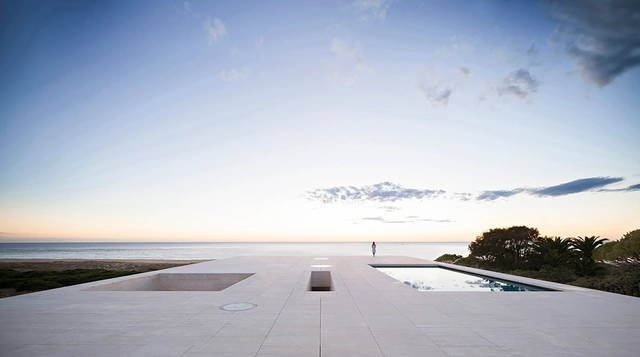
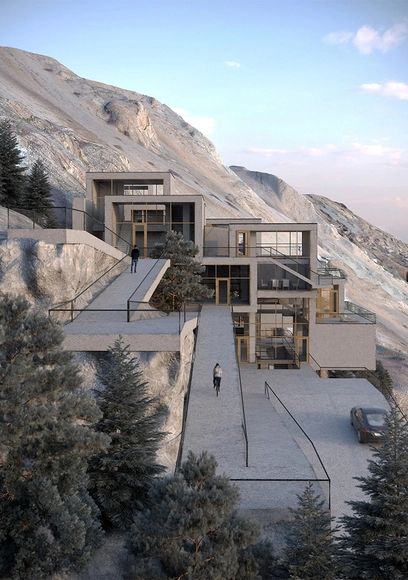
Gathering the best-unbuilt architecture from our readers' submissions, this curated collection features conventional, original and innovative functions. With projects from all over the world, this roundup is a conceptual discovery of different architectural approaches.
Art takes center stage in this week’s article with a different kind of museum for Burning Man, a futuristic art center in Slovakia, a museum dedicated to writing, and the Chinimachin Museum, inspired by the urban fabric of the city of Bayburt in Turkey. Moreover, the editorial showcases integrated houses, a redevelopment of a city block in London and mixed-use projects in Ukraine and Poland. New highlighted functions include a concrete lighthouse in Greece, a retirement complex in the Rocky Mountains of Lebanon, and a thermal hotel and spa in Cappadocia.
New Generations is a European platform that analyses the most innovative emerging practices at the European level, providing a new space for the exchange of knowledge and confrontation, theory, and production. Since 2013, New Generations has involved more than 300 practices in a diverse program of cultural activities, such as festivals, exhibitions, open calls, video-interviews, workshops, and experimental formats.
New Generations has launched a fresh new media platform, offering a unique space where emerging architects can meet, exchange ideas, get inspired, and collaborate. Recent projects, job opportunities, insights, news, and profiles will be published every day. The section ‘profiles’ provides a space to those who would like to join the network of emerging practices, and present themselves to the wide community of studios involved in the cultural agenda developed by New Generations.
ArchDaily and New Generations join forces! From this month, ArchDaily publishes a selection of studio profiles chosen from the platform of New Generations.
Postcards from Quarantine is a series of illustrations by Alvaro Palma y Alvaro Bernis inspired by touristic postcards that analyze the purpose of travelling and the desire to share the experience--a topic that has been brought to the forefront in times of quarantine during the COVID-19 outbreak.
In Mexico, 40 million used tires are thrown away each year and only 12% are recycled. Tires are a difficult waste product to address, due to the sheer volume produced as well as their durability and the components within tires that are bad for the environment. According to specialists, in Mexico about 5 million tires are recycled in organic products and in the cement industry.
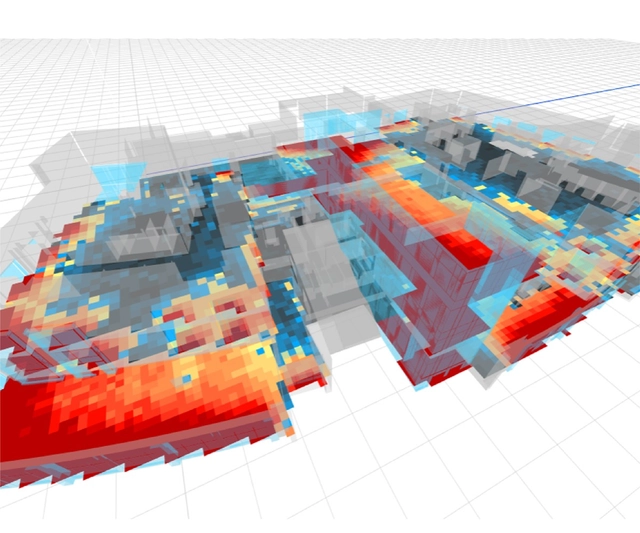
In the highly connected world we live in, technology influences and impacts almost every decision we make. Big Data, Artificial Intelligence (AI), and the Internet of Things (IoT) have enhanced our connected world and helped us understand more about the spaces we inhabit. Aside from the smart homes and smart appliances we have become accustomed to, the modern day office is being redesigned and reprogrammed to include a variety of smart technology systems. The goal of these systems is to put our offices to work and empower businesses to better understand their design decisions, real estate investments, and most importantly- their own employees.
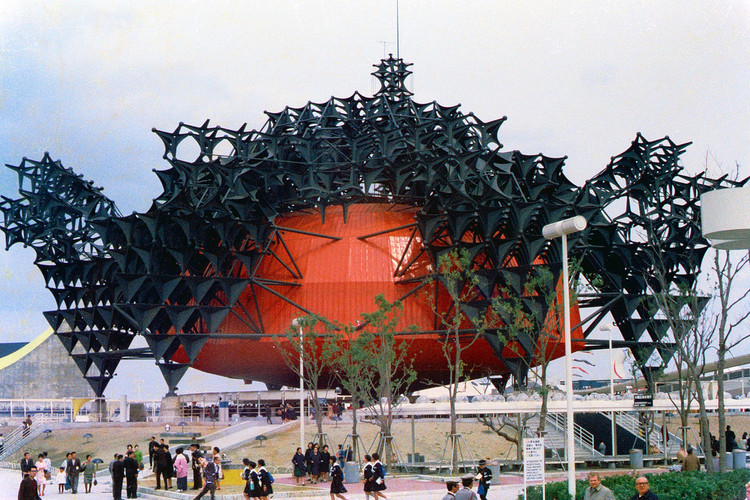
Kisho Kurokawa (April 8th 1934 – October 12th 2007) was one of Japan's leading architects of the 20th century, perhaps most well-known as one of the founders of the Metabolist movement of the 1960s. Throughout the course of his career, Kurokawa advocated a philosophical approach to understanding architecture that was manifest in his completed projects throughout his life.
A figure whose work blurred the line between the mathematical and the aesthetic, French industrial designer, architect, and engineer Jean Prouvé (8 April 1901 – 23 March 1984) is perhaps best remembered for his solid yet nimble furniture designs, as well as his role in the nascent pre-fabricated housing movement. His prowess in metal fabrication inspired the Structural Expressionist movement and helped to usher in the careers of British High-Tech architects Richard Rogers and Norman Foster.
From Wuhan to New York, the epicenter of the coronavirus is moving from east to west and leaving a staggering number of corpses behind. We read of alarming reports, contradictory news, and reminded every day that we live in unprecedented and difficult times. One good news, however: emissions in cities are on the decline, and nature is running its regenerative course. But how long will this last?
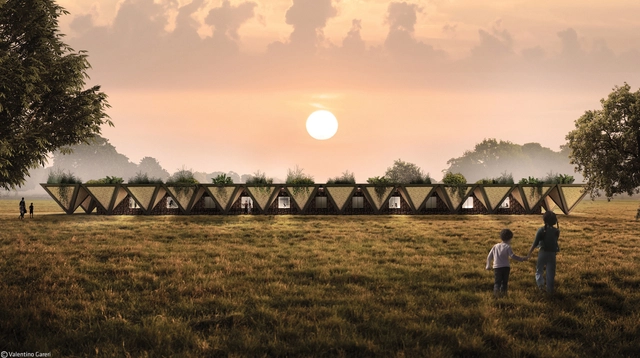
The World Bank believes that urbanization will be “the single most important transformation that the African continent will undergo this century”, with over half of the population set to live in cities by 2040. This will manifest as 40,000 people moving to cities every day for the next 20 years. While much of the architectural discourse around Africa's future focuses on cities, rural areas are often ignored. This has however been the preoccupation of Italian architect Valentino Gareri, founder of Valentino Gareri Architectural Atelier and Senior Designer at Bjarke Ingels Group.
https://www.archdaily.com/936910/in-africa-a-modular-prototype-school-combines-the-practical-and-utopianNiall Patrick Walsh
In the past, sustainability initiatives were coordinated by a few key sustainability-focused professionals in the office. These team members would take charge and corral the rest of the project collaborators in conference calls, emails chains, and boardroom meetings making sure building performance targets were discussed, decided, pursued, and implemented.
Present circumstance makes this process, which was not too efficient, very challenging to begin with. With that in mind, here are some tips from cove.tool and AEC leaders that have mastered remote work and the best ways to coordinate building performance while stuck at home.
https://www.archdaily.com/936939/5-expert-tips-to-help-you-coordinate-building-performance-while-you-are-working-remotelySponsored Post
In this article, we tap into how AI could be augmenting, changing design processes, and how architects and other professionals are responding and incorporating these technological advancements into their design work. What kind of innovation can AI bring to this industry, and what has been experimented with so far? This selection of projects can help form an opinion on the architectural application of AI.
One of the most boldly dissenting voices of our time, architectural and urban theorist Léon Krier (born 7 April 1946) has throughout his career rejected the commonly accepted practices of Modernist Urbanism, and helped to shape the ideals of the New Urbanism movement. Through his publications and city designs, Krier has changed the discourse of what makes a city successful and returned importance to the concept of community.
Over the past few decades, interior spaces have become increasingly open and versatile. From the thick walls and multiple subdivisions of Palladian villas, for example, to today's free-standing and multi-functional plans, architecture attempts to combat obsolescence by providing consistently efficient environments for everyday life, considering both present and future use. And while Palladio's old villas can still accommodate a wide variety of functions and lifestyles, re-adapting their use without changing an inch of their original design, today, flexibility seems to be the recipe for extending the useful life of buildings as far as possible.
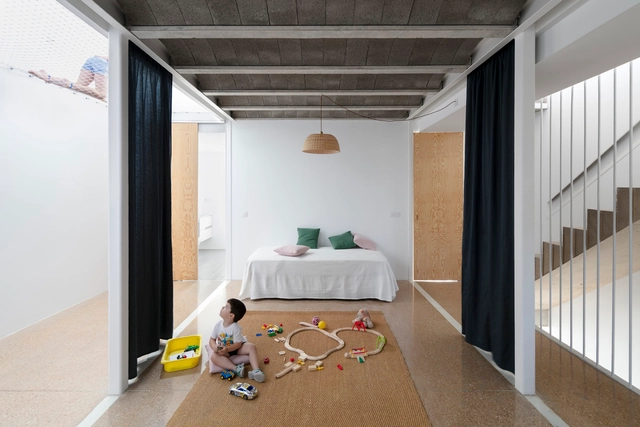
How, then, can we design spaces neutral and flexible enough to adapt to the evolving human being, while still accomplishing the needs that each person requires today? An ancient element could help redefine the way we conceive and inhabit space: curtains.
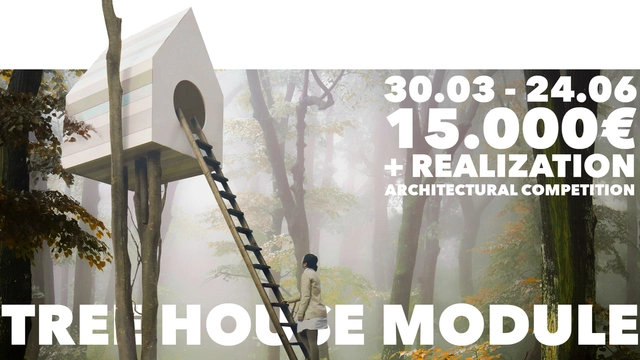
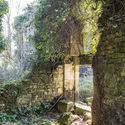
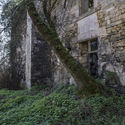
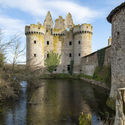
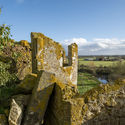
YAC - Young Architects Competitions and Dartagnans launch Tree House Module, a competition of ideas aiming to design and realize a tree house system to sit amidst the oneiric French castles of Vibrac, Mothe Chandeniers, and Ebaupinay. A cash prize of € 15,000 (and the realization of the first-ranking project) will be awarded to the winners selected by an outstanding jury panel including Espen Surnevik, Matthew Johnson (DS+R), Giulio Rigoni (BIG), Tue Hesselberg Foged (Effekt Architects), Peter Pichler, and Patrick Lüth (Snøhetta).
Nothing is more rational than using the wind, a natural, free, renewable and healthy resource, to improve the thermal comfort of our projects. The awareness of the finiteness of the resources and the demand for the reduction in the energy consumption has removed air-conditioning systems as the protagonist of any project. Architects and engineers are turning to this more passive system to improve thermal comfort. It is evident that there are extreme climates in which there is no escape, or else the use of artificial systems, but in a large part of the terrestrial surface it is possible to provide a pleasant flow of air through the environments by means of passive systems, especially if the actions are considered during the project stage.
This is a highly complex theme, but we have approached some of the concepts exemplifying them with built projects. A series of ventilation systems can help in the projects: natural cross ventilation, natural induced ventilation, chimney effect and evaporative cooling, which combined with the correct use of constructive elements allows improvement in thermal comfort and decrease in energy consumption.
Humanity is facing a collective new challenge unprecedented in our lifetime. One of isolation, driven by self-quarantine, for a period unknown. It is a social experiment with no predictable outcome. But one constant in the equation is architecture.
With over half the world’s population inhabiting cities or densely populated areas, billions of people are currently residing in small spaces, disconnected from one another by brick, concrete and steel. The social housing experiment of the 1950s and 60s created a new architectural typology, which was compounded by an underlying social construct, driven by capitalism, that told us to mind our own business. Somehow, during the age of high rises that followed, turned this idea of isolation into a status symbol, as private penthouses, accessed by private elevators, today float high above the city streets.
The Midnight Charette is an explicit podcast about design, architecture, and the everyday. Hosted by architectural designers David Lee and Marina Bourderonnet, it features a variety of creative professionals in unscripted conversations that allow for thoughtful takes and personal discussions. A wide array of subjects are covered with honesty and humor: some episodes provide useful tips for designers, while others are project reviews, interviews, or explorations of everyday life and design. The Midnight Charette is also available on iTunes, Spotify, and YouTube.
This week David and Marina answer questions from listeners about finding a job when you're much older than your classmates, graduating from school without work experience, leaving architecture at the end of a Master's program, taking the CSE, and transferring schools because of IPAL. If you have any questions call or text the hotline at 213-222-6950.
https://www.archdaily.com/936932/on-finding-motivation-to-keep-practice-architecture-and-age-significance-when-getting-hiredThe Second Studio Podcast
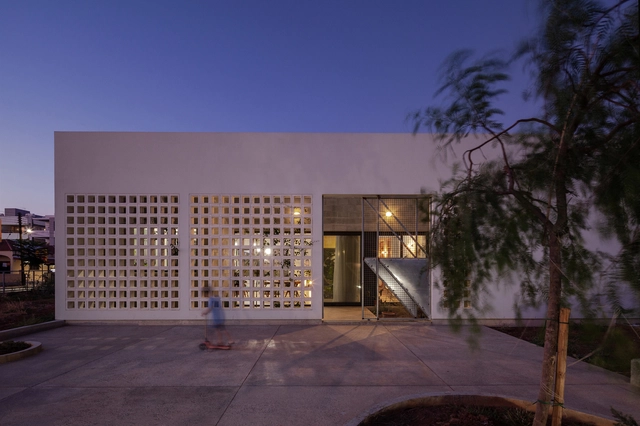
“A House is a place (…) as physical as a set of feelings. (…) a home is a relation between materiality and mastery and imaginative processes, where the physical location and materiality and the feelings and ideas are united and influence each other, instead of being separated and distinct. (…) a house is a process of creation and comprehension of ways of living and belonging. A house is lived, as well as imagined. The meaning of house and the way it materially manifests itself, it´s something that is created and recreated in an unceasingly way through every day domestic tasks, which are themselves connected to the spacial imaginary of the house”1
The sentence above is the starting-point of the current reflection, in an exercise that will mark meaningfully my approach to the way of projecting houses.









.jpg?1515030902)