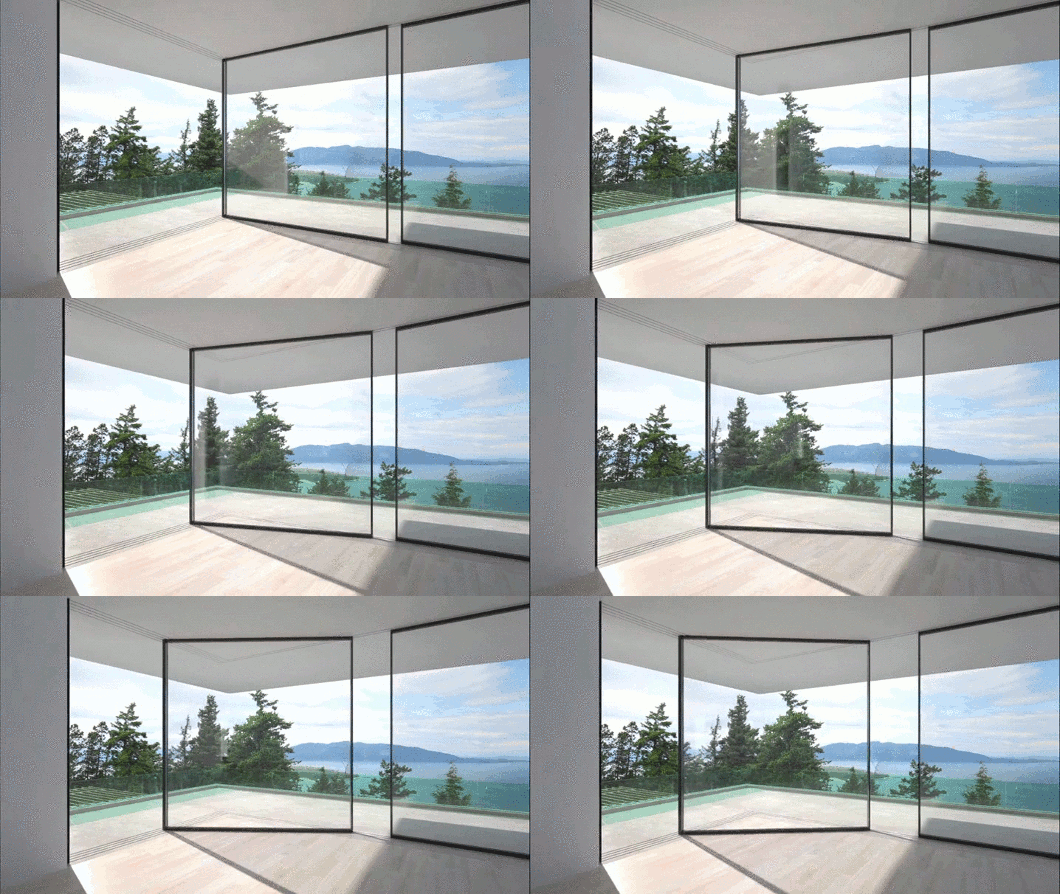
One of the most popular tropes of Modernist architecture was the goal of dissolving the external boundaries of the home, connecting residents to nature through the use of large glass walls in order to "bring the outside in." Nowhere was this project more thoroughly realized than in Mies van der Rohe's 1930 Villa Tugendhat, where an entire side of the glass-walled living space could, if the user wished, be dropped through the floor and the house become open to the elements. Elegant though it was (especially in 1930), Mies' solution didn't catch on, limited by the fact that it required an electric motor and a basement below in which to store the disappeared facade.
These days, while countless houses incorporate glass walls that fold, slide, or swing open, few offer the bravura of Mies' design, choosing to move the glass off to the side rather than making it disappear entirely. This year though, window and door manufacturer Vitrocsa may have turned a corner in the provision of vanishing glass walls with its "Turnable" system.












.jpg?1448848409&format=webp&width=640&height=580)
.jpg?1448848741 "Trail Restroom. Image via DesignCurial")
.jpg?1448848696 "Wembley WCs. Image via DesignCurial")
.jpg?1448848785 "Tokinokura Lavatories Shimodate. Image via DesignCurial")
.jpg?1448848535 "L'Uritonnoir. Image via DesignCurial")
.jpg?1448848409)

.jpg?1448602861&format=webp&width=640&height=580)
.jpg?1448602977 "© Salon")
.jpg?1448602967 "© Salon")
_1.jpg?1448602882 "© Salon")
.jpg?1448602850 "© Salon")
.jpg?1448602861)


