Eugène Viollet-le-Duc, the French architect most famous for the 'restoration' of Notre-Dame de Paris, is a person we unequivocally associate with 19th century Gothic Revival. Although there is no doubt that his interpretive restorations of medieval French monuments were some of his greatest achievements, a new exhibition at Paris' Cité de l'architecture et du patrimoine seeks to uncover a "well-connected character who pursued an uninterrupted career drawing, building, teaching, restoring, and many other things."
In a review for Domus, Léa-Catherine Szacka examines this first major retrospective dedicated to the designer, theorist and artist since 1980 in celebration of the bicentennial of his birth. According to Szacka curator Jean-Michel Leniaud has, in this exhibition, shifted focus to Viollet-le-Duc's artistic output, thereby presenting "the less known and the more unexpected aspect" of his career.
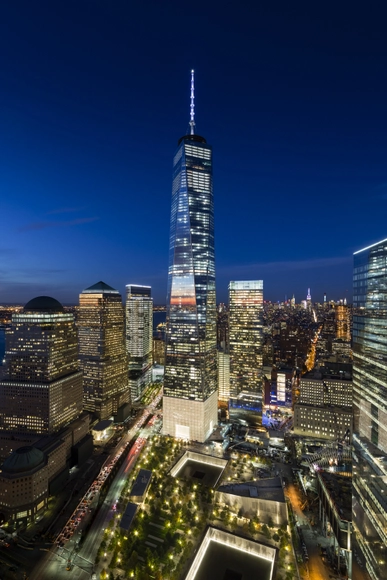
Elevator manufacturer ThyssenKrupp has unveiled its latest technological advance, a cable free, multi-car, multi-directional elevator that has the potential to revolutionize the size and shape of future skyscrapers. Run using magnetic technology similar to that used by Maglev trains, with each cabin running its own individual motor, the "MULTI" elevator system opens up the potential for elevator cabins to move horizontally as well as vertically. This in turn offers the potential for multiple cabins to operate in a single system, with cabins going up one shaft and down an adjacent shaft.
To celebrate the first anniversary of our US Materials Catalog, this week ArchDaily is presenting a three-part series on "Material Masters," showing how certain materials have helped to inspire some of the world's greatest architects.
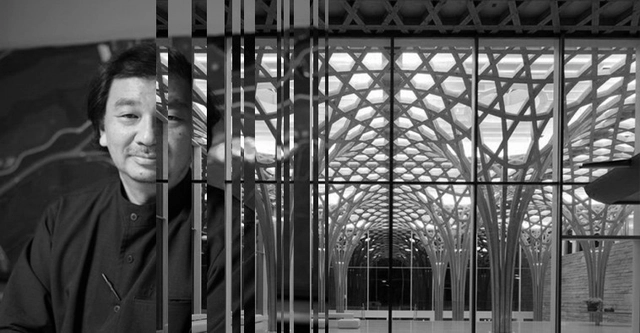
Shigeru Ban’s portfolio is a strange dichotomy, split between shelters for natural disaster refugees and museums commissioned by wealthy patrons of the arts. Even stranger is the fact that, in both cases, Ban’s material palette frequently incorporates recycled cardboard, paper, and old beer crates. The Pritzker prize laureate is unique in this regard, and so great is his predilection for recycled paper tubes (originally formwork for concrete columns), that he has become known as the “Paper Architect.” His work receives media attention worldwide for the unorthodoxy of its construction materials. Yet Shigeru Ban is not concerned with unorthodoxy, but with economy. It is for this reason that, when paper tubes are deemed unsuitable, Shigeru Ban constructs his buildings in wood. Inspired by the architectural tradition of his native Japan, Ban is not only the "Paper Architect," but also one of the most famous architects working in wood today.
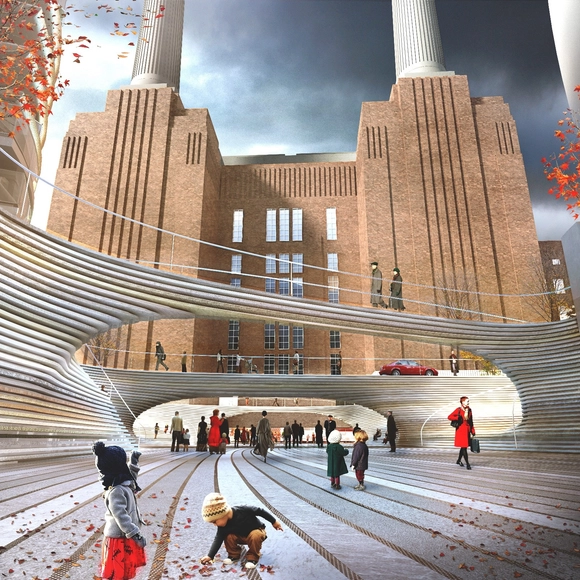
Courtesy of Battersea Power Station Development Company
BIG has unveiled the design for their addition to the development at Battersea Power Station, a public square that will link the power station itself with the Electric Boulevard development designed by Norman Foster and Frank Gehry. Called Malaysia Square after the Malaysian development consortium behind the plans, the design features cascading steps that link the main public space at the lower level with the entrance to the power station above. The split-level design also provides for two pedestrian bridges and a road bridge that cross above the "urban canyon" of the public square.
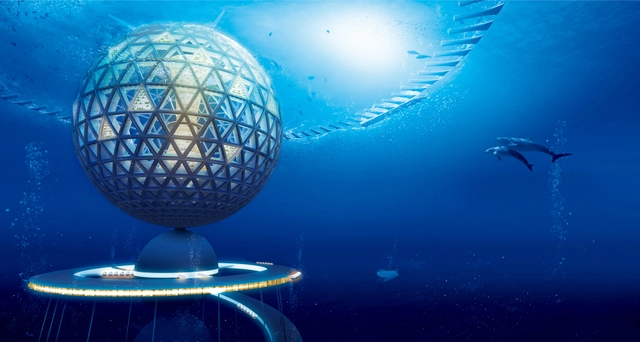
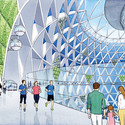
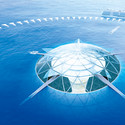
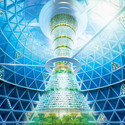
"Now is the time for us to create a new interface with the deep sea, the earth’s final frontier," says a brochure from Japanese development company Shimizu Corporation, presenting their outlandish proposal for the Ocean Spiral: a deep sea colony that can supposedly provide for up to 5,000 people in its 500m wide tethered sphere.
The proposal describes the Ocean Spiral as "safer and more comfortable" than existing land-based cities, thanks to the near constant temperature enabled by the ocean, the fact that it will be unaffected by typhoons or earthquakes, and the hope that the city's methods of oxygen generation will enable higher concentrations of oxygen then are found in the Earth's atmosphere.
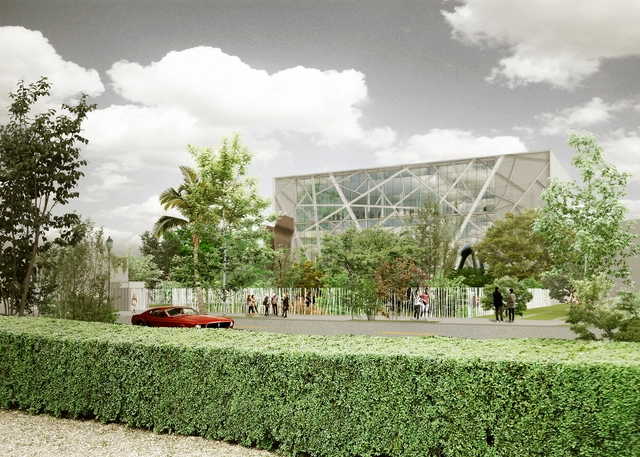
Madrid-based Aranguren & Gallegos Arquitectos has been tapped to design their first US project, a permanent museum building for the Institute of Contemporary Art, Miami (ICA Miami). The 37,500-square-foot building, planned to open in time for Art Basel 2016 on Northeast 41st Street in Miami’s Design District, will feature three stories of exhibition space and a 15,000-square-foot sculpture garden. Final designs will be released in early 2015. Groundbreaking is expected to occur in the summer 2015.
Shelter Winner: The Hole Idea / Weiss Architecture & Urbanism Limited (Toronto). Image Courtesy of Warming Huts
A “blind” jury has announced the 2015 winners of the international Warming Huts competition. Selected from 100 entries, two winning “shelter” designs and one “installation” design were awarded. Each winning proposal will be constructed in January alongside the longest naturally frozen skating trail in the world: the Red River Mutual Rivertrail in Winnipeg, Canada. More about the winning designs, and four other highlighted proposals, after the break.
“A Chair is a difficult object. A skyscraper is almost easier.” – Mies van der Rohe
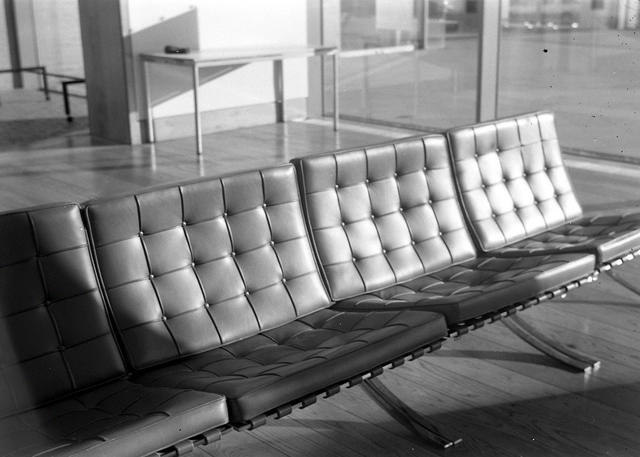
In his latest 99% Invisible podcast, Roman Mars takes listeners to the edge of their seats (literally), as he tackles one of design’s unique challenges: the chair. From Van der Rohe to Gehry, Hadid, Libeskind and Corbusier, “if they’ve designed a big building, chances are they’ve designed a thing on which to sit,” begins Mars. Yet the complexity of chair design comes from the fact that a chair “disappears when in use...Chairs need to look fantastic when empty, and remain invisible (and comfortable) while in use,” states Mars. And with numerous recent studies showing the negative impacts of sitting too much, innovative chair design is now more important than ever.
Listen to the full podcast and check out some well-known chairs designed by architects after the break.
If buildings could talk, what would they say about us? Cathedrals of Culture, a six part collection of films recently premiered at this year's Berlin International Film Festival, "offers six startling responses to this question". The project, filmed entirely in 3D, allows "six iconic and very different buildings to speak for themselves, examining human life from the unblinking perspective of a manmade structure".
In an era in which architectural style is constantly recycled and reinterpreted, how do we know which ideas are original and which characteristics reveal deeper functions? In a recent article by Rowan Moore from The Guardian, architect Farshid Moussavi discusses fashion, function, and physical space as they relate to the concepts of her latest book The Functions of Style, which examines style in architecture beyond external appearance with a belief that style is rooted in a building's organizational ideas. Consequently, says Moore, each of Moussavi’s works are unique and do not rely on repeating trademark artistic moves. To learn more about how Moussavi’s philosophy is embodied in her most recent works, along with her belief in the power of physical space in a virtual world, read the full article on The Observer here.
"Hey dad, when can I become an architect?" says Archie, son of eternally-frustrated architect Archibald, an animated architect who rarely wins an argument. "Architecture is not a final destination in time, it's a journey through life," Archibald says. His son's response: "Great! I love traveling! When can I buy the tickets?"
"arch." is a weekly online cartoon series by Mike Hermans, an Antwerp-based architect-cartoonist, that follows Archibald through the struggles architects know all-too-well: uncooperative models, angry clients, and periodic encounters with Tarzan, the jungle king. Archibald is a self-professed "visionary and romantic dreamer," while his business partner Gerald is the anti-creative in a constant struggle to ground Archibald's ideas in reality (hint: it doesn't go well). In "arch." study models have lives of their own, resisting modifications by the architect in favour of their own changes while meddlesome interns and junior architects attempt their own project modifications. Frank Gehry even makes a cameo appearance.
In this lecture, Leon Krier expounds upon his decades-long critique of modernist urbanism and design. Using his experiences planning and building the town of Poundbury, England as a lens for viewing contemporary planning practice, he compares modernist and classicist theory in their approaches to zoning and building construction.
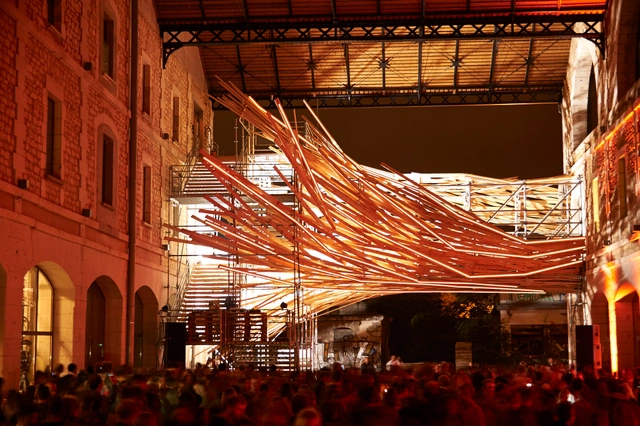
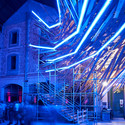
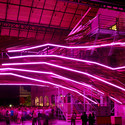
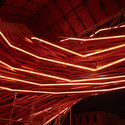
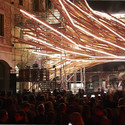
Paris-based firm 1024 architecture has created Vortex, a generative light sculpture located within the Darwin Ecosystem Project’s green building in Bordeaux, France. The “architectural fragment” consists of scaffolding, raw wood, and twelve lines of LED light. With colored LED lights appearing to shoot across the structure, a new spatial experience is created, which also informs viewers about energy consumption within the building.
Learn more about the structure and 1024 architecture after the break.
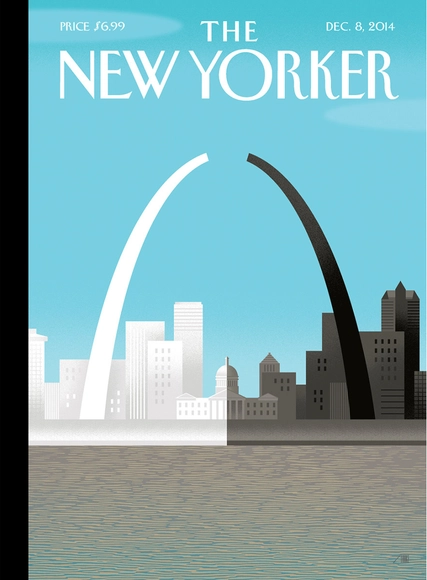
With their latest cover, The New Yorker is addressing the tragic unrest in Ferguson which has followed Monday's decision not to indict the officer who shot Michael Brown in August, using an image of Eero Saarinen's iconic Gateway Arch. The image, designed by Bob Staake, shows the arch divided, black on one side and white on the other in reference to the racial tensions that underpin the dispute. "At first glance, one might see a representation of the Gateway Arch as split and divided," says Staake, "but my hope is that the events in Ferguson will provide a bridge and an opportunity for the city." To read more about the ideas behind Staake's design, visit The New Yorker's website.
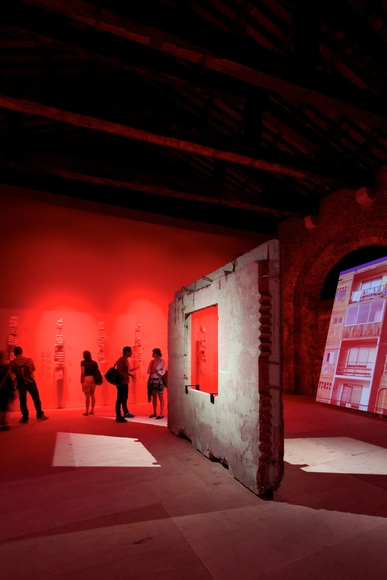
At a time when everyone is constantly interacting with the digital social universe, it's becoming increasingly easier to gather informal data on how well received, recommended, liked (or disliked) an event or exhibition is. Compiled as a series of diagrams for Domus, Maria Novozhilova examines the 'social ranking' of the 2014 Venice Biennale by dissecting the three core exhibitions (Fundamentals, Monditalia and Absorbing Modernity) and revealing the apparent 'winners and losers' as far as social engagement is concerned. Noting that "it is only by starting from the end and working backwards, like a salmon swimming against the current, that we can see more exhaustively how things went,", Novozhilova's visualisations reveal a number of fascinating results. See all the diagrams here.
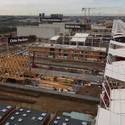
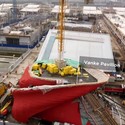
The 2015 Milan Expo has been keeping architecture fans in the loop with "Belvedere in Città," its continuing series of videos filmed with the help of a drone. Since our update last month, two new videos have been released - and now that the recognizable forms of the pavilions are starting to emerge, the videos include labels for each feature of the expo site. With the help of these new videos it is easy to see the forms of highly-touted pavilions such as Libeskind's Vanke Pavilion, or Nemesi & Partners' smog-eating pavilion for Italy, gradually taking shape around the twin axes of the "cardo" and "decumanus," an ancient Roman planning tool borrowed for the site's masterplan by Jacques Herzog, Mark Rylander, Ricky Burdett, Stefano Boeri, and William McDonough. Read on after the break for the second video, and screenshots of the construction works.
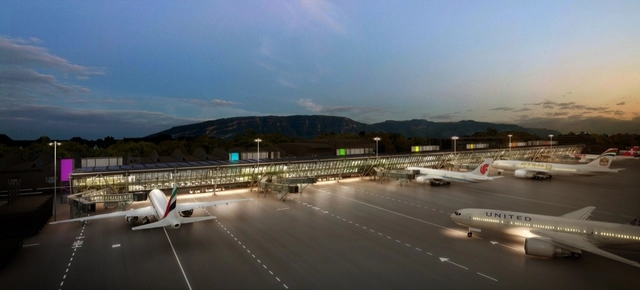
External view of Geneva Airport East Wing at dusk. Image Courtesy of RBI-T consortium
Rogers Stirk Harbour + Partners’ (RSHP) design for the Geneva airport’s East Wing has received planning permission from the Federal Authorities in Switzerland. The 520 meter-long facility will connect to the airport’s existing terminal and includes additional Departures and Arrivals halls, contact stands and gate lounge seating as well as first class airlines lounges and technical basements, according to a press release.
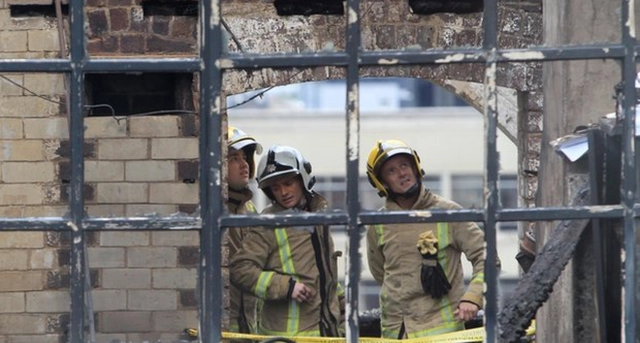
The Glasgow School of Art (GSA) have revealed the unfortunate series of events that led to the school's iconic Mackintosh library, alongside a large collection of student work and archives, devastated in a fire in May of this year. According to BDOnline, who have spoken with Tom Inns (Director of the GSA), "final-year students were setting up their degree show projects in the basement and holes in some pre-built foam panels were being filled with the spray foam."
The flammable gas used as a propellant in the canister was sucked into [a nearby] projector’s cooling fan, setting it alight. A foam panel directly behind the projector then quickly also caught light. "The flames quickly spread to timber panelling and through voids around the basement studio and then into the library two floors above and up through the rest of Mackintosh’s 1909 masterpiece." To add insult to injury, the Scottish Fire and Rescue Service (SFRS) reported that "a fire suppression system was in the latter stages of installation at the time of the fire but was not operational."
In this video from Crane TV, Italian architect and designer Gaetano Pesce talks about his philosophy of art and architecture as an expression of reality. His philosophy raises the question of whether architecture itself should become symbolic of its time and place or express an idea in the way that art often can. Beyond a symbolic nature, Pesce also suggests that architecture could be humorous or act as an extension of artistic expression. “Architecture is the king or queen of the arts,” he says, summarizing his beliefs.
Last week we brought you another video from Crane TV on Vito Acconci, which explored why the goal of architecture is not always a completed building. As another architect who blurs the lines between buildings and art, Pesce’s unbuilt projects are an important tool through which he continually seeks new discoveries to prompt further design innovations.
The 2014 Media Architecture Biennale has drawn to a close in Aarhus, Denmark, and with it five projects have been awarded for "outstanding accomplishments in the intersection between architecture and technology." Representing five different categories (Animated Architecture,Spatial Media Art,Money Architecture, ParticipatoryArchitecture, and Trends & Prototypes), these five projects are the ones that most represent the Media Architecture Biennale's goal to advance the understanding and capabilities of media architecture.
The winners include a power plant with a shimmering chimney tower, an installation that creates "phantoms" with light, an interactive LED facade, a crowdsourced mapping system for transit in the developing world, and a kinetic "selfie facade." See videos of all five winners after the break.
Videos
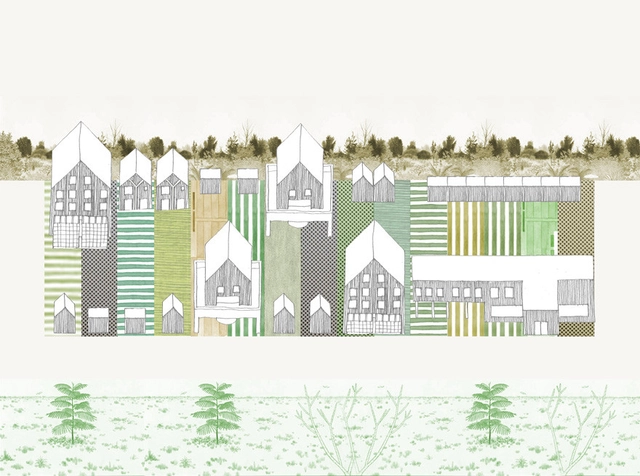
Eco Ruburb, a community hybrid of the rural and the urban (with Hawkins\Brown). Image Courtesy of Sam Jacob Studio
In an interview with Core77Sam Jacob, formerly of FAT and now principal at Sam Jacob Studio, has "always pursued an idea of design practice as a combination of criticism, research and speculation that all feed directly into the design studio." This approach has allowed his ideas to "cross-fertilize, find connections and directions that make the practice stronger, more agile and able to respond intelligently to the problem at hand." Jacob, who is also a Visiting Professor at Yale and the University of Illinois at Chicago whilst simultaneously director of the Night School at London's Architectural Association, recently saw the end of FAT's final project: the curation of the British Pavilion (alongside Dutch architect and academic Wouter Vanstiphout). In the UK, former partner Charles Holland is bringing a collaborative project with artist Grayson Perry to completion in Essex.
Read more and see some of Jacob's drawings after the break.
“Chicago is a great city for architecture and has historically supported innovative, forward-looking work. There is a natural impulse to deride a project in the early stages of design, particularly one that has a new shape or expression. This is not a new concept,” says Gehry, citing that both the Guggenheim Museum Bilbao and Los Angeles Walt Disney Concert Hall were shrouded in criticism before becoming “great assets to their mutual cities.”
Japanese architectYoshio Taniguchiand English designer Jasper Morrison have been selected to receive the second annual Isamu Noguchi Award. Presented by The Noguchi Museum, the award recognizes “kindred spirits in innovation, global consciousness, and Japanese/American exchange.”
“We are thrilled to present the second annual Isamu Noguchi Award to Jasper Morrison and Yoshio Taniguchi, whose visionary work and extraordinary contributions in the fields of design and architecture exemplify Noguchi’s lifelong commitment to world citizenship and the practice of art with a social purpose,” stated Jenny Dixon, Director of The Noguchi Museum.



_ThyssenKrupp.jpg?1417488198&format=webp&width=640&height=580)