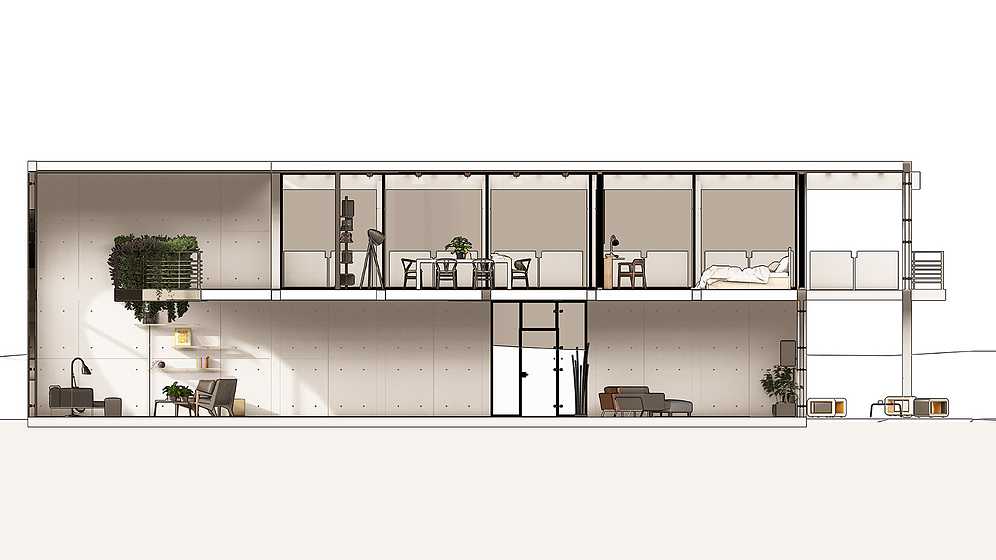
Produce personalized presentation boards that distill complex concepts into simple visual representations with a few helpful tools and effects.


Produce personalized presentation boards that distill complex concepts into simple visual representations with a few helpful tools and effects.
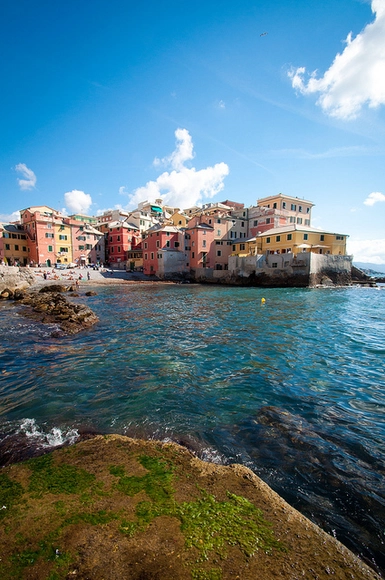
In a recent article published by The Guardian, Renzo Piano encourages architects to make sandcastles. "There is no age limit," he says, "... it helps you think like a child." The Italian architect credits the start of his career to the first sandcastle he ever made on the Genoa shoreline. "Making things has always been a pleasure for me – happy hands, happy mind – and making sandcastles was my training in fantasy."
Embracing the ephemeral nature of such a building, Piano has provided step-by-step instructions on how to make the "perfect" sandcastle: 1) "Study the waves" and site your castle near the water; 2) Build a 60cm tall "little mountain" with 45° slopes and surround it with a 30cm deep, 45cm wide moat; 3) Allow sea water to enter the moat, sit back and watch; and 4) Top the sand structure with a "little flag" to make it visible, then "go home and don't look back."
Read Renzo's complete sandcastle instructions, here.

India has one of the fastest growing populations in the world and to accommodate it, a better building material is needed. Currently over 200 billion of the country’s traditional clay fired bricks are manufactured every year, resulting in numerous pollution and environmental problems. To address these issues, a team from MIT –- composed of students Michael Laracy and Thomas Poinot, along with professors Elsa Olivetti, Hamlin Jennings and John Ochsendorf -- has developed Eco-BLAC bricks: an alternative to traditional bricks that reuses industrial waste and is low-cost and low energy.

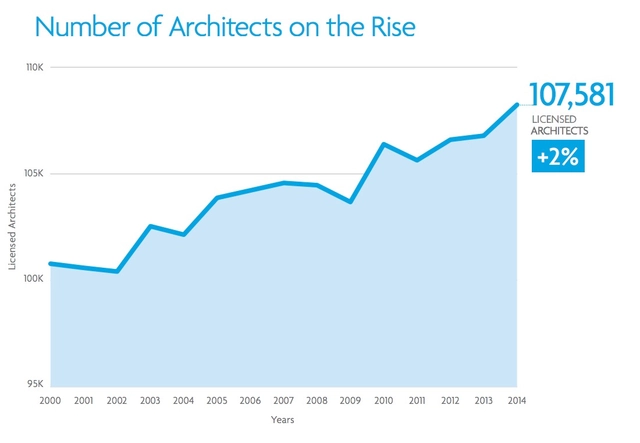
The National Council of Architectural Registration Boards (NCARB) has released “NCARB by the Numbers,” their annual report featuring statistics important to the architecture profession in the US. NCARB’s research portrays a positive future for the profession, with statistics showing that diversity is growing, architects are becoming licensed at an earlier age and progressing through licensure paths more quickly than in previous years, and more architects are becoming licensed than ever before.
The 2015 report covers the causes and effects of the results, looking into the impact of location and education. A section entitled “Jurisdictions by the Numbers,” lays out standardized relevant information for viewers to investigate conditions in the architecture profession in each state. The report also includes an analysis of the role of NAAB-accredited programs in helping architects achieve licensure.
Learn more on the information in NCARB’s report after the break.
This edition of Section D, Monocle 24's weekly review of design, architecture and craft, travels to Indonesia’s third city Bandung, where former architect and current Mayor Ridwan Kamil "is transforming public space." The show also takes a tour of three early 20th-century apartment buildings in Montreal, and hears from Neri & Hu Design and Research Office in Shanghai.

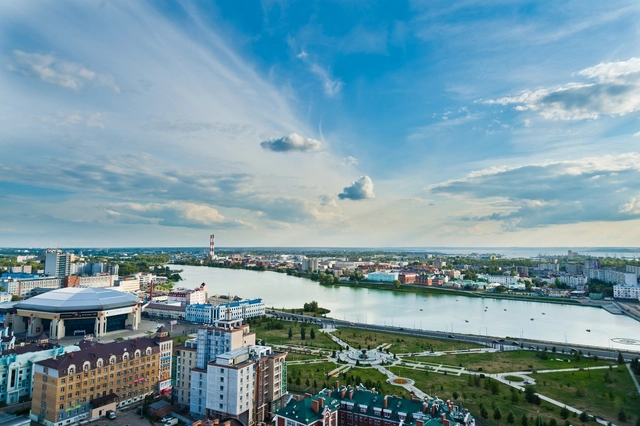
Ten finalist have been shortlisted as part of an open, two-stage competition set to redesign the Kaban lake system embankments in Kazan. Held under the authority of the Republic of Tatarstan Government, the competition will now ask the remaining teams to work on other town-planning projects in the Republic of Tatarstan held within the three context of the Water-Conservation Zones Year - in Kazan, Naberezhnye Chelny, Nizhnekamsk, Almetyevsk and other cities. Visiting sessions with the President of the Republic will be organized to introduce the context of the competition to the finalists.
The Winner will receive one million Rubles and a contract for the design project development of the future embankment.
The 10 remaining finalists are...
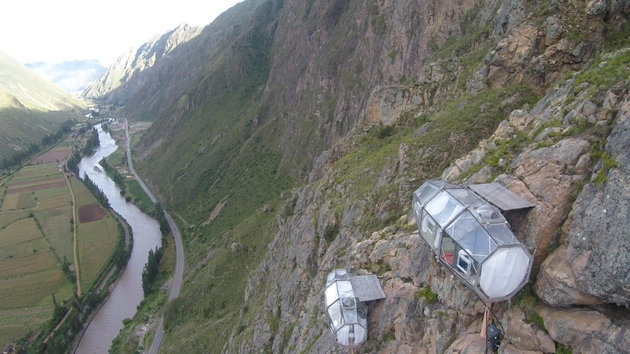
Adventure seekers have yet another reason to visit the Peruvian Andes; Peru-based tour company Natura Vive is now offering a luxurious night's stay 400-feet above the Inca Empire in these glass sky pods. Visitors can access the "Skylodge" by scrabbling up the mountainside. After staying the night, and indulging in some fine dining on top their 192-square-feet room, visitors return Peru's famed Sacred Valley via a series of (terrifying) zip lines.
_James_Bailey_(7).jpg?1436860605&format=webp&width=640&height=580)
The Royal Academy of Arts in London have launched a new international ideas competition which aims "to refocus attention to the huge potential of the brownfield sites that still exist across London." 'Brownfield' sites, or those earmarked for potential building development that have had previous development on them, are plentiful in the UK capital. This competition seeks "speculative ideas [which] make the most of these missing pieces in London’s urban jigsaw."

Did you know you can manage who you "see first" in your Facebook news feed? Don't let advertisers take your top spot, as Facebook's new "See First" feature allows you to control which of your favorite friends and websites (hint: ArchDaily) are shown to you first. Make ArchDaily part of your daily newsfeed on Facebook by following these few simple steps:

Architectural Record has named the "Top 300 Architecture Firms" in the United States, ranking the nation's most successful practices based on their architectural revenue from 2014. Gensler, whose annual revenue surpassed one billion USD, maintained the lead for the fourth consecutive year. The firm's recent commissions, such as Los Angeles' Metropolis, help them set new records for revenue. AECOM, who came in second, also recorded significant growth - both internationally and domestically.
The top 25 firms are...
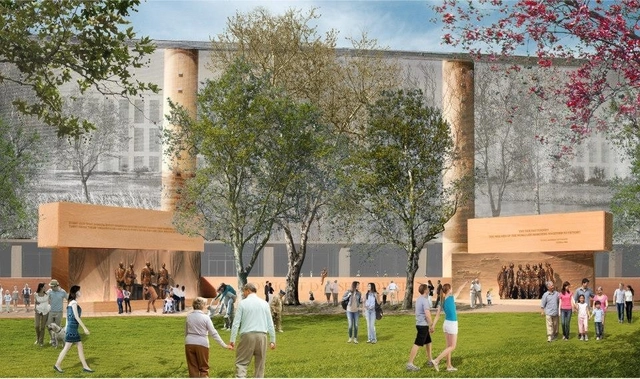
The National Capital Planning Commission (NCPC) has awarded Frank Gehry's controversial Eisenhower Memorial final approval during a meeting held on July 9. This means all agencies overseeing the project has (finally) agreed on the design, which has taken 15 years and many design revisions to achieve. The project, now a joint venture between Gehry and AECOM, was initially granted preliminary approval last October.
"The resulting Dwight D. Eisenhower Memorial design satisfies the goals of the seven design principles established for this site in 2006 by the NCPC to preserve and enhance the unique character of this site and establish a new green space within the context of L’Enfant’s plan for Washington D.C.," said the NCPC in their final report. You can read the report in full, here.

Dear ArchDaily Readers,
One of the most important pillars of our mission is to constantly improve the way that we deliver inspiration and knowledge to architects around the world. Over time, the tens of thousands of projects we have featured in-depth have grown to form a large "ArchDaily Iceberg" in which most of this invaluable architecture content accumulates below the surface. In our quest to make this information more accessible, and especially given our understanding of how we (architects) collect and organize case studies and references, we launched a modest tool in late 2010: My ArchDaily. This tool allowed you to bookmark and save your favorite projects and sort them in folders, two concepts that relate to how you use your browser and desktop.
My ArchDaily was also the authentication tool for voting in Building of the Year Award, and over the years this feature started to gain traction among our users--reaching more than 282,000 registered users as of today! But, My ArchDaily had taken a back seat to other development projects and wasn't updated until we launched our new platform a few days ago.
So now, we're happy to present the new-and-improved My ArchDaily! It was launched alongside other improvements that you may have noticed over the past few weeks. If you aren't using it already, we welcome you to start building your very own personalized architecture library and organize projects and articles using labels.
Whether you are researching specific precedents or just want to save a particularly inspiring project, My ArchDaily's seamless integration allows you to save information with one-simple click.
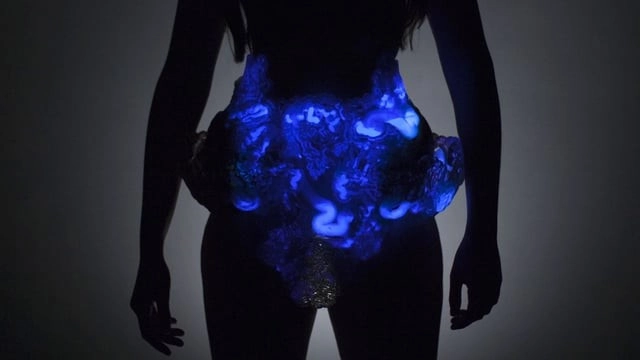
Designer and architect Neri Oxman, working with the Mediated Matter group, has unveiled “Mushtari”: a 3D-printed wearable that can convert sunlight into usable products. Joining the “Wanderer” collection, Mushtari was designed as a relationship between the most primitive and most sophisticated life forms. The wearable contains 58 meters of internal fluid channels and functions as a microbial factory, using synthetic biology to convert sunlight into items for the wearer.
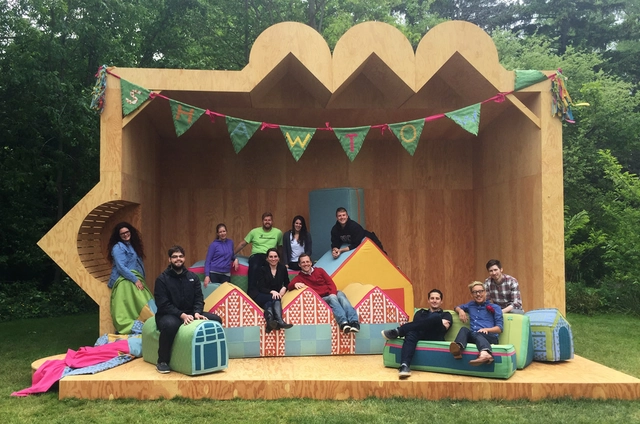
Chicago based architecture studio Design With Company, in collaboration with Arup, have constructed their winning proposal for the Ragdale Ring design competition, which asked entrants to redesign Howard Van Doren Shaw’s 1912 performance venue for a Chicago artists’ community. Their design lightheartedly references features of Shaw’s architecture, while creating a venue for acoustically unamplified performances.
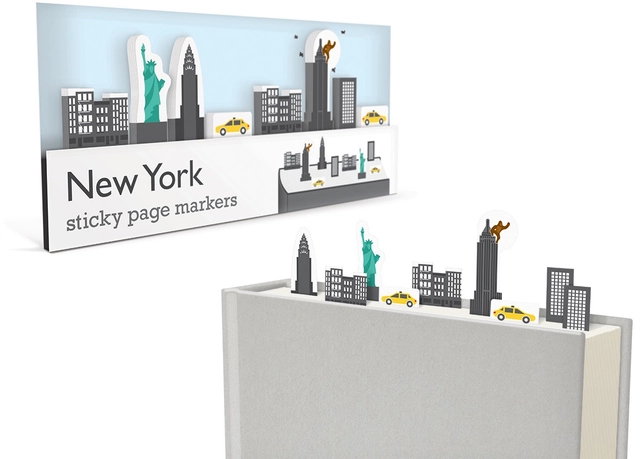
Building a city has never been so easy. With Duncan Shotton Design Studio's Sticky Page Markers you can create your own urban landscape, while marking the pages of your books, catalogues, or notes.
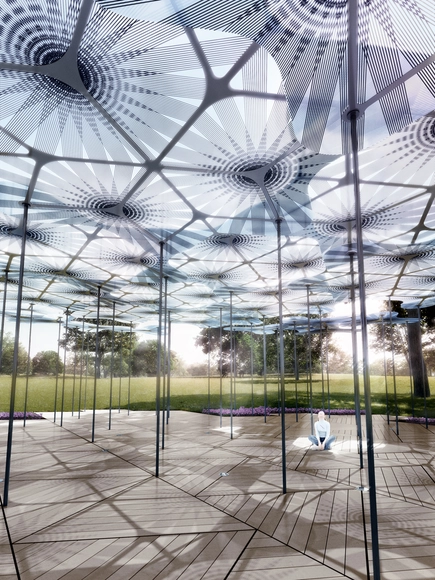
Images have been released of Melbourne's second annual MPavilion. Designed by British architect Amanda Levete of AL_A, the temporary structure will use the latest technology in nautical engineering to stimulate a forest-like canopy within the city’s Queen Victoria Gardens. A series of three- and five-meter wide petals made from ultra-thin translucent composite and carbon fiber will "sway" on top slender columns, mimicking the tree line to the site's east.
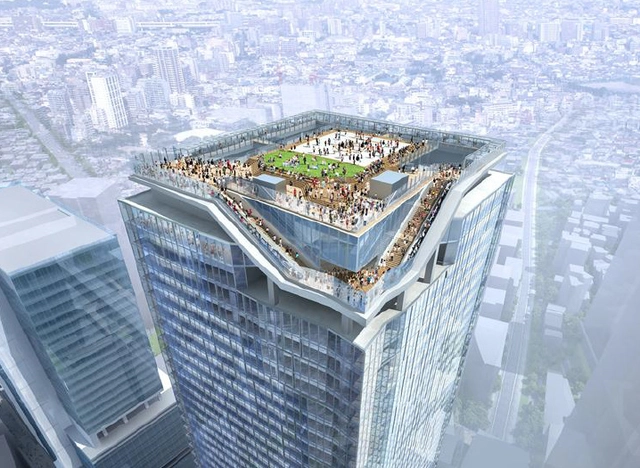
Tokyu Corporation has unveiled a new skyscraper planned will rise adjacent to Tokyo's Shibuya Station. A collaborative design by Japanese firms Kengo Kuma, SANAA and Nikken, the 230-meter mixed use tower will feature an unprecedented, 3,000-square-meter public sky deck that promises "views of Mt. Fuji" (on a clear day).
The Shibuya tower is planned to open in 2019, a year before the Tokyo Olympics.
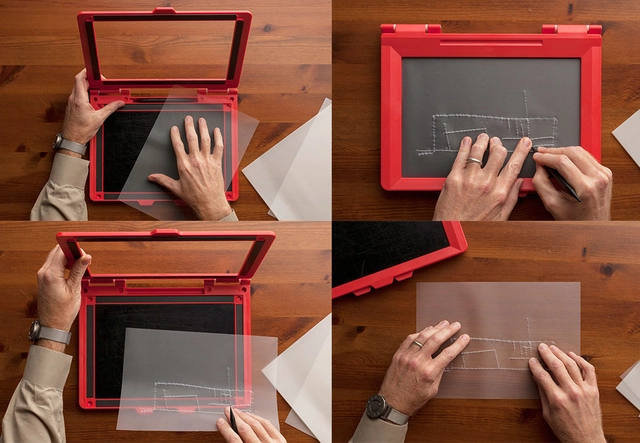
Seven years after waking up without sight, San Francisco-based architect Chris Downey is helping to revolutionize the built environment with interactive technologies optimized for the blind. One of the world's leading blind architects, Downey intrinsically understands the issues facing blind and visually impaired people worldwide. As a consultant to a variety of organizations serving to advance universal access, Downey has played an integral role in the development and integration of new, non-invasive technologies designed to assist the blind.
In a recent article in Dwell, Downey illustrates the various technologies currently being tested and implemented in San Francisco - a city notorious for its topographical challenges to differently abled residents. See four takeaways from Dwell's interview with Downey on how technology can help bridge the gap between architecture and universal access after the break.
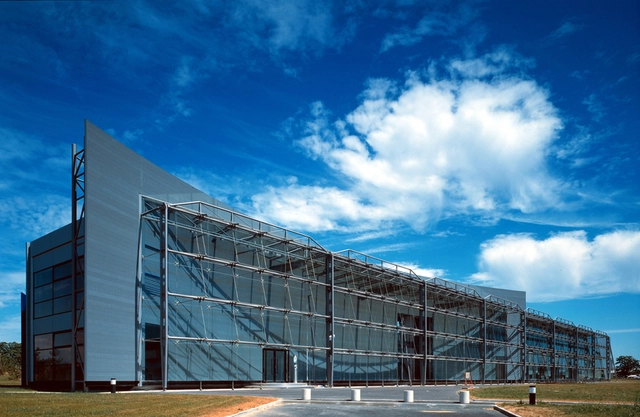
Designed by Odile Decq and Benoit Cornette, the BPO Building in Montgermont, France is now being threatened by a demolition permit. Inaugurated in 1990 and having won no less than 12 awards in its lifetime - including a Golden Lion at the 1996 Venice Biennale - the building has been widely lauded for its technical innovations, including a double-glazed suspended façade and panoramic elevators. It has appeared as the focus of theses internationally, and is featured at the Cité de l’Architecture et du Patrimoine and Palais de Chaillot, illustrating its pivotal role in architectural growth. It was one of the first buildings in the 90s to demonstrate an acute response to the quality of workplaces, and stands as an example of conscious, thoughtful design.
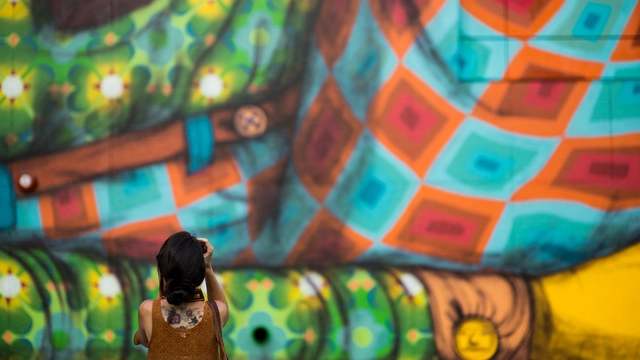
In the latest edition of The Urbanist, Monocle 24's weekly "guide to making better cities," the team tackle the illegal city and look at how our cities are dealing with those who are bending the rules. From Portugal to Albania to Brazil, Andrew Tuck and his correspondents explore how crime and illegality have become ubiquitous in our urban environment, from informal settlements and illegal housing, street art and rough sleeping, to the more sinister impact of inner-city organised crime.

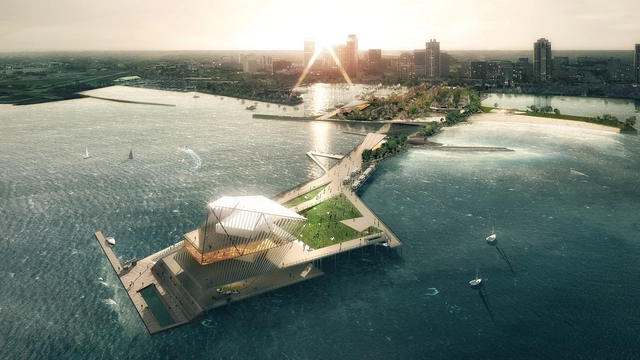
The St. Petersburg City Council has approved Rogers Partners, Ken Smith and ASD's "Pier Park" redesign, allocating funds towards demolition of the current pier and pre-construction work. The design, selected through a city-sponsored competition, will replace "an aging icon" - a 1970s inverted pyramid structure that occupies the pier's head - and focus on integrating flexible, community-oriented program throughout the site and surrounding area.
“Each of the pier’s past incarnations had its own set of programs and uses, some more ambitious than others,” commented John Curran, studio leader at ASD and lead project manager for the new pier. “The ones that succeeded appealed to both visitors and residents, and were active day and night, throughout the year. This flexibility was essential to our approach to the new design.”
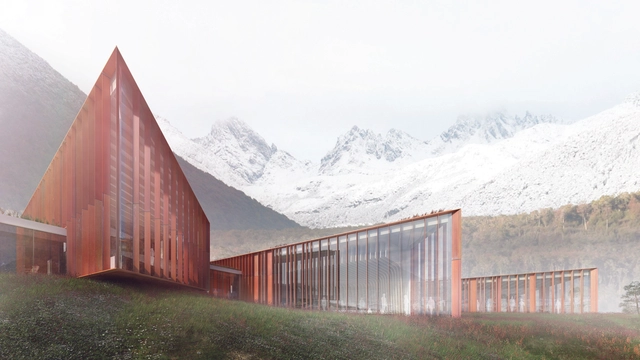
As a result of a public competition, the Chilean Regional Government has commissioned Ennead Architects to collaborate with Chilean architects Cristian Sanhueza and Cristian Ostertag on the design of the Cape Horn Sub-Antarctic Center. Planned for a site within the UNESCO Cape Horn Biosphere Reserve in Puerto Williams, a town on Navarino Island in the Chilean Sub-Antarctic Province, the center will provide a home for the Biocultural Research and Conservation Program led by Dr. Ricardo Rozzi, Professor at the University of North Texas, the Universidad de Magallanes and the Institute of Ecology and Biodiversity.
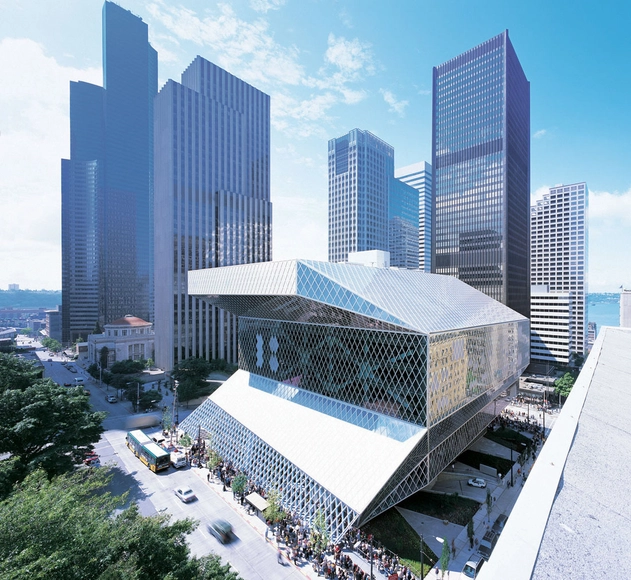
The world of architecture is small. So small in fact, that Rem Koolhaas has been credited with the creation of over forty practices worldwide, led by the likes of Zaha Hadid and Bjarke Ingels. Dubbed “Baby Rems” by Metropolis Magazine, this Koolhaas effect is hardly an isolated pattern, with manifestations far beyond the walls of OMA. The phenomenon has dominated the world of architecture, assisted by the prevalence and increasing necessity of internships for burgeoning architects.
In a recent article for Curbed, Patrick Sisson dug into the storied history of internships to uncover some unexpected connections between the world's most prolific architects. With the help of Sisson's list, we've compiled a record of the humble beginnings of the household names of architecture. Where did Frank Gehry get his start? Find out after the break.

Article 25, the charity which designs, builds, and manages projects to provide buildings for some of the world’s most vulnerable communities, have announced that late last month "the Managing Director [...] was made aware by its bank of irregular account activity." They have stated that a full investigation was immediately launched and the trustees have since "uncovered what appears to be a systematic falsification of financial statements that have hidden multiple unapproved payments, which are believed to be in excess of £200,000" (€280,000 or $310,000 USD). They have announced that William Golding, the office manager and book keeper, "was absent on Monday June 29 and has been uncontactable since then."
Find out how you can help after the break.
The UK is in the midst of a housing crisis, the intricacies of which were detailed by Rowan Moore earlier this year. For decades the typical British housing stock has been of relatively poor quality, proliferated by developer-led consortiums and characterised by ruthless cost-efficiency for maximum profit. From this formula comes nothing but a monotony of off-the-shelf constructions which have, over time, become a national benchmark. These houses – often built of brick, boxy in form, and using as little space in the facade for openings – are commonly dark, spatially inadequate, and far below the standards that should be being aimed for. It’s like living in a well-appointed cave.