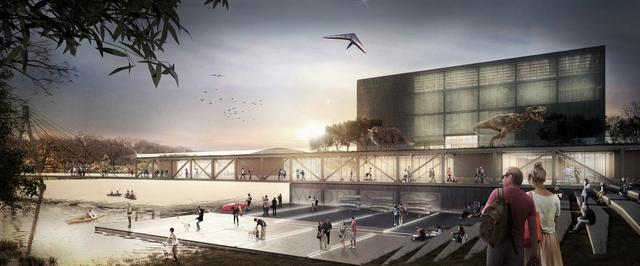
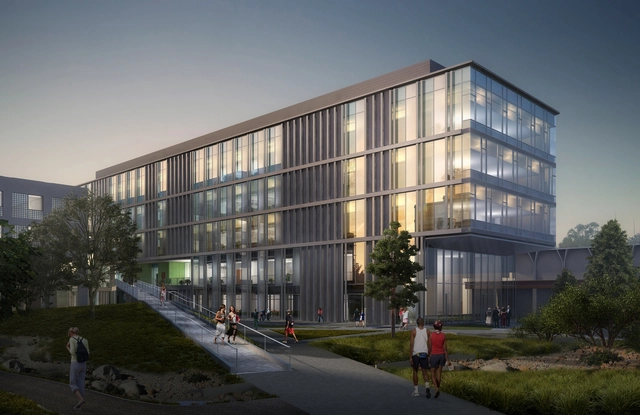
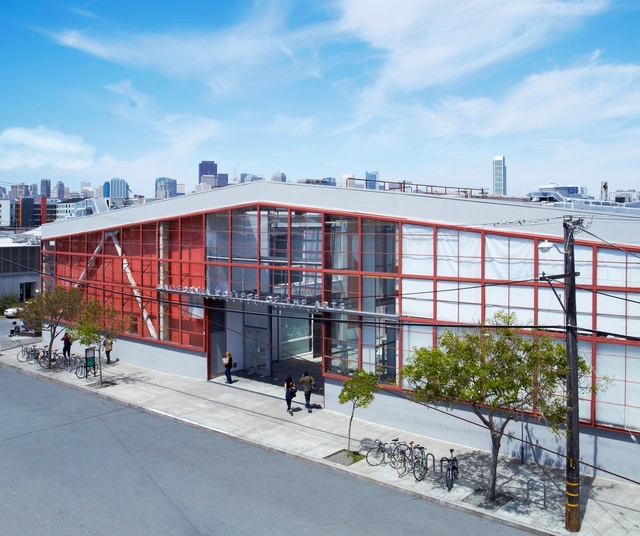
The California College of the Arts (CCA) has selected 3 top firms as finalists to design “a new, ground-breaking art school that will redefine 21st century arts education.” Chosen from an original pool of 75 architects, the three firms will now interview for the chance to design a new campus that aims to unify the college’s Oakland and San Francisco campuses into one vibrant Bay Area institution.
The chosen firm will work together with the school over the next five years to create a plan that will bring together 2,000 students, 600 faculty members, 250 staff members, and 34 academic programs to a consolidated campus located at the intersection of the city’s innovation corridor, the new DoReMi (Dogpatch, Potrero Hill, Mission) arts district, and Mission Bay. The primary project site will be a 2.4-acre lot that borders the college’s existing San Francisco campus buildings. The campus will house all of CCA’s programs, including art, crafts, design, architecture and writing, fostering interaction between the different disciplines.
The Ensemble Immobilier Tour Maine-Montparnasse (EITMM) has selected 7 notable firms to continue to the second round in a competition for the renovation of Tour Montparnasse in the Montparnasse district of Paris, France.
Often cited as one of the architecture world’s most hated buildings, Tour Montparnasse has been criticized for its discordance with the Parisian urban landscape – just two years after its completion, new buildings over seven stories high in the city centre were banned, leaving the tower as an alien presence on the skyline.
With the launching of the competition, the EITMM hopes to transform Tour Montparnasse into a beloved landmark with a complete renovation of the facade, the building entry and all interior spaces. The budget for the project is estimated to reach over 300 million Euro ($330 million USD), and will be funded in entirety by the building owners.
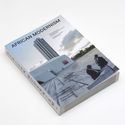
The Frankfurt Book Fair and Deutsches Architekturmuseum (DAM) have announced the results of the 2016 International DAMArchitectural Book Award, their annual list of the ten best architectural books published in the past year.
This year, books were selected from 214 entries and 88 international publishers, based on criteria such as design content, quality of material and finishing, innovation, and topicality. The winning books feature a wide range of topics and graphic styles, and feature projects from all over the world.
Find the top 10 and additional shortlisted books below.
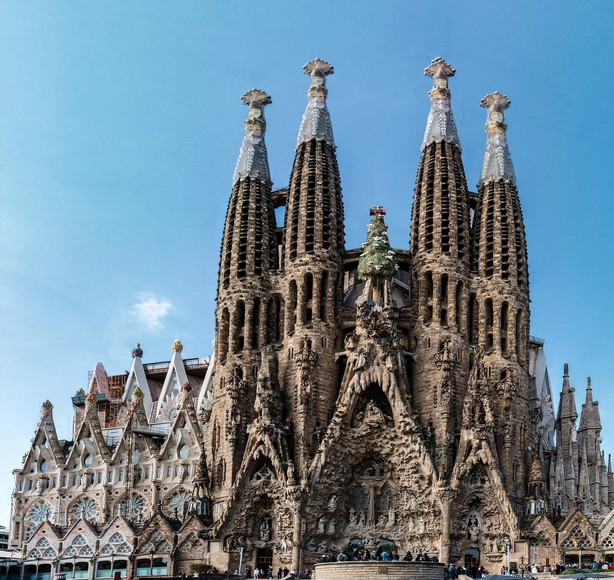
Over the course of 134 years of construction of the Sagrada Familia, the unfinished masterpiece of Antoni Gaudi in Barcelona has experienced three unresolved conflicts. First, there was a lack of a (contemporary) construction permit, the nonpayment of taxes, and finally the uncertainty about whether or not to finally build the large plaza to the southeast that Gaudí imagined with the forced expulsion of up to 3,000 residents and lessees, all living in the area surrounding Sagrada Familia’s Glory Façade.
In recent days, these three issues have come to light almost simultaneously, but let’s discuss them one by one. Bitterly upset by what he describes as "a project without plans in Gaudi's name" Councilman of Barcelona Architecture, Urban Landscape and Heritage Daniel Mòdol called the Sagrada Familia a "giant Easter cake".
His statement, reported by the press two weeks ago, overshadowed the official Municipal proposal made to the temple’s construction monitoring committee "if they plan to modify the planning around the basilica" in a maximum period of six months. This is in reference to the large esplanade designed by Gaudi in his original plan, in front of the Glory Façade (between the streets Mallorca and Arago): a walkway 60 meters wide that would connect the temple with Diagonal Avenue.
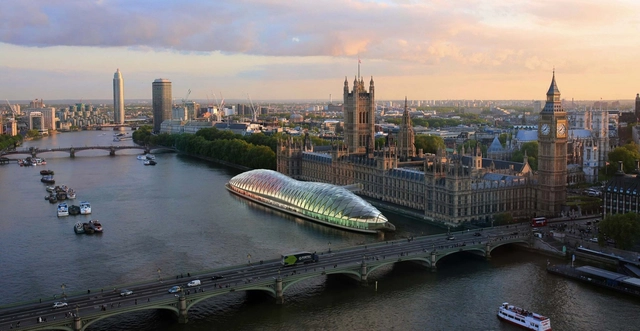
The British government have come to the realisation that the Palace of Westminster—the iconic UK Houses of Parliament designed by Charles Barry and Augustus Pugin—is in desperate need of full-scale restoration and renovation. The decision to move ahead with the plans will be costly and inconvenient; aside from the need to repair the structure, the UK government is bracing itself for eye-watering "relocation" fees. In response to this, Gensler have proposed a temporary parliament on the banks of the River Thames.
https://www.archdaily.com/797480/project-poseidon-genslers-radical-proposal-for-a-temporary-uk-parliamentAD Editorial Team
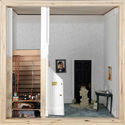
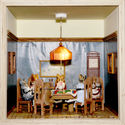
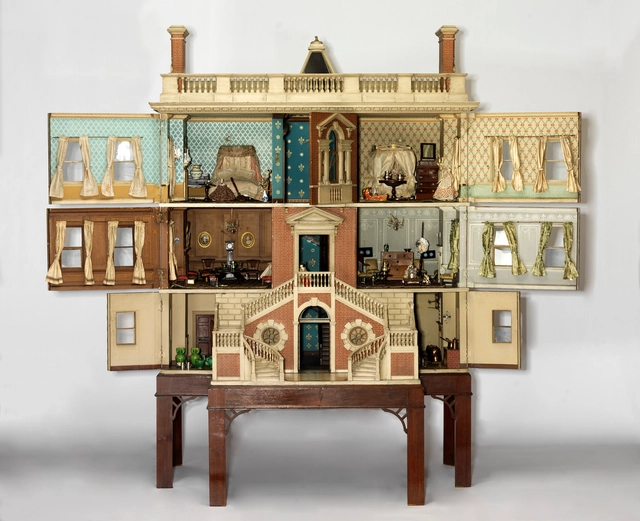
As part of a new exhibition at the National Building Museum in Washington D.C., twelve dollhouses tracing the history of British domesticity have been lent by London's Victoria & Albert Museum of Childhood. The show—Small Stories: At Home in a Dollhouse—spans 300 years and presents a miniature-sized, up-close-and-personal view of developments in architecture and design – from lavish country mansions, to an urban high-rise.
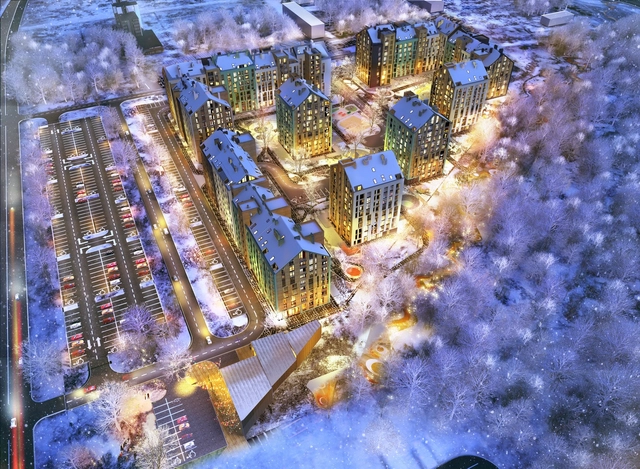
Archimatika Architects has unveiled the plans for “Leopol Town,” a new housing project located on Styiska Street in Lviv, Western Ukraine. Overall, the project will include seven buildings, with 757 flats, shops, cafeterias, restaurants, and public access at the lower levels.
In an effort to combat the uncomfortable Soviet “sleeping neighborhood” feeling of the city, the project will feature open blocks, parceling, energy efficient systems, and sustainability principles to “invite nature in.”
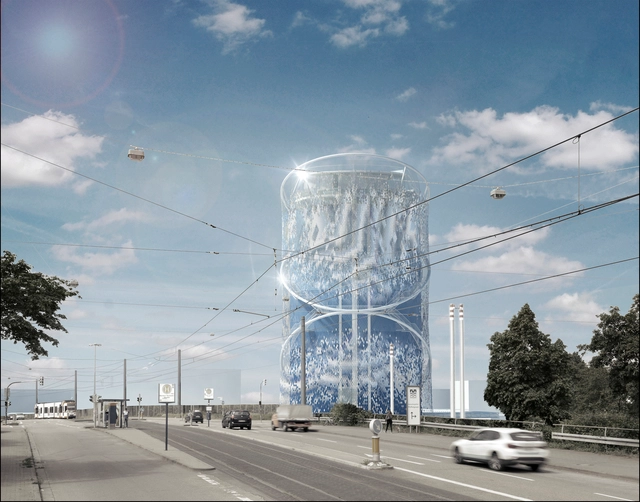
LAVA (Laboratory for Visionary Architecture) has won the competition to redesign an energy park and energy storage building in Heidelberg, Germany, for the Stadtwerke Heidelberg. Currently a cylindrically shaped storage center, the space will be transformed into a dynamic sculpture, city icon, and knowledge hub for sustainable energy, fully accessible to the public with city views.
In order to display the concepts of energy transition, decentralization, networking, flexibility and adaptability, the project will feature a multi-layered façade structure inspired by geometries in nature like leaves, spider webs, and reptile skins. “The result is a dynamic, ever-changing surface of light and shadow, animated by wind, turning the building into a beacon of a dynamic new energy regime.”
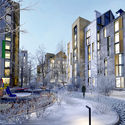
Now in its eighth edition, Design Week Mexico, in collaboration with Museo Tamayo, has unveiled the design for a major public architectural pavilion designed by leading German architects Nikolaus Hirsch and Michel Müller. Until Spring 2017, the installation will be a cultural attraction at Chapultepec Park, Mexico City’s largest public park.
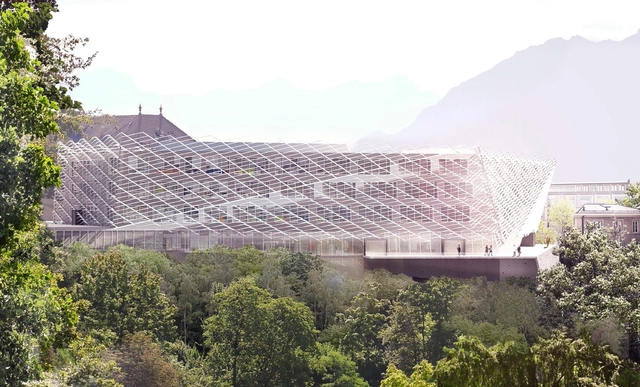
Behnisch Architekten has announced the groundbreaking of the AGORA—Cancer Research Center located in Lausanne, Switzerland within sight of Lake Geneva. As the new home of the Swiss Institute for Experimental Cancer Research (ISREC), the Center will bring together 400 researchers, scientists, doctors, and clinicians under the goal of enhanced communication.
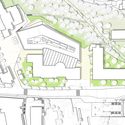
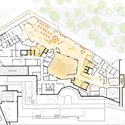
The new AGORA building will connect to an existing building on one side, with minimal disruptions to existing programming. “Visual relationships both on the site and to the landscape beyond require a carefully defined building mass and the new building responds sensitively to these site conditions while sculpturally standing out from its heterogeneous surroundings.”
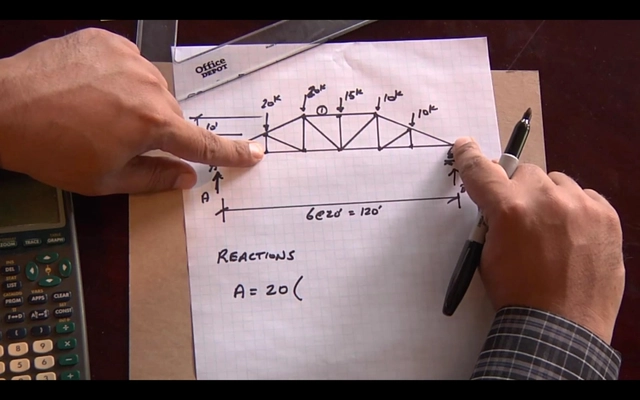
For architects seeking NCARB licensure, few things are more daunting than the dreaded structural exam. But now, thanks to a series of videos from structural engineer Dilip Khatri, even those of us who spent more time doodling than paying attention in college engineering classes can acquire the skills needed to pass the structural section of the ARE.
Khatri, principal of Khatri International Structural and Civil Engineers, has a PHD in Structural Engineering from the University of Southern California and over 30 years experience in the profession, including over 20 years of teaching structural engineering. In the videos, he covers everything you’ll need to know for the exam, from test-taking strategy to shear and moment diagramming to complex problem solving, illustrating with the help of a sharpie pen.
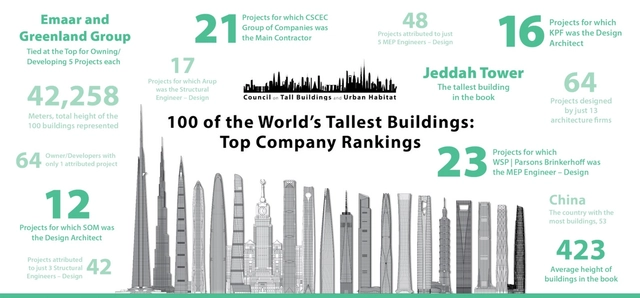
The Council on Tall Buildings and Urban Habitat (CTBUH) has released some of the facts and figures behind the projects appearing in their recent book, 100 of the World’s Tallest Buildings. The construction of tall buildings requires collaboration between many different companies and firms and the efforts of hundreds of people, but a few select firms have been responsible for more of the design and engineering achievements than any other.
Continue reading to see the 18 design architects that have contributed multiple buildings to the top 100 list.
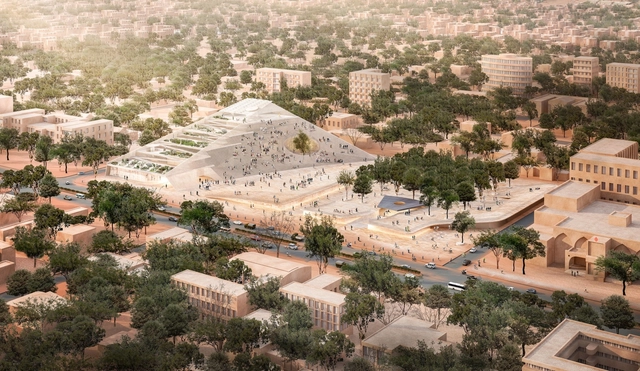
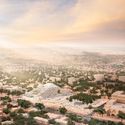
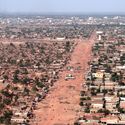
On October 30, 2014, as Burkina Faso President Blaise Compaoré was preparing to make an amendment to the country’s constitution that would eliminate presidential term limits and allow him to extend his 27 year rule, tens of thousands of Burkinabé citizens in the capital city of Ouagadougoubroke through police lines to set fire to several government buildings, including city hall, the ruling party headquarters, and the National Assembly Building. The following day, Compaoré stepped down, ushering in a new era of democratic rule and resulting in the country’s first ever pluralistic and competitive Presidential election in 2015.
But the revolution left the former government complex in tatters and in need of a clear direction forward both culturally and architecturally. A former French colony, Burkina Faso is home to 19 million people, 50 different ethnicities and more than 60 languages. The country would require a new Parliament that could serve as a common ground for these diverse groups, while providing the technology and education necessary to create opportunities and a better quality of life for all Burkinabés.
To find this solution, last year, the new head of Parliament approached architect and Burkina Faso native Francis Kéré to develop a building and masterplan for the Assembly Building. The new building, in the architect’s words, would need to be one that could “not only address the core democratic values of transparency, openness and equality, but could also become a catalyst for growth and development for the capital city of Ouagadougou as a whole.”
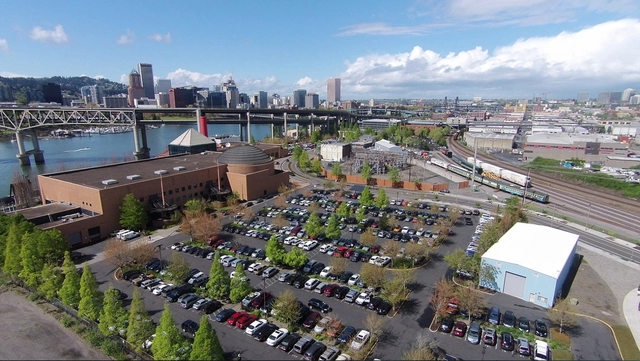
The overall goal of the master plan will be “to provide a market-driven strategy that outlines the best economic and environmental uses of OMSI’s physical property while highlighting the museum’s work as a cultural touchstone, science education resource, and trailhead to connect the community to learning and skill-building opportunities that equip them for 21st century jobs.”
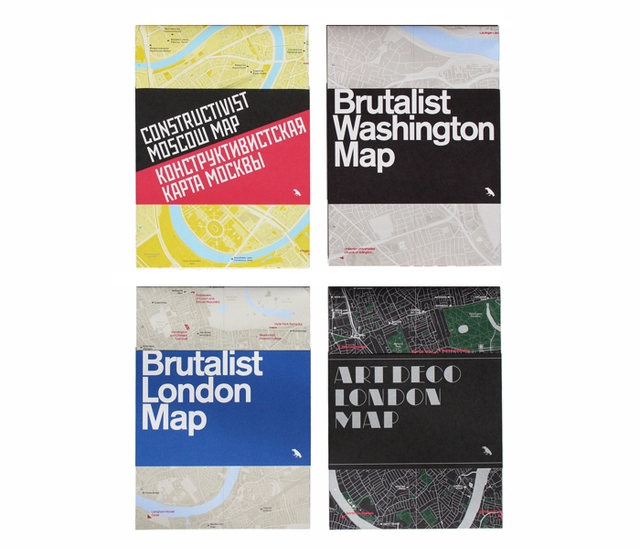
City Guide publisher Blue Crow Media and Deane Madsen, Associate Editor of Design at Architect Magazine, have collaborated to produce the Brutalist Washington Map, which features 40 examples of Brutalist architecture in Washington, D.C. This is Blue Crowe's fourth architectural guide map, following their Brutalist London Map, Art Deco London Map, and Constructivist Moscow Map. One can only expect further releases on the horizon.
This article is part of our "Material Focus" series, which asks architects to elaborate on the thought process behind their material choices and sheds light on the steps required to get projects actually built.
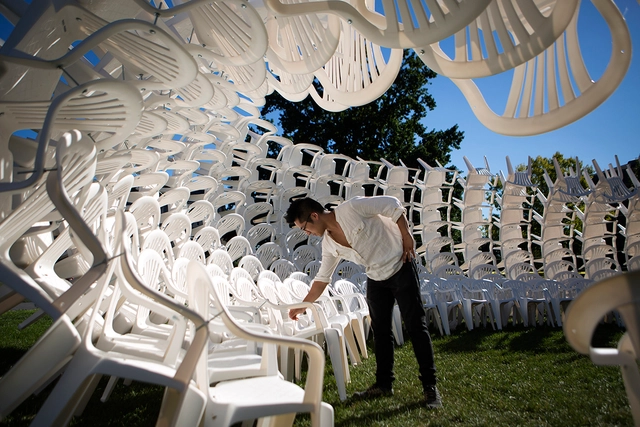
In this exceptionally imaginative and thought-provoking exercise in perceptual shifts, Ithaca- & Brooklyn-based CODA transformed hundreds of humble plastic lawn chairs into a project in the Arts Quad at Cornell University. Viewed from afar as a spiky singular entity, close inspection reveals the simple, unpretentious repeated module. CODA explains, "the object’s features are no longer understood in terms of their use (legs, arms, seat) but in terms of their form (spikes, curves, voids) as, due to their rotation away from the ground, they lose their relationship with the human body." We asked Caroline O'Donnell, principle at CODA, to explain the challenges faced in the development and construction of the fully-recyclable URCHIN.
https://www.archdaily.com/797182/how-coda-used-hundreds-of-white-plastic-chairs-to-build-a-recyclable-pavilionAD Editorial Team
Google and La Biennale di Venezia have teamed up to release an online catalogue of the 2016 Venice Biennale. Hosted on Google’s Arts and Culture platform, the digital archive contains over 3700 images and videos from the 15th International Architecture Exhibition “Reporting From The Front”, curated by Alejandro Aravena, and a selection of National Pavilions and ancillary events.
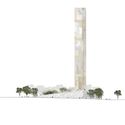
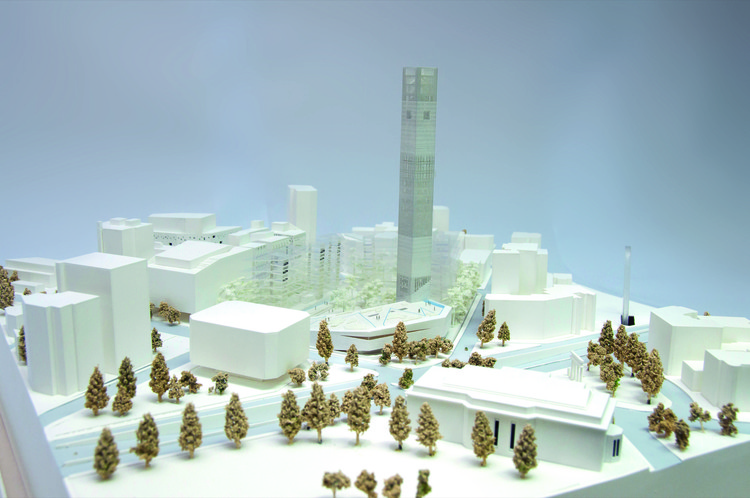
HW architecture, led by Lebanese/French architect Hala Wardé, has been chosen as the winners of an international competition to design the new BeMA: Beirut Museum of Art in Lebanon. The new museum will be located in the heart of Beirut and features a “central campanile tower” that will rise nearly 400 feet into the air as it becomes a new cultural beacon for the city.
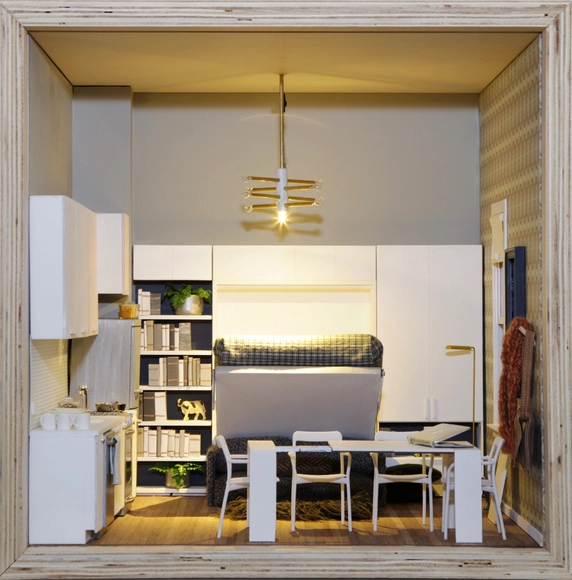
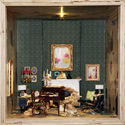
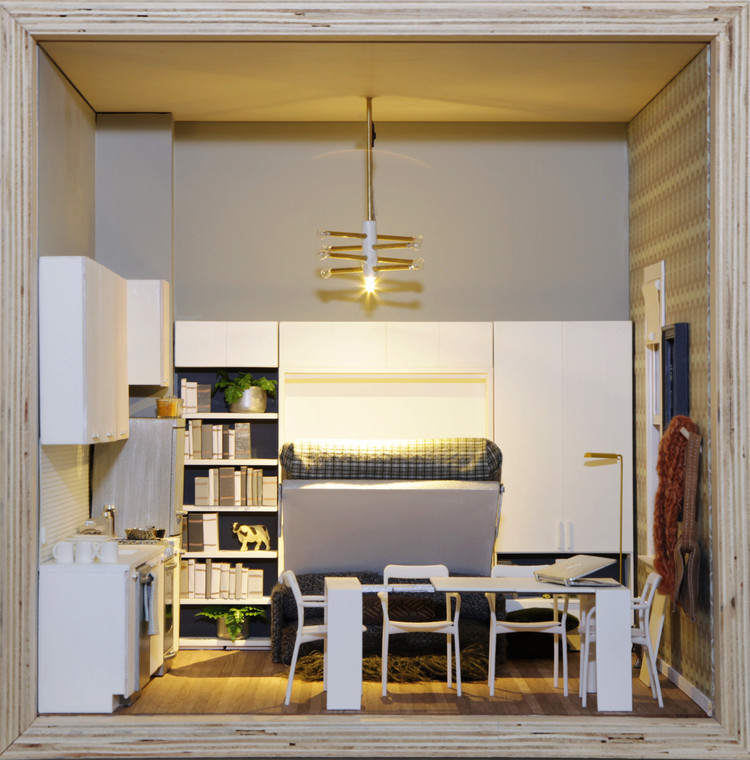
As part of a new exhibition at the National Building Museum in Washington D.C., a group of 24 American architects, designers and architects have been commissioned to create "dream homes" in the format of the contemporary dollhouse. Part of Small Stories: At Home in a Dollhouse, in which twelve historical dollhouses spanning the past 300 years from London's Victoria & Albert Museum of Childhood are being presented in the United States for the first time, these 21st Century interpretations intend to showcase a "diverse array of perspectives, demonstrating the limitless creativity of building in miniature."
Los-Angeles-based CO Architects has released the plans for the Biological Physical Sciences Building (BPSB), a new life sciences facility at the University of California in San Diego. In order to “blend the richly diverse fields” of neurobiology, chemistry, and biochemistry, the seven-story, 128,000-square-foot building will promote collaborative research and visibility in teaching spaces.
Our goal at UC San Diego is to create opportunities to maximize interdisciplinary collaboration between multiple research and academic units, said Jennifer Knudsen, AIA, LEED AP BD+C Principal at CO Architects. We want the building to accommodate a range of research activities and teaching models capable of evolving over time.
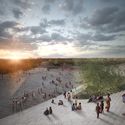
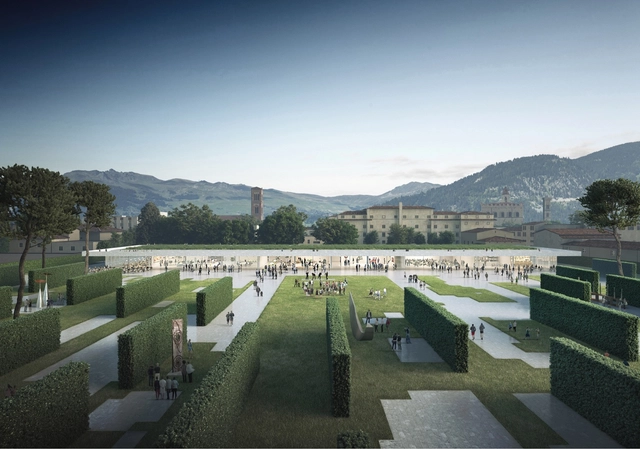
The 230-team competition asked architects to design a new 3-hectare urban park in Prato’s historical city center on the site of the former city hospital, within the perimeter of the city walls. The project is intended to meet the needs of a contemporary city while driving socio-economic development of the city center through “enhancements to its touristic vocation, sustainability and accessibility.”
The jury, chaired by architect Bernard Tschumi, unanimously selected the winning proposal for “its ability to offer to the city of Prato an original, innovative and practical solution.” Commented Tschumi on the design, “The project is remarkable in the way it understands and celebrates the history of Prato and of its medieval walls. At the same time, it looks to the future and to the development of the city and its diverse population.”
The jury also released the full rankings of the 10 finalist teams. Learn about the winning design and see the entries from all 10 of the finalists, after the break.
Researchers from Lund University in Sweden have digitally reconstructed a house in Pompeii to envision what life in the city would have looked like before the destructive eruption of Mount Vesuvius in 79 AD. The large house, thought to have belonged to a wealthy banker named Caecilius Iucundus, is among the first 3D models created by the research team to document and preserve the city. The team has now released video material of their work, showing their creation of a 3D model of an entire block of houses.
The 2016 Lisbon Architecture Triennale, which opened last week, is comprised of a constellation of exhibitions and satellites. One such show—eponymously named The Form of Form—is both an exhibition and a structure in itself – a sequence of rooms designed collaboratively by Mark Lee of Johnston Marklee, Kersten Geers of Office KGDVS, and Nuno Brandão Costa. If "one of architecture’s fundamental legacies is its own form," the curatorial statement declares, "this exhibition [builds] a dialogue that challenges notions of authorship and the limits of form."










s_balkonami_box2.jpg?1476151664 "Courtesy of Archimatika Architects")




_Alberto_Jurtega_(6).jpg?1476413575&format=webp&width=640&height=580)
_Alberto_Jurtega_(9).jpg?1476413605 "Courtesy of Design Week Mexico")
_Alberto_Jurtega_(8).jpg?1476413595 "Courtesy of Design Week Mexico")
_Alberto_Jurtega_(7).jpg?1476413585 "Courtesy of Design Week Mexico")
_Alberto_Jurtega_(3).jpg?1476413544 "Courtesy of Design Week Mexico")
_Alberto_Jurtega_(6).jpg?1476413575)