-
Architects: 4site architects
- Area: 6500 ft²
- Year: 2026
-
Manufacturers: Anchor by Panasonic, Aparna RMC, Ashirwad, Astra CPVC Pipes, Birla white, +17


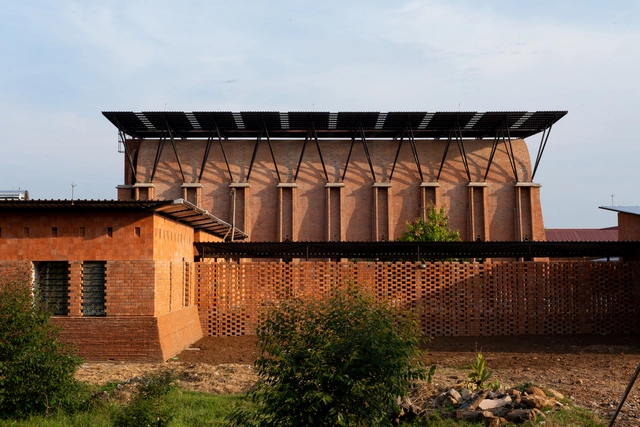
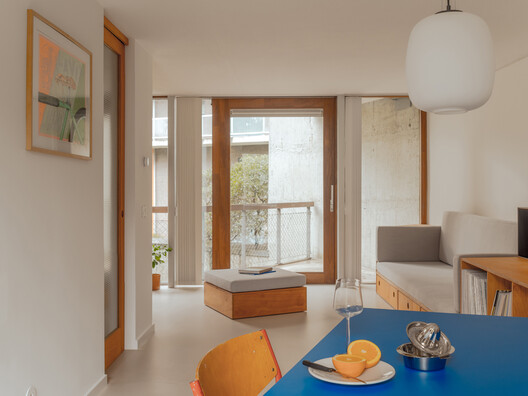
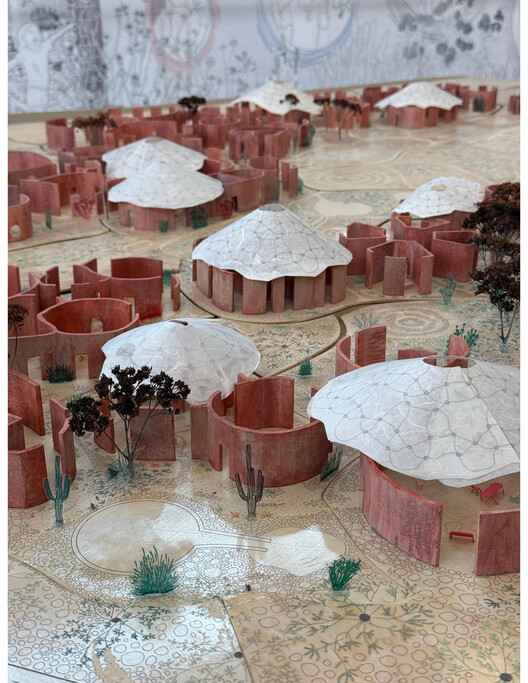
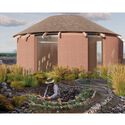
In the high desert of the San Rafael Valley, a few miles from the United States-Mexico border in Lochiel, Arizona, an adobe schoolhouse has stood for more than a century. Built before 1905, before Arizona was an incorporated state, the schoolhouse served generations of Mexican American students from Arizona and Sonora, cultivating shared cultural experiences, stories, and relationships that transcend physical and political boundaries. Over decades of education and shared histories, it became a place where language and narrative moved freely, even as geopolitical tensions continued to rise along the border. Today, it is one of the last remaining one-room adobe schoolhouses in the United States.
Adobe is among the oldest building technologies in the American Southwest, and among the most demanding to steward. In desert climates, earthen walls face intense weathering from temperature extremes, cracking due to seasonal shifts, and accelerated decay after storm events. These vulnerabilities require sustained and skilled maintenance over many seasons and compounding decades. After years of encroaching abandonment and structural threats, a twelve-year restoration effort by local community members who understood this building as critical cultural infrastructure brought the schoolhouse back from the edge of demolition. That the community chose to undertake this effort, given everything Adobe construction demands of those who care for it, is a statement about what the loss of this building would have cost. The result is a structure that now stands as a monument to Mexican American heritage and a living archive of rural border education.


For all the spatial experimentation of the contemporary workplace, one condition has remained largely unchanged: people are still sitting. Studies suggest that office workers spend up to 89% of their working day seated—close to 36 hours a week—despite decades of ergonomic awareness. As workplaces become more flexible, social, and design-led, this contradiction becomes harder to ignore.
The office is no longer organized around a single mode of operation, nor by a fixed spatial logic. Work has become multifunctional, shifting between collaboration and concentration, collective exchange and individual focus. In response, architecture and interior design are moving away from uniform, repetitive layouts towards environments that reflect the variability of human behavior.

Across cultural platforms, heritage sites, and institutional developments, this week's news reflects how the built environment is reshaped through processes of transformation, reinterpretation, and public engagement. From archaeological reactivations and adaptive reuse strategies to museum expansions and large-scale international gatherings, architecture operates across multiple temporalities, balancing preservation with contemporary use and spatial continuity with evolving cultural programs. Within this context, ArchDaily's selection of installations and exhibitions from Milan Design Week 2026 highlights how design weeks increasingly function as curatorial frameworks for experimentation, while global events and institutional projects continue to expand the formats through which architecture is produced, shared, and debated.
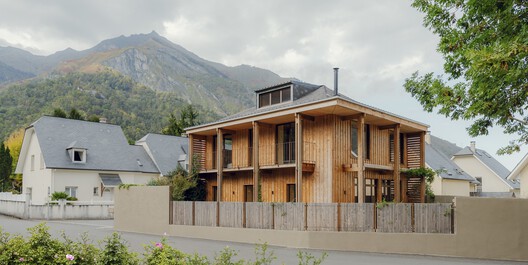

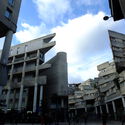
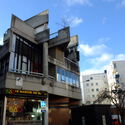
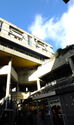
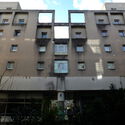
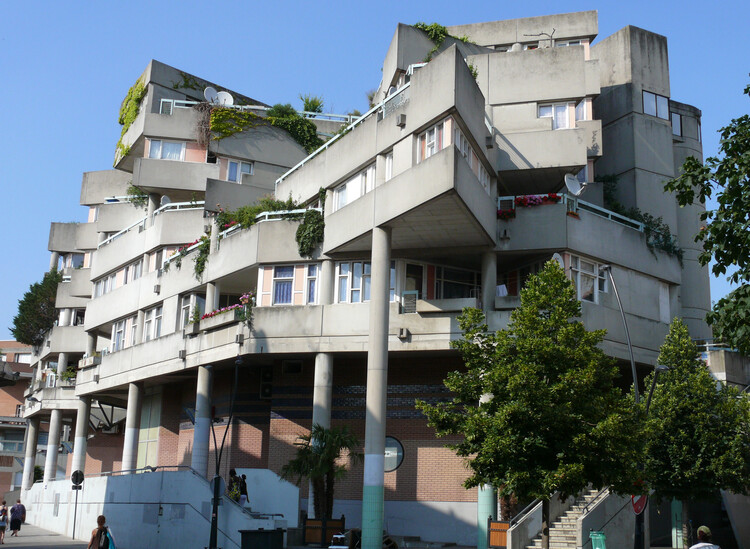
Saint-Denis is a commune in the northern suburbs of Paris, France, known for the Gothic Basilica of Saint-Denis and the Stade de France. At one corner of Place Jean-Jaurès in its historic center, adjacent to the Basilica, stands the Îlot 8 housing complex, a Brutalist landmark designed by architect Renée Gailhoustet. Built between 1975 and 1986 to provide workers' housing in the city center, countering the trend of relegating social housing to peripheral areas, the project is now at the center of a controversial redevelopment plan. Often referred to as "residentialization" and restructuring, the proposal involves the demolition of significant parts of its original design. This reconversion is part of the French Nouveau Programme National de Renouvellement Urbain (NPNRU) and is justified by concerns over structural deficiencies, safety, and maintenance.
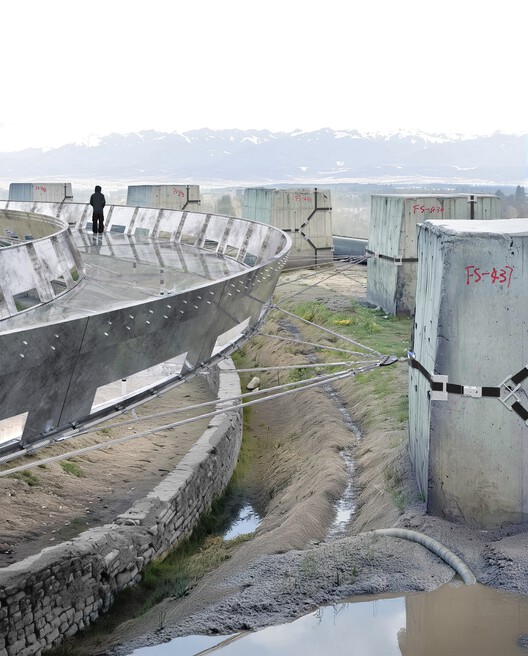
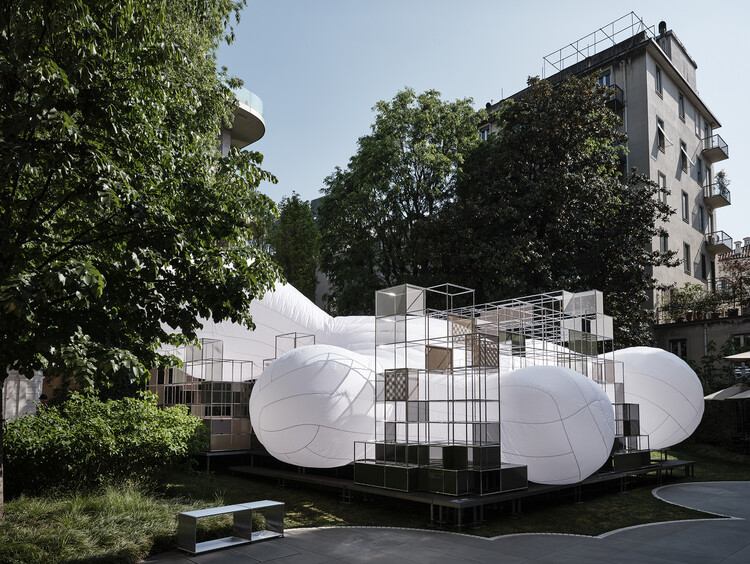
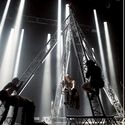
Daryan Knoblauch's work sits at the intersection of architecture and live cultural production, with a focus on how space is made legible through tension and atmosphere. Rather than treating temporary work as a lesser category of architecture, Knoblauch approaches installations, stages, and event architectures as full disciplinary problems—where enclosure, stability, light, and movement must be resolved with the same seriousness as any building, often under tighter constraints and faster timelines.
Across projects, a consistent thread is the productive tension between high-modern precision and an intentionally raw clarity of assembly. Membranes and lightweight systems are not deployed as surface effects, but as structural and spatial instruments—tuned to wind, load, and occupation, and calibrated to produce a sublimity that is felt as much as it is seen. Here, ephemerality is not simply a duration, but a design condition: temporality makes forces—weather, wear, performance—more visible, and demands an ethic of making that is both exacting and adaptable.

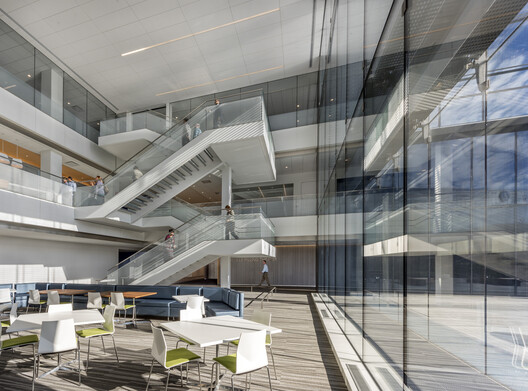
Scientifically, glass is defined as an amorphous solid, meaning its atoms are not arranged in a regular crystalline structure. This is why the material is often described as a "liquid frozen in time." This structural configuration explains one of its most distinctive qualities: transparency. Without a crystalline lattice capable of scattering light, radiation passes through the material with relatively little interference. Although it often appears delicate, this same structure also allows glass to achieve significant mechanical performance. With industrial processes such as tempering, lamination, and specialized coatings, the material can reach high levels of strength, safety, and environmental performance.