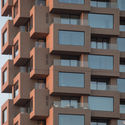
OMA wins competition for new BMVR library in Caen, France

A few weeks ago we were discussing on Twitter how OMA has developed several innovations in cultural and educational buildings. The Wyly Theater (in partnership with REX), the Seattle Public Library, and on projects such as the MNBAQ extension or the West Kowloon Cultural District master plan.
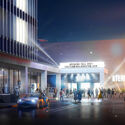
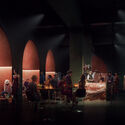
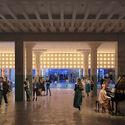
Today we got the news that OMA has won the competition for a new regional library (Bibliothèque Multimédia à Vocation Régionale) in Caen, France. The 12,000m2 project will be OMA’s first cultural building in France, and was led by associate-in-charge Clément Blanchet.
Fondaco dei Tedeschi / OMA

This just in from OMA! The firm has unveiled their plans for the major restoration project of the Fondaco dei Tedeschi – a landmark building in Venice, Italy. Rich in history, this icon was constructed by in 1228 as a major trading post for German merchants, and under Napoleon it became a customs house in 1806. Its most recent use has been as a post office, yet currently, the building has fallen into a state of disrepair as most of the building is unused and inaccessible for the first time in centuries. Now, the next step in the building’s evolution is to become, yet again, a thriving trading post – yet, in a contemporary way. OMA has been commissioned to the create a culturally-programmed department store that will, once again, give a new spirit to the building.
More images and more about the project after the break.
Strelka presentation at the Venice Biennale

As we told you in May, OMA + AMO will collaborate with Strelka, a postgraduate school for media, architecture and design in Moscow.
Now, the presentation of this very special partnership will take place at the Architecture Biennale 2010 in Venice on August 26th between 2:30 and 3:45 pm.
More information after the break.
OMA’s Arts District Master Plan Unveiled
This past week, the West Kowloon Cultural District Authority of Hong Kong unveiled OMA’s conceptual master plan for a new arts district (Koolhaas’ plan is one of three competing proposals). Divided into three villages, the 40 hectacre waterfront site places strong emphasis on the quality of the street life and the “cultural production where all aspects of the creative process are nurtured and made visible.” The master plan has been years in the making, as Koolhaas established an office in Hong Kong to better understand the culture and context, as well as collaborate with financial and culture experts to design a feasible plan to positively affect the communities involved. Rem Koolhaas commented, “Using the village – a typology every citizen of Hong Kong is familiar with – as the model for our plan allows us to absorb the massive scale of WKCD’s ambition into manageable portions and forge deep connections with Kowloon, whose vital urban energy will be the lifeblood of WKCD.”
Images and more information about the master plan after the break.
Roadmap 2050: A pathway to decarbonize the United States power grid / AMO
As we told you a few months ago, AMO (the think-tank inside OMA) played an important role on Roadmap 2050, an initiative by the European Climate Foundation which looks to chart a policy roadmap for the next 5-10 years based on the European leaders’ commitment to an 80-95% reduction in CO2 emissions by 2050.
Based on this plan, AMO presents “Roadmap 2050: A pathway to decarbonize the United States power grid”. While ranked #1 based on the GDP, the US is ranked #61 in energy performance. As we see on the above video, an inefficient energy grid undermines any efforts to improve this, and local production of energy could be the answer.
This initiative is presented at the GE Ecoimagination Challenge, a $200 million call to action for businesses, entrepreneurs, innovators, and students to share their best ideas and come together to take on one of the world’s toughest challenges – building the next-generation power grid to meet the needs of the 21st century.
You can vote for this idea (and even discuss it with AMO on the comments), see others or even submit your own.
Koolhaas wins Lifetime Achievement Award

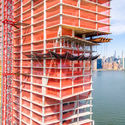
Chaired by Paolo Baratta, the Board of the Biennale di Venezia has awarded the Golden Lion for Lifetime Achievement to Rem Koolhaas. The much deserving architect has produced dozens of thought-provoking and inspirational works that constantly push the limits of the current state of architecture. His strength lies in his buildings’ strong conceptual nature that is carried through to ideas about circulation, structure and programmatic organization. ”Rem Koolhaas has expanded the possibilities of architecture. He has focused on the exchanges between people in space. He creates buildings that bring people together and in this way forms ambitious goals for architecture. His influence on the world has come well beyond architecture. People from very diverse fields feel a great freedom from his work,” explained the board.
More about the award after the break.
In Progress: Shenzhen Stock Exchange by OMA tops out

We first heard about the new Shenzhen Stock Exchange (SSE) building by OMA during the peak of the new chinese construction revolution. Then we saw Rem Koolhaas breaking ground together with the Chinese government, and capitalism in China started to have a tangible representation.
The new building for the NASDAQ equivalent (730 high tech companies & startups, moving over US$500 billion) has now topped out at 246m.
“For millennia, the solid building stands on a solid base; it is an image that has survived modernity. Typically, the base anchors a structure and connects it emphatically to the ground. The essence of the stock market is speculation: it is based on capital, not gravity. In the case of Shenzhen’s almost virtual stock market, the role of symbolism exceeds that of the program – it is a building that has to represent the stock market, more than physically accommodate it. It is not a trading arena with offices, but an office with virtual organs that suggest and illustrate the process of the market.”
- OMA
The project is based on pure volumes, a combination of a tower and a podium suspended 36m high. The podium is one of the biggest cantilevers in the world, an operation that liberates the ground to create a big public plaza which is visually connected (representing the new economic openness) to the lower part of the tower and the podium itself, the places were the stock exchange operations take place. Above the podium, there is a series of office space for internal operations of the SSE, totaling 200,000sqm for the entire building.
The tower’s structure is a robust exoskeletal grid overlayed with a patterned glass skin – the first time such glass has been used for an exterior at this scale. The patterned glass reveals the detail and complexity of construction while creating a mysterious crystalline effect as the tower responds to light: sparkling during bright sunshine, mute on an overcast day, enigmatic at dusk, glimmering during rain and glowing at night.
- OMA
The building is expected to be completed by August, 2011.
Renderings afte the break:
AMO: Roadmap 2050 – A Practical Guide to a Prosperous, Low-Carbon Europe
A month and a half ago we presented you Roadmap 2050, a proposal to set in motion an invisible revolution in the energy sector which would stabilize the Earths climate.
The project is a design for a feasible and affordable Europe-wide power infrastructure which can be implemented by 2050 with existing technology. With the political will and capital investment needed to realize the design, Europe could reduce its greenhouse gas emissions by 80%, and set an example for the rest of the world.
The initiative is lead by the European Climate Foundation, looking to chart a policy roadmap for the next 5-10 years based on the European leaders’ commitment to an 80-95% reduction in CO2 emissions by 2050. The goal is to achieve a 2% energy efficiency saving per year in order to meet this goal, with power and vehicle transportation being the most important areas.
OMA is one of the institutions commissioned to develop this strategy trough its think-tank AMO, focusing on the production of a graphic narrative which conceptualizes and visualizes the geographic, political, and cultural implications of the integrated, decarbonized European power sector.
We now present you a series of videos produced by AMO that continue this narrative to help us understand the implications of this plan:
In Progress: Milstein Hall Steel / OMA
It seems that after Cornell overcame the danger of having both their accreditation and new architecture school eradicated from the campus, there has been smooth sailing in terms of the physical construction of OMA’S Milstein Hall. The building is right on schedule to be fully completed in the Fall of 2011, as the structural steel, and the exterior structure + roof are being erected.
More images of the steel and more about the current construction phase after the break.
Strelka Institute / OMA + AMO

It was just announced that OMA + AMO will collaborate with Strelka, a postgraduate school for media, architecture and design in Moscow. The new school is launching an educational program where a select group of students will work intensely and innovatively on a series of themes aimed to reshape Russia’s current role in the world. In an attempt to raise the ambition of the creative industries in Russia, the institute will challenge students with a variety of projects. The students will guided by the expertise of both Russian and international creative leaders.
More about the collaboration after the break.
Roadmap 2050: A Practical Guide to a Prosperous, Low-Carbon Europe.
AMO is a design and research studio inside OMA, a think tank operating on the boundaries of architecture: media, politics, sociology, sustainability, technology, fashion, curating, publishing and graphic design. Some of their works include the barcode flag for the EU and a study for Wired magazine.
And while OMA covers sustainable strategies on a building or master plan scale, AMO is approaching it on en European scale as one of the five consultants conducting technical, economic and policy analyses for Roadmap 2050, an initiative by the European Climate Foundation which looks to chart a policy roadmap for the next 5-10 years based on the European leaders’ commitment to an 80-95% reduction in CO2 emissions by 2050. You can download a brief of Roadmap 2050 in PDF.

The goal is to achieve a 2% energy efficiency saving per year in order to meet this goal, with power and vehicle transportation being the most important areas.
Through the complete integration and synchronization of the EU’s energy infrastructure, Europe can take maximum advantage of its geographical diversity. The report’s findings show that by 2050, the simultaneous presence of various renewable energy sources within the EU can create a complementary system of energy provision ensuring energy security for future generations.
AMO’s work focuses on the production of a graphic narrative which conceptualizes and visualizes the geographic, political, and cultural implications of the integrated, decarbonized European power sector.
On their study you can find an interesting approach to a diverse european energy grid, including energy trade and the use of new non-traditional sources.

The image of “Eneropa” appears as a new continent based on its energy production: Biomassburg, Geothermalia, Solaria, the Tidal States… are part of this new territory. Other branding concepts are introduced on the study, creating a tangible image of this ambitious plan, which reminds the powerful (yet simple) idea behind the barcode flag.
You can download the full study in PDF format at the Roadmap 2050 website.
More after the break:
OMA wins competition for the Beaux Arts Museum in Quebec expansion

OMA has been announced as the winner of the international competition for the Musée national des beaux-arts du Québec (MNBAQ) expansion. The CAD$90 million project was also consulted with local residents, with an 82% of approval.
A series of stacked boxes remind the programatic relations of Seattle’s Library, while generating an interesting grand hall facing the street with urban qualities.

The three stacked galleries vary in size, as you can see on the axo and models included below: contemporary exhibitions (50m x 50m), the permanent contemporary collection (45m x 35m) and design / Inuit exhibits (42.5m x 25m). The cantilever over the street creates the grand hall, a 14m tall transparent space connected to the park, starting point of an ascending path trough the boxes.
“Our ambition is to create a dramatic new presence for the city, while maintaining a respectful, even stealthy approach to the museum’s neighbors and the existing museum. The resulting form of cascading gallery boxes enhances the museum experience by creating a clarity in circulation and curation while allowing abundant natural light into the galleries.”
- Shohei Shigematsu
The other four finalists of the competition were Barkow Leibinger (Germany) + Imrey Culbert (US), Allied Works (US) + Fichten Soiferman et Associés (Canada), Nieto Sobejano (Spain) + Brière, Gilbert et Associés (Canada) and David Chipperfield (UK) + Groupe Arcop (Canada).
The project is led by partners Rem Koolhaas and Shohei Shigematsu (who we interviewed before), and will be executed by OMA NY in collaboration with Provencher Roy + Associés Architectes. Construction is expected to be completed in fall 2013.
More images after the break:
OMA wins first competition for Chu Hai College Campus in Hong Kong

OMA in association with Leigh & Orange Architects have won the international competition for a 28,000m2 campus for the Chu Hai College of Higher Education in Hong Kong.
The project consists on two 8-stories tall parallel volumes with a rich public space in between, housing three faculties (arts, science and engineering, business), with 10 departments and 2 research centers.
What I like about this project is how OMA incorporated the multidisciplinary focus of this college, trough a rich public space between these two volumes, a topography with library, cafeteria, gym and lecture theaters, which given its ramps, steps and shaded platforms, generate several different spaces for socializing, meeting, studying, etc. So, students from this 3 faculties will flow into this central public space, mixing together.
This project is led by Rem Koolhaas, General Manager of OMA Asia (Hong Kong) David Gianotten and associate Chris van Duijn.
More images after the break:
OMA wins competition for Stadskantoor building at Rotterdam’s City Hall

A month ago we presented you the finalist entries for Stadskantoor, a new mixed used building at Rotterdam’s City Hall. After a process of public feedback and a presentation to the professional jury, OMA‘s entry was awarded with the 1st prize.
The strategy of the project is very simple: a modular flexible structure spans between existing buildings, supporting the mixed use program, while freeing the space below for public use. The axonometric shown below shows this rich public realm that the offers back to the city.
With this modular structure, units can be added or even dismounted from the structure as demands on the building change over time, and can adapt to either office space or residential parameters as desired. Green terraces on higher levels provide the possibility of an apartment with a garden in the heart of urban Rotterdam.
The Interlace / OMA

A year and a half ago, OMA unveiled the first images for a residential project in Singapore, on schematic design phase. Basically it was a set of stacked low-rise blocks.
Today OMA sent us an update on this project, The Interlace, and more details appear.
The project is located on a green belt outside the capital city, and consists on 31 stacked apartment blocks, each six-stories tall and identical in length, resulting in 170,000sqm of gross floor area for 1,040 apartments.
What is interesting about the project is how these stacked volumes achieve a high density, while still maintaining privacy and long-range views as you can see on the renderings.
The second result of this “stacked” strategy, are the common spaces filled with tropical green. By looking at the plan view of the complex, a series of inner courtyards appear on the empty spaces between the blocks. The project turns then into a rich vertical community, apart from the single tower projects seen in the area. Extensive residential amenities and facilities are interwoven into the lush vegetation and offer opportunities for social interaction, leisure, and recreation.
Rotterdam City Hall Extension entries

In a previous post I told you about the competition held by the City of Rotterdam for a mixed used building to accommodate public services and a residential program, and we presented OMA’s entry.
After the break, find the entries by the five finalists: Claus en Kaan Architecten, Mecanoo Architecten, Meyer en van Schooten Architecten, OMA and SeARCH.
Rotterdam City Hall Competition Proposal by OMA

The City of Rotterdam held a competition for a mixed-use extension for the City Hall, accommodating public and administrative facilities and a residential program. The competition requests that the mixed-use building becomes “the most sustainable in the Netherlands”.
Five designs were presented by the City, and they will be on public display at the NAI until Sept 13th to receive public feedback, which can also be made through the website. The teams will present to the jury on Septh 23th, and the winner will be announced sometime in October.
The 5 finalists are: Claus en Kaan Architecten, Mecanoo Architecten, Meyer en van Schooten Architecten, OMA and SeARCH.
OMA shared with us their finalist entry, in collaboration with ABT and Werner Sobek Green Technolgies. The project adheres to the highest energy efficiency requirements, and it also considers a sustainable approach in terms of speed of construction and future flexibility of the building through a repeated and flexible structural system.
Images from the other proposals will be featured on another article. Rem Koolhaas’ statement and more images after the break.
De Rotterdam: OMA and the biggest building in the Netherlands
We just received this from OMA: After almost 12 years in the boards, OMA announced that the De Rotterdam complex will enter construction during December 2009, expecting completion in 2013.
Tree stacked towers with a total height of 150m, will result on a gross floor area of approximately 160,000m2, making De Rotterdam the largest building in the Netherland, with a total cost of €340m.
The mixed-use program (offices, apartments, a hotel, conference facilities, gym, shops, restaurants, and cafes) and the resulting density make this project a vertical city, located in the old harbour district of Wilhelminapier, next to the iconic Erasmus bridge.
OMA´s new landmark for Shenzhen: Crystal Island competition

Shenzhen Crystal Island @ OMA / Ole Scheeren
Shenzhen is one of the most active cities in China, and was recently appointed “City of Design” by the UNESCO (2008). A recent competition for Crystal Island, located in the center of the city, envisions the envisions the Shenzhen Creative Center, an iconic project in front of the city hall.
The project, won by OMA in collaboration with chinese firm Urbanus, includes a major new cultural center, transport hub, and public landmark. The Shenzhen Creative Center takes advantage of such a central location, and disaggregate the program over a 20-hectare landscape of parks and gardens, on which clusters of pavilions and small buildings form “Design Villages” creating a micro urban system which includes buildings for Design Administration, Tourism Center, buildings for design retail and expo and a design campus. It also includes a big open space, the Ceremonial Plaza.
All these buildings and open spaces are connected by an elevated pedestrian system, the “Ring Connector”, which also connects to existing and future train and subway stations.
At the center of this circular project, a spherical void becomes a landmark for the city: the Shenzhen Eye.
The disaggregation of the program on such an active area has the potential to mix the creative industry with the rest of the city’s activities, potentiating multiplicity, permeability, and openness towards creative activity.
The project collaboration between OMA and Urbanus includes the young Ole Scheeren and Rem Koolhaas, and Urbanus partner Meng Yan, with a team lead by OMA Associates Dongmei Yao and Anu Leinonen.
After the break, a schematic model of the program relations and another rendering.
Prada Transformer, Position 1: Fashion Exhibition
Rem Koolhaas’ latest project -The Prada Transformer- is not just a building, but also a statement on today´s state of architecture. Dubbed the anti-blob, this “object” rejects all common blobby shapes we have seen lately. Simple geometrical shapes (a circle, a cross, a rectangle and an hexagon) enclose a space that depending on its rotation results on different spaces suitable for fashion exhibitions, cinema, art exhibitions and other special events. Each face is the platform on which these activities take place, while also being served by the other faces enclosing the space.

© Iwan Baan
A few weeks ago we showed you part of the construction progress, which is already finished and opened in April 15th with a fashion exhibition (Waist Down – Skirts by Miuccia Prada, see video of animated skirts at the exhibition), that will be opened until May 31 when the Transformer will rotate into Cinema mode.
Architecture photographer Iwan Baan recently visited the Prada Transformer and shared with us this impressive photo set of the Transformer on Exhibition mode (see more after the break).
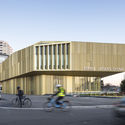
For me, search for the ultimate flexible space and the use of regular shapes puts several things in question. Transformable architecture is nothing new, but in times on which “mixed use” seems to be the 2nd typical characteristic of a building after “green”, this project makes a stand. No fancy shapes, no wind diagrams, no fancy structure, no shiny surfaces, no eye candy renderings. No blob. Just, a simple building.