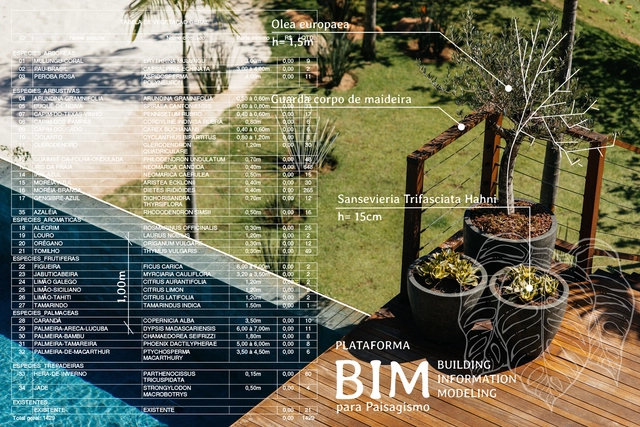
We are heading for a scenario in which BIM technology will greatly help us to maximize the roles and skills of civil construction professionals, making room for us to plan, design, build and manage buildings and infrastructures much more efficiently, integrating all systems, structural, mechanical, electrical and plumbing in a responsible, economical and sustainable way.
While opting for still images seems to be the most utilized means of presenting a project, some architects choose to invite viewers into the architecture itself, allowing them to experience the building and its surroundings immersively. Since 2006, architecture filmography studio Spirit of Space has engaged viewers with over 200 short films of projects built by world-renowned architects such as Peter Zumthor, Steven Holl, Daniel Libeskind, and Jeanne Gang. The studio’s multidisciplinary team has combined visuals with customized soundtracks, elevating the journey and turning it into a multi-sensory experience.
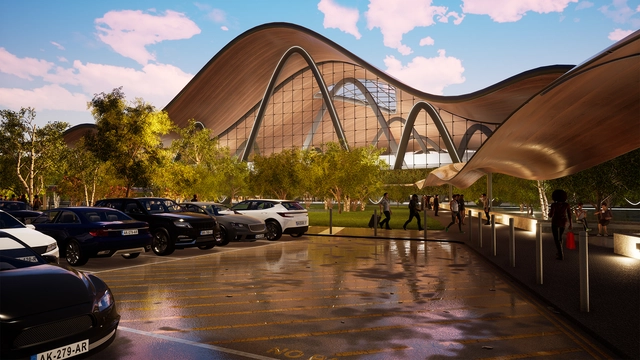
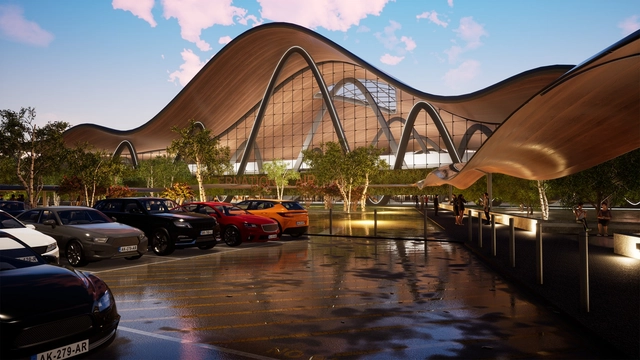
Visualisation and poster by MARTA. Architecture by LABVA.
It is a challenging time for the industry. Lots of architectural projects are being frozen or delayed indefinitely due to the global circumstances.
In MARTA we don’t want to stand back! Within mutually beneficial we would like to push the situation and help both: ▪️architects — to push projects with inspiring images ▪️us — to create great artwork for the portfolio
We are offering to create up to 3 high-end visualizations of an architectural project for free.
To take part, please, follow the steps below:
1. Send us a small presentation of your project. Be simple and clear. You can send it to our mail hello@marta.pictures Or
The AI & Architecture at the Pavillon de l'Arsenal in Paris, France was scheduled to be open for the past couple of months, showcasing work by Stanislas Chaillou on generative design and machine learning. However, due to the global pandemic, people were able to virtually explore the ideas through a series of interviews and a virtual tours. The work explored current scales of experimentation: plans, elevations, structures and perspectives in which AI could already make a contribution, whether real or speculative.
By now, you’ve likely heard about real-time rendering for architectural visualization and how it’s changing the way designs are presented. With real-time rendering, you can edit your design and see the changes updated instantly, at full quality, and you can produce animations and panoramas in minutes instead of days. Real-time rendering also opens the door to immersive experiences like 360° videos and virtual reality.
American video game and software development company Epic Games today welcomes Twinmotion as the latest offering to help visualization professionals in the architecture, construction, urban planning, and landscaping industries better communicate their designs. Powered by Unreal Engine 4, Twinmotion delivers real-time, final-quality rendering through a simple and intuitive interface, with the ability to quickly produce a variety of presentation options including images, panoramas, videos, and virtual reality content.
In 2017, the Portland Society for Architecture (PSA) asked citizens and visitors to provide their vision of Portland on blank maps of the city. PSA distributed these maps as a tool to encourage civic engagement in defining Portland. The completed maps offer unique perspectives and insight into how the city might grow and flourish.
As more and more visualization professionals adopt real-time rendering for presentation and collaboration, we’re seeing yet another trend in this emerging field: the integration of various technologies to serve a wide variety of workflows.
Every firm has different needs for compatibility with their chosen CAD programs. No one wants to learn a new process from scratch when they've already spent countless months setting up a design-to-presentation process that works for them.
https://www.archdaily.com/913407/integration-the-latest-architectural-visualization-trend-of-2019Sponsored Post
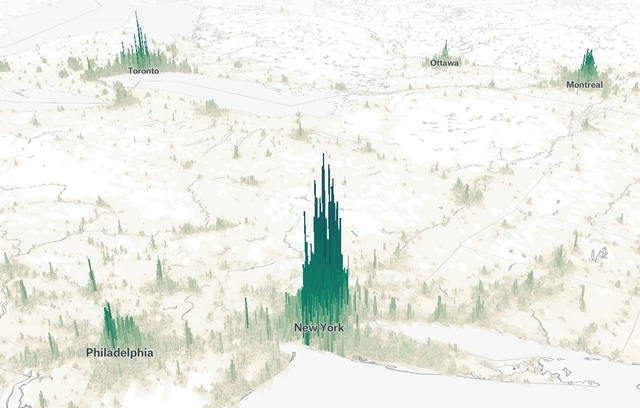
Engineer Matt Daniels has created a new interactive map to visualize the world's populations. Called 'Human Terrain', the project includes extruded block-by-block population data for cities across the world to give viewers fine-grain insight into population distribution. Daniels used data from the Global Human Settlement Layer and processed it using Google Earth Engine to create a mountainous digital landscape.
Videos
Coral Cities. Image Courtesy of Craig Taylor, ITO World
Craig Taylor, Data Visualization Design Manager at ITO World, has created a series of beautiful visualizations showing commutes in the world's most liveable cities. Using color in the form of growing coral, the project depicts city infrastructure through rendered street networks. The visualizations show how far you can travel by car in 30 minutes from a city center. Dubbed Coral Cities, the project has extended to include 40 major cities across the world.
Are architects really turning to real-time rendering for visualization? Epic Games, the creators of Unreal Engine, decided to find out with an independent survey.
The results confirmed what many of us have suspected—real-time rendering is on the rise in architecture, media and entertainment, and manufacturing. But the survey also revealed a few surprising details about real-time rendering and its uses.
Cape Town native Alexis Christodoulou is a winemaker by day but also dabbles in the art of 3D visualization. His Instagram (@teaaalexis) is a striking composition of intricate spaces rich with color, light, and materiality. Crafted entirely from scratch, each of Christodoulou's digital worlds appears to be influenced by many of the modernist masters. In a recent interview with Curbed, Christodoulou lists Aldo Rossi, David Chipperfield and Le Corbusier among his inspirations.
Much has been said about the new "Instagram aesthetic." Put that together with the emerging role of Instagram and other social media platforms in the design process, and the result is a new type of digital art form. Christodoulou's page is the creative collection of a year-long personal challenge to regularly create and publish images of his own fantasy worlds, which has resulted in a community of nearly 20K followers.
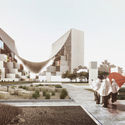
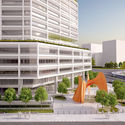
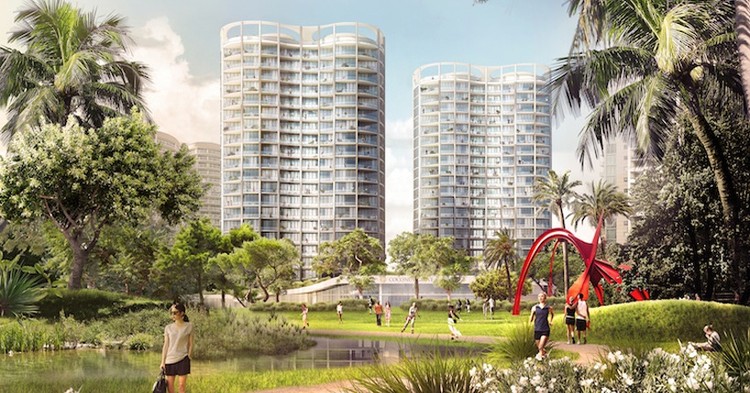
Why do so many architects use Alexander Calder sculptures in their renderings, even when the works have nothing to do with the institution or project depicted? The Calder Foundation has been tracking this phenomenon, and the results are featured in the images for this article.
A new exhibition at the Whitney Museum in New York explores mobiles—kinetic sculptures in which carefully balanced components reveal their own unique systems of movement—created by American sculptor Alexander Calder from 1930 until 1968, eight years before his death.
Designer and artist Andrew Lucia generates a catalog of theoretical objects from the ambient light and curvature specific to their environments of origin. Through a series of novel visualizations, Lucia speculates on the role of ambient light as an underlying force and active agent in the figuration of these new hypothetical worlds and entities.
Utzon Center, Aalborg, recently opened their newest exhibition - FATAMORGANA - about Jørn Utzon’s mythical unbuilt project for Silkeborg Museum intended to house the art and private collection of the Danish expressionist painter; Asger Jorn. The exhibition unfolds the museum, which never was realised. A museum where art meets architecture and Utzon and Jorn worked on the edge of the possible!
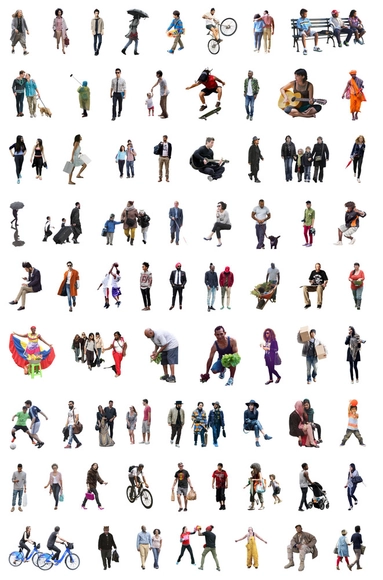
The significance of people in architectural rendering is nothing new – the added realism, and addition of narrative elements can make or break whether a render successfully sells its project. With sites like Skalgubbar, architects and architecture students have easier access than ever before to “Render People”: PNG cut-outs of people, ready to be photoshopped into buildings.
In the early years of free, online render-people databases, there was a stark homogeneity to the people represented. As the people providing the crowdsourced images were from predominantly Caucasian, Scandinavian countries, there was a surge of such people appearing in renders in projects across the world. In wake of this, other groups have worked to produce workable databases of diverse, culturally representative render people, giving architects and architecture students the freedom to accurately depict their work in its intended context.
We’ve rounded up 5 different sites that offer free render people of a wide range of ethnicities. See them all after the break.
With the ability to manipulate every interaction players have in a game, video game designers have boundless opportunity to shape the way players experience space. Because of this, game designers often look to architecture to enhance gameplay and provide inspiration for the appearances of their virtual worlds.
In the video above, Jamin Warren of YouTube show PBS Game/Show calls Halo the “most creative architectural game,” remarking that the brutalist-inspired architecture of the series exerted a strong influence on the way players move through levels and makes the battles in the game more immersive. Warren notes that several members of Halo’s development team had backgrounds in architecture; this observation suggests that the video gaming industry views architectural design as an essential element in its creative endeavors.
Warren makes an interesting point with his remarks on Halo: while people that inhabit virtual buildings cannot experience them physically, video game buildings can still be incredibly innovative and interesting. Which other video games feature innovative architectural approaches? Check out our list of six of the most architectural video games after the break.