

What if the manufacturers of the phones and social networks we cling to became the rulers of tomorrow’s cities? Imagine a world in which every building in your neighborhood is owned by Samsung, entire regions are occupied by the ghosts of our digital selves, and cities spring up in international waters to house outsourced laborers. These are the worlds imagined by self-described speculative architect, Liam Young in his latest series of animations entitled ”New City.” Read on after the break to see all three animations and learn more about what’s next in the series.
Visualization: The Latest Architecture and News
Corporate Dystopia: Liam Young Imagines a World in which Tech Companies Own Our Cities




https://www.archdaily.com/615649/corporate-dystopia-liam-young-imagines-a-world-in-which-tech-companies-own-our-citiesEvan Rawn
Unreal Visualizations: 3 Pros and 3 Cons of Rendering with a Video Game Engine
In recent years, we've reached a point where visualizations have become all-prevalent in the architectural profession. Whether we like it or not, stylized imagery is seen as a commodity, and ultimately, renderings win competitions and commissions. Architects have become enamored with beautiful renderings because clients understand pictures better than plans, and yet, the tools used to produce these glitzy images are changing faster than our industry can keep up. But with technology constantly evolving, we may face a new wave of visualization techniques, as the same render engines used to produce the tantalizingly realistic visuals in movies and video games are, for the first time, easily within our reach.
The lines across industries are blurring and companies behind the rendering engines for the most popular video games are now marketing their software directly to architects. This year, the original developers of the game Gears of War have made their proprietary rendering software Unreal Engine 4 free to architects, and many other video game render engines are available for less than the cost of those used by architects. Founder Tim Sweeney believes that the world of visualization is changing, telling The Verge "We’re realizing now that Unreal Engine 4 is a common language between all these common fields." Creating a common language between the presently disparate fields of architecture, film, and video games, for example, suggests that the industries themselves may begin to hybridize and learn from one another. For instance, video game developers may look to architects to understand how to construct 3D buildings, while architects may learn from the navigable virtual environment of video games in order to discover new means of representation. Add to this the fact that these software packages are capable of producing lifelike animated walkthroughs and we are left wondering, why is this not an industry standard? Read on after the break for the pros and cons of being an early adopter.
https://www.archdaily.com/607849/unreal-visualizations-3-pros-and-3-cons-of-rendering-with-a-video-game-engineEvan Rawn
Defining Place: Alternative Urban Futures from The Neighbourhood
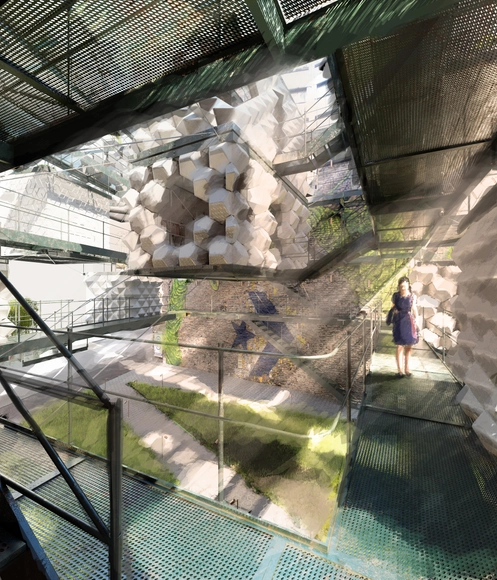
3D printing technology is quickly emerging as a technology that could be applied at the scale of the built environment. But could we use 3D printed materials to create engaging urban spaces that are constantly changing? Creative communications agency, The Neighbourhood, has imagined speculative architecture based on 3D printed materials.
https://www.archdaily.com/569851/defining-place-alternative-urban-futures-from-the-neighbourhoodEvan Rawn
Autodesk Launches New Tool for Digital Preservation
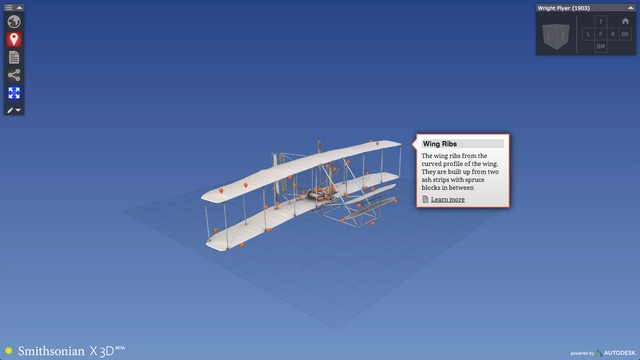
Autodesk and the Smithsonian have paired up to launch x3D Explorer, an educational tool that will allow the Smithsonian to digitally preserve its extensive collection as interactive, 3D models.
But while this may just sound like a fun way to interact with history, the initiative, backed by industry heavyweight Autodesk, could very soon have practical, revolutionary applications for architecture as well.
https://www.archdaily.com/452845/autodesk-launches-new-tool-for-digital-preservationVanessa Quirk
Ask Arup: What Are the Best Ways to Use 3ds Max in Visualizations?

This article originally appeared on Arup Connect as "Ask Arup: Visualization Edition."
For our latest round of Ask Arup, ArchDaily reader Biserat Yesflgn requested tips for visualization software 3ds Max (formerly known as 3D Studio Max). We spoke to New York-based Arup visualization specialist Anthony Cortez to find out how he uses the program, what skills prospective visualization artists need, and how the field is evolving.
https://www.archdaily.com/420943/ask-arup-what-are-the-best-ways-to-use-3ds-max-in-visualizationsArup Connect
ProFORMA: From webcam to 3D
Qi Pan, a PhD student at the University of Cambridge, has developed an interesting technique to model objects using a webcam.
https://www.archdaily.com/41684/proforma-from-webcam-to-3dDavid Basulto