Real-time visualization is an excellent tool for creating beautiful renderings and streamlining workflows within architectural and design projects. It plugs into your CAD, enabling you to visualize as you design.
On top of the high-quality renderings it produces, its speed and ease of use are some of the reasons why many firms have added it to their workflows. See how real-time visualization has benefitted these three firms.
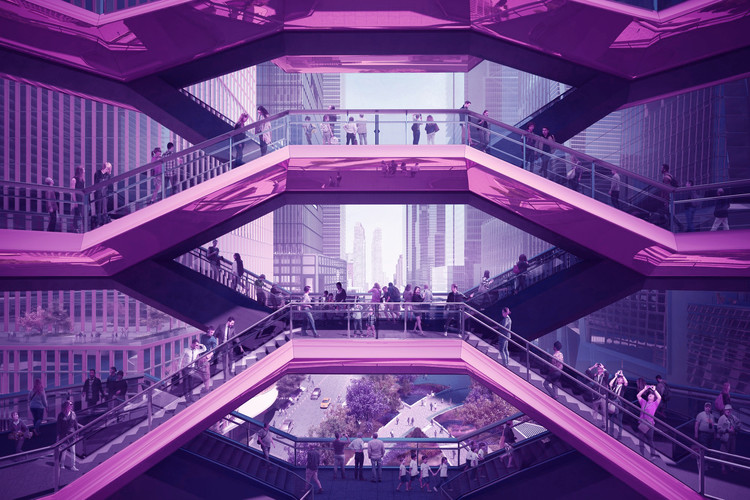
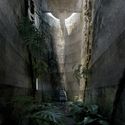
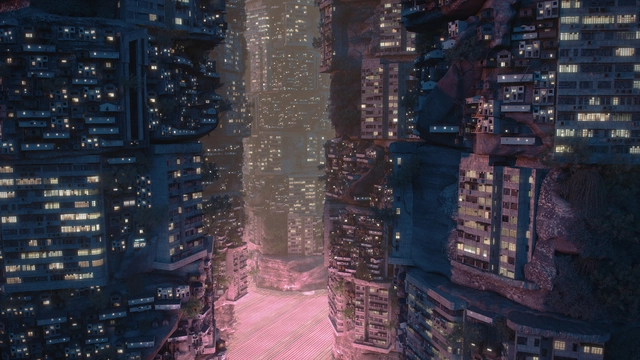
Liam Young is a speculative architect, product designer, and director who operates in the spaces between design, fiction, and futures. Young specializes in designing environments for the film and television industry, harboring the belief that creating imaginary worlds grants us the ability to connect emotionally to the ideas and challenges of our future.
Following the centuries of colonization, globalization, and never-ending economic extraction and expansionism, humans have remade the world from the scale of the cell to the tectonic plate. Young suggests in a TED Talk, “What if we radically reversed this planetary sprawl? What if we, as humans, reached a global consensus to retreat from our vast network of cities and entangled supply chains into one hyper-dense metropolis housing the entirety of the earth’s population?"
From Epic Games' Build: Architecture 2021. Image Courtesy of Zaha Hadid Architects
Epic Games operates one of the world’s largest games, Fortnite, and also develops Unreal Engine, the most advanced real-time 3D creation tool that powers Fortnite and is used in industries beyond games. Over the last few years, more professionals in architecture and related fields are using Unreal Engine to bring stunning, photorealistic worlds to life.
In an exclusive interview with ArchDaily, David Weir-McCall, Architecture Industry Marketing Manager at Epic Games, shares his insights on the use of digital technology, such as the likes of Unreal Engine, for collaboration and co-design within the field of architecture, engineering, and construction.
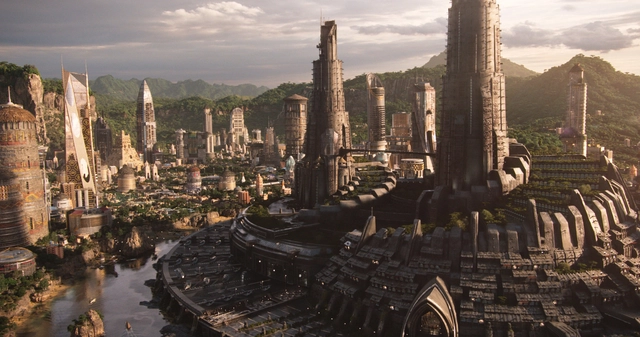
Storytelling is undoubtedly one of the oldest informative tools; a universal language that has transcended generations and cultures, and has been adapted into different media such as video games, theater, and film. Regardless of how old the narratives are, the success of these adaptations relies heavily on production - the visual and audible elements - and their ability to allow viewers to fully immerse themselves in the storyline. In this article, we explore the magical and captivating world of Marvel Cinematic Universe, and how architecture played an important role in contributing to the movies’ notorious storylines.
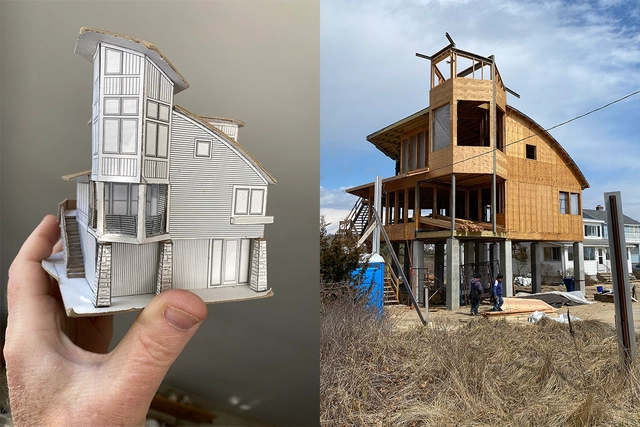
Model and Photograph. Image Courtesy of Duo Dickinson
We deal with buildings every day. We sleep in them, work in them, live our lives using their accommodation. But like a song or a painting, a person usually helps create them, with those who use and build them, then the world receives that work. But before they are built, buildings are just ideas.
It is nearly impossible nowadays not to present accompanying renders when proposing a new project. No matter the method, software or style that is used, it is a valuable reference that bares more practical weight than one might think. Not only can it be one of the closest possible representations of the architect's vision, if approved, it can also become a promise to clients, investors, and the general public.
When it comes to works from renowned architects, the render becomes a critical reference to the project participants and to the expectant community. A lot of details can be developed and considered when creating the images. In most cases, special attention is brought to the lighting, materials, and context in order to make the most accurate representation possible.
The importance of the use of advanced technologies, such as the likes of virtual reality in the scene of architecture, is becoming increasingly necessary. No matter how beautiful a rendered image may be, it will always lack the capacity to fully convey the scope and feel of a project as a whole, further perpetuating the necessity to incorporate the use of these technologies at a professional practice level.
Architects who choose not to adopt the use of virtual reality technologies into their design process fall victim to being at a significant disadvantage, and the problem no longer even lies within accessibility, as VR is very much a possibility for architects of all backgrounds in the present age.
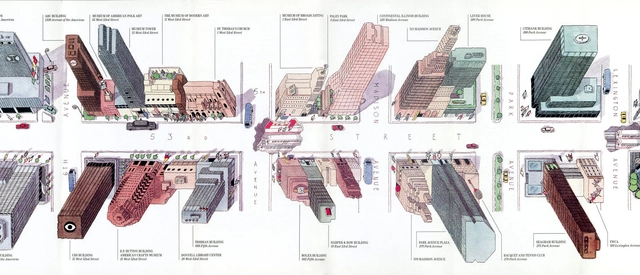
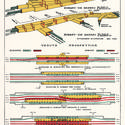
Martin Pederson interviewed this week Antonis Antoniou and Steven Heller, author of Decoding Manhattan, a new book that compiles over 250 architectural maps, diagrams, and graphics of the island of Manhattan in New York City, talking about the origin story of the book, the process of research, and the collaboration.
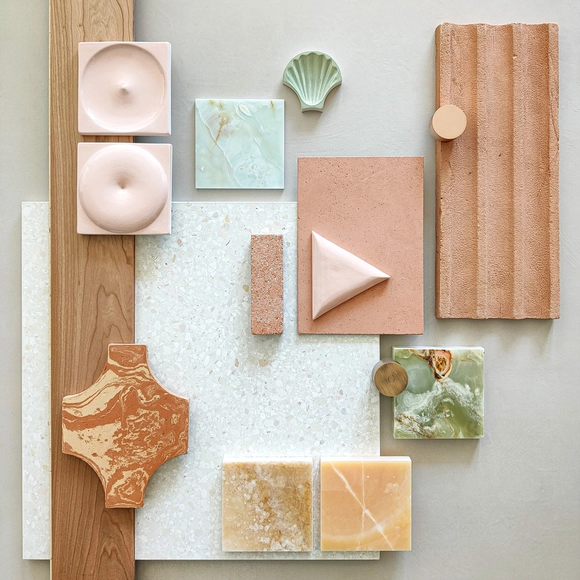
Design projects rely heavily on visual tools that illustrate the project's features and overall atmosphere, and whether you are an architect, interior designer, furniture designer, or engineer, the term 'mood board' has definitely come up at some point during the early stages of the design process. Generally speaking, images have immense powers of influencing and inspiring their viewers, so putting together a powerful mood board can be a game changer for the architect, the visual artist, and the clients, and can amplify the project's story telling process. So what is a mood board and how can you create one?
Digital literacy is not a topic architects usually consider. For Aliza Leventhal, Head of the Technical Services Section, Prints & Photographs Division at the Library of Congress, the processes of literacy and design go hand-in-hand. Previously the corporate librarian and archivist for Sasaki, Aliza is leading national conversations on everything from born-digital design files and archiving to institutional memory and knowledge sharing. Today, she's working with architects and designers to reimagine digital workflows for future access and ideation.
Collage by Matthew Maganga. Image Courtesy of Forbes Massie-Heatherwick Studio
Fifty-one years ago, in 1970, a Japanese roboticist named Masahiro Mori came up with the concept of the “Uncanny Valley”. Around the same time, architectural renderings done using analog methods were still in vogue – collages and photomontages used to get ideas across to clients. A decade later, personal computers came along, and that saw the emergence of CAD and the wider adoption of digital rendering. Today’s architectural renderings are almost imperceptible from reality, with the increase in sophistication of rendering sofware. We struggle to tell the difference between what is a rendering and what is not – or rather we are able to tell a slight difference and it leaves us slightly uncomfortable, which brings us to Mori’s uncanny valley.
Twinmotion 2021.1 offers powerful new possibilities to create, develop and present visualizations as a fully connected member of the Epic ecosystem, cementing its place as an essential component of the entire archviz process from concept to advanced photorealistic experience. Additionally, with this release, Unreal Engine continues its efforts to improve existing features and workflows in response to customer feedback.
Videos
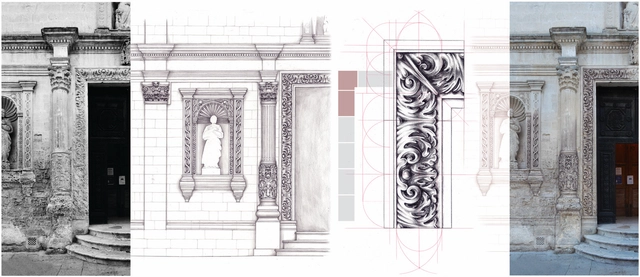
Mariapia di Lecce (commended, Hybrid category): Reconstruct with drawing. Hand drawing for graphic analysis.. Image Courtesy of Sir John Soane's Museum
If there is any word that describes what architectural renders look like nowadays, it would be: impressive. The immense world of rendering has allowed people to engage in virtually-built environments, exploring each space and experiencing what they might hear or feel as they walk by one room to another without being physically present in the project.
The main purpose of a render is to help viewers visualize what the final result of the project will look like. Whether it is for presentation or construction purposes, architects need to translate their visions in a way that helps people who were not involved in the ideation process understand the space and the experiences that come with it. However, not all architects have the proper skills or the time to create such hyper-realistic environments, but with the exceptional quality of visuals being produced nowadays and the rising demand, it has become somewhat mandatory for every project to be presented as a realistic 3D render. So if you are one of those architects who don't have the skills nor time, here are ways you can present your project as an immersive visual experience that translates its identity without resorting to 3D software.
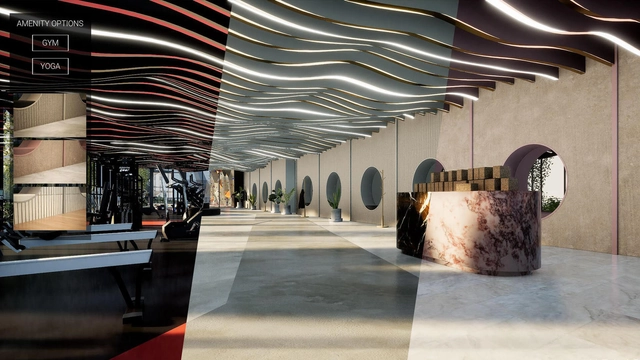
Real-time rendering is the fastest and easiest way to turn building models into immersive 3D experiences. It empowers the creative process by enabling designers to generate, document, and visualize simultaneously from one model.
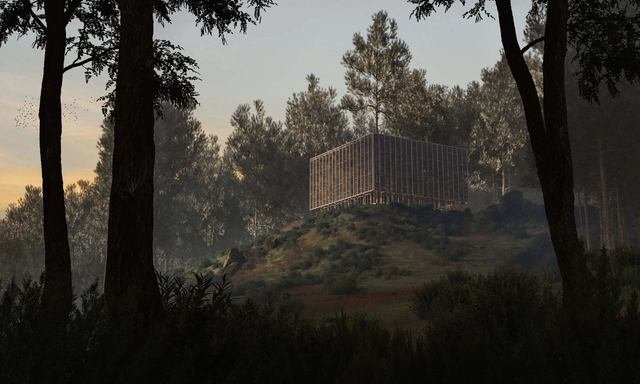
Tucked beneath the dense trees of Al-Ozer Forest in Mount Lebanon, Byblos-based architects and visual artists of JPAG Atelier created a secluded retreat away from humans and the chaos of the urban life. The Earth Chapel is a unique sanctuary that lets its visitors experience both the simplicity of the architecture and the richness of the surrounding landscapes, all at once.
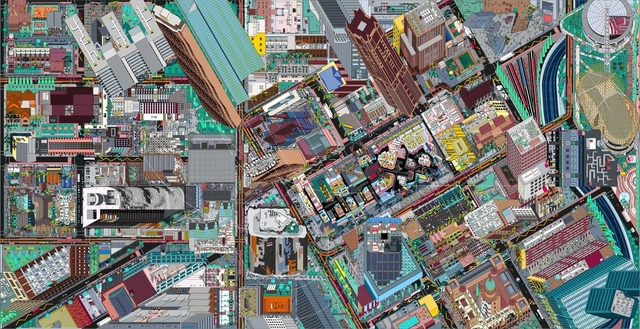
Lost in Melbourne. Conceptual Category Jury Winner.
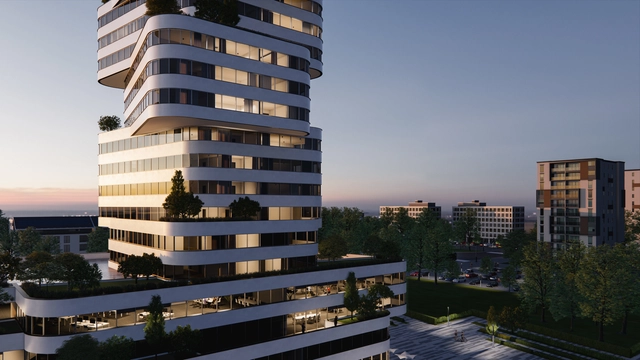
After 3 weeks of voting, the results are finally in. The ArchDaily Architectural Visualization Awards has just selected the winners of its first edition. Out of 750 visualizations submitted from all over the world, 6 winning images were chosen, two for each of the following categories: Exterior, Interior, and Conceptual.
Gathering more than 10 000 votes, This awards has come to an end. Presented by IPEVO, Cove.tool, and Concepts, the contest aimed to find the most talented individuals, who inspire us and help us visualize the future of our cities and buildings.
The 1st stage of the Architectural Visualization Awards has come to an end. 30 finalists, 10 from each category: Exterior, Interior, and Conceptual were selected by the official ArchDaily jury. Launched thanks to IPEVO, Cove.tool, and Concepts, this 1st edition of the award gathered a whopping number of proposals, with 750 visualizations submitted from all over the world.
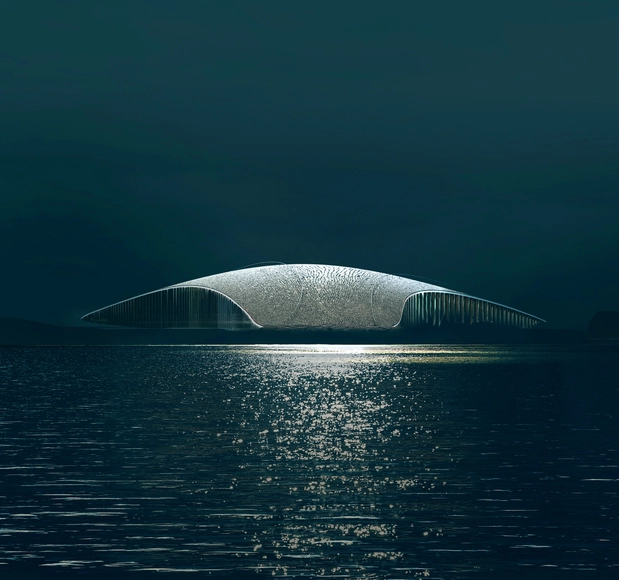
As architecture is increasingly reliant on renderings to convey its message and depict the unbuilt, many practices turn to seasoned 3D artists to help them portray their designs in the most favourable light; thus they externalize visualizations to a handful of firms.




























.jpg?1618071837 "Courtesy of BIG")
.jpg?1618071843 "Courtesy of Alexis Christodoulou")