When we get wrapped up in everyday life, it can be easy to take the place we live for granted. In the MiniLook Berlin video, Okapi Creative Studio takes a step back to show the beauty of daily life in the city of Berlin via a stop-motion, tilt-shift technique that makes the city appear as if in miniature. The video highlights everyday street scenes and picturesque shots of nature, while some famous buildings make appearances as well.
Chiloé is a five-part video series produced by Glaciar Films and directed by Diego Breit and David Guzmán; it explores the architectural identity of the southern island off of Chile. Architects, carpenters, artisans, and inhabitants present the constructive history of the island and explore how it is faced with the imminent changes of modern production and practices.
Glaciar Films has made three of the five episodes available to ArchDaily readers. In these clips, explore the island's architecture along with interviews with principal architects of the region: Jonah Retamal, Edward Rojas, and Macarena Almonacid.
Why do we remember buildings, locations, and experiences? Even a place visited in our childhood can conjure emotions that make an impact on us through the memories they create. Angela Brooks and Larry Scarpa explain that the work of Brooks + Scarpa Architects aspires to make a lasting impression out of even a brief encounter. “We try to leave something behind,” says Scarpa, “something ingrained in people’s memory that sticks with them.”
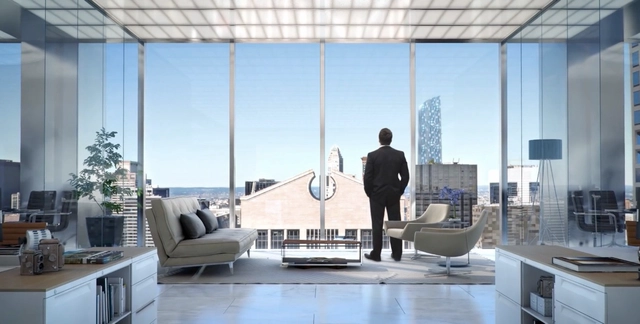
A new genre of film is emerging: the luxury skyscraper promotional video. Usually released before a new building is even finished, these filmic renderings follow an uncannily standard format: A stirring soundtrack reliably accompanies a time lapse of a city’s skyline; viewers ascend a rendered building until we reach the top floor. There, we see some variation of the most common scene found in these videos: a businessman silently overlooking the expansive city below. The figure tends to be pensive, well-dressed, white, and male. Read on to see three prime examples of this odd trend.
Celebrated for their unique, lively, and intimate take on architecture, in their films Ila Bêka and Louise Lemoine break with the traditional representation of architecture, choosing instead to follow people living inside buildings, focusing on them instead of capturing empty structures. In a new video, Louisiana Channel interviews the Italian filmmaker and architect Ila Bêka, in which he discusses the rhythm of everyday life within contemporary architecture projects, and their importance in triggering emotions.
We felt that the movement inside architecture is very important to understand how the architecture works. – Ila Bêka
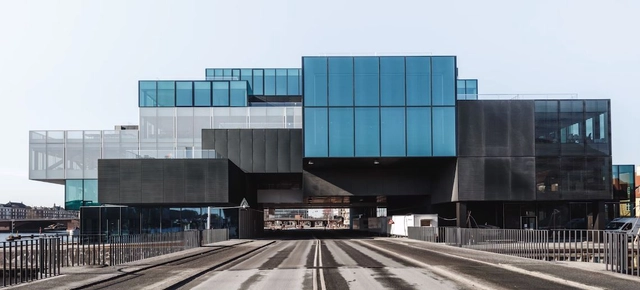
Louisiana Channel has released a new video interview with Ellen van Loon, the Dutch “design duchess” of OMA. In the interview, available to watch below, van Loon discusses the concept of “architectural contamination” behind OMA's new mixed-use "BLOX" scheme, home of the Danish Architecture Center in Copenhagen.
Van Loon discusses the process of “re-invention” needed for the scheme’s realization, in terms of both function and location. Situated on an old brewery site, the scheme seeks to embed architects and visitors in their own field of study, “placing them in the center of the building, which meant they would contaminate all other functions.”
https://www.archdaily.com/893754/omas-ellen-van-loon-discusses-the-firms-new-danish-architecture-centerNiall Patrick Walsh
Barcelona is a thriving city with world-class architecture and a rich history that makes it one of Europe’s most popular destinations. When you first think of this Spanish metropolis, what comes to mind? For many of us, it is the image of Antoni Gaudi’s unique style and gravity-defying Sagrada Familia. But what would Barcelona look like without this cathedral or some of its other buildings the city is known for? In Menilmonde’s new video titled “Barcelona Archi’llusion”, the buildings flicker between total erasure, a pseudo-sketch, and views of their actual forms, allowing you explore to what the city would be like without some it’s most famous icons.
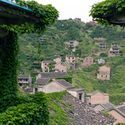
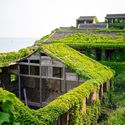
As the shadows of the past loom around what’s left of the overgrown houses and pathways, videographer Joe Nafis has perfectly captured the rare charm of the abandoned fishing village of Houtouwan using his drone. From above, you can appreciate the extent of the foliage carpeting the walls, roofs, and openings. It was the promise of this unlikely setting that first led Nafis to visit the village as part of a fashion shoot.
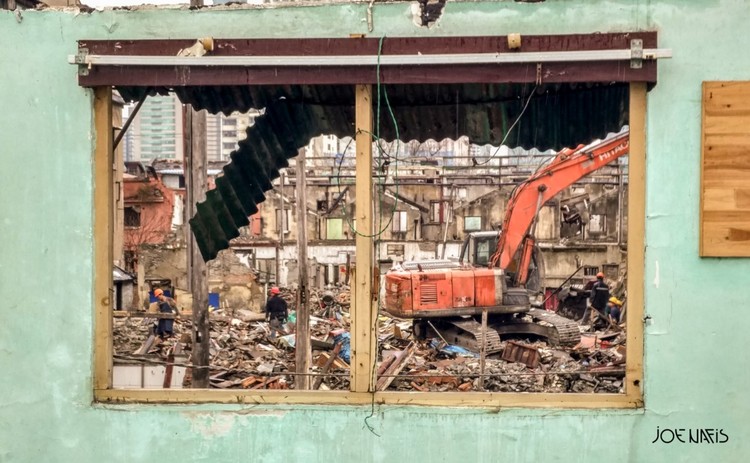
As Shanghai works hard to become an international economic, financial, trade and shipping center of the world, the city powers behind to keep up with the ever-growing needs. Joe Natis’ video follows the demolition of the buildings that didn’t quite make the cut for the fast-paced 21st century living as soaring skyscrapers and developments take their place.
Today marks what would have been the 100th birthday of the leading Danish architect, Jørn Utzon. Notably responsible for what could be argued to be the most prominent building in the world, the Sydney Opera House, Utzon accomplished what many architects can only dream of: a global icon. To celebrate this special occasion, Louisiana Channel has collaborated with the Utzon Center in Aalborg, Denmark to put together a video series to hear prominent architects and designers talk, including Bjarke Ingels and Renzo Piano, about their experiences with Utzon and his work—from his unrivalled visual awareness of the world, to his uncompromising attitude that led him to create such strong architectural statements.
Unlike many architects around at the time of Jørn Utzon, who as modernists rejected tradition in favour of new technologies and orthogonal plans, Utzon combined these usually contradictory qualities in an exceptional manner. As the architects recount, he was a globalist with a Nordic base, that has inspired the next generation to travel the world and challenge their concepts. Many of them compare his work to Alvar Aalto’s, as both shared an organic approach to architecture, looking at growth patterns in nature for inspiration. Utzon even coined this approach "Additive Architecture," whereby both natural and cultural forms are united to form buildings that are designed more freely.
Begin to understand the inner workings of Fumihiko Maki's architectural mind in PLANE—SITE’s latest short film from their Time-Space-Existence series. Each film focuses on the different principles which drive the practice of famous architects. Maki is known for being experimental with materials and fusing east and west culture.
Following the evolution of architecture in Tuscany, this documentary maps out the decline of the region in the shadow of Brunelleschi and Alberti. From the 14th century onwards, Italy underwent a cultural rebirth that changed the entire world, bearing the architectural mastery of the Renaissance. However now, there appears to be a detachment within modern architecture and little work for the many architects who are being forced to emigrate.
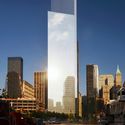
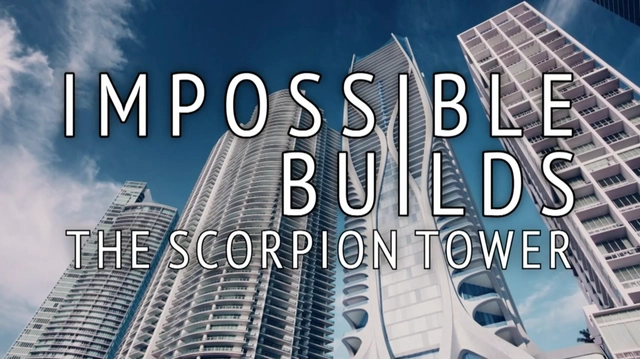
The building was the subject of the season premier of "Impossible Builds," which profiles "the creation of some of the world’s most ambitious, complex and technologically advanced construction projects."
Described by the show as "one of the most complex skyscrapers ever to make it off the drawing board," the 62-story tower features a unique glass fiber reinforced concrete exoskeleton – a system never before seen at this scale.
The show is now available to watch in its entirety online. Check it out below!
Update:The deadlines for this opportunity have been extended
Call For tutors : Extended till January 28
Call for participants : Ends on February 28
MEDS workshop “Meetings of Design Students” is an international workshop that takes part each summer in a different country, focusing on various issues, themes, topics and settings that will help any designer expand their expertise. It is a chance to get in touch with diverse approaches to design, different building techniques, traditions and skills. MEDS workshop is both practical and educational because it focuses not only on creative theoretical designs, but actually compels participants to execute these designs during the 2-week span of the workshop. You can apply to MEDS as a tutor or as a participant.
If you are missing the capacity to create emotion, then it doesn’t work, it’s not enough. – Renzo Piano
In this in-depth biographical video by the Louisiana Channel, Renzo Piano talks about his earliest influences, why traveling is essential, the pleasures of drawing, what creativity really means, how “computers are a bit stupid,” the way “beauty can change the world,” and more.
https://www.archdaily.com/886603/renzo-piano-creativity-is-only-possible-when-you-share-creativityZoya Gul Hasan
Great buildings blatantly express their true essence to the world
In this interview from the Louisiana Channel, Bjarke Ingels shares the personal moments of his life that have influenced the graphic, playful and humanistic architectural style for which he is now world renowned.
The idea for the vessel came from feeling that we shouldn’t just make a sculpture or a monument – it felt to us that rather than building a sculpture, it would be great if something was creating more public space.