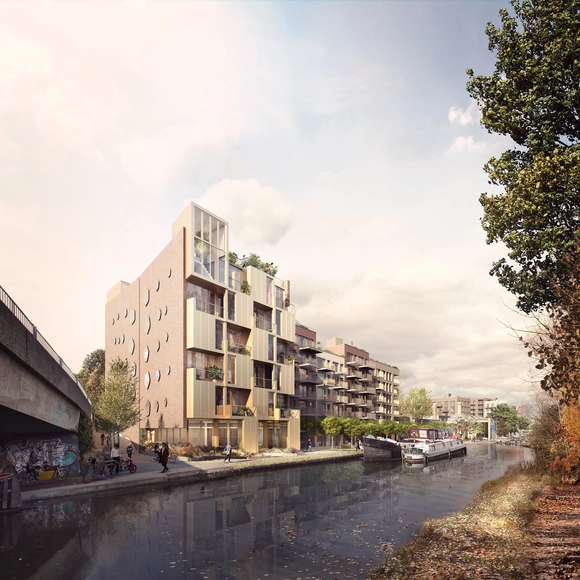
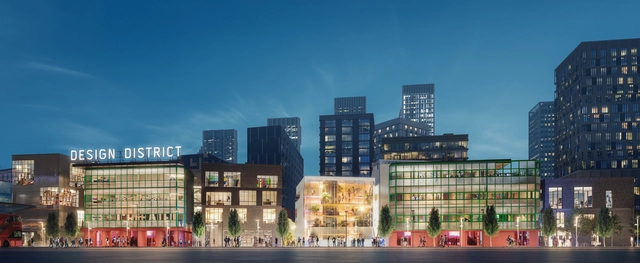
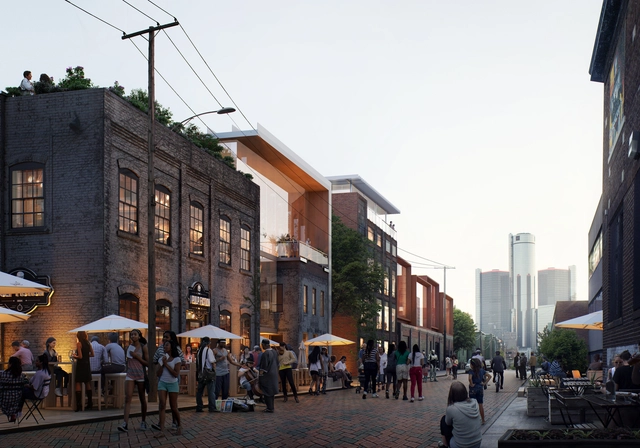
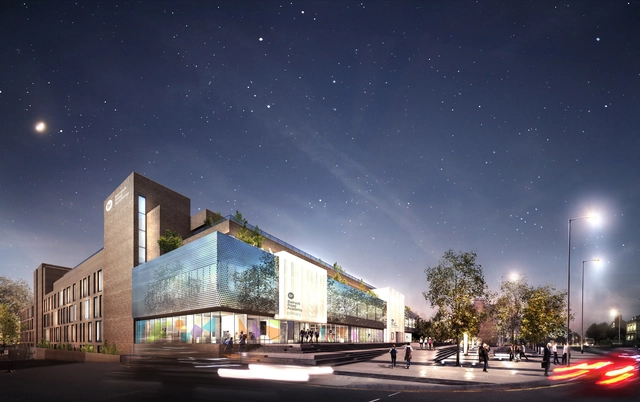
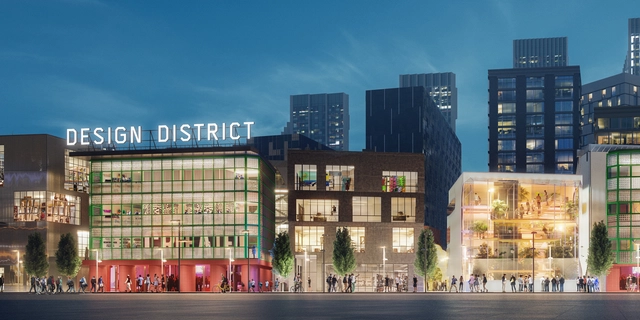
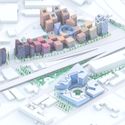
The developers of Design District have released new visuals of the future creative hub at the heart of Greenwich Peninsula. Designed by a collective of eight well-renowned architectural studios, and with landscaping by Schulze+Grassov, the project aims to gather together startups, artists and entrepreneurs across many industries, generating a new creative neighbourhood for London.
This week’s curated selection from our readers’ submissions focuses on some of the essential components of our present-day cities.
Featuring the best-unbuilt architecture, the article highlights adaptive reuse projects that transformed abandoned warehouses and factories, a street design in Luxembourg, a regenerative master plan in Seoul, and an emergency family accommodation to temporarily house those in need. Moreover, the roundup distinguishes a library in South Korea and an extension of a museum in Helsinki, because the cultural aspect is an integral part of our urban environment.
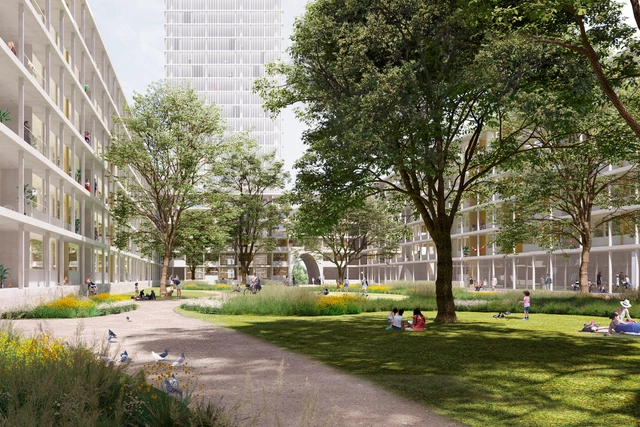
David Chipperfield Architects with Wirtz International Landscape Architects have won an urban competition in Berlin to convert the abandoned industrial and production site Georg-Knorr-Park into a lively residential and commercial neighborhood.
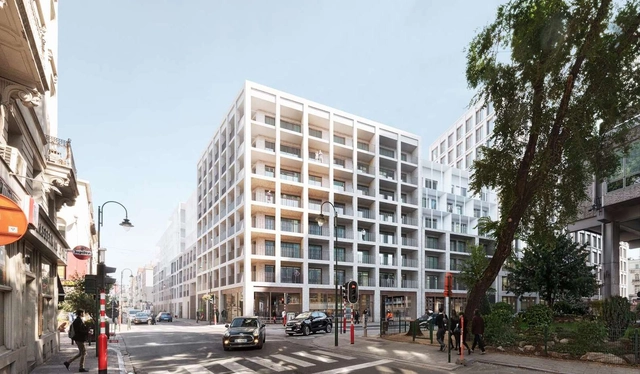
Henning Larsen has unveiled its vision for Brouck’R, a city block transformation project facing Brussels’ busy Place de Brouckère. Inspired by traditional and contemporary heritage, the proposal generates a 21st-century, vibrant, mixed-use destination in the city center.
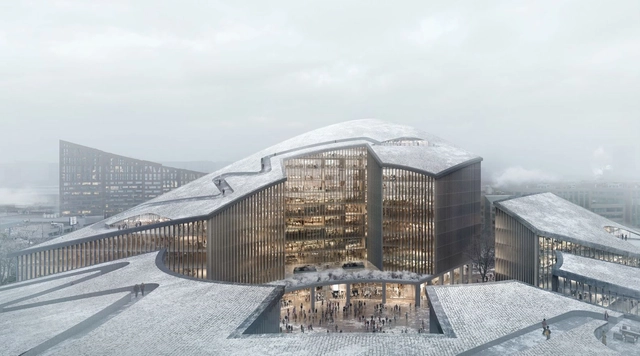
ODA has won an international competition to create MAZD, a 3 million square feet master plan in Moscow, Russia. The project puts in place a large mixed-use development intended to stimulate industrial zones just outside of the city.
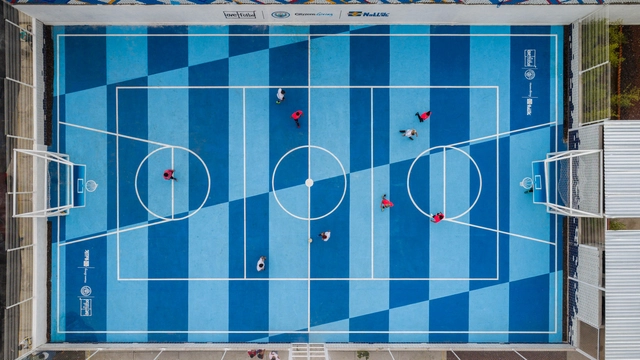
People often gather around sports activities, whether they are the ones exercising or the ones cheering. This internationally recognized social interest brings everyone together seamlessly, regardless of their background, gender, culture, ethnicity and so on.
Urban regeneration can take different aspects, and one of the most prominent and efficient solutions that can reconcile a community with itself and its surroundings is a sports function. In fact, this purpose encourages people to reclaim their fundamental right to public spaces and regenerate demoted, hostile or forgotten areas.
Read on to discover examples from all over the world, where physical activities made an urban impact on the neighborhood and the community.
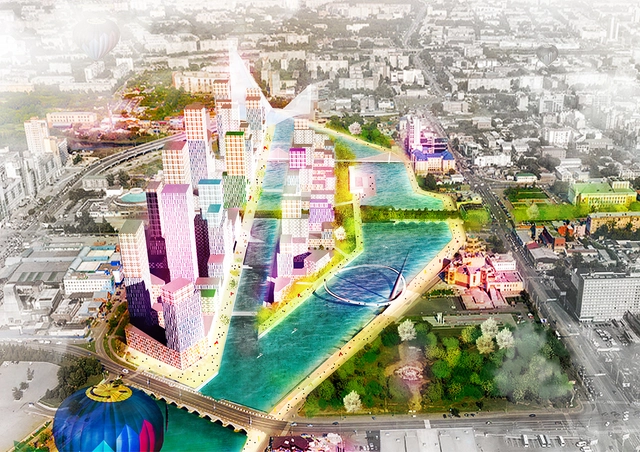
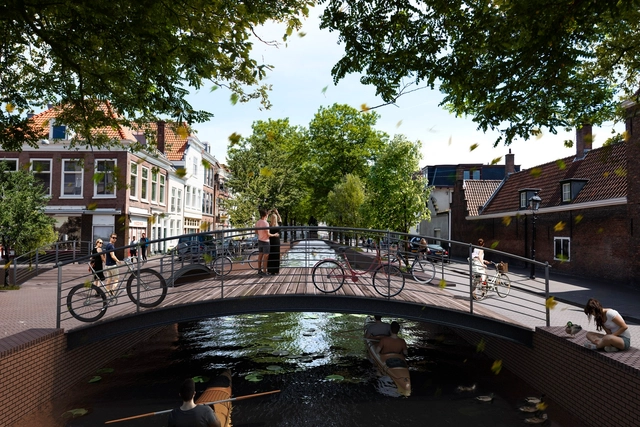
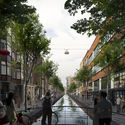
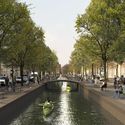
MVRDV has designed with local neighborhood organizations, a proposal to regenerate the canals of the city of The Hague, in the Netherlands. Filled-in during the 20th century, the canals will be reopened in order to revive the historic center and improve the city on the sustainable, economical and infrastructural levels.
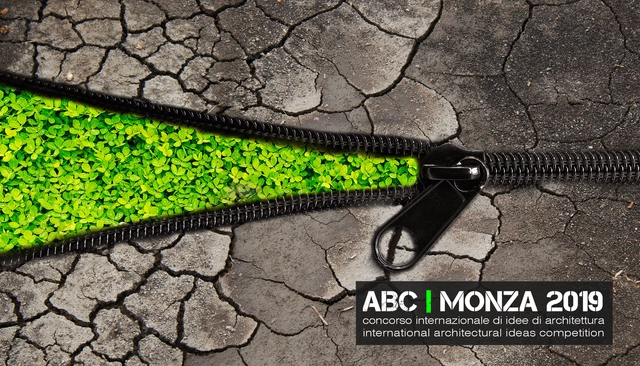
THE COMPETITION IN BRIEF ABC | MONZA 2019 is an international architectural ideas competition in the time of Digital Transformation. The theme of the competition is the urban regeneration of an industrial site of approximately 60,000 square meters in the city of Monza - Italy in accordance with the values of environmental, economic and social sustainability. One of the characterizing elements of this competition is the use of BIM (Building Information Modeling) for the ideation, design and submission of the proposal.
WHERE Via Philips 12 in Monza - Lombardy - Italy, north of the Greater Milan and close to what in the coming years will
In Mazara, an unexpressed heritage is sleeping. QUARRIES occupy an area of about two hundred thousand square meters: a system divided into galleries, gardens, open-air spaces. Not all are visible: some rest beneath the ground, guarding precious traces of the past. As ECO, a two-thousand-square-meters hypogean quarry discovered last year, by the founders of Periferica, during survey work for Evocava - the future museum of Mazara quarries.
Periferica is an international festival of urban regeneration that will take place in Mazara del Vallo, Sicily, from 1 to 10 August 2019. Every year, Periferica brings together associations, universities and businesses to rethink a disused area with students, creative people and inhabitants, through a program of workshops and events. Since 2013, more than 300 students from different parts of Europe have so far participated.
The story of the Hastings Pier is an improbable one. Located in Hastings - a stone's throw away from the battlefield that defined English history - the pier was first opened to the promenading public in 1872. For decades the structure, an exuberant array of Victorian-era decoration, entertained seaside crowds but by the new millennium had fallen out of disrepair. In 2008 the pier was closed - a closure that became seemingly irreversible when, two years later, it burnt down.
Wickside is a £120m “permeable, mixed-use neighborhood” that will provide 475 homes and 300 jobs for the surrounding community. Designed by BUJ Architects and Ash Sakula Architects, the neighborhood has recently received the all-clear from the LLDC planning committee. Almost nine years in the making, the scheme uses “urban blocks set around ordinary London streets” to create a complex, diverse townscape with a variety of uses. The neighborhood is housed within a 28,800 square meter former waste transfer site in Hackney Wick, London. Integrating the context’s existing buildings and cultural heritage, Wickside aims to develop the existing creative community through “retention and regeneration,” and is one of the largest development sites in the area.
The Greenwich Design District is the next phase in London's largest single regeneration project - a new creative hub providing affordable workspaces and studios. Eight up and coming architecture practices have 'blindly' designed two buildings each, independently from one and other. The result is an amalgamation of 'architectural anarchy' and a 'neighborhood of playful contrasts.'
Urban developers Knight Dragon are coordinating the entire development of Greenwich Peninsula, celebrating the diversity of art, design, technology, music, and food industries that this innovative district will be the home of. The mix of architecture stays true to the ideals of the district, presenting a provocative front of 'unexpected contrasts' brought together by the same natural paving throughout the pedestrianized quarter designed by Schulze+Grassov to encourage communication and interaction between the public.
The Historic Stone Soap Building will be upgraded to a mixed-use development, increasing density and activity along the riverfront. Image Courtesy of City of Detroit
Chicago-based SOM’s plans for the redevelopment of the East Riverfront in Detroit, Michigan have been unveiled. The Detroit RiverFront Conservancy, Detroit Economic Growth Corporation, and City of Detroit Planning and Development Department will work together to deliver SOM’s plan to revitalize the former blighted industrial area. The framework plan involves improving community access to the riverfront, the design of a new riverfront parkland, and the conversion of a historic riverfront structure into a mixed-use development.
https://www.archdaily.com/806465/soms-inclusive-riverfront-set-to-revitalise-detroitNiall Patrick Walsh
Development of the Miass river. Image Courtesy of Felixx Landscape Architects and Planners
Dutch firm de Architekten Cie, in collaboration with Felixx Landscape Architects and Planners, has won an international competition to transform the historic Russian city of Chelyabinsk. The winning masterplan, chosen by the City Administration of Chelyabinsk from five proposals, seeks to activate the city’s existing grid structure and to use it as a vehicle for spatial transformation.
Building a highway in a city is often thought of as a solution to traffic congestion. However, the induced demand theory has shown that when drivers have more routes, they choose to continue using this medium instead of using public transport or a bicycle, and as a result, congestion doesn’t decrease.
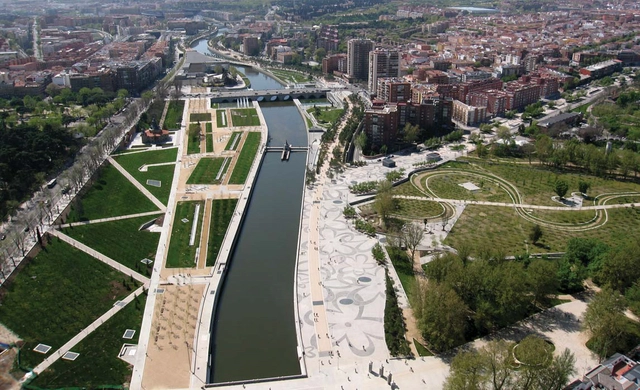
As a result, some cities have chosen to remove spaces designated for cars and turn what was once a highway into urban parks and less congested streets.
Here we have six examples, some have already been completed, while a few are still under construction. To the surprise of some, most of the projects are in the US, which reflects that American designers are looking into further studying European transport policies.
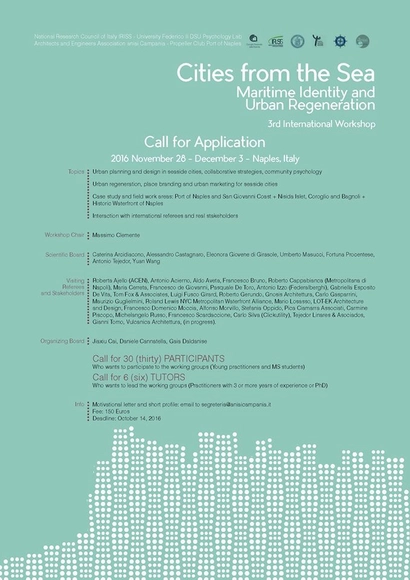
We are selecting 30 Participants and 6 Tutors to be part of the project teams that are going to re-design the waterfront of Naples through interaction with local decision makers and stakeholders.
Download the information related to this competition here.












![Call for Students: Hypogean Dreams Workshop [Architecture + SelfConstruction] - Featured Image](https://snoopy.archdaily.com/images/archdaily/media/images/5cd4/2969/284d/d155/2300/00e8/slideshow/open-uri20190509-16079-18ipdts.jpg?1557408096&format=webp&width=640&height=580)
![Periferica Workshop: The Open Museum [Architecture + SelfConstruction] - Featured Image](https://snoopy.archdaily.com/images/archdaily/media/images/5c90/087a/284d/d1e4/9400/07cc/slideshow/open-uri20190318-20693-124qn7r.jpg?1552943206&format=webp&width=640&height=580)
.jpg?1540405202&format=webp&width=640&height=580)
.jpg?1540405410 "Hastings Pier / dRMM. Image © Laurian Ghinitiou")
.jpg?1540404858 "Hastings Pier / dRMM. Image © Laurian Ghinitiou")
.jpg?1540405254 "Hastings Pier / dRMM. Image © Laurian Ghinitiou")
.jpg?1540583713 "Hastings Pier / dRMM. Image © Laurian Ghinitiou")
.jpg?1540405202)