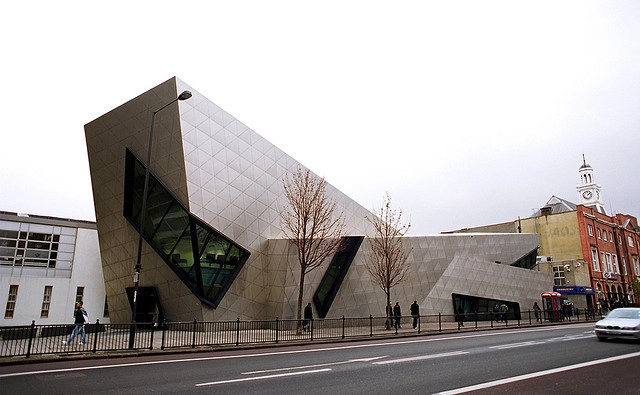
Following the news in 2010 that Daniel Libeskind was to design a "landmark" building for the UK's University of Essex, it has been announced that the plans have been abandoned. What was known as the Institute for Democracy and Conflict Resolution (IDCR) "was intended to become the ‘anchor’ to a new Knowledge Gateway research park at the university’s Colchester Wivenhoe Campus".
Nakagin Capsule Tower / Kisho Kurokawa. Image Courtesy of arcspace
In recent weeks both the national papers and the London Evening Standard have been reporting dramatic increases in the price of houses in the capital. Up 8% in a year they say. This isn’t great. Rents are also rising sharply. Soon, many, particularly young, Londoners will be trapped, unable to rent or buy. No doubt this is increasingly the case in many big cities. But England is still arguably in a recession, the worst for nearly a century.
In an attempt to find affordable homes people move further away from their work, especially those on low wages, and spend too much of their salary and their time commuting. The cost of housing affects what we eat, whether we exercise and how much spare time we have. It affects our quality of life.
So, this is not about business or property. It’s more important. This is about home. Home is a refuge. It’s our emotional harbour. In fact it is a human right. As the UN Covenant on Economic, Social and Cultural Rights states: it is 'the right of everyone to an adequate standard of living for himself and his family, including adequate ... housing'.
Can architects help? Yes. As architects, we need to ask what home actually is, and, how it fits into the city. Indeed, the answer is as much anthropological as it is architectural, as it lies in re-thinking the house itself, in creating - not housing - but homes.
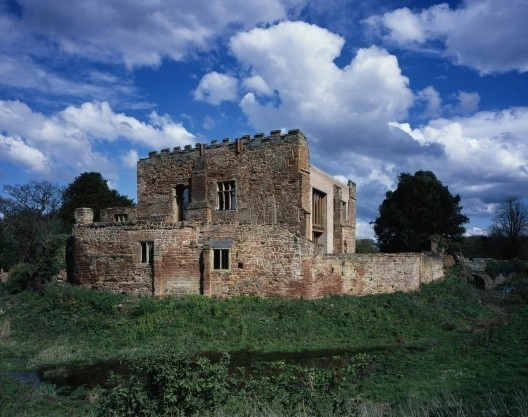
Following the news that the 2013 RIBA Stirling Prize was been won by Witherford Watson Mann for Astley Castle at a ceremony in London last week, the critical response to the project has been extremely positive. Joseph Rykwert (who recently won the RIBA Gold Medal) said that "Witherford Watson Mann have been gentle surgeons, saving the essential, eliminating the incidental". Check out the critical responses from The Financial Times' Edwin Heathcote, The Guardian's Oliver Wainwright, Building Design's Ellis Woodman, and the Architects' Journal's Rory Olcayto after the break...
With Astley Castle winning this year's Stirling Prize last week, Olly Wainwright investigates the fortunes of other Stirling Prize winners - finding that in many cases critical acclaim and awards do not necessarily translate to long term success. His study brings into question what qualities should be awarded, and seems to imply that there should be a greater focus on post-occupancy awards, such as the 10-year award started by the Council on Tall Buildings and Urban Habitat’s (CTBUH) this year, and another being considered by the RIBA. You can read Wainwright's full investigation here.
The 2013 RIBA Stirling Prize has been won by Witherford Watson Mann for Astley Castle (Nuneaton, Warwickshire). The winner was just announced at a ceremony at London's Central Saint Martins, a building designed by last year's winner Stanton Williams. Astley Castle was also voted as BBC readers' favourite earlier this week. Jury-member Stephen Hodder stated that "engaging with the building was such a surprise for [the jury]," and described it as an "unassuming" building with great "rigour."
The RIBA and Arb have teamed together to examine UKarchitectural education, with the aim of bringing the UK into line with other EU countries.
The move is part of a new EU directive, due to be ratified next month, which seeks to establish more uniformity across Europe by aligning the time it takes to qualify and by making mutual recognition of title easier between countries - a move which would make architects more free to move between countries.
Read more about the aims of the RIBA and Arb after the break...
Four post-war buildings, including the Spectrum Building by Norman Fosterand Capel Manor House by Michael Manser, have been elevated to the Heritage List by the UK's Architecture and Heritage Minister Ed Vaizey. Upon announcing the news, the Minister commented that in spite of England's "fine and wonderful built heritage it's sometimes forgotten that we have many outstanding modern buildings too." His listings show that "architecture in this country is very much alive and well in the modern world."
Architectural critic, historian and writer Joseph Rykwert, 86, has been named as the recipient of the 2014 RIBA Royal Gold Medal, one of the world’s most prestigious architecture awards. Given in recognition of a lifetime’s work, the Royal Gold Medal is approved personally by the Queen and is presented to a person or group of people who have had a significant influence on the advancement of architecture.
Describing Rykwert’s recognition as “long overdue,” RIBA President Stephen Hodder stated: “Joseph's writing and teaching are rare in that he can deliver the most profound thinking on architecture in an accessible way. All our lives are the richer for it.”
“Architecture is too complex to be solved by any one person.”
Richard Rogers is an architect who understands the significance of collaboration. As a man with an intense social mind and a thirst for fairness in architectural and urban design, Rogers’ substantial portfolio of completed and proposed buildings is driven by the Athenian citizen’s oath of “I shall leave this city not less but more beautiful than I found it.”
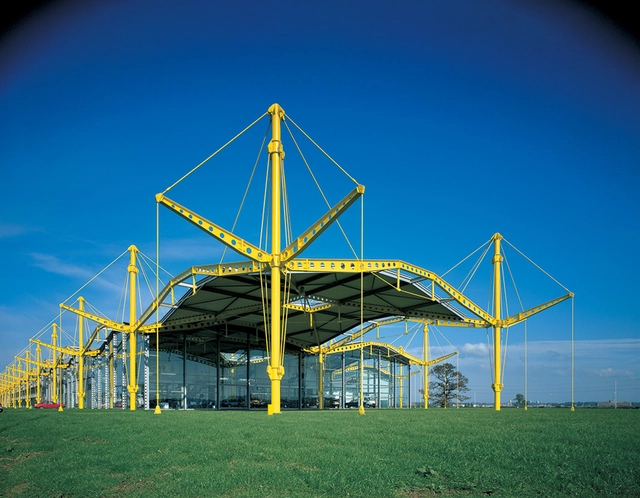
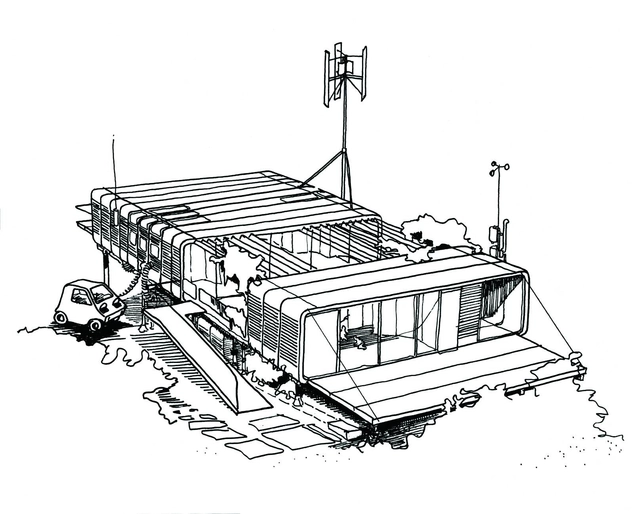
In honor of his success, London’s Royal Academy (RA) is currently playing host to a vast retrospective of Richard Rogers’ work, from his collaborations with Norman Foster and Renzo Piano, to the large-scale projects that define Rogers Stirk Harbour + Partners (RSHP) today. The RA’s extensive exhibition has been condensed into a series of motifs that have defined his architectural work, punctuated by memorabilia which offer personal insights into how Rogers’ career has been shaped by the people he’s worked with and the projects that he has worked on.
Continue after the break for a selection of highlights from the exhibition.
Inspired by the dolls' house that Edwin Lutyens designed for The British Empire Exhibition in 1922, twenty British practices are each designing a contemporary dolls' house in aid of the disabled childrens' charity KIDS. Each version will sit on a 750mm square plinth to be exhibited during this year's London Design Festival (14th - 21st September, 2013) before being auctioned. Each design must contain "a unique feature to make life easier for a child who is disabled."
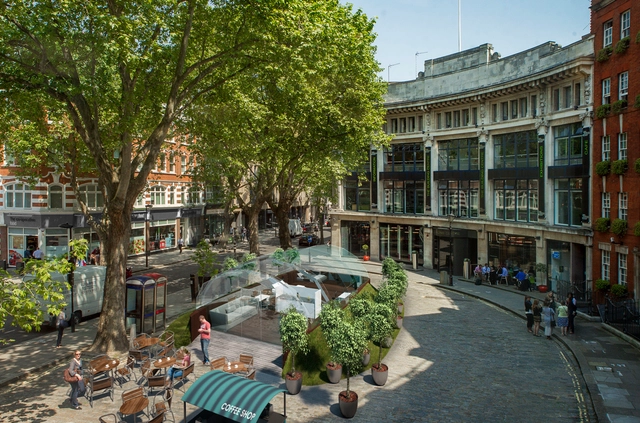
A Mobile town square designed for Cricklewood, by Studio Harto and Studio Kieren Jones. Image Courtesy of http://cricklewoodtownsquare.com/
Cricklewood, a North London suburb devoid of public space, is finding a new lease of life through a series of pop-up interventions - including a mobile town square designed by Studio Hato and Studio Kieren Jones - put together by civic design agency Spacemakers. While the project might have a bit further to go before any benefits are truly felt by the local residents, the project is part of a wider scheme financed by the Mayor’s Outer London Fund which will hopefully lead to the rejuvenation of more of the capital's suburbs. Read Liam O'Brien's full article in The Independenthere.
A large scale architectural installation, informative exhibition and free two day conference will take place at The Building Centre WC1 during the 2013 London Design Festival to launch a four year study into the effects of natural light.
A typical new home in the UK has an average of only 12% of the walls glazed. Natural light in the home and workplace can reduce energy costs and improve health and wellbeing, so why do we have so little natural light in our buildings?
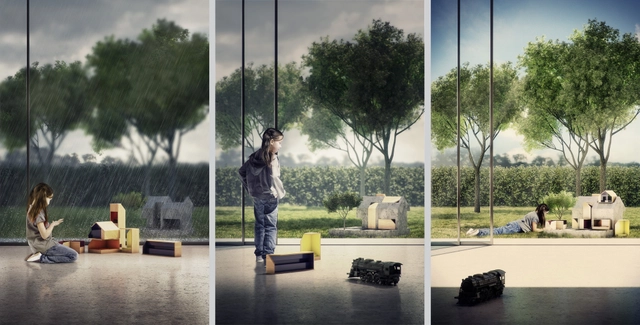
The Photon Project is a major four-year scientific study to investigate the impact of natural light on biology and wellbeing. To launch the project a prototype fully-glazed ‘Photon Pod’ will be built in Central London, complete with seating and landscaping. The installation and exhibition will be in place during the London Design Festival (14 – 22 September). During this week the public are invited to experience ‘life under glass’ and take part in simple scientific tests, designed specifically for the event by Harvard University to test the effects of daylight on the human body.
With Birmingham's new public library opening last week, Mecanoo's latest large-scale public building has received mixed reviews from critics in the UK. Check out the critical responses from Hugh Pearman, The Telegraph's Stephen Bayley, The Guardian's Oliver Wainwright, The Observer's Rowan Moore, and The Financial Times' Edwin Heathcote after the break...
Videos
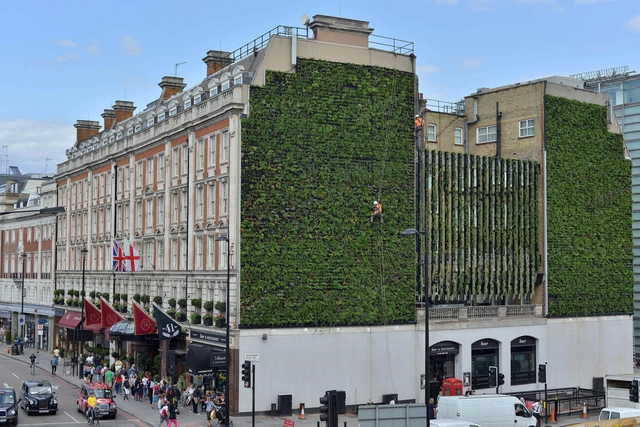
Courtesy of Green Roof Consultancy and Treebox
The Rubens at the Palace Hotel in Victoria, London, has unveiled the city's largest "living wall" - a vertical landscape, composed of 16 tons of soil and 10,000 plants, designed to reduce urban flooding. Taking two months to construct and covering a 350 square foot area, the 21 meter high wall will beautify the cityscape year round with seasonal flowers such as strawberries, butter cups and winter geraniums.
Because of the lack of absorbent surfaces in the Victoria area of London, the Victoria Business Improvement District (BID) decided to step in with the design of this incredible wall that combats urban flooding with special water storage tanks. Designed by Gary Grant of Green Roof Consultancy, these tanks can store up to 10,000 liters of water that are then channeled back through the wall to nourish the plants. Not only will the wall do a great job of keeping the surrounding streets flood-free, it boosts the area's green appeal and attracts wildlife into the dense urban environment.
The latest Future Trends Survey, published by the Royal Institute of British Architects (RIBA), shows a decrease of 3% in average earnings bringing the average salary in the UK to around £40,000. The largest fall in earnings is with sole principals, a quarter of whom are receiving less than £18,500 per annum. This is compared to principals in partnership who continue to average a salary of around £50,000.
According to the report, Architects earning the highest wages with an average salary of around £53,000 are working "in-house for private firms such as developers or other commercial groups." Reported unemployment has fallen to 2%, which is lower than in recent years.

_Landmark_Trust.jpg?1380664454)