“Economic shocks, climate change, and COVID-19 have changed transportation systems in a fundamental way. We can’t waste a crisis. We can increase access to transportation while reducing greenhouse gas emissions. We can achieve more mobility with fewer impacts,” argued Ani Dasgupta, president of the World Resources Institute (WRI), at the 20th annual Transforming Transportation conference. For two days, global leaders reflected on the state of transportation systems worldwide at the hybrid event in Washington, D.C., which was also watched by tens of thousands online. The event was co-organized by WRI and the World Bank.
Transportation still accounts for 25 percent of greenhouse gas emissions worldwide and up to 30 percent of emissions in developed countries. Transportation is a diverse sector that includes sidewalks, bikes, cars, buses, trains, subways, ships, and planes.
https://www.archdaily.com/999939/twenty-years-of-transforming-transportation-where-are-we-nowJared Green
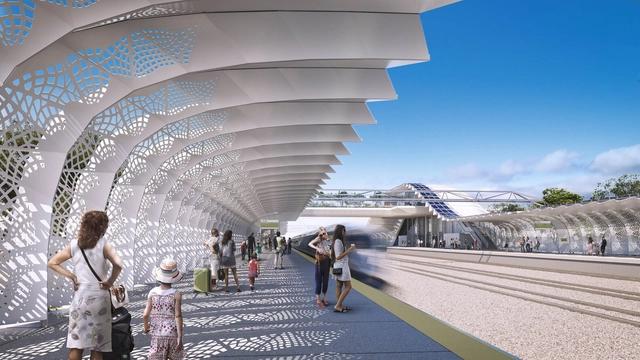
California High Speed Rail. Image Courtesy of Foster + Partners
Foster + Partners and Arup have chosen to work together to design the Merced, Fresno, Kings/Tulare, and Bakersfield stations that will service high-speed train passengers on the first 171-mile leg of California High-Speed train (CA HSR). The Central Valley stations will be the grand entrances to America's first high-speed rail stretch, marking an important step towards providing all Californians with sustainable, carbon-free transportation. Planning, architecture, and engineering for the four new stations, which will serve as design templates for stations planned for the whole 500-mile Los Angeles/Anaheim to San Francisco line, are being done jointly by Foster + Partners and Arup.
The California high-speed rail will connect the state's mega-regions, promote economic growth and a cleaner environment, foster job growth, and conserve agricultural and protected lands. With up to 200 mph speeds, the system can travel from San Francisco to the Los Angeles basin in less than three hours. The Authority is collaborating with regional partners to implement a state-wide rail modernization plan that will spend billions of dollars on local and regional rail lines.
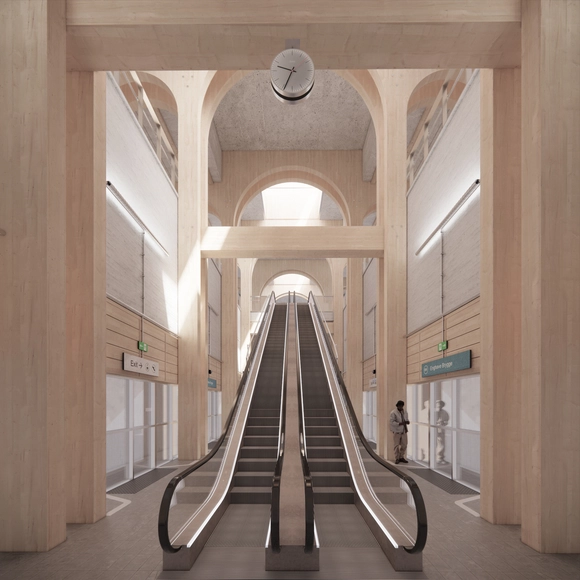
JAJA Architects won the competition organized by Metroselskabet, Denmark, to develop resource-efficient and climate-friendly metro stations. The winning team takes a comprehensive and holistic approach, looking at both material-optimized and sustainable design solutions and the character of the journey that passengers take to reach their destination. The proposal is centered around three core elements: Materials, Mobility Hub and Climate Campaign. While aiming to reduce CO2 emissions, the team also seeks to create an enjoyable and easy-to-navigate space for the many daily passengers. Snøhetta, 3XN/GXN, and Effekt also participated in the competition.
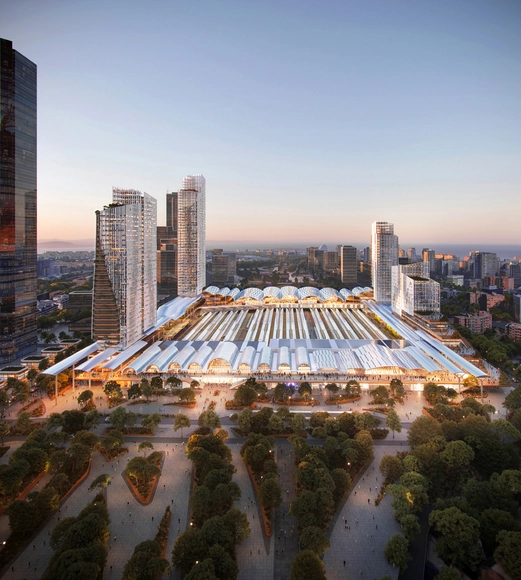
UNStudio and b720 Arquitectos, in collaboration with engineering firm Esteyco, were selected to deliver the integral remodeling for Madrid-Chamartín Clara Campoamor Station and its urban integration. Among the proposals submitted by the world's leading architecture firms, the winning design was chosen for its integral program of efficiency, sustainability, and inclusivity. As "Europe's largest urban regeneration project," the railway hub will extend 2.3 million square meters to become an international benchmark in the Spanish Capital.
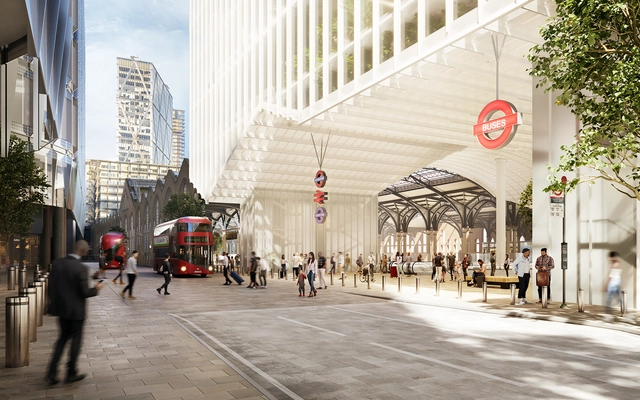
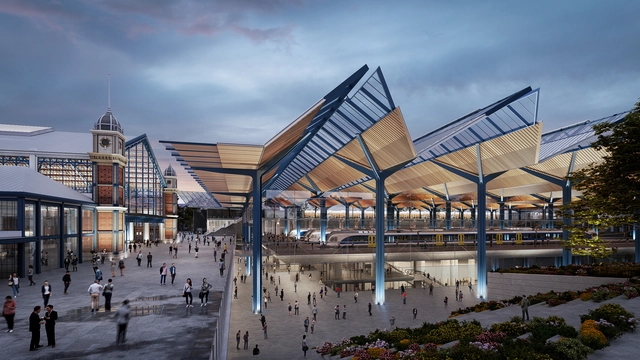
Architecture office Herzog & de Meuron has unveiled plans to revamp the Liverpool Street station in London. The scheme includes “vital upgrades” aimed at transforming the Victorian-era station into a fully accessible transportation hub fit to accommodate the 135 million people using the station annually. It also includes the addition of 840,000 square feet of offices and a 190,000 square feet hotel in two new structures, 10 and 6 stories high, respectively. These new interventions have attracted criticism from conservation groups. The proposal is currently undergoing its first round of public consultation. The development is overseen by Stellar, working with MTR, the operator of rail transport services and Network Rail.
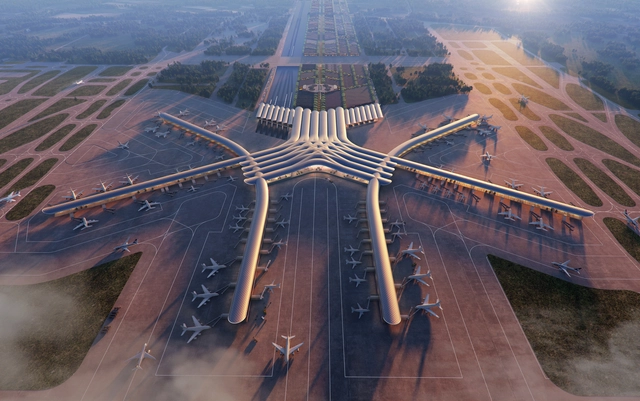
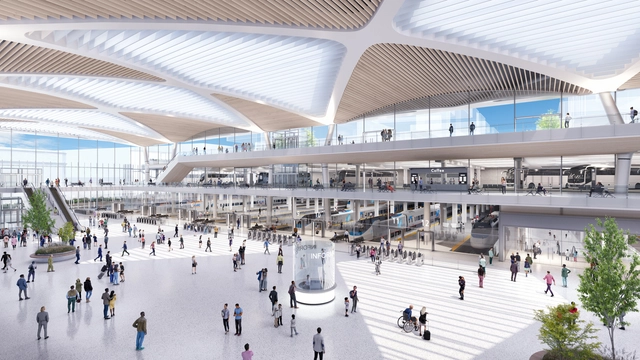
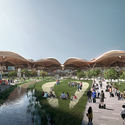
A Foster + Partners and Buro Happold consortium has been announced as the winners of the competition to design the new CPK airport, situated between Warsaw and Łódź, in Poland. The project is envisioned as a 21st-century transport interchange, bringing together air, rail, and road. The design seeks to strike a balance between operational efficiency, environmental responsibility, and a symbolic expression that reflects the country’s national identity. Initially, the airport will serve up to 40 million passengers but is planned to easily expand to meet the 65 million passengers target in 2060.
From smartphones to space rockets and self-driving cars, the power of technology in this modern digital era is enormous (and practically limitless). It has impacted every aspect of our lives and will continue to open up endless possibilities that today we cannot even begin to fathom. When applied in a socially and environmentally responsible way, technology has the power to enhance productivity, communication and sustainability, enabling global communities to function efficiently, addressing people’s everyday needs and improving their quality of life. Simply put, good technology serves humanity. And just as the healthcare or manufacturing industries have taken advantage of this, the architecture, design and construction world cannot fall behind.
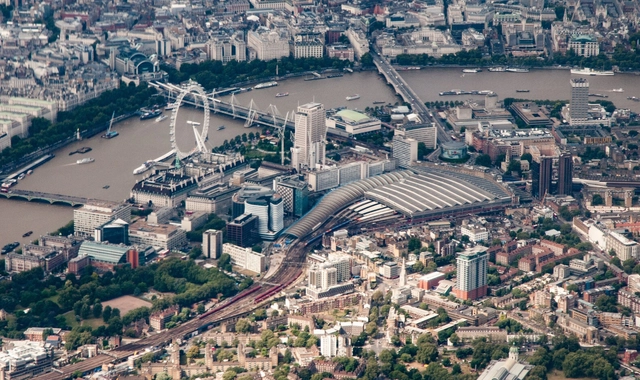
Grimshaw has been commissioned to develop the busiest transport hub in the UK, as well as London's surrounding Southbank area. The master plan will improve the traffic of 5 connections and renovate the terrain, home to world-famous attractions like the London Eye and the Tate Modern. The project is aligned with Lambeth Council's and the Network Rail's commitment to net zero emissions by 2030, through the extension of pedestrian and cycling routes.
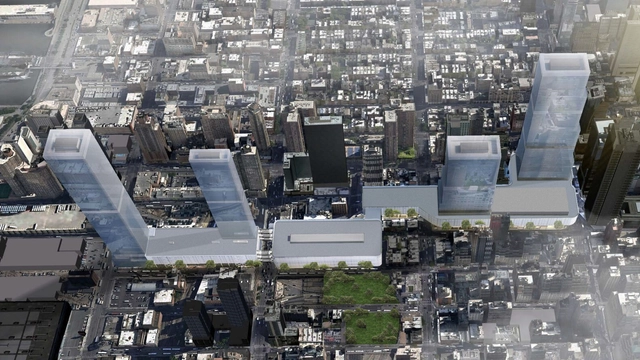
Port Authority New York New Jersey Midtown Bus Terminal future masterplan. Image Courtesy of Foster + Partners
The Port Authority of New York and New Jersey have announced the selection of Foster + Partners and U.S.-based multi-disciplinary design firm A. Epstein and Sons International Inc to reimagine the city's state-of-the-art Midtown Bus Terminal in Manhattan, the busiest bus terminal in the world. The project aims to expand the terminal's accommodation capacity, replacing the aging 72-year-old bus terminal with a new world-class facility. The new terminal will be designed to provide a best-in-class customer experience that serves the region’s 21st century public transportation needs, while enhancing the surrounding community and allowing for the removal of intercity buses from local streets.
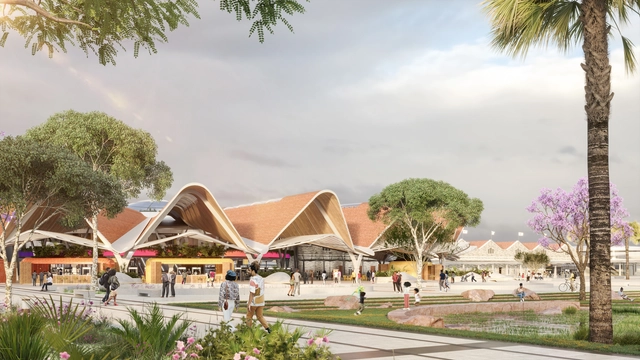
Atkins has revealed the final design of Nairobi’s new Central Railway Station and public realm. The project extends the historic station building, one of the city’s first stone structures, to raise its capacity to over 30,000 passengers per hour. The new additions take inspiration from the past, referencing the “Boma,” a community enclosure rooted in the heritage of central African culture. Built for flexibility and adaptability, the new station aims to become a key functional facility within the city, providing its citizens with amenities, landscape, and respite.
MAD Architects led by Ma Yansong, unveiled renderings of the MoLo, short for Mobility and Logistic hub, a new gateway situated along the western boundary of the Milano Innovation District (MIND). In collaboration with Architect Andrea Nonni, Open Project, and Progeca, the 28.5 meters high complex brings together several facilities across 68,700sqm of surfaces. Designed as an integration of nature and architecture, the MoLo “performs as a welcoming entrance and education space for issues related to mobility in which visitors can drop off their cars to explore the district on foot and see innovative transportation technology in person”.
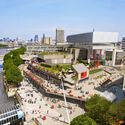
Architecture practice Grimshaw, in collaboration with Beyer Blinder Belle, Arup, and VHB, has revealed designs for the Washington Union Station Expansion Project (SEP) in Washington DC, USA. The project will ensure the preservation of the historic station and will improve access to the existing railway services, Metrorail, DC Streetcar, and bus services. The expansion aims to become a multi-modal transportation hub for the district adjacent to the historic station. In addition, the SEP will incorporate enhanced vehicle access and cycle and pedestrian routes.
Grimshaw, in collaboration with Nautes Architects, WSP, Vogt and Turner & Townsend, have been awarded first place in an anonymous competition for the renewal of Budapest Nyugati Railway Station. Selected from a shortlist of 12 international design firms, the winning design creates a "permeable station campus" with a series of car-free streets, walkways, public squares and a park, which open up the station complex to the city and restores its significance as one of the most vibrant and historic cities in Europe.
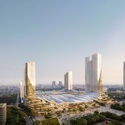
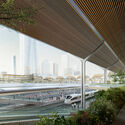
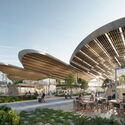
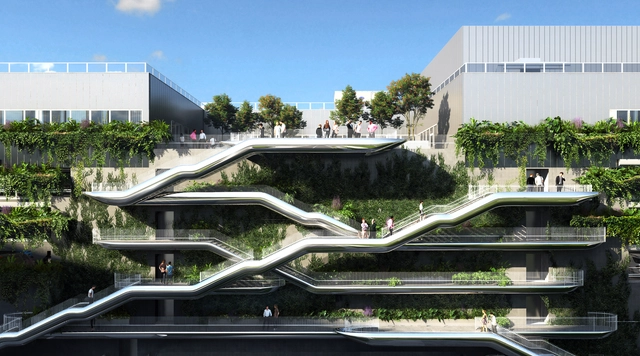
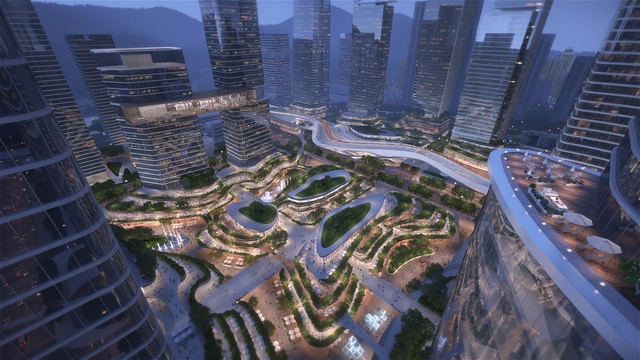
Aedas has won an international competition to design Shenzhen's new Qingshuihe Comprehensive Transportation Hub in a joint venture with China Railway Siyuan Survey and Design Group Co., LTD and Shenzhen Urban Transport Planning Center Co., LTD. The master plan draws inspiration from the natural environment of the area, integrating nature and water elements into the high-density city to build a unique new emblem for Qingshuihe. The underground compact hub releases large above-ground spaces which will feature urban terraces, offices, five-star hotels, first-rate apartments, science and technology exhibition halls, and other facilities.
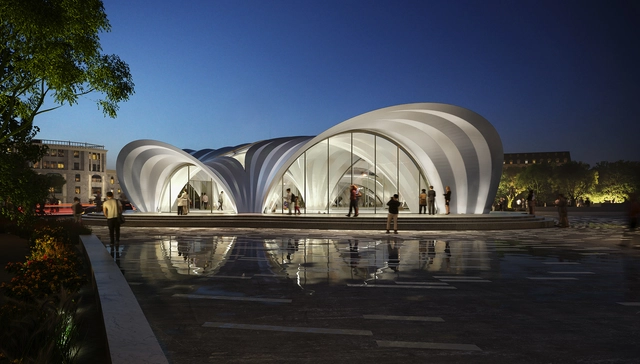
Following excavation and engineering works on Dnipro’s metro line in 2016, Zaha Hadid Architects has begun construction on three new metro stations. The Teatralna, Tsentalna, and Muzeina stations, all designed by the renowned architecture firm, will connect the residential, commercial, cultural, and academic institutions in Dnipro’s eastern districts with the city center and the Dnipro-Holovnyi railway station.
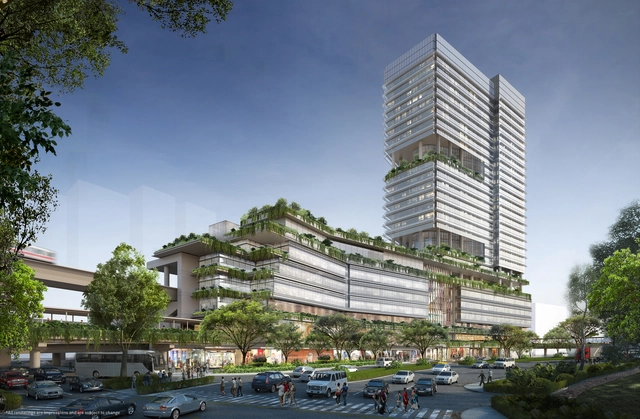
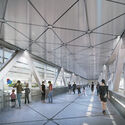
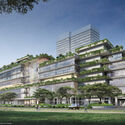
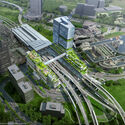
Aedas revealed the design for the Jurong East Integrated Transport Hub, a development merging work environment and recreation located within a vibrant commercial area outside of Singapore’s city centre. Featuring a transport interchange station and an office tower, together with community-oriented amenities, the project is designed as a catalyser for the emergence of a second financial district in the western part of the city.
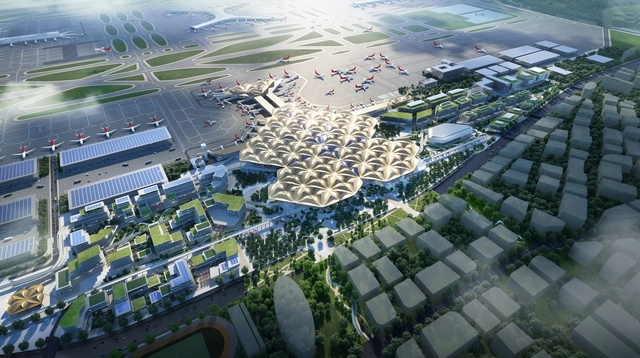
A multidisciplinary design team led by global architecture firm Grimshaw was selected as the winner of an international competition to design the Shenzhen Airport East Integrated Transport Hub. The winning design, which was inspired by the Mangrove tree, will provide travelers effortless transfers between high speed rail and other public transportation means in a new green and interactive way.
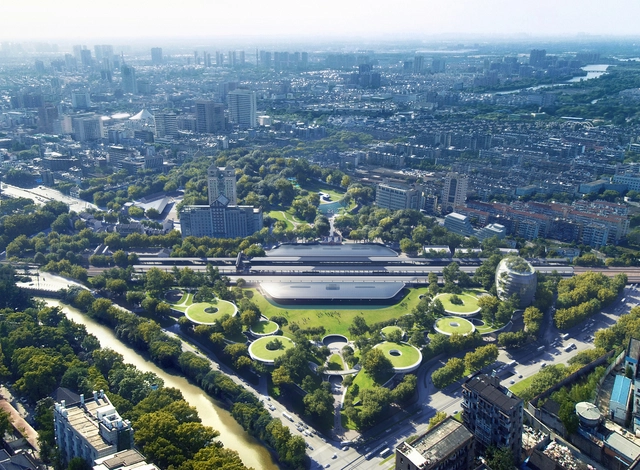
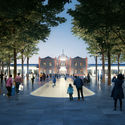
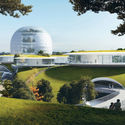
MAD Architects has just unveiled its design for the “Train Station in the Forest.” Under construction and scheduled for completion by July 1st, 2021, the project is located in the center of Jiaxing, in southeast China, in close proximity to Shanghai, Hangzhou, and Suzhou. Covering an area of 35.4 hectares, the intervention consists of rebuilding the historic station while creating a new infrastructural annex underground. It also includes the creation of plazas to the north and south and the rehabilitation of the adjacent People’s Park.