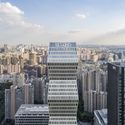
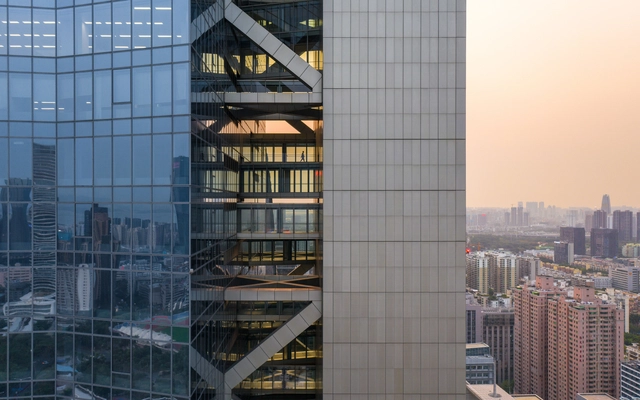
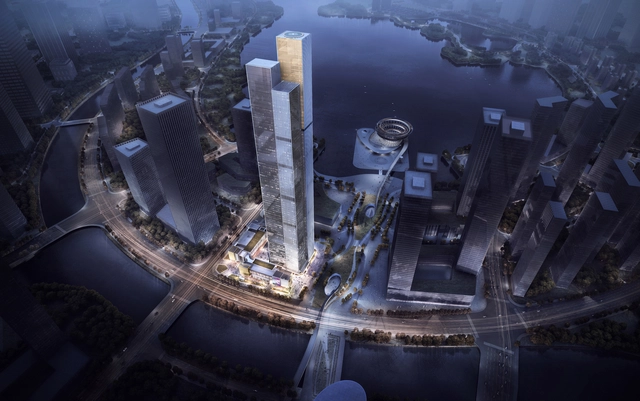
With its Shenzen project, design firm Morphosis reimagines the skyscraper typology, maximizing the flexibility of the floor plan through a detached-core scheme that shifts circulation, services and amenities to the building's exterior. Using a pioneering structural system, the project's spatial configuration diversifies the interiors' functional possibilities while reshaping the circulation routes within the building, with glass sky-bridges and large-scale steel braces knitting the core to the tower's main body. Completed in 2018 with a gradual opening that continues into 2021, the 359.8-metre tower is currently the tallest detached-core building in the world.
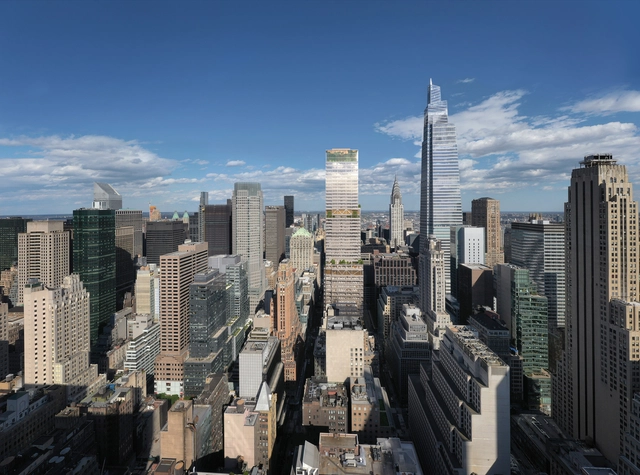
After completing One Vanderbilt, the tallest office building in New York, Kohn Pedersen Fox Associates has unveiled plans for a new skyscraper in Midtown Manhattan. The 320-metre high office tower at 343 Madison Avenue makes the most out of its relatively small plot and the silhouette mandated by the New York City zoning laws, featuring a series of receding volumes that leave a way to gardens and terraces at different levels. When completed, the project will also create an important new transit entrance to the Long Island Rail Road and the Grand Central Complex.
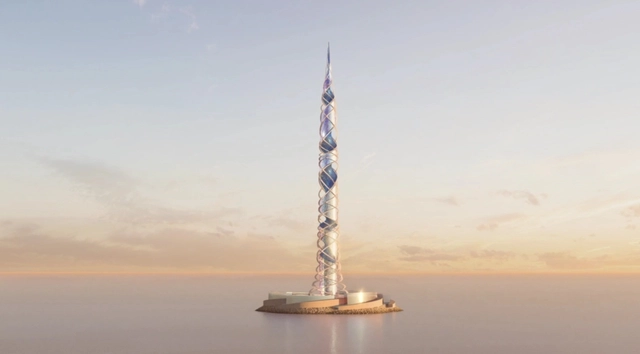
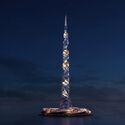
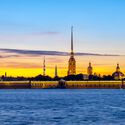
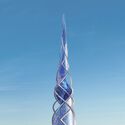
Scottish architecture firm Kettle Collective has revealed plans for a 703-metre skyscraper in St. Petersburg, making it the second tallest building in the world after Dubai’s Burj Khalifa. The Lakhta Centre II will have the highest occupied floor, and while the exact site is yet to be confirmed, it will sit alongside Lakhta Centre, currently the tallest building in Europe and the headquarters of energy firm Gazprom.
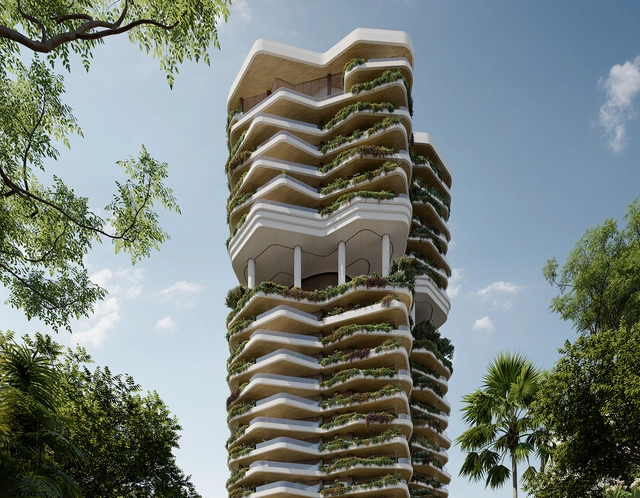
PLP revealed its design for a luxury residential tower in Singapore, featuring a lush vertical garden inspired by the city’s greenery. The biophilic design that blurs the line between indoor living areas and outdoor spaces strives to redefine metropolitan living by promoting health and wellbeing.
Scale dramatically shapes how we experience architecture and the built environment. Whether looking at buildings by volume, square area or height, the larger a project gets, the greater our perception changes. Monumental projects tell incredible stories of spatial experience, programming and design. Towering above us and around us, these large-scale works become landmarks in rural and urban contexts.
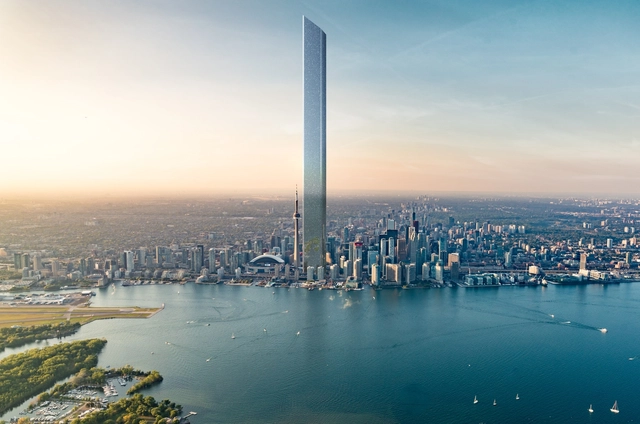
This week’s curated selection of the Best Unbuilt Architecture focuses on large-scale architecture located around the world. Drawn from an array of firms and local contexts, they represent proposals submitted by our readers. They showcase a wide array of approaches to designing at larger and larger scales, from an expansive arena in Vienna and a lush memorial in Singapore to the world's tallest tower designed to draw attention to poverty in Toronto.
SOM and Fender Katsalidis have won an international design competition for Central Place Sydney, a commercial development that will introduce new transformative public space and high-tech towers. Located in Sydney's Central Business District, Australia, the proposed project seeks to transform the western edge by introducing innovative buildings and public realm improvements.
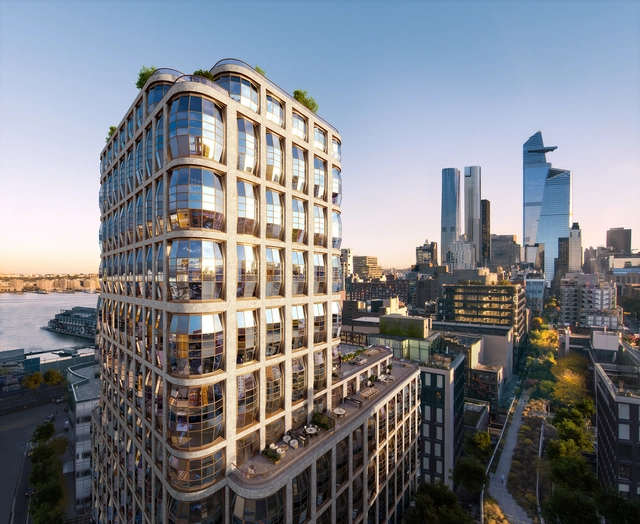
New renderings were unveiled for Heatherwick’s first residential project in New York, currently under construction. The recently dubbed “Lantern House”, in West Chelsea’s neighborhood, will join a series of developments, expanding the High Line's facades.
Lisi Green Town. Image Courtesy of Lisi Development
Architects and developers have always been on opposite ends of the construction world. While the first wanted to create dreamy spaces, the latter just wanted to cater to the basic needs. In these past few years, the world has witnessed significant changes, with the aggravation of climate-related issues, the evolution of technological solutions, and the newly acquired awareness and growth of the population.
While everything is transforming, building trends also evolved, mainly due to an alteration in people’s perceptions and priorities. However, one question remains unanswered: Could all these changes mean that the never-ending conflict between architects and developers reached some sort of common grounds? And could they finally be seeking one same goal, of a sustainable, resilient and inclusive future?
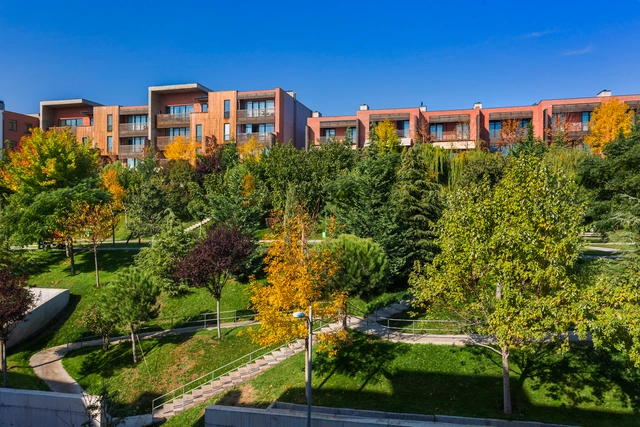
Sky Green, WOHA’s first project in Taichung, Taiwan has just been completed. Commissioned by the developer Golden Jade, with Feng Chia University as an advisor, the project is the first green and sustainable mixed-use development in the city.
Led by Iyad Alsaka, Reinier de Graaf, Jad Semaan, and Adrianne Fisher, OMA’s proposal was selected as the winning entry for a residential project on Kuwait City’s waterfront. In collaboration with local partner Kuwait-based consultant Pace, The Wafra tower will be OMA's first venture in the country upon its completion.
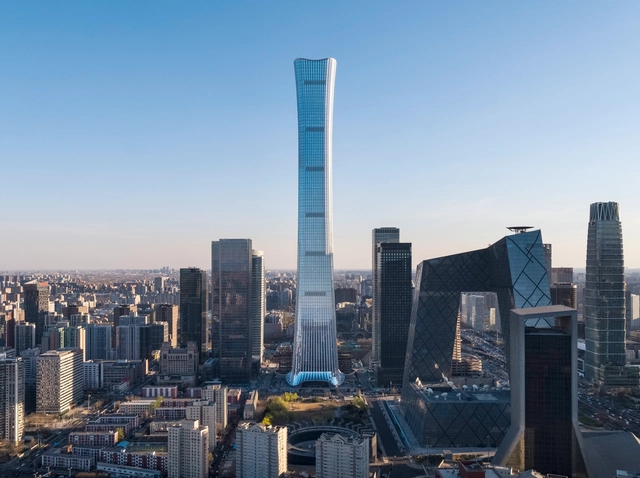
The 528 meters CITIC Tower, was inaugurated, standing tall as Beijing’s highest building to date. Designed by Kohn Pedersen Fox Associates (KPF), the supertall innovative architecture remains culturally appropriate, drawing inspiration from the “zun”, a ritual vessel originating in Bronze Age China.
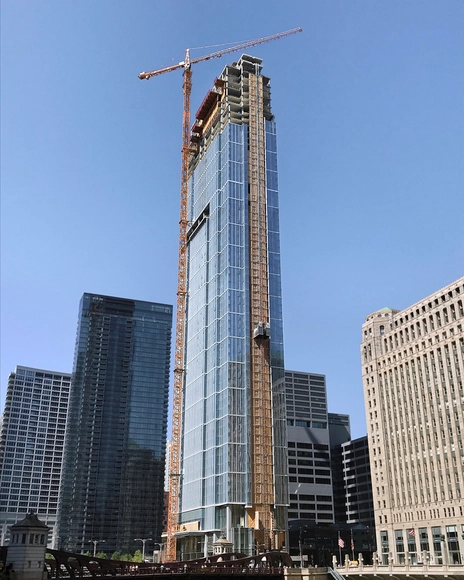
Wolf Point East, a 665-foot residential tower, part of the last remaining development along the Chicago River, topped off and is near completion. Designed by Pelli Clarke Pelli Architects, and part of a master plan to redevelop the area, the east tower generates 700 rental units, 35,000 square feet of amenities, and 4,000 square feet of retail at street level.
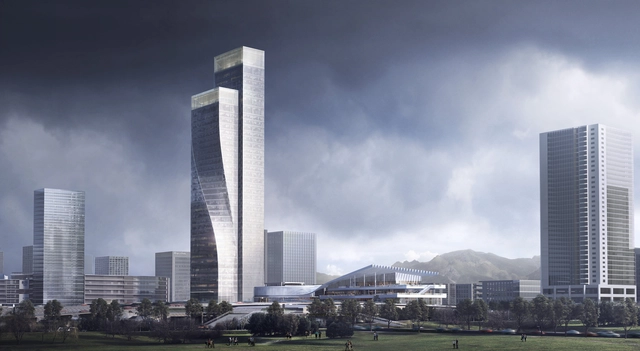
Aedas, one of the world’s leading architecture and design practices, designed the 323 meter Changsha Jinmao Tower. Located in the newly planned Changsha CBD, the architecture firm created a high-rise that reflects its context, especially the local steep mountainous landscape.
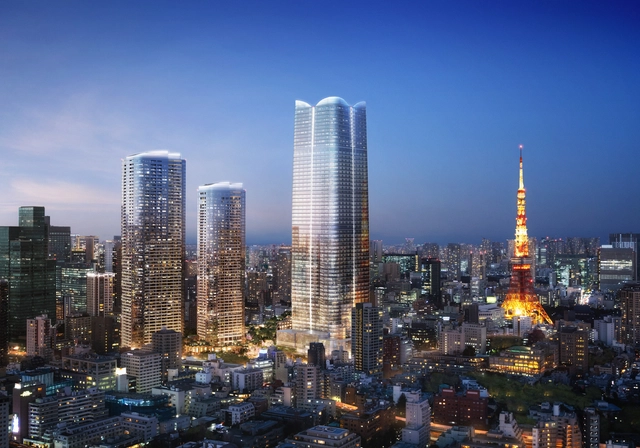
Towers of Pelli Clarke Pelli Architects . Image Courtesy of DBOX for Mori Building Co.
Pelli Clarke Pelli Architects generate for the first time in Japan, a high rise complex that holds the tallest building in the country, at the height of 330 meters. The U.S firm designed 3 towers for the district of Toranomon-Azabudai in Tokyo, part of a whole urban regeneration scheme for the central area of the capital.
The Chongqing Gaoke Group Ltd Office building designed by Aedas has reached new heights as construction progresses, and the project is taking form in the urban fabric and the city center’s skyline. Standing tall at the north of Xingfu Plaza, in Jiangbei District of Chongqing, in the southwest of China, the high rise introduces a vibrant and dynamic movement in the surrounding.
The Robinson Tower, a 24 000 m² boutique retail and office tower, was inaugurated in Singapore. Designed by the international firm KPF or Kohn Pedersen Fox Associates, and executed in collaboration with Associate Architect A61, the building addresses the cultural and social aspects of the city, creating a singular and refined experience. The tower stands out from its context showcasing novelty in form and function, changing the city’s skyline.
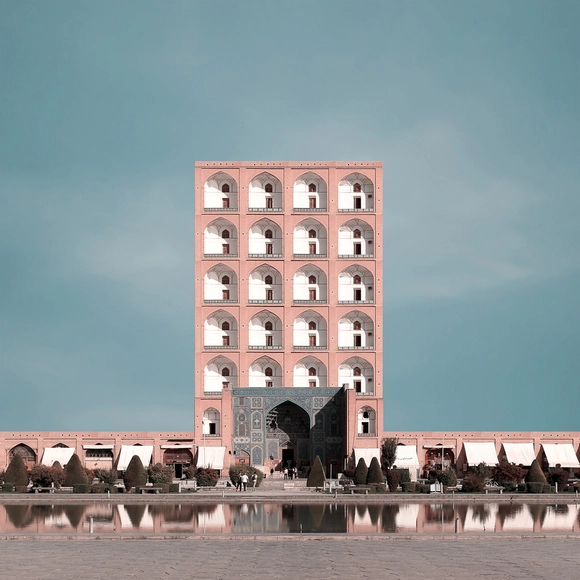
Traditional Iranian architectural monuments are often built low to the ground due to the lack of beam and column technology. Palaces, mosques, and public buildings are thus built with only one or two floors, and Iranian architecture rarely features towers or high-rise buildings as a result.
https://www.archdaily.com/921683/traditional-iranian-monuments-reimagined-as-high-rise-buildingsLilly Cao
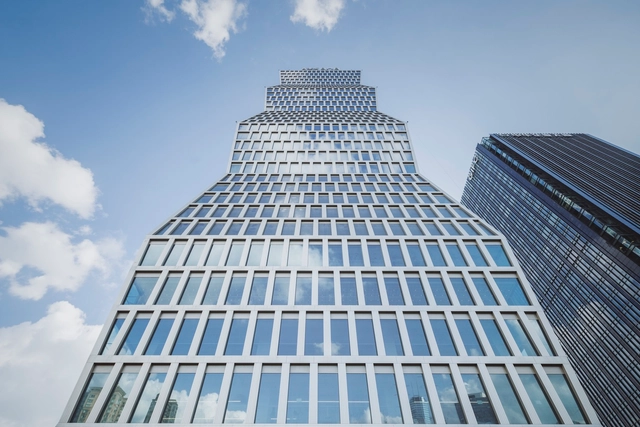
Kohn Pedersen Fox Associates (KPF) has announced the completion of the SOHO Gubei office tower in Shanghai. Inspired by the proportions of Constantin Brâncuși’s “Endless Column” sculpture, the tower manifests as an undulating obelisk with a diagonally canted zig-zag profile.
Each side of the tower’s sculptural form consists of four stacked volumes, with a series of shifted grids creating a density of wall surfaces that offer shade, reduce glare, and create a sense of urban solidity.








.jpg?1597587766&format=webp&width=640&height=580)

.jpg?1597587782 "Courtesy of SOM | Fender Katsalidis")
.jpg?1597587827 "Courtesy of SOM | Fender Katsalidis")
.jpg?1597587803 "Courtesy of SOM | Fender Katsalidis")
.jpg?1597587766)




.jpg?1576051979&format=webp&width=640&height=580)
.jpg?1576051840 "© Kuomin Lee")
.jpg?1576051957 "© Kuomin Lee")
.jpg?1576052609 "© Kuomin Lee")
.jpg?1576052676 "© Kuomin Lee")
.jpg?1576051979)
_OMA.jpg?1571676595&format=webp&width=640&height=580)
_OMA.jpg?1571677954 "Courtesy of OMA")
_OMA.jpg?1571684132 "Courtesy of OMA")
_OMA.jpg?1571683555 "Courtesy of OMA")
_OMA.jpg?1571674872 "Courtesy of OMA")
_OMA.jpg?1571676595)
_HG_Esch_(4).jpg?1570092438 "© KPF")
_HG_Esch_(6).jpg?1570092512 "© KPF")






_Tim_Griffith_(4).jpg?1564671406&format=webp&width=640&height=580)
_Tim_Griffith_(3).jpg?1564671392 "Courtesy of Tim Griffith")
_Tim_Griffith.jpg?1564671491 "Courtesy of Tim Griffith")
_Tim_Griffith_(5).jpg?1564671417 "Courtesy of Tim Griffith")
_Tim_Griffith_(7).jpg?1564671445 "Courtesy of Tim Griffith")
_Tim_Griffith_(4).jpg?1564671406)