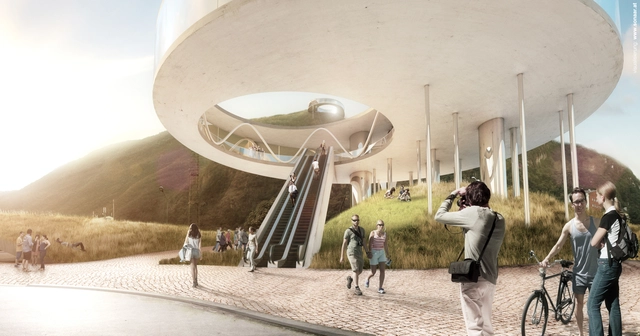
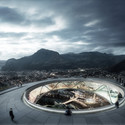
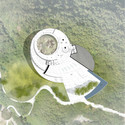
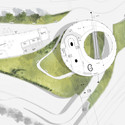
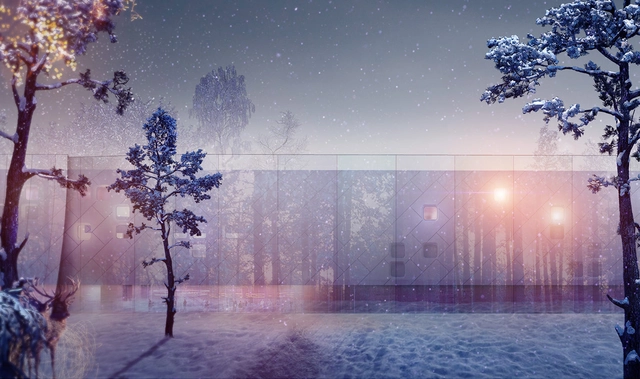
The Italian city of Bolzano, located in the foothills of the alps, has an intimate connection with the mountains that surround it. However, for almost 40 years, one of the most commanding views of Bolzano has been inaccessible, since the cable car which led up to the Virgolo mountain was closed in 1976. After winning an international design competition hosted by The SIGNA Group, Snøhetta has now been selected to replace that cable car, making the summit of Virgolo accessible once again and returning a valuable tourist asset to the city.
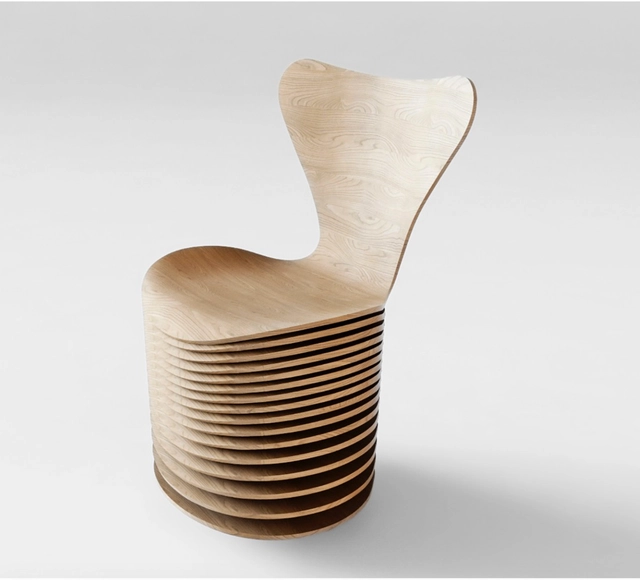
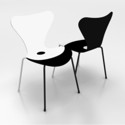
Bjarke Ingels Group. Image via www.fritzhansen.com
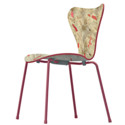
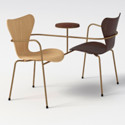
Sixty years ago Arne Jacobsen designed the Series 7 chair - the "Sevener." Unlike many other Jacobsen designs, the chair was not designed for a specific use, leaving it to interpretation. In light of the chair's 60th anniversary, Fritz Hansen commissioned "seven cool architects" - BIG, Zaha Hadid, Jean Nouvel, Snøhetta and three others - to recreate the chair. The results, after the break.
Snøhetta has unveiled plans for a flagship public market in Portland - the city's first in over 70 years. Named after a famous chef and Portland native who helped initiate the fresh food movement in the US, the James Beard Public Market will showcase Oregon's best cuisine within an "ambitious civic hub" that will reenergize an underutilized site in Downtown Portland.
"Linking the city to the river, the market will be an asset for residents and visitors alike," says Snøhetta. The market will feature more than 60 permanent vendors, 30 day tables, full-service restaurants, a teaching kitchen and event space.
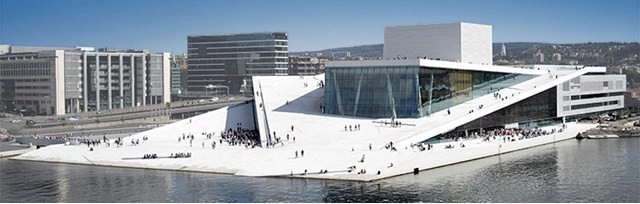
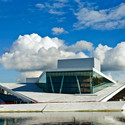
Oslo Opera by Snøhetta, Nowaye. Photo: Christopher Hagelund, Formdesign.no
Snøhetta wants design to be alive. Whether it is on paper or in wood or water, it is alive, diverse and difficult to capture.
Starting 18 June, an exhibition at The Danish Architecture Centre, titled 'Snøhetta - World Architecture' will center on how human nature interacts with a range of conditions - cultural, social, economic and environmental - in the world around us and how this thinking drives Snøhetta’s work.
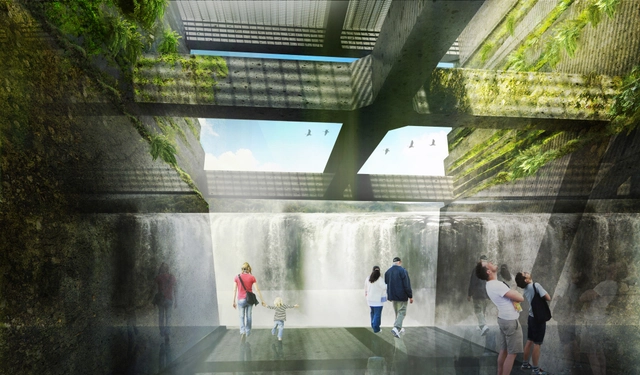
For the first time in 100 years, Oregon’s Willamette Falls will open to the public, with a Riverwalk proposed by Mayer/Reed, Snøhetta and DIALOG. The second largest waterfall in the US, Willamette Falls has a diverse history, and the proposed design seeks to celebrate and amplify the power of the falls, weaving the pedestrian through its rich cultural and geological history.
The final destination of many west-bound pioneers on the Oregon Trail during the 1800s, the falls also served as a gathering spot and source of fish for Native Americans. During the 19th and 20th century, it was an industrial powerhouse, accommodating woolen, lumber, flour and paper mills, and a brick making operation. Yet after the bankruptcy of the Blue Heron Paper Mill, the site has been inhospitable to the public, haunted by empty industrial buildings.
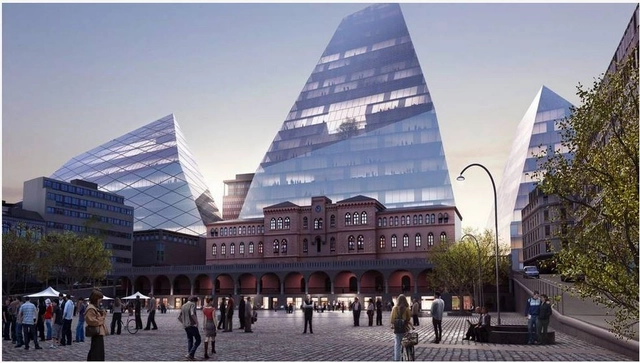
Nearly 100 architects, designers, and consultants have been developing designs for a competition for the new government quarter in Oslo. Drawing an initial 24 entries, the intent of the competition was to generate viable solutions for the future relocation of all government ministries (excluding the defense ministry), emphasizing an urban atmosphere and public elements. In the six shortlisted proposals from both local and international firms, including BIG, Snøhetta, and MVRDV, the themes of building tall and introducing green space emerged.
Now a ten-member committee of industry professionals will assist Statsbygg, the public construction advisers collaborating on the government's behalf, with the evaluation of each design. Take a look at the six proposals after the break.
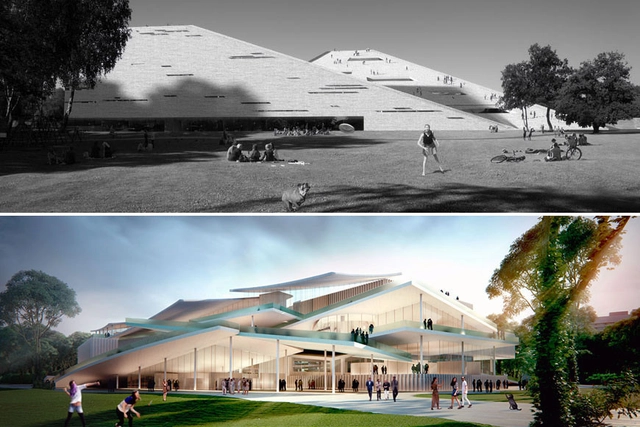
SANAA and Snøhetta have been jointly awarded first prize in a restricted competition to build a "New National Gallery - Ludwig Museum" in Budapest's 200-year-old Városliget (City Park). Lauded for their "equally outstanding" proposals, the winning teams will now meet with the jury to be judged "on professional and financial considerations."
Nieto Sobejano Arquitectos and the joint proposal of Balázs Mihály's Architect Studio and the Faculty of Architecture of Budapest University of Technology and Economics were awarded second prize.
The competition is part of a larger cultural project that aims to renew the city's Városliget by 2018 with five new museum buildings built inside the expanded park area.
A closer look at the winning schemes, after the break.
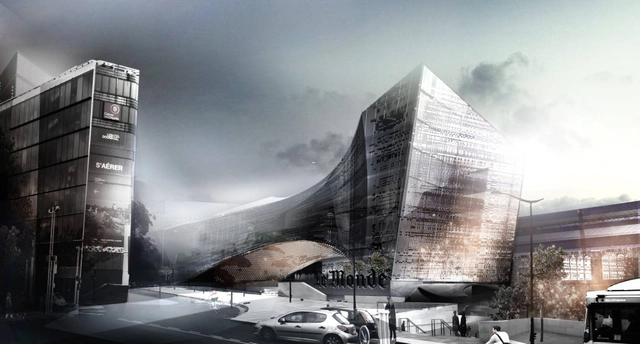
French media company Le Monde Group has chosen Snøhetta to design their new headquarters in Paris. Clad with a pixelated matrix of glass that offers varying degrees of transparency, the building’s distinct facade will be embedded with clusters of LEDs that project “abstracted levels of data,” symbolically representing the group’s continuous “flow of information.”
“The intention is that the façade gives the building a homogenous character when viewed from distance, but at the same time reveals a greater level of complexity as the view approaches – like headlines and detailed content in a news story,” says Snøhetta. “The façade patterns are intended to represent the building as a complete volume, while the distorted pixel map creates a rich tapestry from inside and out.”
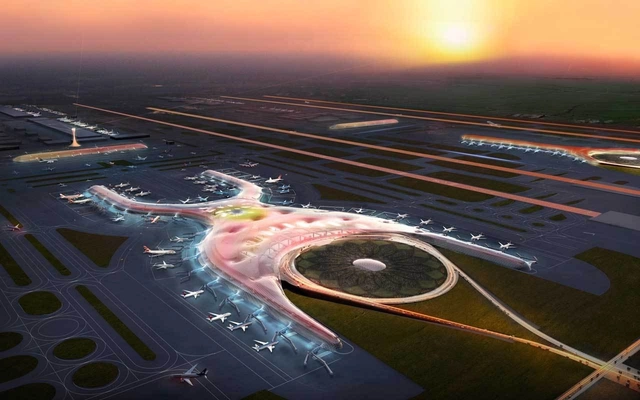
Foster + Partners and FR-EE - Fernando Romero EnterprisE’s winning scheme for the Mexico City Airport expansion (click to learn more). Image Courtesy of DBOX for Foster + Partners
A global survey conducted by BD has deemed Foster + Partners to be world’s “most admired architect" for the ninth consecutive year. The London-based practice, led by Norman Foster, is the 16th largest practice in the world. Foster + Partners’ ranking was undeniable, as the survey revealed a significant seven percent lead over runner-up contender, Herzog & de Meuron.
“To be voted most admired practice by our peers is a great honor,” said Norman Foster. “It is a huge tribute to our talented and hard-working teams with their myriad skills and disciplines, both in our many studios around the world and our base in London, all working towards the common goal of bringing innovative design solutions to create a better built environment.”
See who else topped the list as the world’s “most admired,” after the break.
Sleek, contemporary, and unapologetically eclectic, the work of Norwegian firm Snøhetta is as diverse as it is synonymous with modern Scandinavian design. Spanning everything from architecture and master planning to installation art and product and packaging design, Snøhetta's projects are characterized by the marriage of efficiency, quirky charm, and an eye for beauty. Offering a broad selection of suggestions for visitors to Oslo, Snøhetta's guide to the nation's capital is no different. Reflecting the favorite attractions of architects, artists, and brand designers from within the firm, the guide includes a windowless bar, jazz-punk band, and the Norwegian National Opera and Ballet, even encompassing the work of Oslo-based design contemporary, Element Arkitekter, in Lærernes hus. Read the rest of the seven travel selections here.
First Prize: “Nothing is impossible” / Alexandru Oprita, Romania and Laurentiu Constantin. Image Courtesy of Unbelievable Challenge
A “magical” logistics center fit for the season’s most hardworking man has been awarded first prize for it’s innovation and feasibility in the “Unbelievable Challenge” architectural ideas competition. Submitted by Alexandru Oprita and Laurentiu Constantin of Romania, “Nothing is impossible” was selected from 243 entries spanning 59 countries and five other deserving projects that have been highlighted as runner-ups.
A closer look at Santa Claus’ proposed logistics center, after the break.
"So in some ways I think that this tragedy gave a sense of purpose to people that was very positive, and we tried to translate that feeling into this building." In this video from the Louisiana Channel, Craig Dykers of Snøhetta describes how his own experience with the events of 9/11 and the positivity of the spirit of people around him helped inspire the design process of the 9/11 Memorial Museum Pavilion.
He speaks of the journey of healing and understanding as central to the design and experience of the building itself. "As you move through these cycles, you realize one day that you are alive, and you that have to present the strength of being alive to those around you, and this building is meant to be a part of that cycle…to allow you to see yourself, at a moment in time."
Watch the video above to learn more about the challenges of designing a memorial museum fully integrated within an essentially nonexistent site.
Few of the architectural principles developed in the 20th century have been as widely accepted as the curtain wall, with the technology going from an implied feature of Le Corbusier's Five Points of Architecture to the go-to facade treatment of architects worldwide. In this article, originally published on Australian Design Review as "Invisible Cities - The Last Remnant of Modernism," Annabel Koeck argues that the curtain wall, initially prized for its glassy transparency, is now making buildings and even entire cities invisible thanks to its sheer ubiquity - at the expense of architectural expression.
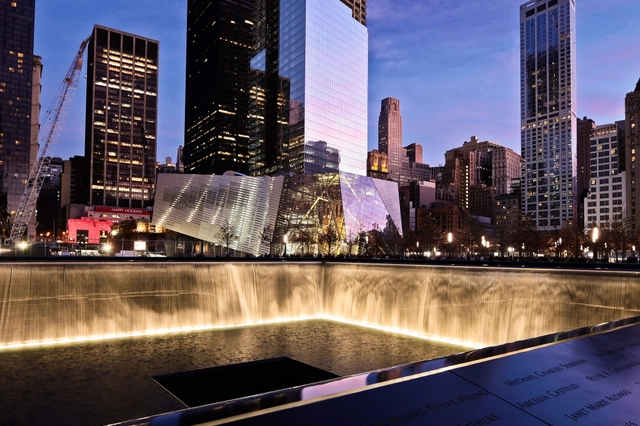
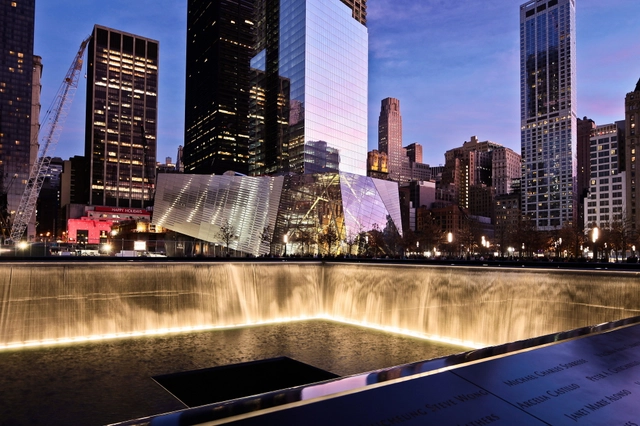
Norwegian architects Snøhetta, based between Oslo and New York, designed the glass structure for the The National September 11 Memorial entry pavilion, which appears camouflaged against the backdrop of neighbouring glass curtain walls that define the New York skyline. Admittedly, Snøhetta’s pavilion was conceived by a very different brief, one defined by timidity and subtlety; yet paradoxically it was the curtain wall that facilitated this. Looking over the South Pool towards an array of glazed elevations that dominate the skyline it is ironic that a Modernist technique – the curtain wall – could now spell the end for architectural diversity in cities.
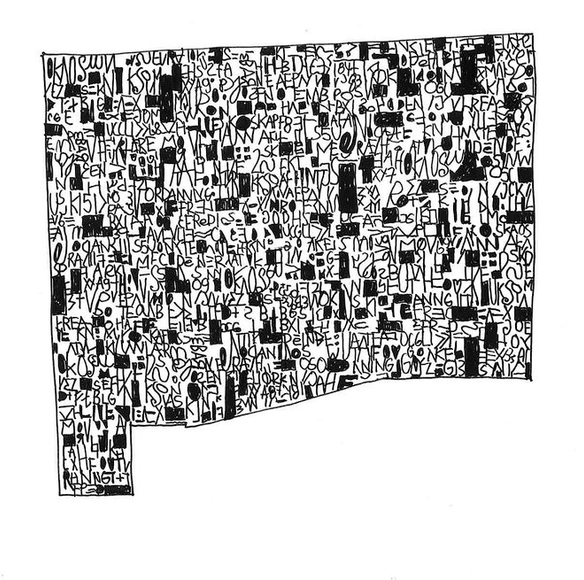
Snøhetta’s pixilated concept for the Norwegian banknote has been selected by the Central Bank of Norway to serve as the “foundation” for the backside of the new kroner notes. This news, announced yesterday in Oslo, also confirmed that the notes’ front will be based off The Metric System’s more “traditional” design featuring a images of sailing vessels.
Both Snøhetta and The Metric System were among seven designers invited to submit ideas under the nautical theme “The Sea,” in which Snøhetta chose to commemorate Norway’s coastal landmarks with a “visual language” of brightly colored, cubical patterns.
More on Snøhetta’s winning concept, after the break.
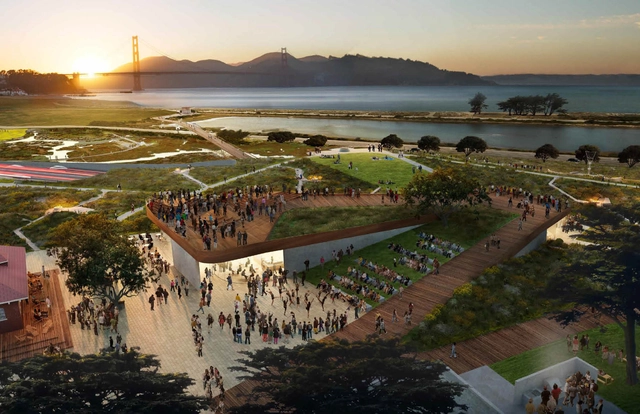
Last week, the five teams competing for the Presidio Parkland project in San Francisco unveiled their proposals in a public meeting at the project site. The parkland, made possible by the replacement of an elevated highway by a new tunnel, will command stunning views of the San Francisco bay, including views of the Golden Gate bridge.
"This is a once-in-a lifetime opportunity to create and design new parklands," Executive Director of the Presidio Trust Craig said. "We are extremely pleased with the caliber of the work of the five design teams and look forward to hearing the public’s feedback on these early concepts."
Competing for the prestigious project are James Corner Field Operations, OLIN with Olson Kundig Architects, Snøhetta with Hood Design Studio, West 8, and CMG Landscape Architecture. A winner will be announced in January.
The European Union Prize for Contemporary Architecture - Mies van der Rohe Award is one of the most important and prestigious prizes for architecture within Europe. First established in 1987, the prize is awarded every two years, and a look at the projects over the years offers unique insight into the development of architecture across Europe. To better understand the significance and uniqueness of the award we spoke with two previous award winners – Kjetil Trædal Thorsen and Craig Dykers from Snøhetta and Dominique Perrault from Dominique Perrault Architecture – as well as Peter Cachola Schmal, an architect, critic and the director of DAM, the German Architecture Musuem, and Josep Lluís Mateo of Mateo Arquitectura and a professor of Architecture and Projects at ETH-Eidgenössische Technische Hochschule/ Swiss Federal Institute of Technology Zurich.
“This is the special thing about the Mies jury, that they do visit the top 5 projects, and see first-hand what this piece of architecture is about. And then they vote, which means the jury really knows what they’re voting about,” Peter Cachola Schmal noted.
“It’s a prize for a project, rather than a prize for an architect,” Kjetil Trædal Thorsen added.
Read on after the break for more on the Mies van der Rohe award and to see what the architects had to say about the importance of archives...
If you like magazines, then you'll love this: the New Yorker, celebrating their recent redesign, have made their archive free for a limited period only. And, making up for their hiatus as they wait for a redesign of their own, Places Journal has gone to the effort of rounding up the best architecture reads from the last few years. Here are our top three:
Set to open to the public on Wednesday after a highly controversial and contested journey from idea to reality, the September 11 Memorial Museum has inevitably been a talking point among critics this week. The museum by Davis Brody Bond occupies the space between the Memorial Plaza at ground level and the bedrock below, with an angular glass pavilion by Snøhetta providing an entrance from above. A long ramp, designed to recall the access ramp with which tons of twisted metal was excavated from the site, descends to the exhibits which sit within the perimeter boundaries of the twin towers' foundations, underneath the suspended volumes of Michael Arad's memorial fountains.
The content of the museum is obviously fraught with painful memories, and the entrance pavilion occupies a privileged position as the only surface level structure ground zero, in opposition to the great voids of the memorial itself. The discussion at the opening of the museum was therefore always going to center on whether the design of the museum - both its built form and the exhibitions contained - were sensitive and appropriate enough for this challenging brief. Read the critics' takes on the results after the break.