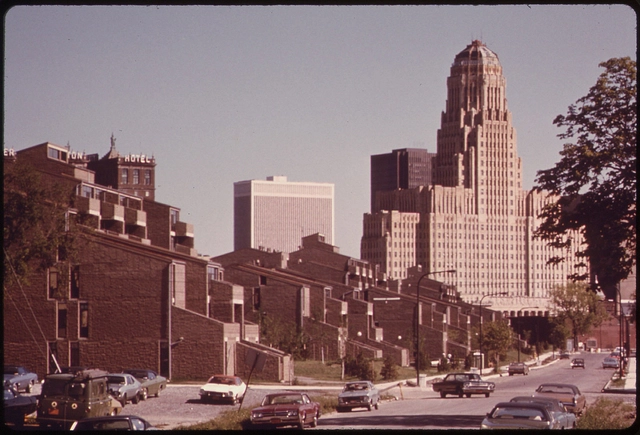
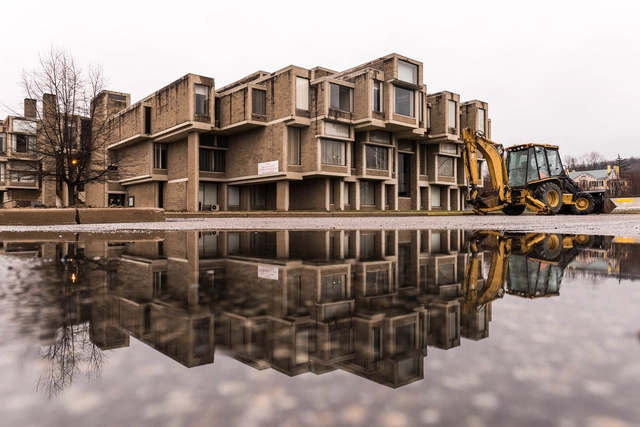
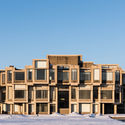
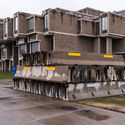
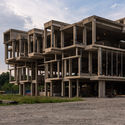
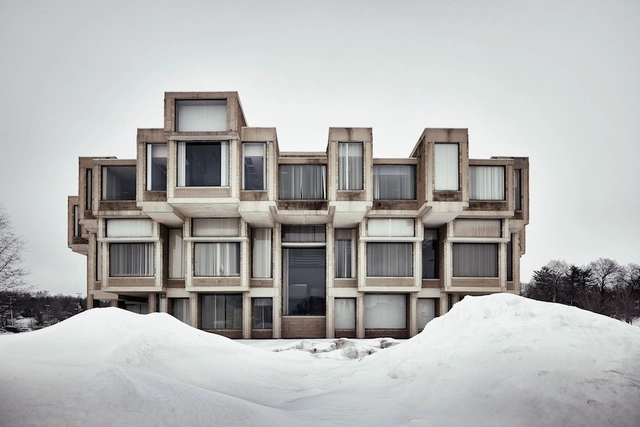
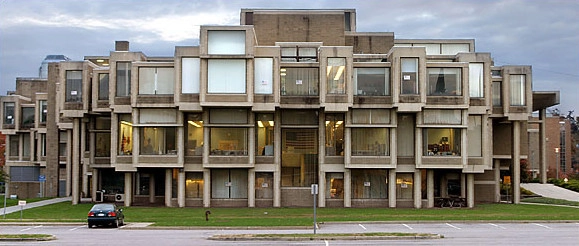
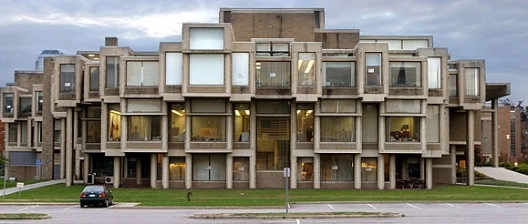
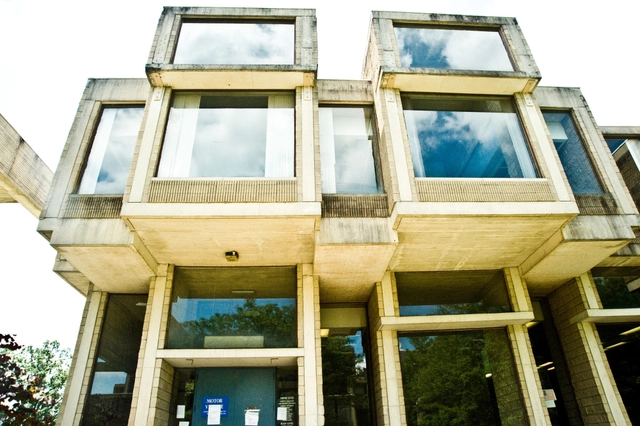
Demolition of the Paul Rudolph-designed Shoreline Apartments in Buffalo, New York, has accelerated, and the full destruction of the housing complex is being stalled by a single tenant. John Schmidt has refused to leave his unit in what remains of the brutalist buildings, despite having received an eviction notice, over what he feels are strong-arm tactics from developer Norstar Development Corporation.
To speak of Paul Rudolph’s illustrious career is to trace a grand arc stretching from the 1940s to the 1990s. More often than not, the popular narrative begins with his student days at Harvard under the tutelage of Walter Gropius, touches upon his earliest, much-loved Florida beach houses, circles around his eventual break from the rigidity of both the Sarasota School and the International Style, and finally races towards the apex: his chairmanship of the Yale School of Architecture, and the concurrent shift to a Brutalist architectural style characterized by monumental forms, rugged concrete, and interwoven, multilevelled spaces awash with a remarkable interplay of light. Then comes the fall from grace: the beloved Yale Art and Architecture Building went up in flames just as the architecture profession began to question modernist ideals, and eventually Postmodernism was ushered in. Flickering, sputtering, Rudolph's grand narrative arc lurched towards Southeast Asia, bearing away the “martyred saint.” Save for several scattered commissions in the United States, Rudolph spent the last two decades of his life building abroad, mostly across Hong Kong, Indonesia, and Singapore, until his death in 1997.
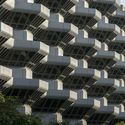
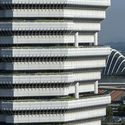
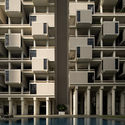
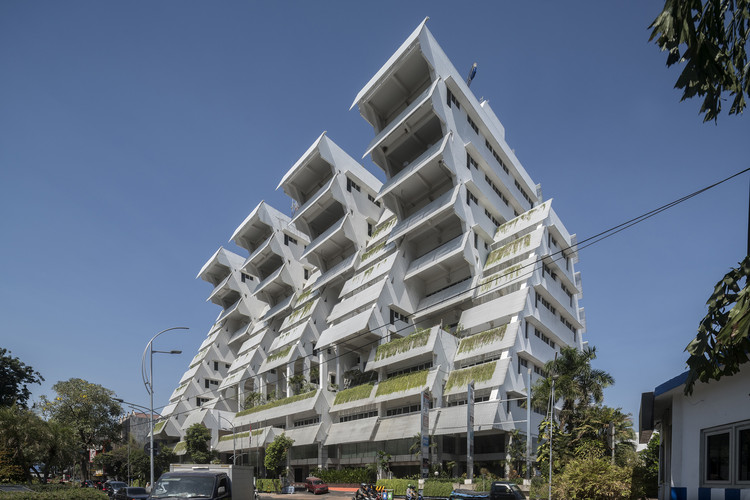
But of course, time and again, historians have sought to challenge the myth of the failed architect by rereading his understudied work from the late years. Adding to this growing corpus of fresh research and alternate perspectives is architectural photographer Darren Soh’s ongoing project documenting—so far—three of Rudolph’s major works in Southeast Asia: The Colonnade (1986) and The Concourse (1994) in Singapore, and the Intiland Tower (1997) in Surabaya, Indonesia.
Visiting on four separate occasions throughout 2015 and 2016, Erskine captured the dismantling of this iconic Brutalist work with stunning severity. See the building's final seasons below.
Illustration by John Pirman of the Walker Guest House, Paul Rudolph, 1952
SarasotaMOD is an architectural festival, this year celebrating Paul Rudolph and the opening of SAF's Walker Guest House Replica at The Ringling Museum of Art. The Guest House was designed by Rudolph in 1952 and the original still stands on Sanibel Island, Florida, USA.
The weekend features six great presentations, walker tours of Lido Shores and trolley tours of Siesta Key, an open house at Rudolph's Umbrella House, a party at the just restored Rudolph Addition at Sarasota High School (1960)... plus dinner and parties in private midcentury homes.
“I always had an affinity for architecture which I attribute to growing up in a neighborhood and town that was constantly under construction. Our house was the first on the block. I think that in a way I was more interested in the abstractness of the foundations and the initial framing then in the completed structures themselves. Things I made back then had that incompleteness about them. As I became more aware of architecture in the wider world Brutalism was one of the styles of the moment. Looking at architecture magazines as a child and seeing hotels in French ski resorts (Marcel Breuer at Flaine) made of concrete suited my sensibility, I was hooked.”
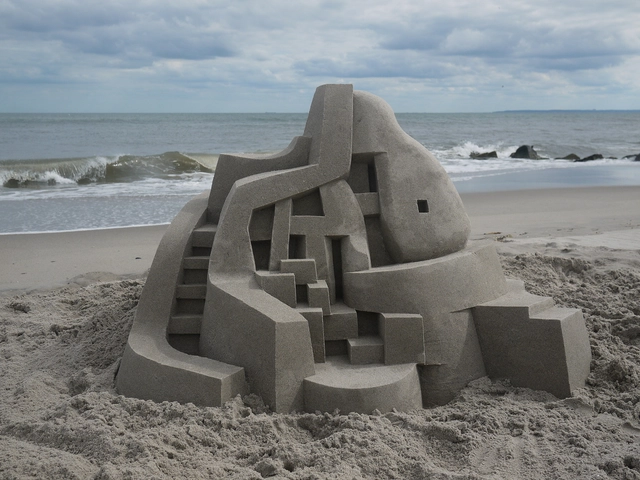
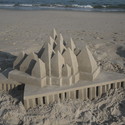
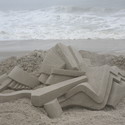
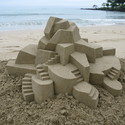
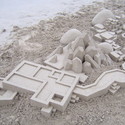
For New York-based Calvin Seibert, sandcastles are more than just a fun summer hobby. Using a paint bucket, homemade plastic trowels, and up to about 150 gallons of water he creates spectacular modernist sandcastles. Read on after the break for an interview with Seibert and to see more photos of his work.
Happy Fourth of July! In recognition of Independence Day in the United States, ArchDaily has assembled six of our favorite "American Classics." Featuring projects by Louis Kahn, Mies van der Rohe, Richard Neutra, Paul Rudolph, Eero Saarinen, and Richard Meier, each of these canonical works occupies a prominent place in twentieth-century American architecture. See them all after the break.
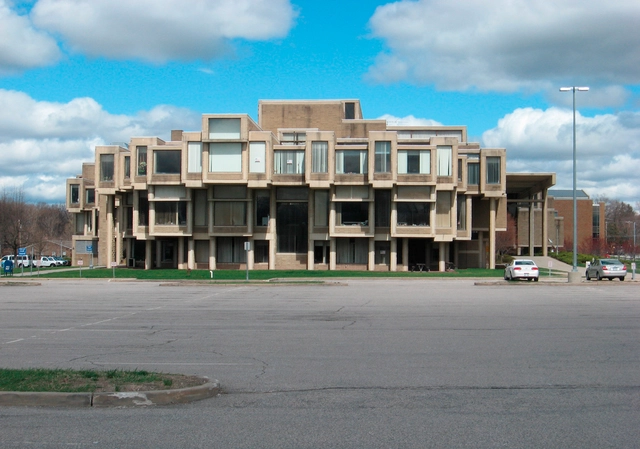
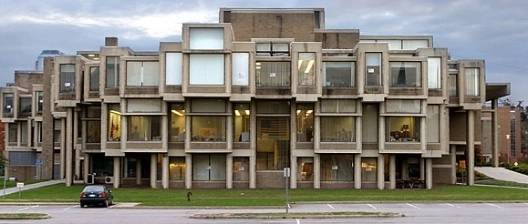
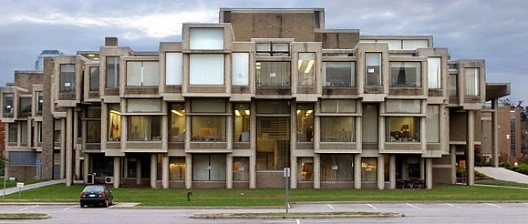
The 44-year-old brutalist landmark has been the center of a preservation debate for years; lawmakers argue that the building is “not easy to love” and expensive to maintain, while preservationists declare the building is an important piece of modern history and blame its state of disrepair on neglect. The council vetoed an offer last summer to allow a New York architect to purchase the property and transform it into artist studios. More on the decision, and more of Matthew Carbone's images for Architect Magazine, after the break.
The latest in the debate over Paul Rudolph's controversial Orange County Government Center, Michael Kimmelman of the New York Times stresses the importance of its survival in "A Chance to Salvage a Master's Creation." The much debated plan for the now monumental structure would alter much of its existing character, whether by removal or replacement. Kimmelman argues that despite the criticism the Government Center has garnered from some, Orange County should reconsider architect Gene Kaufman's alternate proposal which would keep the structure intact and would restore it to its former glory.
Paul Rudolph’s threatened Orange County Government Center has new hope. According to a report by Architectural Record, New York City architect Gene Kaufman has offered to purchase the building and transform it into artist studios, though under one condition: Kaufman’s practice Gwathmey Siegel Kaufman must be commissioned to design the city’s new government building adjacent to the brutalist landmark. This news comes a week after an 18-3 vote secured plans to restore a portion of Rudolph’s building and return it to its former use.
The Sarasota Architectural Foundation (SAF) has announced that a replica of Paul Rudolph’s Walker Guest House will be constructed at the John and Mable Ringling Museum of Art in Sarasota, Florida. It is hoped the iconic, 24' x 24' vacation cottage will be opened to the public by 2015, after which it will be disassembled and transported to select museums around the country.
More information about the Walker Guest House, after the break...
https://www.archdaily.com/497999/paul-rudolph-s-iconic-walker-guest-house-to-be-re-constructedStephen Stanley
Despite a 15-6 Legislature vote in February that ruled in favor of preserving Paul Rudolph’s brutalist landmark in Goshen, reports indicate that demolition is still being considered as an option. According to the Times Herald-Record, an ad hoc panel led by pro-demolition County Executive Ed Diana selected a team of architects and engineers to develop three options in 90 days for “renovating and replacing” sections of the 43-year-old complex. Though many thought the 18-month-long campaign ended with February's ruling, it is apparent that the heated debate is far from over. Ultimately, lawmakers must vote again on the project to authorize bonding for construction.
Last Sunday James S. Russell, architecture critic for Bloomberg News and a former editor for Architectural Record, mused on his personal blog about the possible influence Paul Rudolph’s Brutalist University of Massachusetts campus in Dartmouth may have had on Dzhokar Tsarnaev, the younger of the two Boston Marathon bombers who was also a student there.
Mr. Russell describes the campus as “a gigantic eerie, dozen-building concoction of grim ribbed-concrete hubris….” This is the sort of description that drives right to the heart of urban alienation. It’s Edvard Munch’s The Scream. This ability to sum up and drive the nail home is one reason he is the architecture critic for Bloomberg News. No side-stepping here.
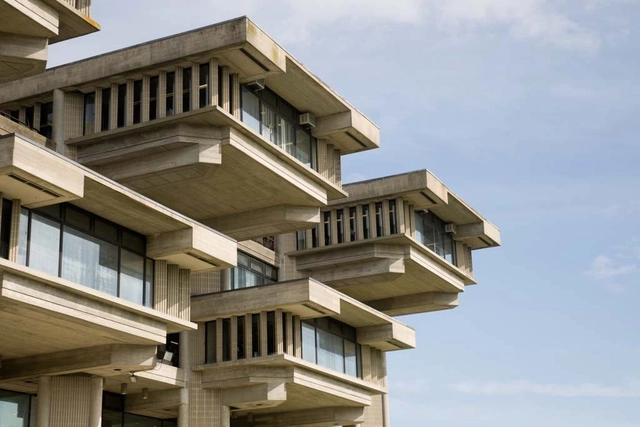
Brutalism. It’s the architecture movement that the public loves to hate, and architects dare to love. It’s also the latest topic tackled by CLOG, the quirky publication that takes a long slow look at what’s important in architecture now.
While Brutalism, a movement that reached its height in the 60s, may not seem a timely topic, nothing could be further from the truth. With Brutalism’s monolithic beasts reaching their not-so-golden golden years, the question to re-model (often prohibitively expensive, considering these projects’ complexity) or just demolish (as the public often begs for) is an urgent one - as the recent preservation debates over Paul Rudolph’s Orange County Building (successful) and Bertrand Goldberg's Prentice Women’s Hospital (not) reveal.
However, while this edition of CLOG of course mentions these debates, Brutalism shines in exploring the bigger questions these debates provoke: Why is Brutalism so loathed? What is it, really? And - can Brutalism be saved? Should it be?
Although preservationists continue to mourn the seemingly inevitable demise of Chicago’s Prentice Women’s Hospital, a solid victory for Brutalism has finally been confirmed. Lawmakers in Goshen, New York, have passed a proposal to renovate Paul Rudolph’s iconic Orange County Government Center, authorizing $10 million in design funding. The 15-6 vote was secured by the overwhelming evidence that an upgrade would be more cost effect than County Executive Ed Diana’s fallback plan to replace two-thirds of the building and preserving only the court section. In addition, lawmakers felt the pressure of a March 12 deadline that would risk losing up to $2.7 million in federal funds to repair water damage caused by Hurricane Irene and Tropical Storm Lee in 2011.
Created by Reiser + Umemoto for the Hong Kong & Shenzhen Bi-City Biennale, “Manhattan Memorious” explores what Manhattan could have been. The film visualizes several unrealized projects from Manhattan, including Buckminster Fuller’s dome over Midtown, Rem Koolhaas’ City of the Captive Globe, RUR’s East River Corridor, Paul Rudolph’s Eastside Redevelopment Corridor, Morphosis’ West Side Yard and others.