1. ArchDaily
  2. Passive House

Passive House: The Latest Architecture and News

Faveker’s Tailor-Made Tiled Facade Brings Personality and Efficiency to the New Muskiz Secondary School

 | Sponsored Content

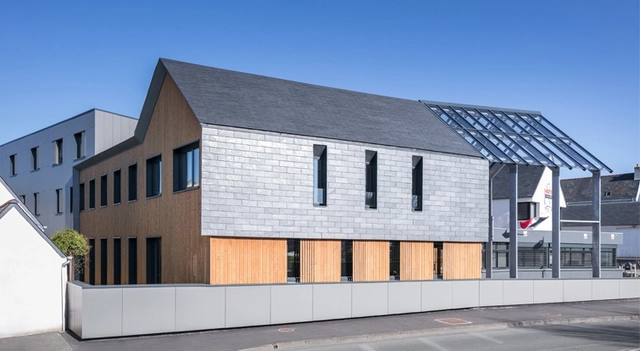
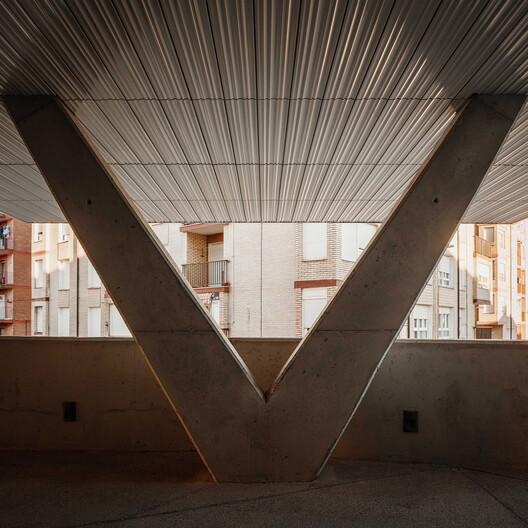
The new Muskiz Secondary School building (Vizcaya), designed by BAT Architecture studio, has become a leading symbol of sustainable architecture for educational centers. Designed in accordance with Passivhaus criteria and built using cross-laminated timber (CLT), the project combines innovation and comfort with environmental care.

In this equation, Faveker's tiled ventilated facade, tailor-designed using its GA16 system as a basis, plays a key role. This precise, luminous tiled skin enhances the building's energy efficiency and infuses it with a unique architectural personality that harmonizes with the surrounding natural setting.
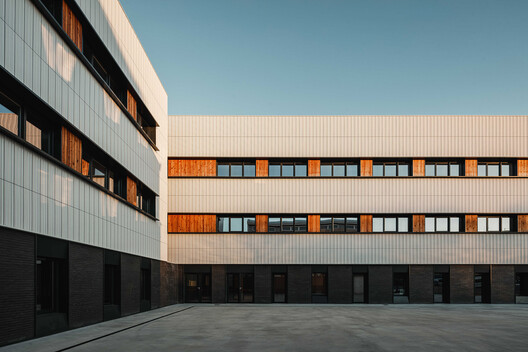
Faveker’s Tailor-Made Tiled Facade Brings Personality and Efficiency to the New Muskiz Secondary School - Image 2 of 4
© Aitor Estévez
Faveker’s Tailor-Made Tiled Facade Brings Personality and Efficiency to the New Muskiz Secondary School - Image 3 of 4
© Aitor Estévez

Context-Responsive Architecture in Spain: 7 Projects Highlighting Material Strategies

 | Sponsored Content

Andanzas y visiones españolas is the book in which Miguel de Unamuno collects his experiences during excursions through Spain's cities and countryside, accompanied by friends and colleagues. More than a precise geographical description, the text consists of narratives in which each region and every feature of the territory leaves a deep imprint on his thought. The literary discourse actively weaves the diversity of setting, climate, and contextualism as foundational threads, presenting the territory not only as a physical place but also as a space for reflection and contemplation. This attentive engagement with the landscape—so diverse within Spanish architecture—also resonates in the built environment, fostering in contemporary practice a sensitive adaptation to the country's varied climatic conditions, both through design strategies and material choices.

Natural Slate Rainscreen Cladding: A Solution for Passive Houses

 | Sponsored Content

Inspired by experimental solar houses developed after the 1970s oil crisis, the Passive House certification emerged in the late 1980s as a response to growing concerns about energy efficiency and the environmental impact of the construction industry. Its goal is both simple and radical: to reduce heating and cooling demands to an absolute minimum through passive strategies, controlled mechanical ventilation, and an extremely efficient building envelope — eliminating the need for complex or expensive systems.

The choice of exterior cladding materials plays a strategic role in achieving this performance. Poorly designed surfaces, thermal bridges, or sealing failures can undermine the building's entire thermal logic, especially in demanding climates. This is where rainscreen systems stand out: by creating a ventilated air gap between the cladding and the structural wall, they promote continuous airflow, manage moisture, and enhance thermal stability. Materials that combine performance, durability, and visual appeal are rare — and natural slate from Spain's Cupa Pizarras is a standout solution.

MVRDV and GRAS Complete Phase One of Project Gomila in Mallorca, Spain

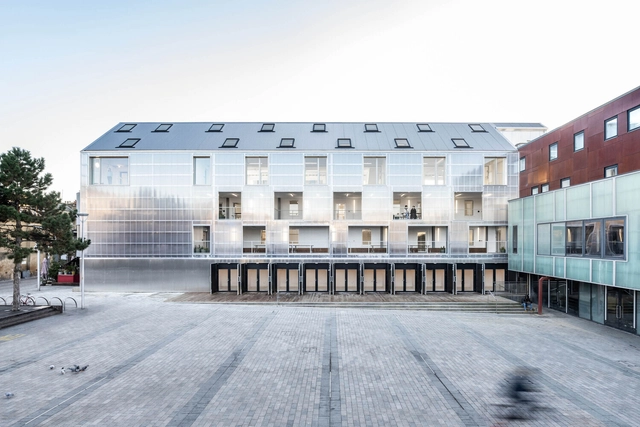
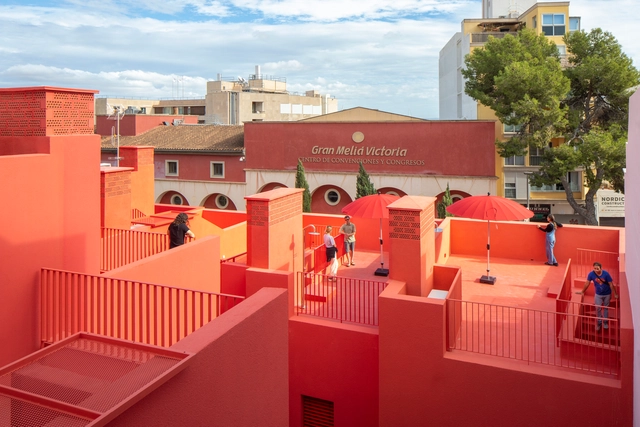
MVRDV and GRAS announced the completion of five of the seven buildings of Project Gomila in Palma de Mallorca, Spain. The residential complex was originally comprised of four existing buildings, adding three new ones for a total of 60 new dwellings and new commercial spaces. The project aligns with revamping the historic neighborhood "El Terreno" as a vibrant and sustainable residential site, home of bohemian nightclubs that hosted iconic musicians such as Jimi Hendrix, Ray Charles, and Tom Jones.

MVRDV and GRAS Complete Phase One of Project Gomila in Mallorca, Spain - Image 1 of 4MVRDV and GRAS Complete Phase One of Project Gomila in Mallorca, Spain - Image 2 of 4MVRDV and GRAS Complete Phase One of Project Gomila in Mallorca, Spain - Image 3 of 4MVRDV and GRAS Complete Phase One of Project Gomila in Mallorca, Spain - Image 4 of 4MVRDV and GRAS Complete Phase One of Project Gomila in Mallorca, Spain - More Images+ 4

World's Tallest Passive House Skyscraper Designed for Vancouver

Canadian company Henson Developments has released plans to build the world's tallest passive house in Vancouver's West End neighborhood. The 60-story project and rezoning application is being reviewed by the City of Vancouver before it goes to city council for a public hearing. Aiming to earn Passive House certification, the tower was formed to break away from traditional Passive House design approaches.
Call for Entries: 2018 UK Passivhaus Awards

The Oscars for building performance have returned! The 2018 UK Passivhaus Awards are free to enter for all certified Passivhaus & EnerPHit schemes that not only have architectural ambition, but can also prove their impeccable eco credentials.

Benefits of Entering:
• The UK Passivhaus Awards are the only dedicated awards for Passivhaus in the UK.
• All shortlisted projects in the awards will be promoted as exceptional examples of their sector through all the Passivhaus Trust marketing channels and the media.
• All finalists will present their project at the awards ceremony, due to take place on the 24th October 2018, at London

Froscen Architects Unveils Sustainable Micro-Houses to be Built on WWII Phone Bunker

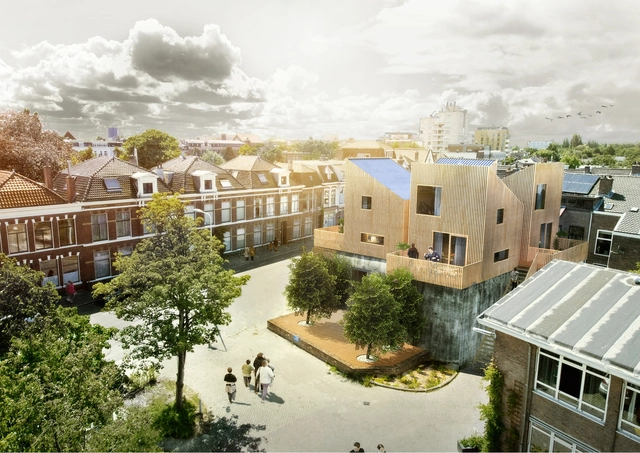
Dutch firm Froscen Architects has unveiled FOON HOUSE(S), a tiny house concept in Leiden, the Netherlands. To be built on a former communications bunker from World War II in the middle of the city, the design focuses on the adaptive reuse of a small concrete complex overgrown with ivy.

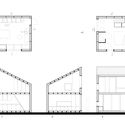
The project will consist of four separate micro-houses on top of the bunker, each with a floor space of about 38 square meters, and equipped with necessary facilities.

Froscen Architects Unveils Sustainable Micro-Houses to be Built on WWII Phone Bunker  - Image 1 of 4Froscen Architects Unveils Sustainable Micro-Houses to be Built on WWII Phone Bunker  - Image 2 of 4Froscen Architects Unveils Sustainable Micro-Houses to be Built on WWII Phone Bunker  - Image 3 of 4Froscen Architects Unveils Sustainable Micro-Houses to be Built on WWII Phone Bunker  - Image 4 of 4Froscen Architects Unveils Sustainable Micro-Houses to be Built on WWII Phone Bunker  - More Images+ 5

Georges Batzios Architects Propose Cultural Center Made Entirely of Straw

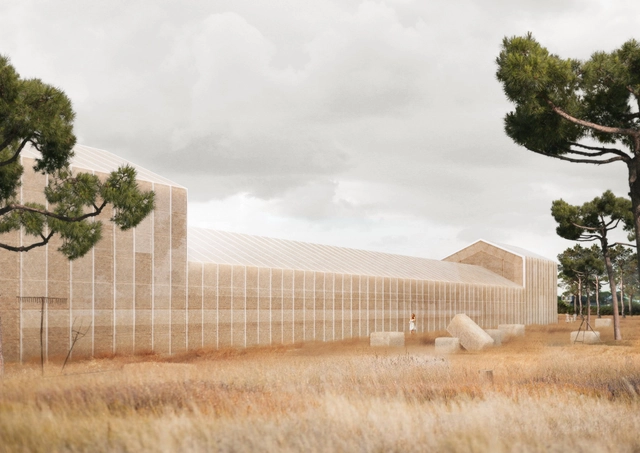
A proposal from George Batzios Architects for the Konaki Averof Cultural Center in Greece uses a cutting edge, sustainable approach to revive a deeply historical site. The design intertwines elements of architecture and agriculture to refit an existing structure with reference to the Thessalian plains on which it lies. The new architecture recreates the existing envelopes with straw cladding, regenerating the "golden environment" which defined the place in the late 19th century.

International Passive House Conference 2016

The Passive House is now 25 years old; to celebrate this, the International Passive House Conference is returning to Darmstadt – the city in Germany, in which this success story began. On 22 and 23 April 2016, over a hundred speakers from all over the world will report on the latest projects relating to highly energy efficient construction and retrofits. But the anniversary will also serve as an occasion for a review, with the presentation of results relating to the durability of the individual building components of the first Passive House. The complete Conference programme is now available online. In

HALO: Swedish Students' Solar Decathlon Entry

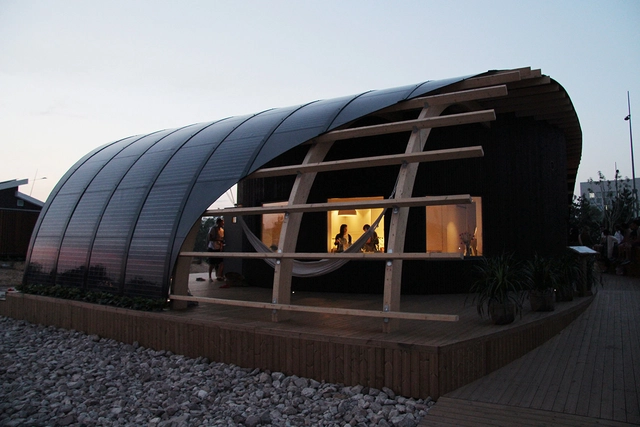
Designed and built by 25 students from Chalmers University in Sweden, HALO is a socially sustainable home for four students, running on renewable energy from the sun. HALO was designed using one underlying concept: shared space is double space.

HALO: Swedish Students' Solar Decathlon Entry - Image 1 of 4HALO: Swedish Students' Solar Decathlon Entry - Image 2 of 4HALO: Swedish Students' Solar Decathlon Entry - Image 3 of 4HALO: Swedish Students' Solar Decathlon Entry - Image 4 of 4HALO: Swedish Students' Solar Decathlon Entry - More Images+ 18

Kita Göttingen / Despang Architekten

Subscriber Access | 
Kita Göttingen / Despang Architekten - Image 14 of 4
© Jochen Stüber

Architects: Despang Architekten Location: Göttingen, Germany Architects In Charge: Günther Despang/Martin Despang Project Architects: Philip Hogrebe/Jörg Steveker Area: 512 sqm Year: 2010 Photographs: Jochen Stüber, Olaf Baumann

Kita Göttingen / Despang Architekten - Image 18 of 4Kita Göttingen / Despang Architekten - Image 27 of 4Kita Göttingen / Despang Architekten - Image 8 of 4Kita Göttingen / Despang Architekten - Image 16 of 4Kita Göttingen / Despang Architekten - More Images+ 23