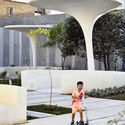
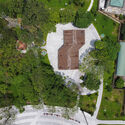
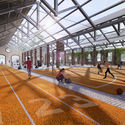
The climate crisis has accentuated changes in the amount of rainfall, causing droughts or storms with large volumes of water, which result in floods that can cause great damage to urban infrastructure. To combat this, the sponge city is a solution that has a green infrastructure to operate the infiltration, absorption, storage and even purification of these surface waters.
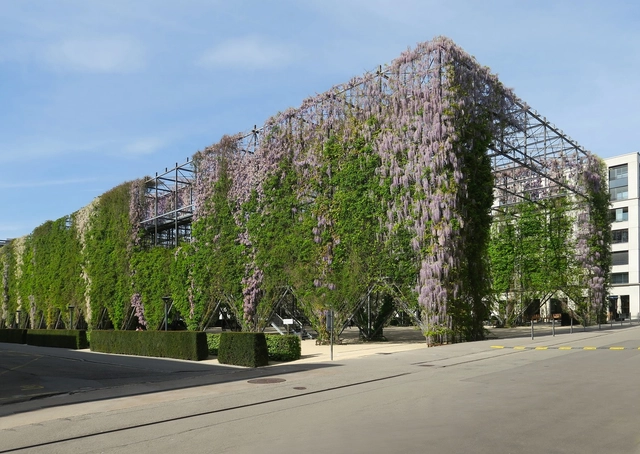
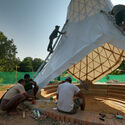
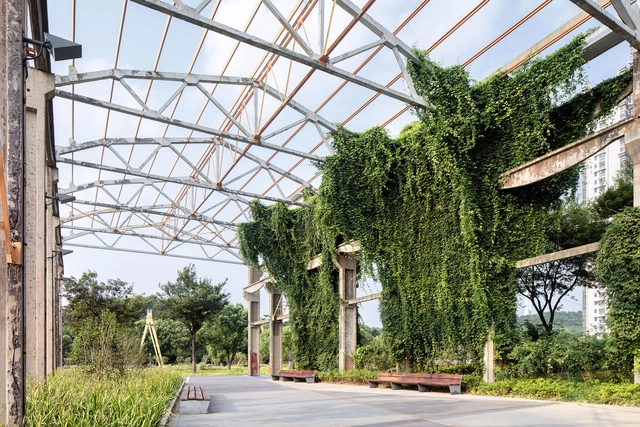
Paul Clemence’s capture of Zürich’s MFO Park is an evocative photo series for Archi-photo, demonstrating the juxtaposition between the metal shell of the man-made and the wild nature of the park itself. Vines intertwining themselves upon the skeleton of the structure create an attractive destination, replenishing the brownfield land and replacing it with a renewed and captivating image.
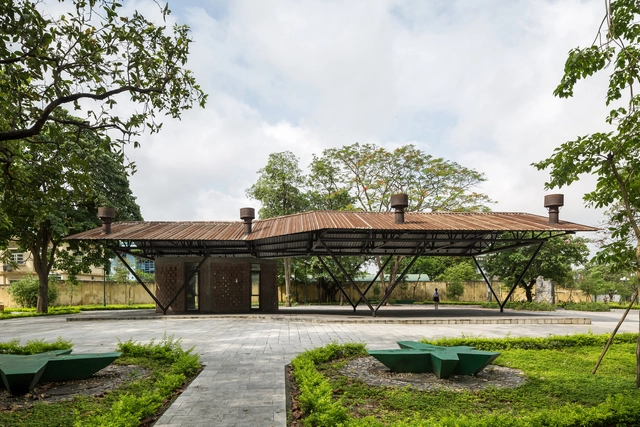
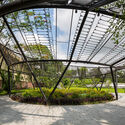
Zürich’s MFO park is a vibrant parkscape in Switzerland, previously a site used for around a century by the Oerlikon Machine Works (MFO). Saturated with construction debris and pollution during a long period of industrialization, it has been transformed into a green paradise with the nearby wooded Oerliker Park brimming with ash trees. Offering a diverse area of open space it is available to the public for a wide range of activities and events, with the presence of ‘Park House’, a large open hall, and trellis enveloped with climbing vegetation.
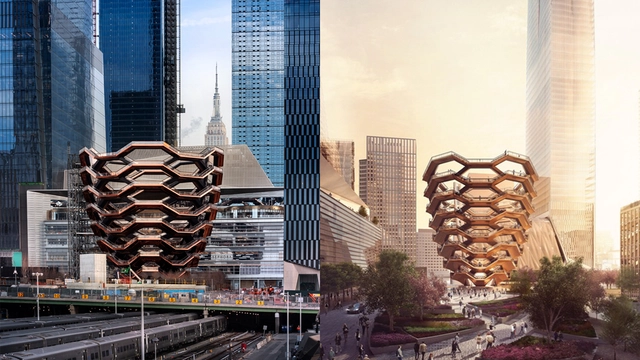
It is nearly impossible nowadays not to present accompanying renders when proposing a new project. No matter the method, software or style that is used, it is a valuable reference that bares more practical weight than one might think. Not only can it be one of the closest possible representations of the architect's vision, if approved, it can also become a promise to clients, investors, and the general public.
When it comes to works from renowned architects, the render becomes a critical reference to the project participants and to the expectant community. A lot of details can be developed and considered when creating the images. In most cases, special attention is brought to the lighting, materials, and context in order to make the most accurate representation possible.
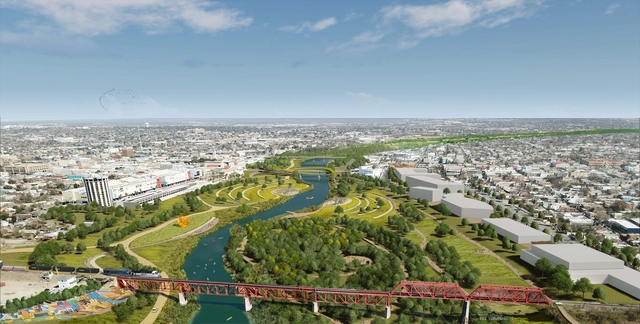
As part of a strategy developed in late 2021 by Ken Salazar (US Ambassador to Mexico), Deanna Kim (US Consul General in Nuevo Laredo), and Esteban Moctezuma (Mexico Ambassador) in collaboration with leaders politicians, and businessmen from the southern region of Texas and the Mexican state of Tamaulipas, Overland Partners has been announced in conjunction with Able City as the creators of the new 6.3-mile "Binational River Park" that will extend along the Rio Grande - Rio Grande between Laredo, Texas and Nuevo Laredo, Mexico. This new space aims to restore and revitalize the ecosystem as well as attract tourism and celebrate the multiculturalism that takes place in this border territory.
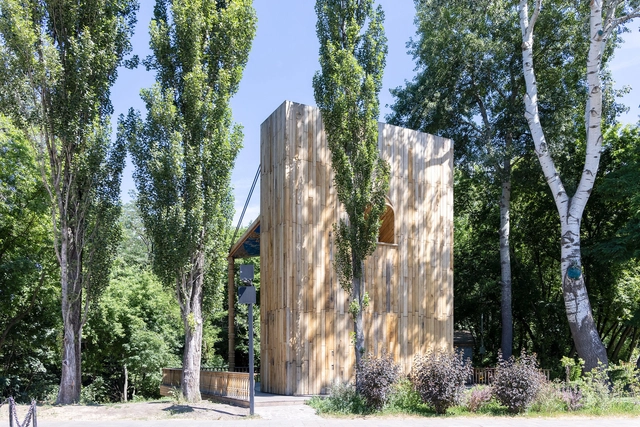
Babyn Yar Synagogue by Manuel Herz, image by Iwan Baan. Image Courtesy of BYHMC
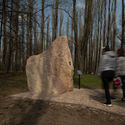
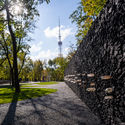
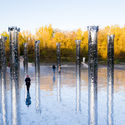
Babyn Yar, a ravine in the Ukrainian capital Kyiv, witnessed the killing of more than 33,000 Jewish men, women, and children, on September 29 and 30, 1941. The site of one of the largest single massacres perpetrated by occupying German troops against Jews during World War II, Babyn Yar became a symbol of the Holocaust by Bullets.
While the main tragic event took place in 1941, throughout the occupation, the site was used as a killing location by the German forces. In fact, it is reported that 70 to 100 000 people lost their lives in Babyn Yar. With no architecture to the tragedy and only a remaining “broken” landscape, people struggled with achieving memorialization and public recognition.
Designing a public space means contemplating the aspects of everyday life in the city. Creating places for gatherings, conflicts, demonstrations, relaxation, and enjoyment. These spaces can be used in many different ways, depending on who interacts with them, and one of the main roles of those who design them is to expand these possibilities and sensations. Including plants, benches, sports facilities, spaces for culture, arts, and performances, conservation areas, or any other element that stands out, is essential to improve the quality of life of the citizens who enjoy these squares and parks.
https://www.archdaily.com/971738/parks-and-squares-20-public-space-designsEquipe ArchDaily Brasil
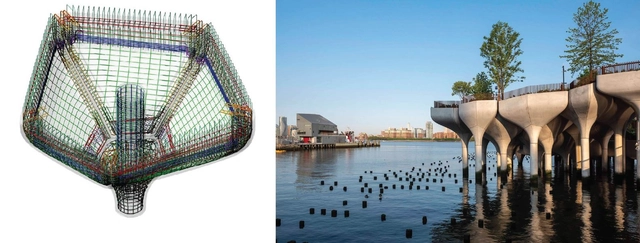
Pier 54 in New York has a history that dates back to the city's first inhabitants. After being severely damaged in 2012 with the passage of Hurricane Sandy, Barry Diller and the Hudson River Park Trust institution worked to create solutions to reactivate it and return the space to the public.
The final resulting project, Little Island Park, became an urban oasis of almost 10,000 square meters, which is structured on 132 pillars and houses amphitheaters, and several species of trees and other vegetation, in addition to other attributes. With the architecture developed by Heatherwick Studio and landscaping by MNLA, the work presented numerous difficulties, which required great innovation and collaboration between many professionals. Arup, a global company that develops consulting and engineering projects, was involved in the project from the beginning. We spoke with David Farnsworth, Principal at Arup’s New York office & Project Director of Little Island, about the challenges and learning involved in this process:
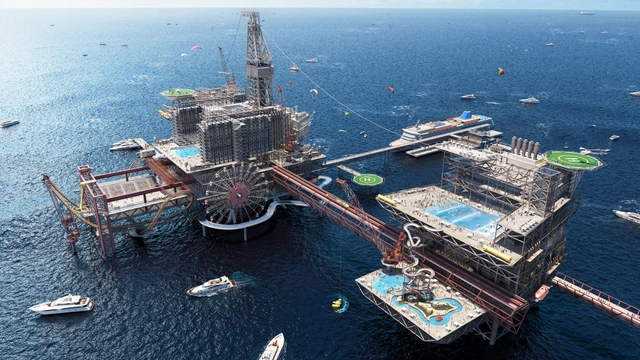
Saudi Arabia's Public Investment Fundhas announced that it will convert an oil rig into a 150,000 square meter amusement park and resort located in the Arabian Gulf. Titled "THE RIG.", the project is expected to be the world's first touristic destination built on offshore oil platforms, featuring three hotels, eleven world-class restaurants, roller coaster rides, and extreme sports and activities like bungee jumping and skydiving, all accessible via a ferry, yacht, cruise, or helicopter.
Mogilevich’s study of how the Lindsay administration leveraged political and on-the-ground will to build pocket parks, stump for closing streets and introducing outdoor dining, and reducing racial economic inequality could point the way forward for modern architects and planners. Image Courtesy of Minnesota Press
In this week's reprint from the Architect's Newspaper, author Karen Kubey, an urbanist specializing in housing and health questions if the invention of Public Space is "Invented Or Agreed Upon?" Basing her ideas on a book by Mariana Mogilevich, The Invention of Public Space, the article asks if public spaces are a product of negotiation in the city.
The Graceful Dancer - New Yongxin Old City’s Entertainment District. Image Courtesy of Estúdio Leonardo Zanatta
This week's curated selection of Best Unbuilt Architecture highlights public spaces and buildings submitted by the ArchDaily Community. From bridges to squares, from parks to markets and train stations, this article explores the various kinds of public infrastructure that support the urban fabric, showcasing distinct approaches worldwide.
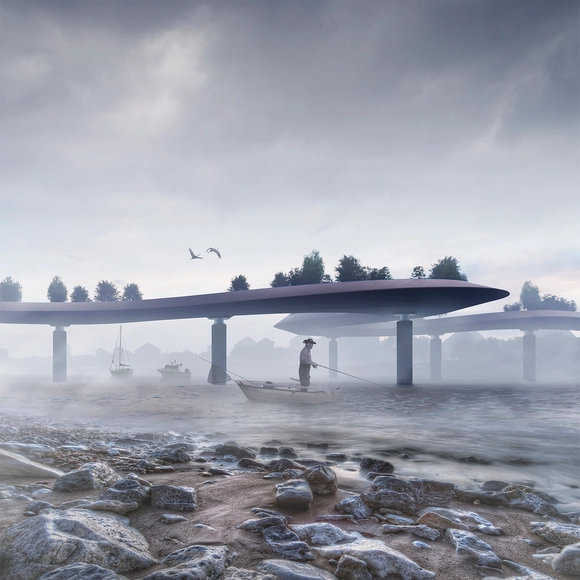
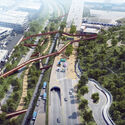
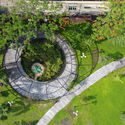
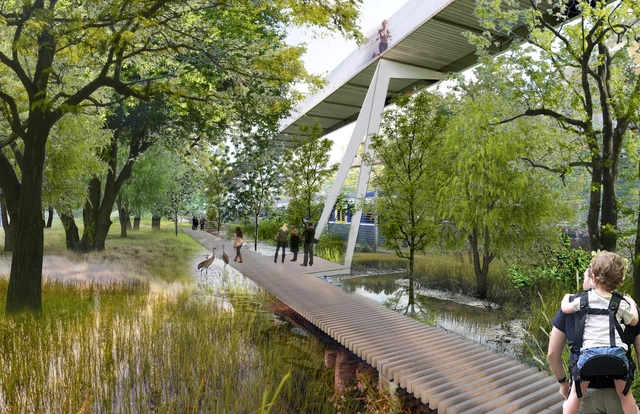
Featuring a bridge that doubles as a garden in China, the redevelopment of public spaces to meet contemporary needs in Montenegro and the Czech Republic, or a pier park in New York, the round-up spans various scales, from single architectural objects to urban strategies, to masterplans. The following projects reveal the ideas that shape public spaces and amenities in different contexts, illustrating diverse approaches towards what constitutes the backbone of the urban fabric.
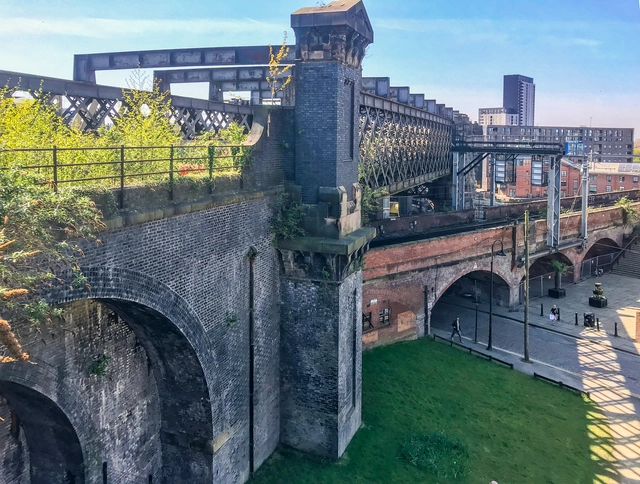
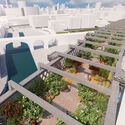
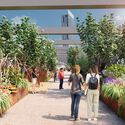
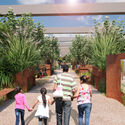
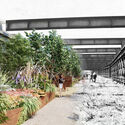
Echoing New York’s High Line, Manchester’s Castlefield Viaduct, a disused railway viaduct dating back to the Victorian, will be transformed into a public park. The design developed by Twelve Architects pays homage to the city’s industrial heritage while bringing new life to the structure and establishing a new vibrant public space within the city centre. The two-stage design process creates a temporary park, enlisting the public’s feedback before implementing the new urban design.
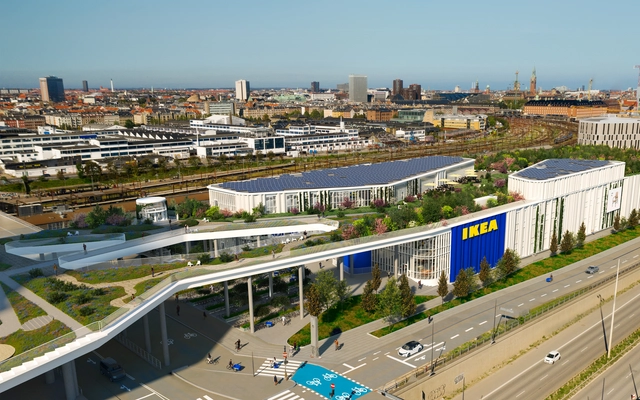
Catering to the Danish capital's aspirations regarding infrastructure and green space, the new IKEA store in Copenhagen designed by architecture studio Dorte Mandrup features a richly plated rooftop park that doubles as a new pedestrian route stretching one kilometre within Vesterbro neighbourhood. Located in one of the city's busiest area, neighbouring the central station, the historic Meatpacking District, and the inner-city harbour, the project's elevated public space offers a respite from the bustling streets, providing the area with a much needed green space.
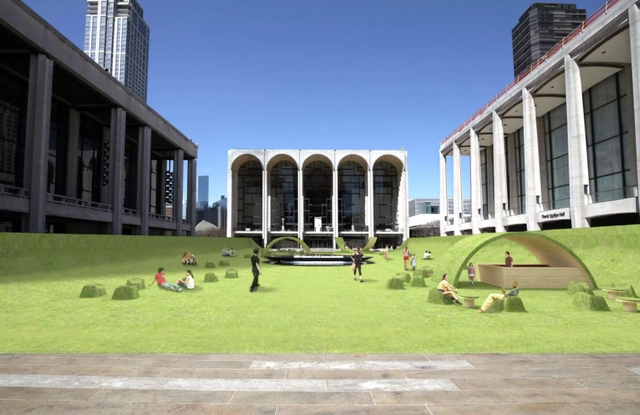
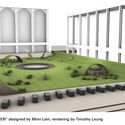
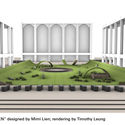
The Green. Image Courtesy of Mimi Lien/Rendering by Timothy Leung
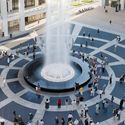
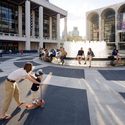
After several event cancellations due to the pandemic, Manhattan’s Lincoln Center for the Performing Arts complex have transformed their outdoor plaza into a green park and outdoor performance venue called The Green. As of May 10, the Restart Stagesinitiative will add fake grass across the 14,000-square-foot (1,300 sqm) Josie Robertson Plaza. The plaza, which was originally designed by Philip Johnson, Wallace K. Harrison, and Max Abramovitz, and renovated by award-winning architecture firm DS+R in 2010, will transform into a public urban space of gathering, leisure, and entertainment.
Courtesy of OUTCOMIST, Diller Scofidio + Renfro, PLP Architecture, CRA - Carlo Ratti Associati and Arup
Led by OUTCOMIST, an international design team including Diller Scofidio + Renfro, PLP Architecture, CRA - Carlo Ratti Associati, and Arup won the competition to revitalize the Porta Romana Railway Area, transforming the industrial site into a diverse green neighborhood in Milan. Rehabilitating a disused railway yard into a connective tissue that links the southeast area of the city to the center, the development will generate a rich biodiverse public space, including a large urban park.