Fred Kent, the founder of the nonprofit organization Project for Public Spaces, once stated that “If you plan cities for cars and traffic, you get cars and traffic. If you plan for people and places, you get people and places." It may sound obvious, nevertheless, our cities today are indeed undergoing a rapid transformation from a car-oriented society to a pedestrian-friendly community.
You might be surprised by this, but the days of shopping in stores are long from over-, in fact, they’re experiencing a renaissance, and are creating a whole new type of design and experience to bring consumers back through the doors. The rise of e-commerce and the pause caused by the COVID-19 pandemic have served as a perfect catalyst for creating a whole new type of experience through unique design features, technological advancements, and customization that will revitalize physical stores in the future.
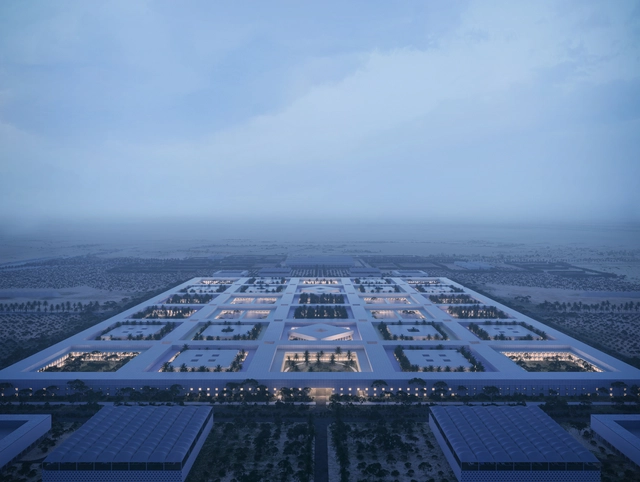
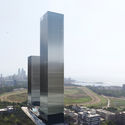
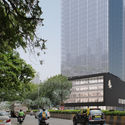
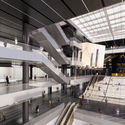
OMA and GMP have been selected as the winners of the Chengdu Future Science and Technology City Masterplan and Design competition in China. The team will develop the first phase of the overall masterplan, which will include an International Educational Park in the west, and a Transit Oriented Development (TOD) in the southeast led by GMP. The pilot project is one part of the innovation industry driving the development of the city around the new airport east of Chengdu.
A new film by OMA / Reinier de Graaf titled “The Hospital of the Future” has been released as a part of the exhibition, Twelve Cautionary Urban Tales at Matadero Madrid Centre for Contemporary Creation. Dubbed a “visual manifesto”, the 12-minute short film questions the long-standing conventions in the field of healthcare architecture in terms of the methodology behind how hospitals are built and also why they are built in certain ways. Through an exploration of the role that disease has played in shaping cities, the film offers a lens into the future of what we might expect for healthcare design, especially as we emerge from the COVID-19 pandemic.
The RENAZCA international competition has released a shortlist for the design of the financial district of Azca in Madrid, Spain, according to El Pais. Directed by IE School of Architecture and Design Martha Thorne and Edgar González, the competition aims to transform the district into the most important economic and cultural node in the Spanish capital. The winning team will be chosen at the end of January 2021 and will have the task of transforming the sector into a "new, open, sustainable urban space connected to the city."
Dallas is home to a high concentration of structures by world-renowned architects. With some of the most iconic architecture per square mile of any American city, Dallas boasts designs by six Pritzker Prize Laureates, all within close distance to the up and coming Arts District. From Norman Foster’s Opera House to Thom Mayne’s Museum of Nature and Science, these projects are emblematic of a larger city-wide design culture.
On 25 November, 10am CET,OMA, Hassell, WA Museum Boola Bardip, and the Netherlands embassy in Canberra will join a panel discussion with a focus on the architecture of the Museum.
As the forces shaping our built environment have shifted, engaging technology, networks, and complex systems, architects need to envision more than the physical space but produce narratives on how to best operate within this new societal landscape. In this context, speculative architecture seems to have never been more critical; therefore this article takes a closer look at the mediums that currently question the existing conditions of the built environment and explore new architectural possibilities.
OMA and Shohei Shigematsu have designed a proposal for Miami Beach’s first underwater sculpture park and artificial reef in Florida. Working with Ximena Caminos and BlueLab Preservation Society, the project will function as an artificial reef to protect and preserve Miami’s marine life and coastal resilience. Called ReefLine, the design will be a new 7-mile underwater public sculpture park, snorkel trail and artificial reef located off Miami Beach’s shoreline.
Architecture school is a place of experiment and a testing ground for innovative ideas. The academic work and student projects can bring to light the focus of an entire career, shape the backbone for an architectural theory, and crystalize values. How do their studies and formative years reflect on the later work of different architects? Taking a journey along decades, we explore the transition from architecture school to practice, the reverberance of academic explorations and early projects in the work of several architects and practices, highlighting the different pivotal steps that have shaped the beginning of their architectural journey.
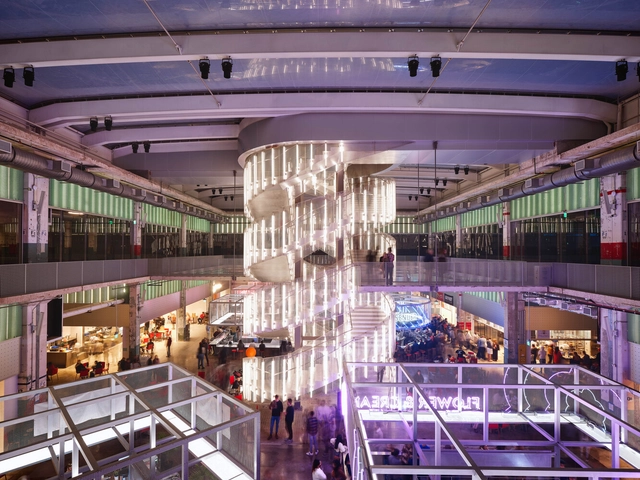
In their newly released architectural film, photographer Laurian Ghinitoiu and filmmaker Arata Mori take viewers on a visually compelling tour of OMA’s MEETT Exhibition and Convention Centre, Toulouse’s new mega-scale parc des expositions. Exploring the design’s multiple facets, from the monumental to the mundane, the film constructs a detailed vision of the project sitting at the intersection of architecture, infrastructure, masterplan and public space.
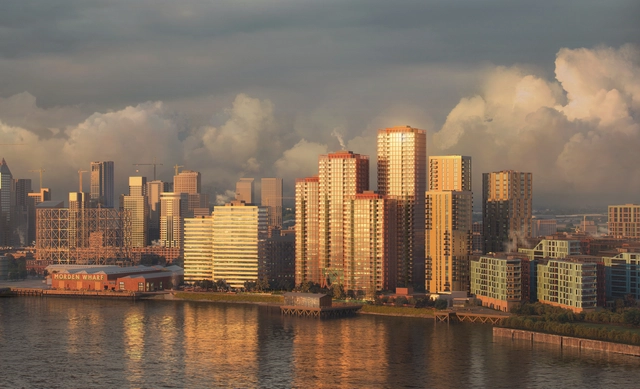
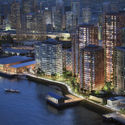
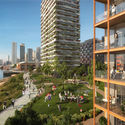
Regeneration specialist U+I submitted plans for Morden Wharf in June 2020, comprising 1,500 new homes, employment spaces, and a landscaped park along 275m of the River Thames. Located on Greenwich Peninsula in London, the mixed-use scheme designed by OMA includes more than six acres of the high-quality public realm, 12 high quality, and tenure-blind residential buildings, as well as commercial, retail, and community spaces.
The COVID-19 Pandemic is a disruptive moment for our world, and it’s poised to spur transformative shifts in design, from how we experience our homes and offices to the plans of our cities. The webcast series Design Disruption explores these shifts—and address issues like climate change, inequality, and the housing crisis— through chats with visionaries like architects, designers, planners and thinkers; putting forward creative solutions and reimagining the future of the built environment.
OMA's new MEETT Exhibition and Convention Centre in Toulouse has officially opened. OMA Partner Chris van Duijn led the development, the third largest parc des expositions in France outside of Paris. The masterplan of MEETT was conceived as an active strip - ‘une bande active’ - forming a physical border between urban development and countryside. The project was made to help organize an integrated development approach for the city.
With society's needs and aspirations shifting, spatial typologies and architectural programs are continually being questioned, and this re-evaluation creates the premises for innovation. The following is an exploration of how architecture is metabolizing society's fundamental changes throughout several aspects of everyday life, challenging the existing assumptions regarding program and space.