Photograph by Delfino Sisto Legnani and Marco Cappelletti. Image Courtesy of OMA
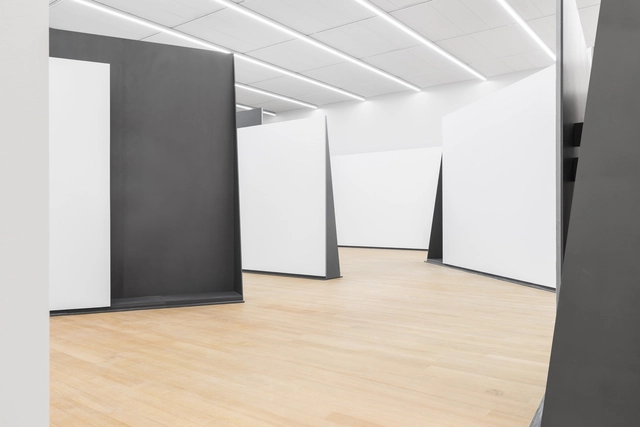
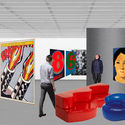
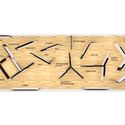
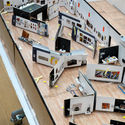
AMO, the research and think tank wing of OMA, has completed a flexible new exhibition space for the permanent collection of the Stedelijk Museum in Amsterdam. Named Stedelijk BASE, the bespoke display system is constructed from “very thin yet solid” free-standing steel partitions that interlock like puzzle-pieces to create an open-ended flow for viewing art from the late 19th and 20th centuries.
“The opening was an opening with many formal obligations and many excellencies, and that was exciting,” said Koolhaas about the pavilions opening events. “But frankly more exciting was this morning, when the thing performed really wonderfully spontaneously in terms of raising a lot of issues and having from the very first second a really animated discussion about a whole range of issues. And that’s exactly we intended it go.”
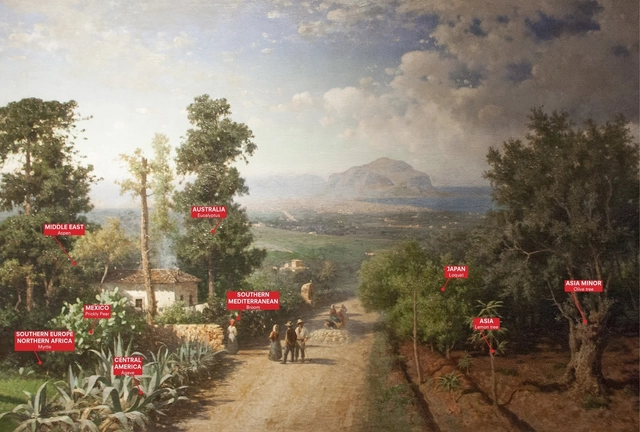
Veduta di Palermo, Francesco Lojacono, 1875; Palermo Atlas. Image Courtesy of OMA
The creative mediators of Manifesta 12 have revealed the concept for next year’s Manifesta 12 biennial in Palermo.
Entitled The Planetary Garden. Cultivating Coexistence, the concept will explore “coexistence in a world moved by invisible networks, transnational private interests, algorithmic intelligence and ever-increasing inequalities through the unique lens of Palermo – a crossroads of three continents in the heart of the Mediterranean.”
The concept was derived from an earlier analysis conducted by OMA named the Palermo Atlas, which investigated the “social, cultural and geographical textures of the city.” The event will allow visitors to visualize contemporary global transformations through the lens of Palermo.
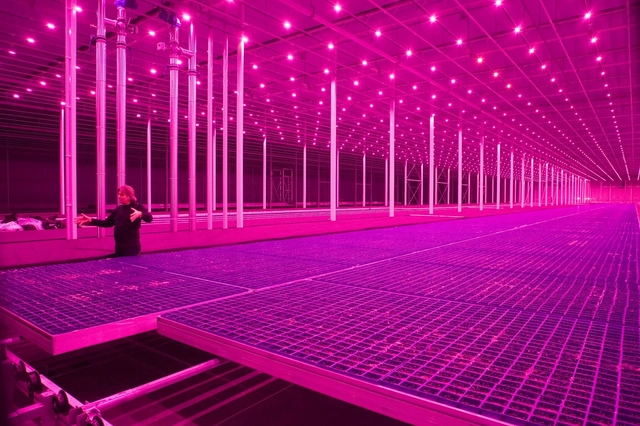
Countryside: Future of the World, a collaboration between Guggenheim and AMO / Rem Koolhaas examines radical changes transforming the non-urban landscape opens Fall 2019. Photo: Pieternel van Velden (Koppert Cress, The Netherlands 2011). Image Courtesy of Guggenheim
The Solomon R. Guggenheim Museum has announced a new research project exploring the “radical changes in the countryside, the vast nonurban areas of Earth” that will culminate in an exhibition at the museum’s Frank Lloyd Wright-designed New York home in Fall 2019.
Collaborating with Rem Koolhaas and his firm AMO, the think tank wing of OMA, the project will continue research already conducted by the Dutch architect and students from the Harvard Graduate School of Design.
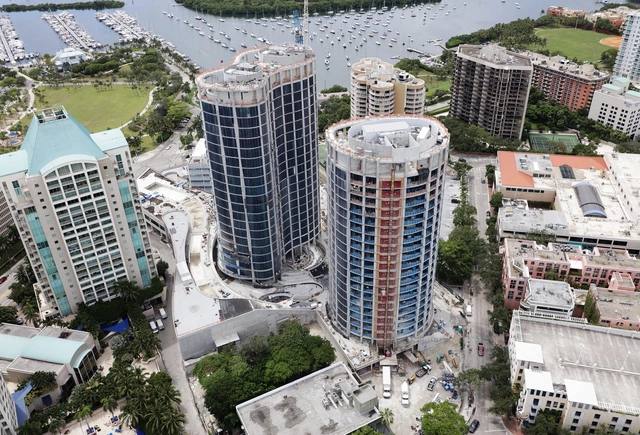
Construction photos - November 2017. Image Courtesy of OMA
New construction photos capture the progress of OMA’s Miami development, “Park Grove,” as the project’s details and finish begin to emerge.
Located next to the twisting towers of BIG’s recently completed “Grove at Grand Bay,”OMA’s trio of towers will consist of 1,000,000 square feet of luxury residential spaces with panoramic views of Florida’s Biscayne Bay.
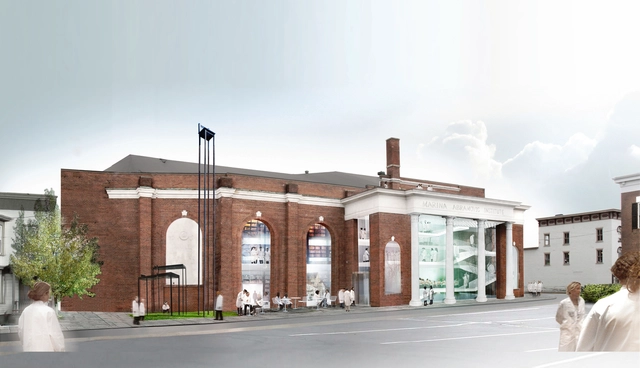
When Abramovic first announced the project in 2012, she touted the plans as transformative for the town of Hudson, New York. To be known as the Marina Abramovic Institute (MAI), the facility was intended to create a new space for the “collaboration between art, science, technology and spirituality.”
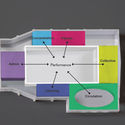
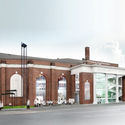
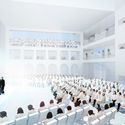
Abramovic tapped OMA’s Rem Koolhaas and Shohei Shigematsu to design the space, located within an old 33,000-square-foot theater. Early architectural concepts were daringly experimental – ideas included a theater with seats that could be individually rolled away if visitors were to fall asleep during planned hours-long performances.
https://www.archdaily.com/883685/marina-abramovic-ends-plans-for-oma-designed-art-institute-after-2-dollars-2-cents-million-fundraising-campaignAD Editorial Team
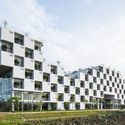
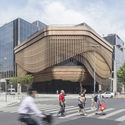
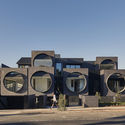
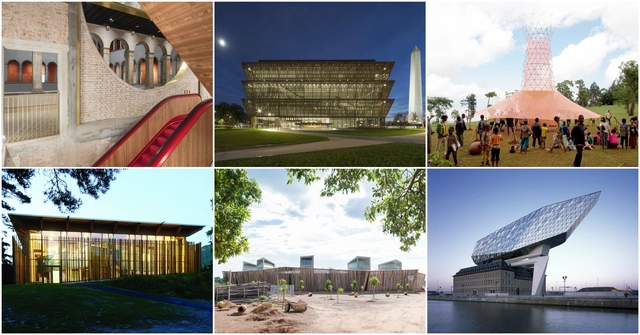
New technological developments in construction have given architects great freedom when designing. Innovations in construction materials and their properties allow for the creation of increasingly original and surprising facades. The buildings constructed as a result can even inspire people to travel thousands of kilometers just to see these masterpieces. This week, we present 15 of most ground-breaking facades through photos by prominent photographers such as Paul Ott, Peter Bennetts and Laurian Ghinitoiu.
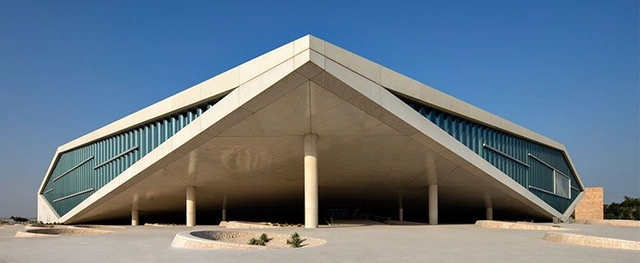
The OMA-designed Qatar National Library has opened to the public in the Education City district of Doha, Qatar, giving residents access to a wealth of top-of-the-line facilities, including computer labs, group study spaces, a writing center, innovation stations offering 3D-printing tools and musical instruments, and of course, a massive library containing more than one million books, periodicals and special collections.
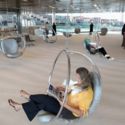
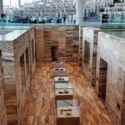
Some stunning shots of the library have already begun to circulate across social media streams, showing off the building’s striking form and expansive interiors, including the open rows of stacks, hanging seating lounges, interactive media walls, and central labyrinth, among other features.
Check out some first looks at the building below, and stayed tuned for professional photos next week.
In addition to their videos, #donotsettle’s Wahyu Pratomo and Kris Provoost tell extended stories about the buildings they visit through an exclusive column on ArchDaily: #donotsettle Extra. In this installment, the duo brings you to the newest design by OMA, Rijnstraat 8 in The Hague, The Netherlands. Saskia Simon and Kees van Casteren from OMA explained the architecture of Rijnstraat 8 to #donotsettle while touring the building.
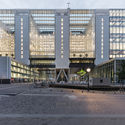
This project, which houses a variety of Dutch government agencies, is an example of a spatial alteration that occurred as result of political and organizational changes. However, given the existing structure by architect Jan Hoogstad, OMA has transformed the architectural experience of the building from within.
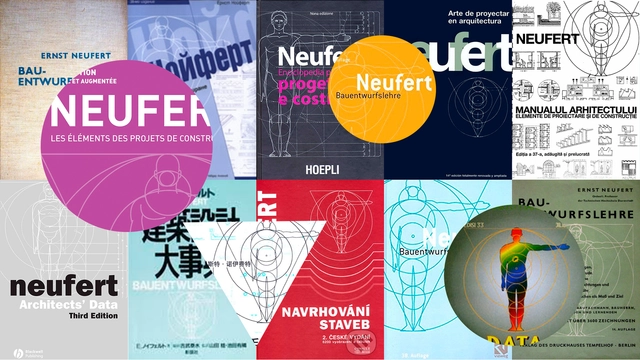
In this excerpt from Reinier de Graaf's new book Four Walls and a Roof: The Complex Nature of a Simple Profession (Harvard University Press), the all-pervasive work and pedagogical practice of Ernst Neufert is put under the spotlight. Was he an architect, a teacher, or something larger than both? In examining Neufert's ardent pursuit of the "norm", De Graaf sheds light on the impact and enduring legacy of the author of Architect’s Data.
His built output—a few industrial complexes, some housing projects, and the Quelle Mail Order headquarters in Nuremberg—is not much to speak of, but his name is known to every practicing architect: Ernst Neufert, author of Architect’s Data, more commonly referred to as Neufert. [1] If the importance of an architect equals the extent to which his work lives on in others, Neufert is the most important of the twentieth century. There is probably no architect who has not used Neufert, whether as a didactic tool or as a volume of references. It contains all the necessary information to design and execute works of architecture. Neufert is enduringly popular. As of 2016, it is in its forty-first German edition, has been translated into seventeen languages, and has sold over 500,000 copies. [2]
https://www.archdaily.com/881889/neufert-the-exceptional-pursuit-of-the-normReinier de Graaf
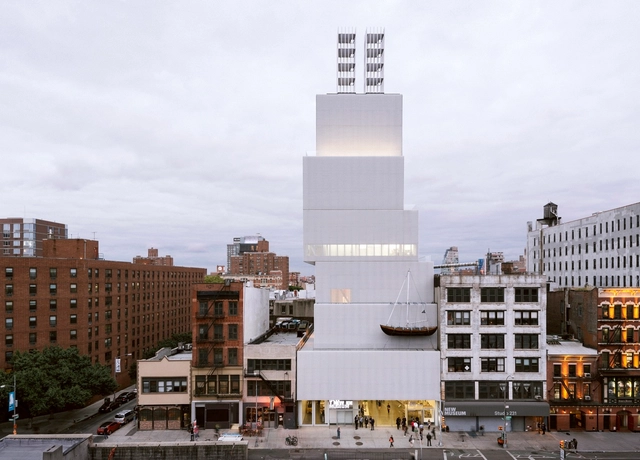
Rem Koolhaas and Shohei Shigematsu, both partners at OMA, have been tapped to design the recently-announced expansion of the New Museum in New York. OMA will design a new building adjacent to SANAA's tiered-box museum. The project is expected to break ground in 2019 and will give the New Museum an additional 50,000 square feet (4,650 square meters) for "galleries, improved public circulation and flexible space for the institution’s continued exploration of new platforms and programs." This will be Koolhaas' first public building in New York. According to the New York Times, the New Museum—the only museum in New York City exclusively devoted to contemporary art—has already raised 50 percent of the cost.
https://www.archdaily.com/881400/oma-shohei-shigematsu-and-rem-koolhaas-selected-to-design-new-museum-expansion-in-new-yorkAD Editorial Team
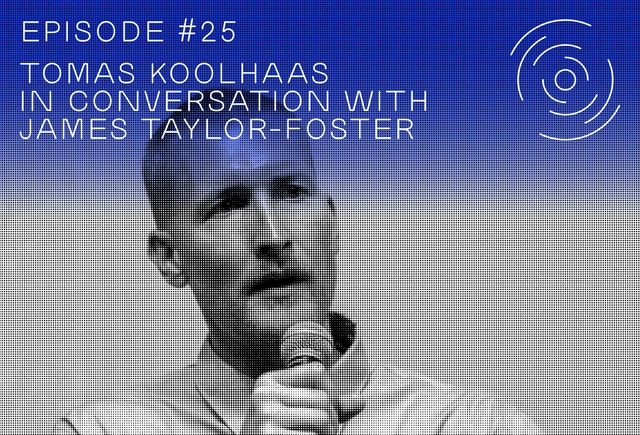
In this episode of GSAPP Conversations, Tomas Koolhaas—the director of the much anticipated documentary-biopic REM, a film about the eponymous founder of the Office for Metropolitan Architecture (OMA), Rem Koolhaas—discusses the movie at length. Among other topics, the conversation touches upon Koolhaas's specific tools and methods for filming architectural space, and the challenges of producing a film founded on a personal relationship.
https://www.archdaily.com/880918/tomas-koolhaas-discusses-the-reasoning-devices-and-reception-of-rem-gsapp-conversationsAD Editorial Team
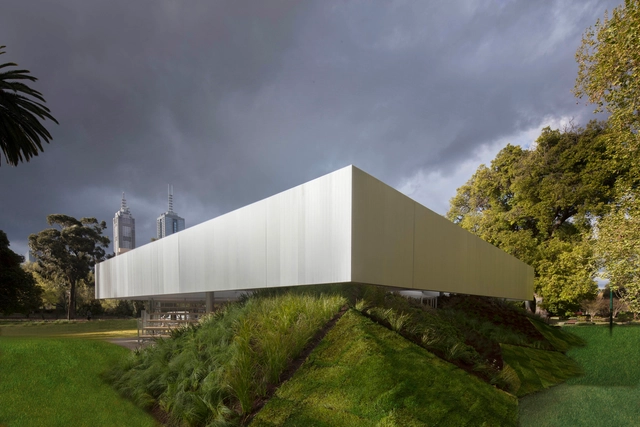
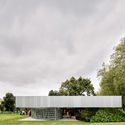
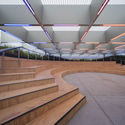
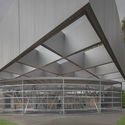
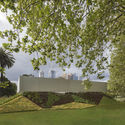
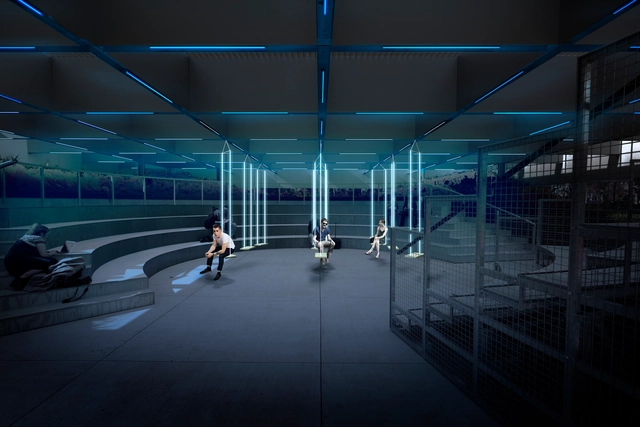
Inspired by the design of ancient amphitheatres and embedded into a raised landscape of native plantings, the project represents OMA’s first-ever completed project in Australia. The 19x19-meter, aluminum-clad structure will feature a rotating grandstand to allow the space to be reconfigured for the variety of events planned for the summer MPavilion program, as well as a two-meter-deep floating roof structure to offer shade and provide support systems for the programming below.
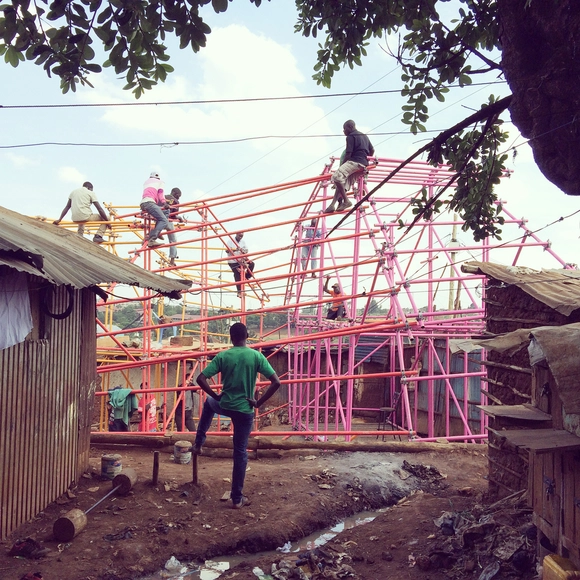
Image: Kibera Hamlets School by SelgasCano, Helloeverything, and studio.14, photo credit: helloeverything
Scaffolding curated by Greg Barton, examines the extraordinary applications of scaffolding as a kit-of-parts technology to provide novel forms of inhabitation and access. Through an installation designed by Shohei Shigematsu and OMA New York with graphic design by MTWTF, Scaffolding will disrupt the architectural space of the Center for Architecture, instilling a new appreciation of scaffolding and its transformative potential.
Of particular interest to our local New York City audience, scaffolding is a flexible and accessible system hiding in plain sight. Despite its indispensable link to architecture, scaffolding is too often maligned as a necessary nuisance. The exhibition demonstrates how this
The team of OMA and FABRICations in collaboration with LOLA landscape architects has been selected as the winners of a competition to transform a former prison complex in Amsterdam into a 135,000-square-meter mixed-use development. Located in southeastern Amsterdam, Bijlmerbajes has been seen as a distant landmark for the city since its construction in the 1970s. But with recent expansions, the once peripheral site has moved to the center of new urban development, making the property prime location for redevelopment.
The Design Museum in London has announced the shortlist projects in the running for the 2017 edition of their prestigious Beazley Design of the Year award. Now in its tenth year, the award was established to “celebrate design that promotes or delivers change, enables access, extends design practice or captures the spirit of the year.”
This year, a total of 62 projects have been nominated across six categories: Architecture, Digital, Fashion, Graphics, Product and Transport – including 13 projects from the Architecture category. A winner from each category and the overall winner will be announced on January 25, 2018. Previous winners of the architecture category include: IKEA’s Better Shelter last year (also the overall winner), Alejandro Aravena's UC Innovation Center in 2015, and Zaha Hadid Architects’ Heydar Aliyev Center (overall winner in 2014).
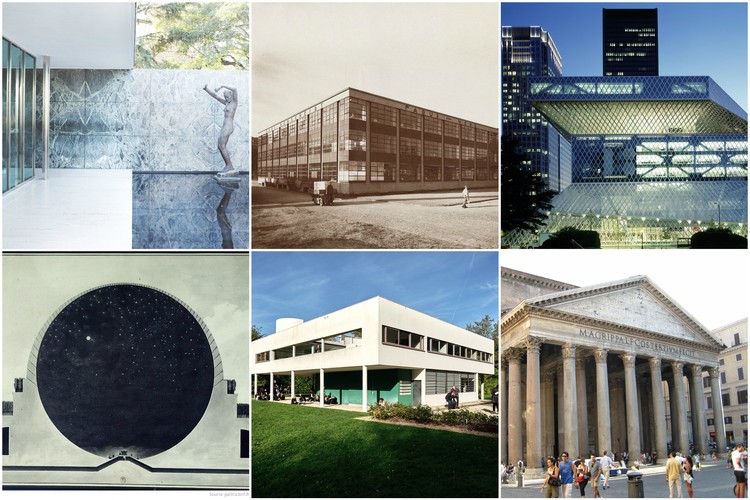
You’re a chipper young first-year student, still soft and tender in the early stages of your induction into the cult of architecture. Apart from fiddling with drafting triangles and furiously scribbling down the newfound jargon that is going to forever change how you communicate, you often find yourself planted in a seat, eyes transfixed to a projector screen as your professor-slash-cult-leader flashes images of the architecture world's masterpieces, patron saints, and divine structures.
Soon, you develop a Pavlovian response: you instinctively recognize these buildings, can name them at once and recite a number of soundbites about their design that have lodged themselves in your brain. Your professor looks on in approval. Since we here at ArchDaily have also partaken in this rite of passage, here are 15 buildings that we all recognize from the rituals of architecture school.










.jpg?1510859185&format=webp&width=640&height=580)
.jpg?1510680321 "Some of OMA's design concepts. Image Courtesy of OMA")