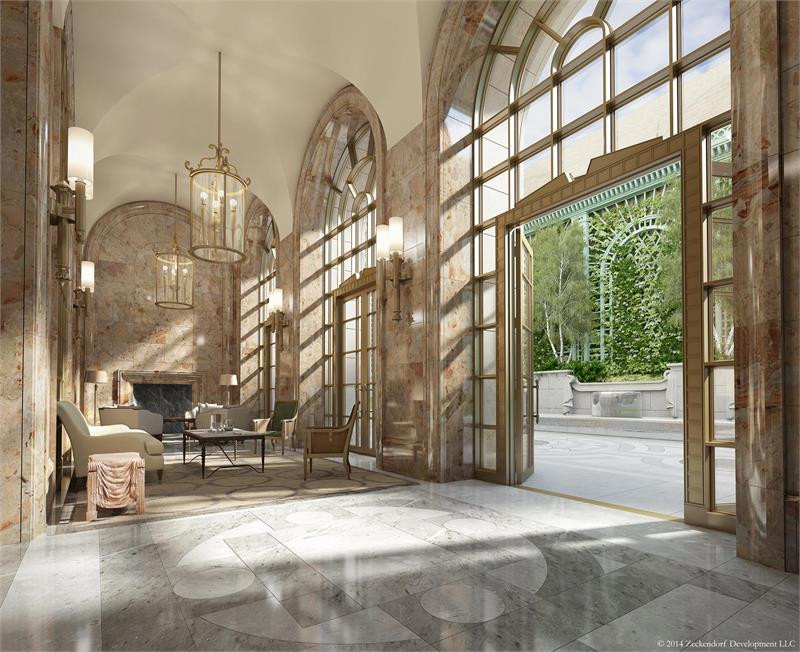
Robert A.M. Stern‘s 520 Park Avenue has already been called “the next 15 Central Park West,” and like its Stern predecessor, 520 is an ultra-luxury development with a stately façade wrapped in stone. Set to be completed in 2016, it will rise 51 stories high, but contain just 31 units, one of which is the $130 million penthouse, the city’s most expensive apartment. And though most of the attention has been on “the greatest apartment on the Upper East Side,” the fanfare has now shifted to the first batch of interior renderings for the building.
520 Park’s full website is now live, and not surprisingly, the residences have classic layouts, impressive Central Park views, and a host of high-end amenities.
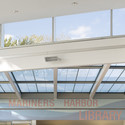
US Embassy in London / KieranTimberlake Architects
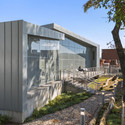
As the culmination of a five-month selection process, New York University (NYU) has announced that Davis Brody Bond and KieranTimberlake will be designing its major new facility along Mercer Street between Houston and Bleecker in New York. The facility's many uses will include classrooms, teaching spaces for performing arts, a state-of-the-art sports facility, and student and faculty housing.
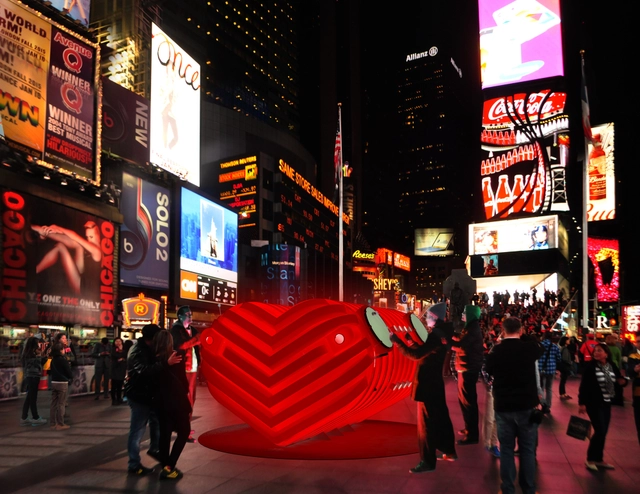
Come February 9, New York City will be celebrating the opening of its seventh annual Valentine’s Day installation in Times Square. As part of Times Square Alliance’s heart design competition, Brooklyn- based and Venezuelan-born firm Stereotank will be constructing a heart-beating urban drum in hopes that it will bring together New Yorkers through music.
American Museum of Natural History. Image Courtesy of Wikipedia
Chicago’s Studio Gang Architects have been selected to design a new Center for Science, Education and Innovation for the American Museum of Natural History in New York. Named after its largest donor, the $325 million Gilder Center will include 218,000-square-feet of existing and new space. It is slated to open on Columbus Avenue at 79th Street on the west side of the Museum campus, in conjunction with its 150th anniversary in 2019–2020.
SHoP Architects have revealed a mixed use proposal to pedestrianize New York City’s historic Seaport District. Extending the Manhattan grid out into the waterfront, the scheme seeks to harmonize pedestrian infrastructure and increase access to the shoreline, while proposing a 500-foot luxury residential tower by developer Howard Hughes Corporation that would jut out into the harbor. More about the proposal, after the break.
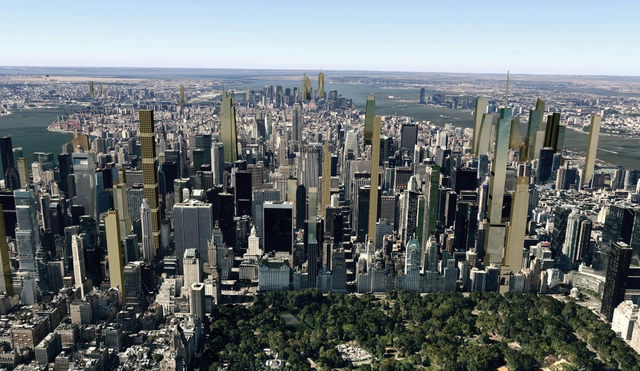
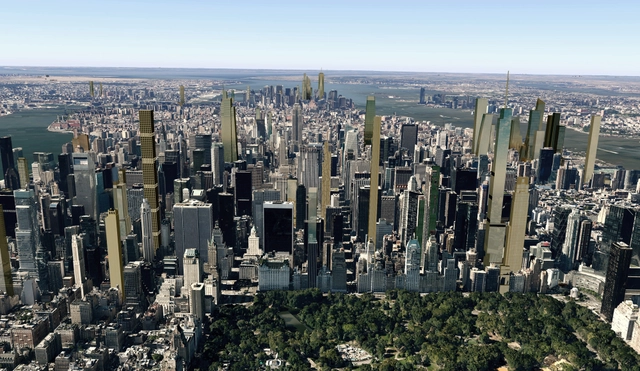
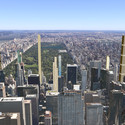
View above Central Park looking south towards “Billionaire's Row” towers, with Midtown towers in background and various Financial District and Downtown Brooklyn Towers in far background. Image Courtesy of CityRealty
What would a city owned by the one-percent look like?
New renderings for CityRealty get us part way there, illustrating how Manhattan may appear in 2018. The defining feature will be a bumper crop of especially tall, slender skyscrapers piercing the skyline like postmodern boxes, odd stalagmites, and upside-down syringes. What they share in common is sheer unadulterated scale and a core clientele of uncompromising plutocrats.
https://www.archdaily.com/577034/why-new-york-shouldn-t-be-a-city-for-the-one-percentJoshua K Leon
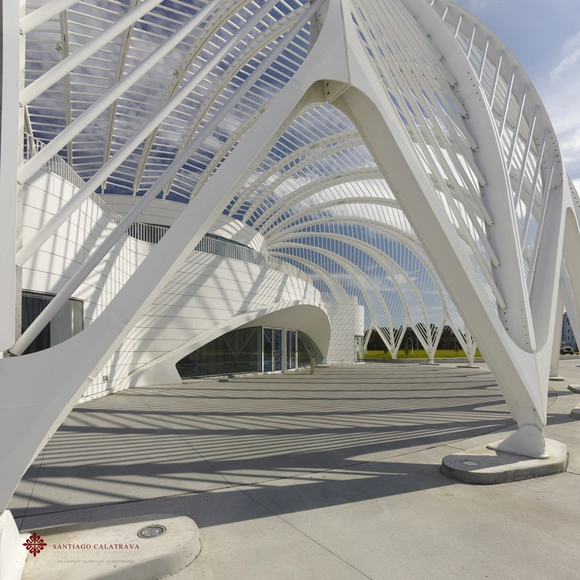
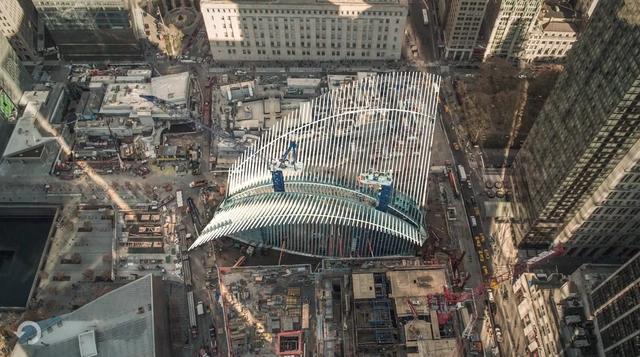
Santiago Calatrava’s head-turning World Trade Center Transportation Hub has assumed its full form, nearly a decade after its design was revealed. In light of this, the New York Times has taken a critical look at just how the winged station’s budget soared. “Its colossal avian presence may yet guarantee the hub a place in the pantheon of civic design in New York. But it cannot escape another, more ignominious distinction as one of the most expensive and most delayed train stations ever built.” The complete report, here.
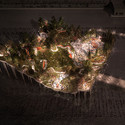
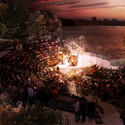
Last week, Thomas Heatherwick unveiled his fairytale-like designs for what will hopefully be New York's latest and most ambitious park, Pier 55 (with apologies to the High Line, New York's last "next big thing" in the public park arena). Envisaged as an undulating artificial landscape on a cloud of mushroom-like supports, Pier 55 has the internet buzzing. In this interview with FastCo Design, Heatherwick discusses the inspirations behind his latest project, explaining how everything including New York's street grid, the ruins of Pier 54 and yes, even the city's other recent global green space phenomenon, have manifested themselves in his latest madcap creation. Read the full article here for more.
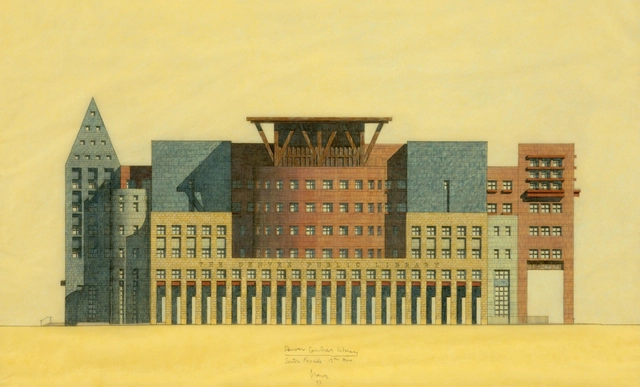
Denver Library, South Elevation, 1994, pencil and colored pencil on yellow tracing paper, 14 x 26 inches. Image Courtesy of Michael Graves & Associates, photo: Ken Ek
With their "Past as Prologue" symposium - a day of lectures celebrating fifty years of Michael Graves' career - approaching tomorrow, the Architectural League of New York is taking a look back at one of its seminal exhibitions which heavily featured Graves' work. When "200 Years of American Architectural Drawing" launched in 1977, New York Times critic Ada Louise Huxtable said "By any definition... a major show," adding "here is architecture as it comes straight from the mind and the eye and the heart, before the spoilers get to it." In memory of the show, the Architectural League has published a selection of essays and images from the accompanying book, including the work of Graves, Peter Eisenman, John Hejduk and Richard Meier.
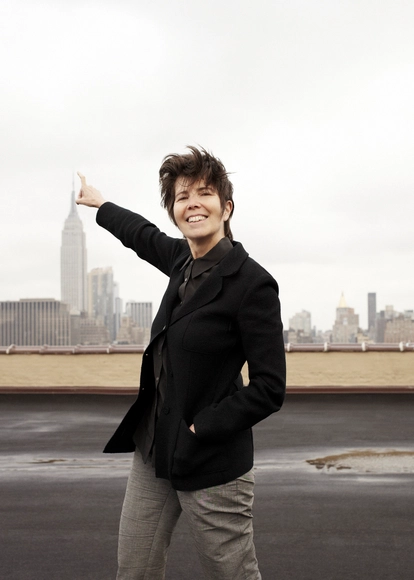
The 35-year career of Elizabeth Diller, a founding partner of the New York–based architecture studio Diller Scofidio + Renfro, is a study of contrasts: conceptual and pragmatic, temporary and permanent, iconoclastic and institutional. After graduating from Cooper Union in 1979, Diller started her practice mounting temporary installations with her partner and future husband, Ricardo Scofidio, their interests leaning closer to art and theory than conventional buildings and construction. Today the duo—along with Charles Renfro, who became a partner in 2004—is responsible for some of the most important architectural projects in the country. DS+R counts Boston’s Institute of Contemporary Art (completed in 2006) and a makeover of New York’s Lincoln Center (finalized in 2012) among its highest-profile works. Especially influential, at least among architects and academics, has been the firm’s unbuilt Slow House (1991), a proposal for a residence on Long Island, New York, renowned for its examination of how we see in a media-saturated world.
One notices sharp contrasts not just in the firm’s work history but in its public reception as well. Widely lauded for repurposing a dilapidated elevated railway into New York City’s beloved High Line park (the third phase opened in September), DS+R received heavy criticism this year for its involvement in a major expansion proposal for the Museum of Modern Art. The museum’s plans included the demolition of its little-guy neighbor, the American Folk Art Museum; despite efforts to work the idiosyncratic building into the design scheme, Diller’s studio, hired to lead the expansion, ultimately acknowledged that the structure couldn’t be saved.
Surface recently met with Diller at her office in Manhattan to speak about the ensuing controversy, as well as early career experiences that have influenced her firm’s recent commissions for cultural institutions, including the current exhibition “Musings on a Glass Box” at the Cartier Foundation in Paris (through Feb. 25, 2015), a collaboration with composer David Lang and sound designer Jody Elff. Diller, 60, is pensive and surprisingly relaxed for someone whose aides are constantly interrupting her to remind her of meetings she has to attend. She speaks with an erudite inflection befitting her academic credentials and professional accolades (she is, after all, a professor at Princeton and a MacArthur “genius grant” recipient), though she smiles with the ease of an affable neighbor.
https://www.archdaily.com/569298/surface-mag-interviews-liz-diller-on-architecture-art-and-early-aha-momentsDave Kim
View looking south above Central Park showing "Billionaires Row" towers visible in foregorund, midtown towers in background, and various Financial District and Downtown Brooklyn Towers in far background. Image Courtesy of CityRealty
Billionaire Barry Diller, chairman of IAC/InterActiveCorp and former head of Paramount Pictures and Fox, has commissioned Thomas Heatherwick to design a $170 million “futuristic park” on Manhattan’s lower west side. Replacing the deteriorated Pier 54, the new “Pier55” will be a lush undulating landscape, raised atop 300 mushroom-shaped concrete columns placed 186 feet off of the Hudson River shoreline, that will host outdoor performances, act as a marine sanctuary for striped bass and guard the city against storms.
Heatherwick will be collaborating with landscape architect Mathews Nielson. Read on to learn more about the project.