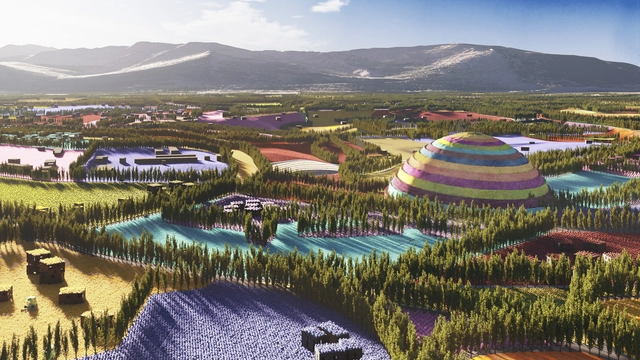
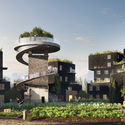
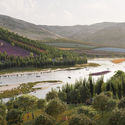
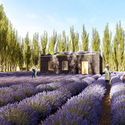
MVRDV has been commissioned by the Armenian non-profit organization DAR Foundation for Regional Development and Competitiveness to develop a masterplan that will transform Gagarin Valley's 34,000-hectare area into a more sustainable and ecologically diverse land. With the help of over 10,000 plant species, innovative facilities, and additional 12,000 housing units, the valley is set to become an ideal community for sustainable agriculture and ecotourism.
Last year, a series of new museums, expansions and several museum renovations have opened their doors to the public, adding a new dimension to the cultural landscape around the world. From the long-awaited re-opening of the Neue Nationalgalerie in Berlin, to Ryue Nishizawa's Jining Art Museum merging with the landscape, and MVRDV's reflective Art Depot, discover the architecture of the latest venues of art and culture.
MVRDV revealed its plans to redevelop a challenging site surrounded by roads in the south of Munich through a design that combines the renovation of an existing building complex with the addition of two-stepping towers. Retaining six of the nine existing blocks, the project expands the current programme and creates a new landmark for the neighbourhood while placing a green plaza at the heart of the development.
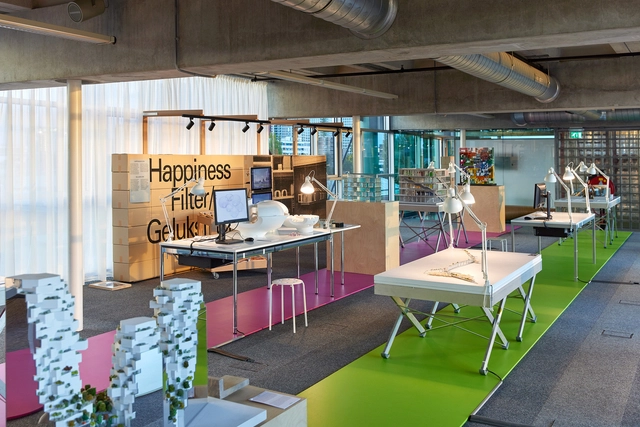
Hosted at the top floor of Het Nieuwe Instituut in Rotterdam, the Netherlands, the “MVRDVHNI: The Living Archive” exhibition showcases 30 years of MVRDV’s work, looking into the design philosophy of each project and future visions. The exhibition, which sits right next to the firm's latest project, the Depot Boijmans Van Beuningen, highlights the creative process behind each project, how they were developed, and the challenges of preserving their materials and approaches for future generations.
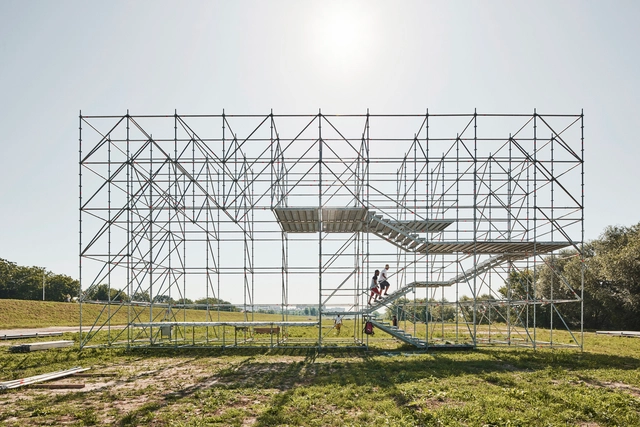
MVRDV revealed its design for a temporary intervention that takes tourists and city dwellers on a walk across several rooftops in Rotterdam, highlighting an untapped potential for expanding the public realm. Created in collaboration with Rotterdam Rooftop Days, the project will feature an aerial bridge from the roof of The Bijenkorf department store to the top of the World Trade Centre plinth and will be available to the public from May 26 to June 24 2022, during Rotterdam Architecture Month.
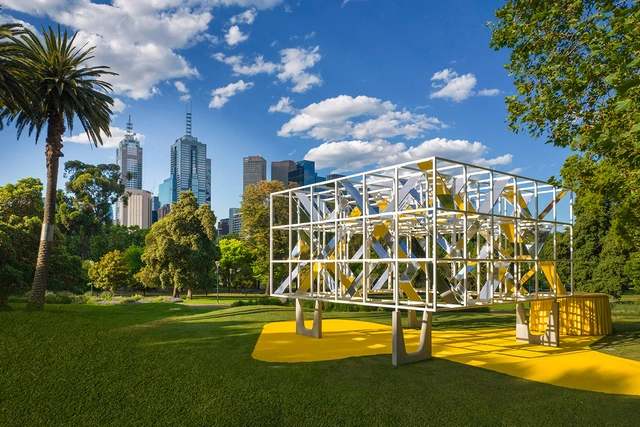
The Naomi Milgrom Foundation has unveiled the 2021 MPavilion program, offering over 250 free events over the span of 152 days, its longest to date. Now in its 8th season, the event welcomes design enthusiasts from Australia and across the globe to celebrate the important contributions of the design community to cultural landscapes. This year's pavilion, titled 'The LightCatcher' is designed by Venice-based MAP studio, and will be installed in Melbourne’s Queen Victoria Gardens from the 2nd of December until the 24th of April 2022.
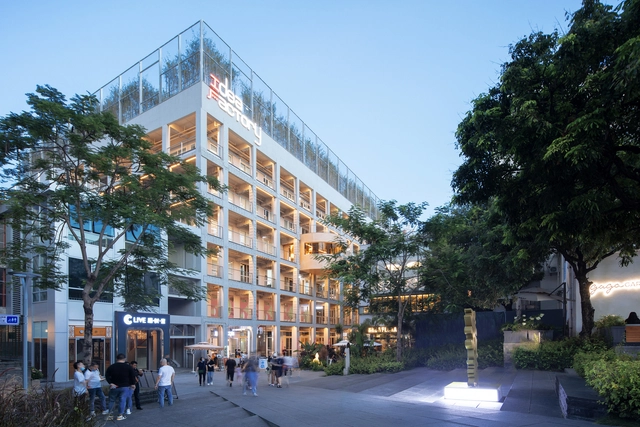
MVRDV has recently completed the Idea Factory, transforming a disused factory into a creative hub with an important community-oriented focus. Located in Shenzhen's urban village of Nantou, the adaptive reuse project refurbishes the existing structure to accommodate offices while adding a new layer of public space. The latter takes the form of a rooftop bamboo landscape packed with activities and amenities that provides a new leisure space for the historically disadvantaged neighbourhood.
MVRDV has revealed "O", one of four letter-shaped apartment buildings that spell out the word HOME in Franklin Mitte, Mannheim. The 15-storey residential building features a brightly colored structure with 120 apartments, commercial spaces, and a terrace, and is part of Franklin Mitte's complete master plan transformation.
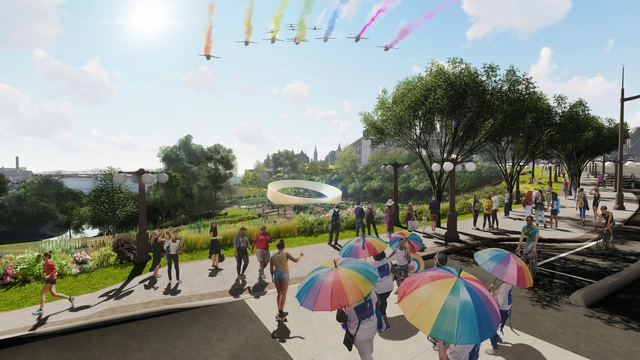
Canada’s Department of National Heritage has announced the five finalists for the LGBTQ2+ National Monument competition, a project meant to tell the story of generations of people who have been persecuted, specifically during the LGBT Purge period. Among the shortlisted designs is The Lens, a proposal that turns a symbol of oppression into an identity element and uses the landscape to express the community’s reverberation into society. Designed by a team comprising Canadian office Fathom studio, MVRDV and Two Row Architect, the proposal seeks to express resiliency, creating a space for memorialization and education while providing an inclusive space for the 2SLGBTQQIA+ community.
MVRDV revealed plans for adaptive reuse of Berliner Union Film Ateliers (BUFA), receiving planning approval to redevelop the first two buildings. The project expands the scope of the site to address a broader user base, including all kinds of creative industries, as well as organisations and individuals involved in activism and social justice. Building on the site's heritage and spatial diversity, MVRDV proposes a series of sustainable transformations of the existing structures, reaffirming the adaptive reuse ethos.
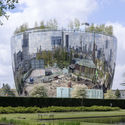
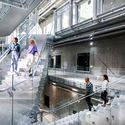
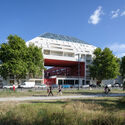
MVRDV's Depot Boijmans Van Beuningen, the world’s first fully accessible art depot, is opening its doors to the public this weekend. The official opening ceremony is taking place on November 5th, and the public will be able to visit from Saturday 6th of November onwards. Located at Museumpark in the center of Rotterdam, the reflective structure features exhibition halls, a rooftop garden, and a restaurant, and offers a behind-the-scenes look into the world of museums, making art collections accessible to the public.
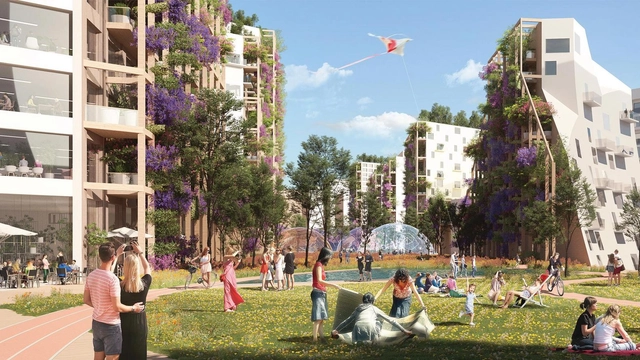
MVRDV and Hyde Park BV have unveiled their design proposal of Hoofddorp's Station Quarter, a project that aims to transform the area around the existing station into an ecofriendly and affordable urban district. The masterplan will offer 8,500 housing units and renovated train, bus, and metro stations, providing a solution to the housing shortage and access to public transportation without compromising the quality of living.
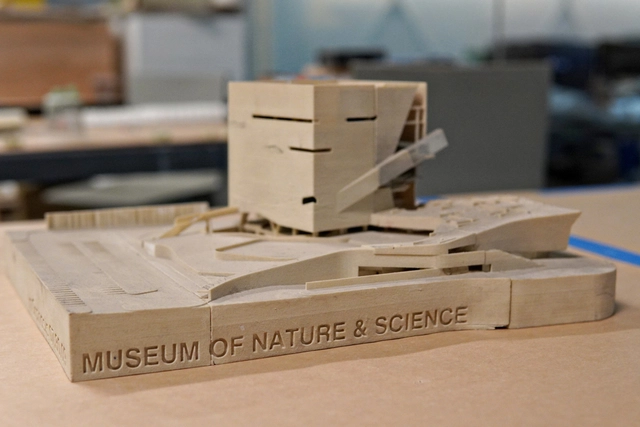
Models are useful to architects for all sorts of things, from the earliest parts of the design, all the way to marketing a building after it's built. But, what is it about models that makes them such an important and powerful tool? And, how do different architecture firms incorporate them into their own and unique design process? This video explores these questions by surveying three firms: Morphosis, MVRDV, and Herzog and de Meuron. Often firms have model shops and dedicated model teams who are responsible for everything from early design decisions to critical client presentations and even marketing the building. We hear from the folks who work in these model shops and breakdown how the three case study firms approach models in their own unique way.
The Second Studio (formerly The Midnight Charette) is an explicit podcast about design, architecture, and the everyday. Hosted by Architects David Lee and Marina Bourderonnet, it features different creative professionals in unscripted conversations that allow for thoughtful takes and personal discussions.
A variety of subjects are covered with honesty and humor: some episodes are interviews, while others are tips for fellow designers, reviews of buildings and other projects, or casual explorations of everyday life and design. The Second Studio is also available on iTunes, Spotify, and YouTube.
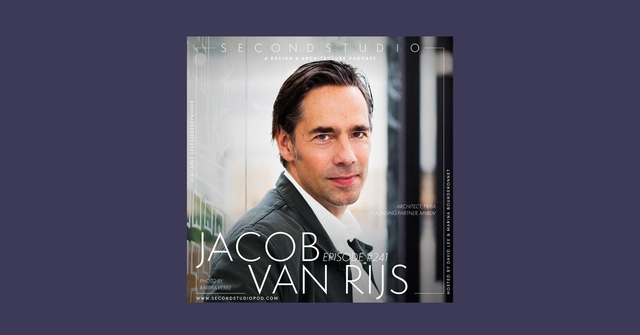
This week David and Marina are joined by Jacob van Rijs, Founding Partner of MVRDV, Architect and Urban Planner to discuss the beginnings of MVRDV, working internationally, the office's structure and growing from 3 people to 300, creating a positive office environment (the MVRDV house), design process, having fun in design, MVRDV's diagrams, why clients hire MVRDV.
Beyond "experience tourism" and light entertainment, temporary architecture is a fertile ground for testing ideas, examining places, popularizing new concepts and technologies. Taking a wide array of forms, from disaster relief projects and utilitarian structures to design experiments, architectural statements and playful installations, transient structures showcase alternative visions for the built environment, opening up new possibilities and questioning established norms. As temporary architecture now seems at odds with sustainability imperatives, the following discusses the value of temporary architecture as a vehicle of experimentation, advancing design and engaging communities.
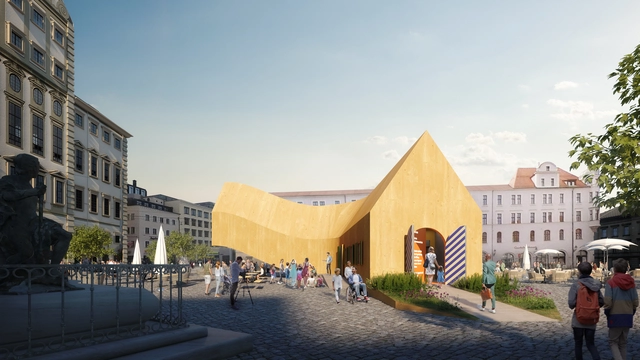
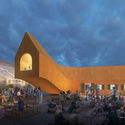
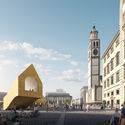
Celebrating the 500th anniversary of the Fuggerei social housing in Augsburg, Germany, MVRDV has collaborated with Fugger Foundation to initiate a conversation about the future architectural and urban plans of Fuggereien, the world’s oldest social housing complex. Throughout the upcoming months, the Fugger Foundations are hosting interdisciplinary debates that highlight Fuggerei’s guiding urban principles and discuss challenges about the field of architecture, politics, culture, and sciences, by notable individuals in each respective field.
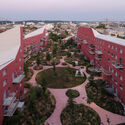
MVRDV's Traumhaus Funari project, a residential master plan that redevelops parts of a former US Military barracks, has started construction in Mannheim, Germany. The project aims to combine affordability, individuality, and diversity by allowing residents to make their own ecological and spatial choices regarding their homes. The master plan consists of a catalogue of residential typologies with a variety of materials, sizes, finishes, interior layouts, and connections to the outdoors which future residents can choose from.





.jpg?1641932763 "© Ossip van Duivenbode / MVRDV")


.jpg?1640769856 "© Florine van Rees")


.jpg?1640166431 "Stairs of Kriterion, temporary rooftop intervention. Image © Laurian Ghinitoiu")





.jpg?1637314414&format=webp&width=640&height=580)
.jpg?1637314414 "Courtesy of MVRDV")

.jpg?1637314404 "Courtesy of MVRDV")
.jpg?1637314508 "Courtesy of MVRDV")
.jpg?1637314414)



.jpg?1635758471&format=webp&width=640&height=580)
.jpg?1635758691 "© Ossip van Duivenbode / MVRDV")
.jpg?1635758471)

.jpg?1635756192 "Courtesy of MVRDV")
.jpg?1635756150 "Courtesy of MVRDV")



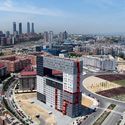


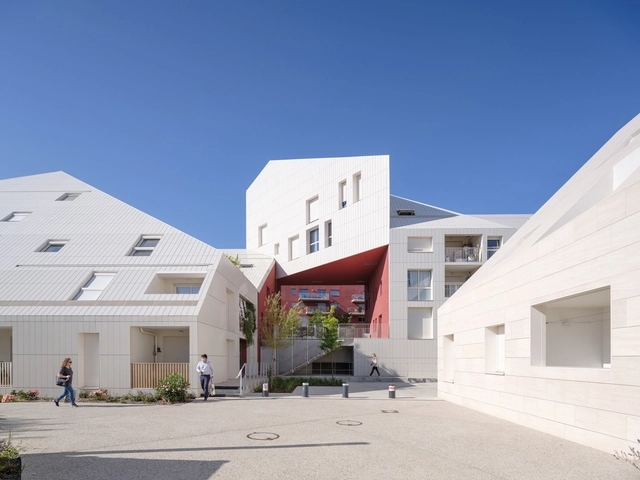
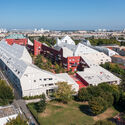
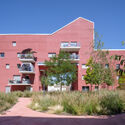




.jpg?1629793779 "Traumhaus Funari Project . Image Courtesy of MVRDV")

.jpg?1626762371&format=webp&width=640&height=580)
.jpg?1626762472 "© MVRDV")
.jpg?1626762365 "© MVRDV")
.jpg?1626762420 "© MVRDV")
.jpg?1626762410 "© MVRDV")
.jpg?1626762371)