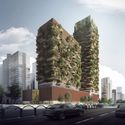
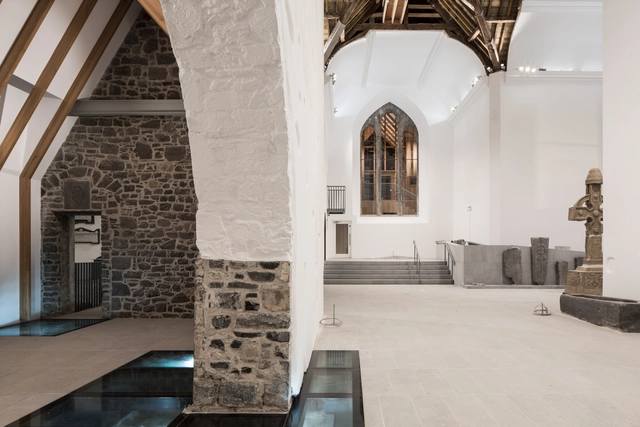
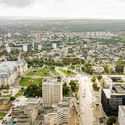
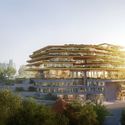
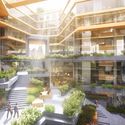
UNStudio has been announced as the winner of the international competition "Un Iași pentru Viitor" to design a new residential district in the historical center of Iași, Romania. For this competition, organized by Iulius company, four offices have been invited to participate, Foster + Partners, MVRDV, UNStudio, and Zaha Hadid Architects. The main challenge of the competition brief was designing a building well integrated into a complex urban environment marked by historic monuments of different ages, new archeological discoveries, and open public spaces and gardens. The winning proposal, titled „Bridging Time, Bridging Communities,” aims to offer a coherent response to the particularities of the site.
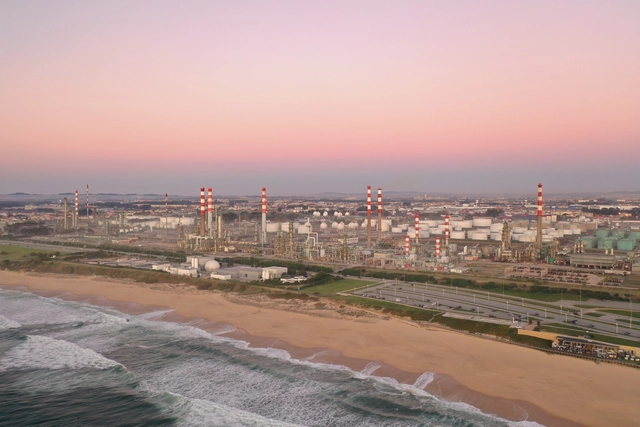
An international consortium led by MVRDV and OODA, in close collaboration with LOLA, Thornton Tomasetti, A400, and LiveWork, was selected to design an eco-city within the city of Matosinhos, Portugal. The project aims to transform a large-scale urban project, turning the former Galp Energia’s refinery into a green and innovative district with housing, a university campus, and a large park, among various facilities. The transformation of Matosinhos will serve as a catalyst for a greener future. The refinery's heritage will promote a sustainable future with projects that attract investments in innovation and education, attracting a new population to the city.
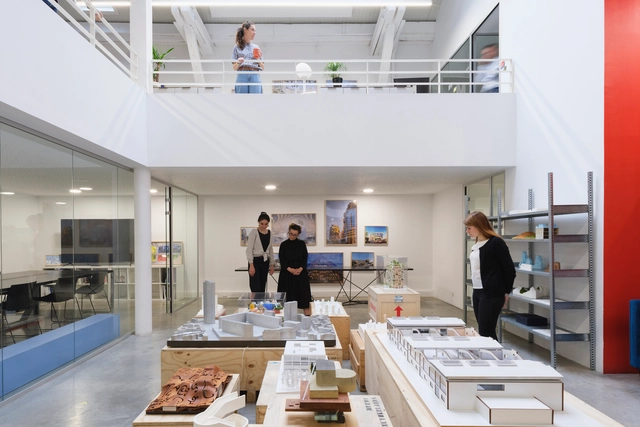
MVRDV and The Why Factory's have collaborated on an exhibition that explores the principles of "architecture and urbanism calls to action”. Titled "Agir", the exhibition is open to the public since June 9th, in the connected spaces of the ArchiLib Gallery and MVRDV’s Paris office. The exhibition takes its name from the French verb meaning “act”, and examines the activist works of MVRDV and The Why Factory, revealing its capacity to address a wide variety of environmental and social challenges.
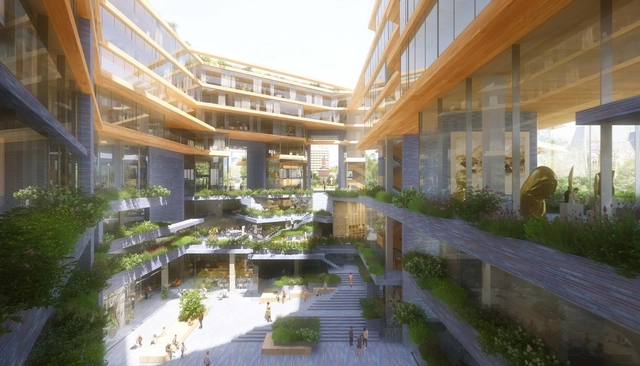
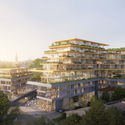
Designed for an insurance company, The Centraal Beheer building by Herman Hertzberger in Apeldoorn, Netherlands, is widely recognized as one of the high points of the structuralist movement. MVRDV, in consultation with Herman Hertzberger’s office AHH, is transforming the celebrated building, making it the centerpiece of a new sustainable residential neighborhood while preserving its structure and core principles. The project is part of a larger area of development, a three-hectare site near the city’s train station. MVRDV’s design proposal introduces approximately 650-800 homes while keeping the focus on preservation, greening, and innovation.
MVRDV has revealed the design for its first project in South America. The Hills is a residential project located on the Guayas riverfront in Guayaquil, Ecuador, comprised of six residential towers displayed atop a mixed-use plinth, creating the image of a valley. The towers range in height from 92 to 143 meters, raising taller the further away they are from the riverfront. The whole composition is inspired by the local landscape that merges the natural and the urban environment.
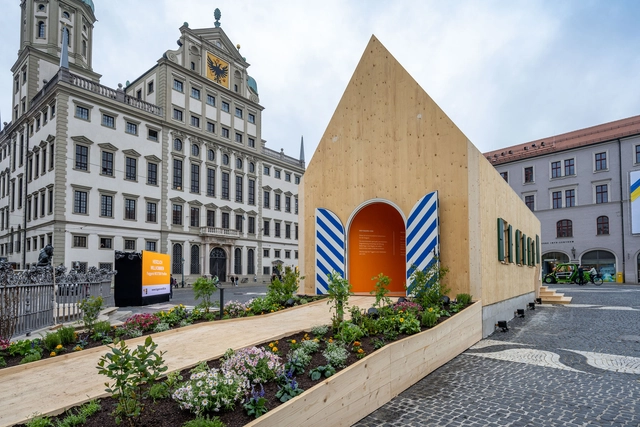
MVRDV and Fugger Foundation are celebrating the 500th anniversary of the Fuggerei social housing project, the world's oldest housing complex, with a ceremonial pavilion and three proposals for “Fuggerei of the Future”. The celebration features a 5-week programme of interdisciplinary discussions and events about social housing and current global challenges. In honor of the occasion, MVRDV designed the 'NEXT500' pavilion, which exhibits an MVRDV study on the “Fuggerei of the Future”, presenting a new Fuggerei code and three proposals for new Fuggerei complexes around the world.
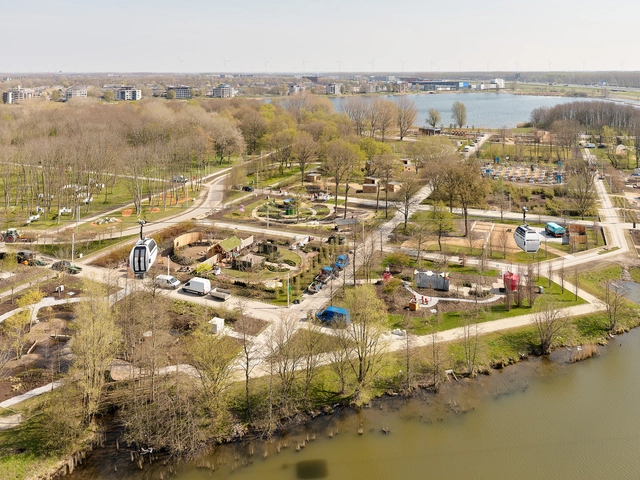
The international horticultural exhibition Floriade Expo 2022 opened to the public yesterday on the site of MVRDV's arboretum masterplan in Almere. The concept features an alphabetical library of trees and plants arranged into lots on a rigorous grid across the 60-hectare site. The masterplan was conceived as a framework for the Expo, and at the same time, as a blueprint for a sustainable city district, given that the park will be transformed into a new residential area after the event. Held every ten years and running for six months, the Expo showcases the latest innovations in the field, from nature-inclusive agriculture to a sustainable pilot home made from 93 per cent recycled plastic.
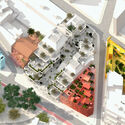
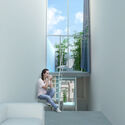
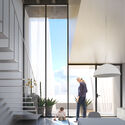
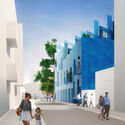
MVRDV, together with Spanish practice GRAS Reynés Arquitectos, is transforming the iconic El Terreno neighbourhood in Palma, Mallorca, into a vibrant residential area, through renovations and new additions. After decades of decline, a series of neighbouring plots in Plaza Gomila are to be redeveloped through a public-private venture, with the aim of restoring the essence of the bohemian neighbourhood. Each executed in a different colour and material, the seven diverse buildings form a recognisable district with a variety of typologies.
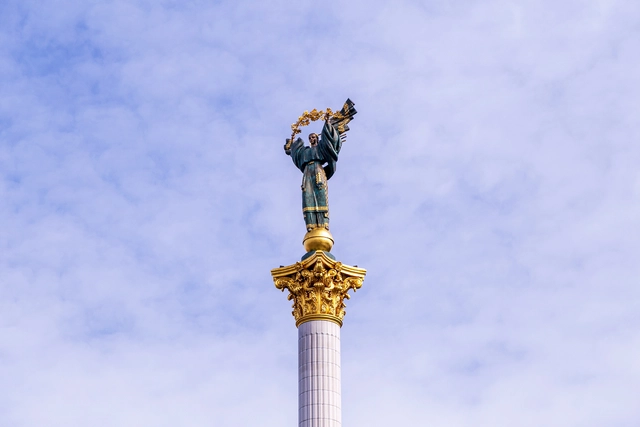
Kiev, Ukraine / Statue of Berehynia on the top of Independence Monument on the Maidan Nezalezhnosti. Image via Shutterstock
On the 24th of February 2022, Russia launched a large-scale invasion of Ukraine. Set to become Europe’s largest refugee crisis and armed conflict in this century, so far, this war has mobilized people across the world in order to exert pressure on authorities and put a stop to the armed hostilities. Individuals, as well as institutions in the architectural field, have taken part in these acts of solidarity, issuing statements, condemning actions, and even halting their work in Russia. From the UIA to MVRDV to Russian Institutions such as Strelka, the architecture world is denouncing the acts of violence and supporting an immediate cease of fire.
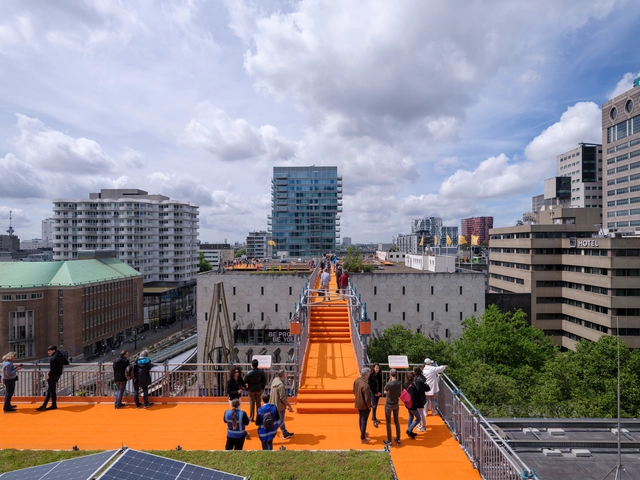
Setting the stage for Rotterdam Architecture Month this upcoming June, MVRDV have designed a temporary rooftop platform on the Het Nieuwe Instituut in Rotterdam. The 600-square-meter event space titled The Podium will be elevated 29 meters and covered with a striking pink color, making it visible to all pedestrians on ground level. The installation will open to the public on June 1st, coinciding with the inauguration of the Rotterdam Architecture Month Festival, and will continue to be used for events until August 17th.
Amsterdam is one of the most beautiful cities in Europe. Its origins lie in the 12th century when fishermen living along the banks of the River Amstel built a bridge across the waterway near the IJ, then a large saltwater inlet. Most of the city’s territory is below sea level and therefore it lies on land that has been reclaimed from the water.
Amsterdam is all about practical urban planning, amazing cycling infrastructure, tulip-lined canal bridges, and old merchant houses that tilt at impossible angles. I visited Amsterdam again last year and discovered some new places.
With over 100,000 votes cast during the last three weeks, we are happy to present the winners of the 2022 ArchDaily Building of the Year Awards. This peer-based, crowdsourced architecture award showcases projects chosen by ArchDaily readers who filtered thousands of projects down to the 15 best works featured on ArchDaily in 2021.
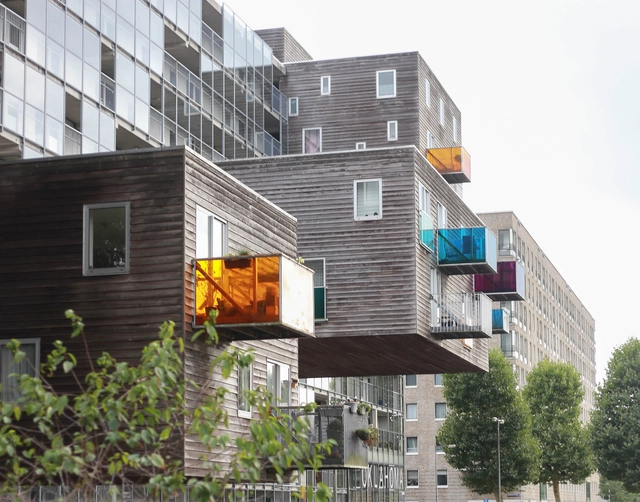
As in previous years, the winners showcase a wide spectrum of different types of building, giving an insight into how diverse the profession has become in recent decades. High-profile practices take their place as ever, with winners such as MVRDV's Housing project in Bordeaux and Kengo Kuma's Casa Batllo's installation, showing that establishment firms are still able to make their mark, as in more traditional award systems. Alongside these are previously unsung heroes, such as PALMA and HANGHAR with their project, Types of Spaces. Among the winners, we also find Ca'n Terra House by ENSAMBLE STUDIO and Plaza of Kanagawa Institute of Technology by Junya Ishigami + Associates, extremely creative projects that today challenge their typologies.
But for all their many beautiful differences, the winners share a crucial element in common: they represent the values of our mission, to bring inspiration, knowledge, and tools to architects everywhere. Neither ArchDaily nor the Building of the Year Awards would be possible without the continued generosity of the firms that choose to publish their projects with ArchDaily every year, or without the engaged readers who take part in the voting process.
The 2022 Building of the Year Awards is brought to you thanks to Dornbracht, renowned for leading designs for architecture, which can be found internationally in bathrooms and kitchens.
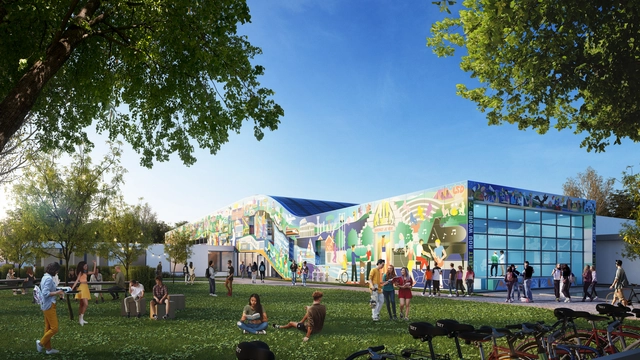
MVRDV founding partner Winy Maas and Theobert van Boven of Van Boven Architecten, two alumni of Gymnasium Beekvliet, are leading the transformation of their former highschool in the Dutch village of Sint-Michielsgestel. In addition to the renovation of the existing building, the design features a flowing, colourful extension accommodating a new auditorium, as well as art and culture facilities providing students with an engaging learning environment. The new structure features a printed façade showcasing artwork by Canadian visual artist Ian Kirkpatrick that provides a record of the school's 200 years of history while creating a new focal point for the school and region.
Over the past year, established practices have continued to champion the transformation of existing structures, with adaptive reuse and renovations increasingly becoming a defining aspect of contemporary architecture From the renovation of landmark structures to the adaptive reuse of obsolete facilities, the idea of giving new life to existing buildings has been embraced as the premise for a more sustainable practice, but also as a means of reinforcing the urban and cultural identity of cities. Discover 8 designs and recently completed projects that showcase a new common practice of reusing existing building stock.
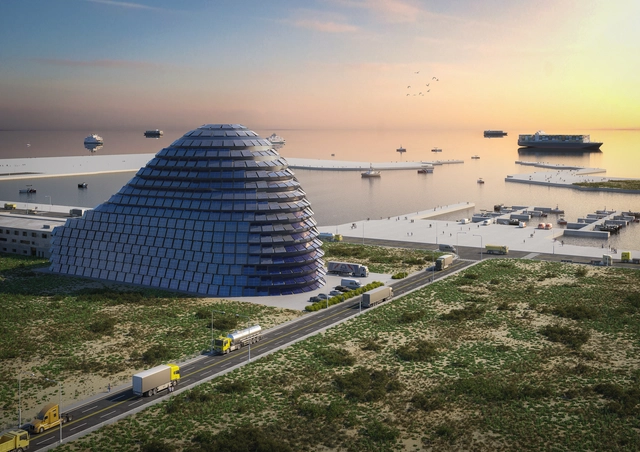
MVRDV ‘s latest project designed for government-owned power company Taipower is “a tool for energy production”, communicating Taiwan’s goal of transitioning to green energy. The morphology of the project and its architectural image are entirely data-driven, the expression of the most efficient way of generating solar energy on the site. An operations facility comprising offices, a maintenance workshop, storage spaces, and a public gallery, the project is defined as a “built manifesto”, projecting the company’s aspirations for achieving a “carbon-free future”.
As the new year kicks off, we're taking a look ahead to the projects we're most looking forward to in 2022. With a mix of cultural and commercial programs, the designs are located across five continents, with many under construction for multiple years. Designed across a wide range of scales, they represent a mix of interconnected landscapes, museums, and new skyscrapers.
The dawn of the Anthropocene has thrown the idea of adaptive reuse into the limelight: effectively the pinnacle of urban regeneration and revitalization. It utilizes the presence of existing buildings with historic and cultural value and re-purposes them to be functional. Essentially a form of architectural salvage; a sustainable and viable means of rebuilding.
Recent events such as the pandemic has highlighted inequalities in our cityscape, the inadequate segments in a state of disuse and disrepair. Adaptive reuse can replenish these areas and create new cultural hotspots, encouraging activity and creating vibrant and healthy mixed-use environments.
Below is a diverse selection of cultural hotspots using Adaptive Reuse





.jpg?1655725729 "© Juan Jerez")

.jpg?1655725498 "© Juan Jerez")


Certitudo_HR.jpg?1655422317&format=webp&width=640&height=580)


.jpg?1655422503 "Herman Hertzberger - Centraal Beheer offices, Apeldoorn (1968-1972). Image via AHH, used under terms of \"fair use\"")
Certitudo_HR.jpg?1655422317)
.jpg?1653955037&format=webp&width=640&height=580)

.jpg?1653955060 "Courtesy of MVRDV")


.jpg?1653955037)









.jpg?1646212066&format=webp&width=640&height=580)
.jpg?1646212124 "© MVRDV")
.jpg?1646212098 "© MVRDV")
.jpg?1646212076 "© MVRDV")
.jpg?1646212066 "© MVRDV")
.jpg?1646212066)