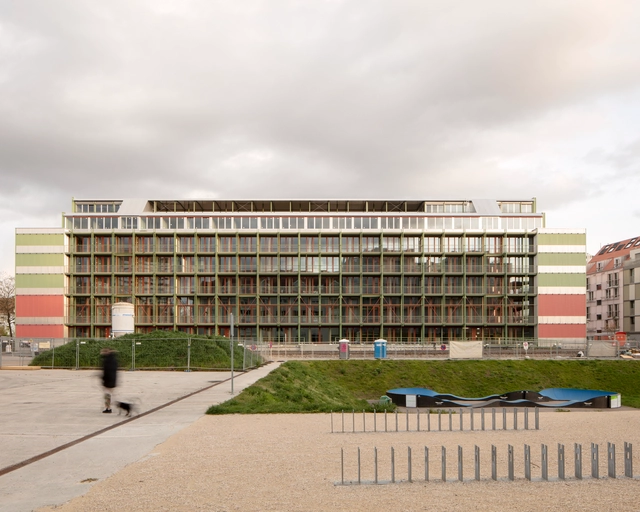
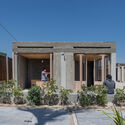
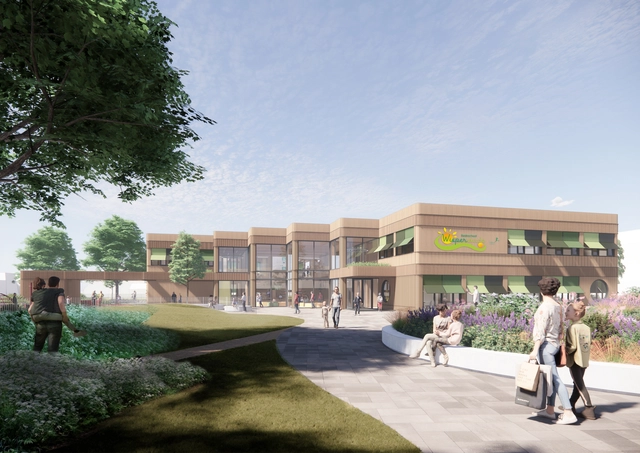
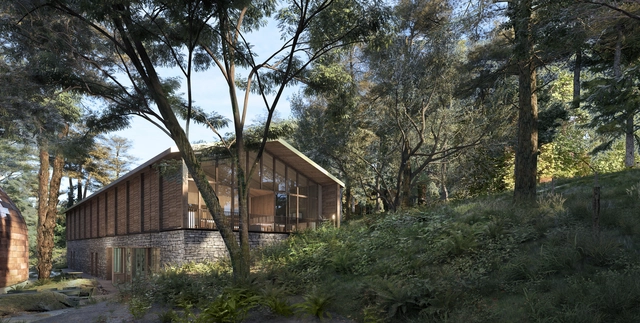
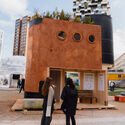
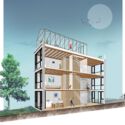
Modular homes are houses either partially or fully constructed in a factory. This process involves creating a series of three-dimensional 'modules' delivered to a site in a predetermined spatial pattern and assembled into a complete product. These homes have become popular solutions to housing crises as they can be produced 50% faster and emit half as much pollution.
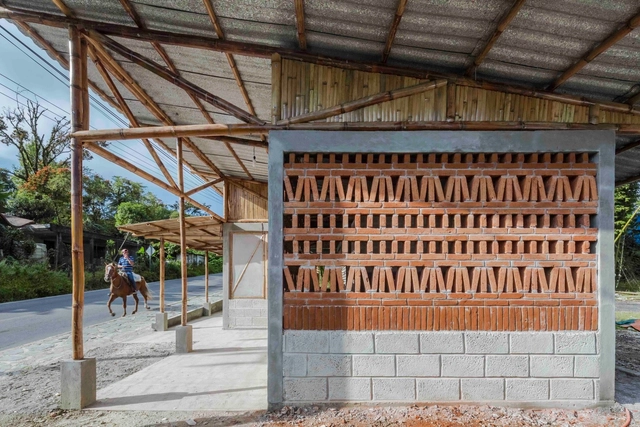
However, the locality of the materials used is a significant factor that gives homes their character. It conveys a sense of place, culture, construction history, and local craftsmanship. This raises questions about its role in modular housing: Can local materials be used in the factory production of homes? Can they be combined with a modular framework and temporary connections? What are the limitations of building modular homes in the local contexts of the Global South?
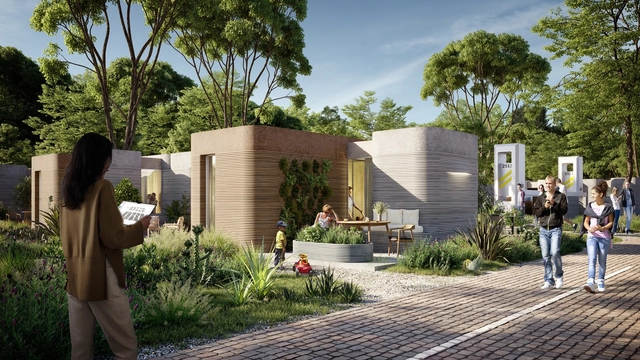
German-based architecture and design studio Beta Realities has developed the “Collective Parts” initiative, a design and technology platform for enabling the construction of affordable 3D printed housing. The project has been recognized as one of the winners of Inititative99by ICON, a global architecture competition aimed at reimagining affordable housing that can be built for under $99,000. The other winners of the open category are MTspace Studio from New Zealand and For Everyday Life from the United Kingdom. The competition also highlights contributions from students as a separate category, featuring Casa Fami by IAAC from Spain, Juan Felipe Molano from Colombia, and Victoria Roznowski from Germany.
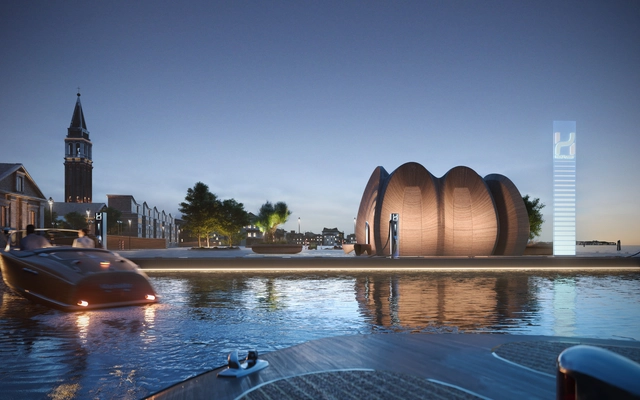
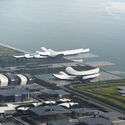
Zaha Hadid Architects have released images of their design for the world’s first hydrogen refueling infrastructure for recreational boating. Continuing ZHA’s experience in maritime designs, the stations are to be installed in 25 Italian marinas and ports. Launched by NatPower H, the stations will begin to be implemented in the summer of 2024, with plans to expand to over 100 locations throughout the Mediterranean Sea in the next six years.
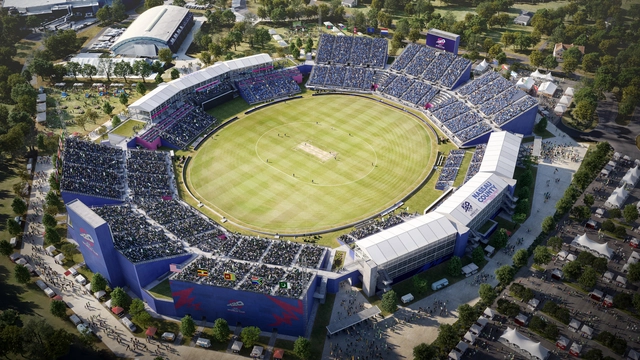
Nassau County International Cricket Stadium / Populous. Image Courtesy of Populous
Designed by the sports and entertainment-focused architecture office Populous, the Nassau County International Cricket Stadium will be located in Eisenhower Park, 30 miles east of Manhattan, and is planned to host eight matches during the ICC Men’s T20 World Cup 2024. The stadium, having a capacity of 34,000 seats with additional VIP and hospitality units, is scheduled to be completed within 3 months. The accelerated process is made possible by the modular system, typically employed in other sports such as Formula 1, Golf, and the Olympic Games.
The ArchDaily projects library is managed by our curators who constantly seek to populate our stream with the most interesting global works, showcasing evolving focuses and criteria. While we usually share our reader’s top 100 favorites, this year, we also decided to initiate our editor’s picks on the ArchDaily Instagram account, where our curators highlight some projects that include interesting themes and unique traits.
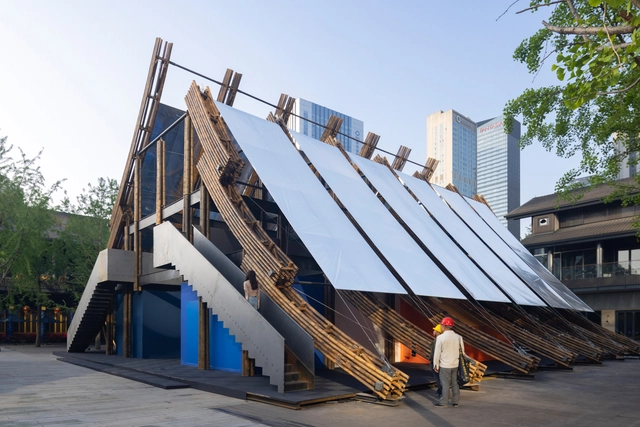
RoarcRenew Architects has been selected for ArchDaily's 2023 New Practices. In two of Shanghai's busiest commercial districts, Anfu Road and Columbia Circle, stores designed by RoarcRenew Architects attract large crowds. Within spaces covering just a hundred square meters, they meticulously design every architectural element, continuously exploring and innovating. Their recent bamboo installation, done in collaboration with Taikoo Li, is a remarkable showcase of sustainable design in commercial spaces.
Roarc Renew consistently conveys a clear architectural concept in its projects. The construction logic mirrors the fundamental principles governing our world, involving substances and joints: joints can both represent the substances in the physical world and connect them all. In their projects, Roarc Renew has introduced the JointsPavilion (JP) series for the construction system and the SoftJoints (SJ) series for home furniture systems. This allows them to utilize their expertise in creating elegant connections that simplify and enhance the beauty of various elements.
Sustainability has taken center stage in the broad world of architecture and design, inspiring and directing the construction of new structures towards environmental harmony. The use of wood, a classic material with enormous potential to lessen our ecological impact while providing limitless design possibilities, is a notable example of this movement's implementation. In the fight for sustainability in the field of architecture, wood has become an ally. Its distinctive qualities, such as renewability and carbon neutrality, have inspired creative methods among architects worldwide.
A wide range of architectural projects, from vital healthcare facilities to exciting mixed-use buildings, cultural hubs, and welcoming residential spaces, benefit from wood's extraordinary versatility as a building material. In fact, wood's natural warmth and biophilic qualities can create spaces that reduce stress and promote well-being. Furthermore, the carbon-neutral nature of wood aligns perfectly with the design industry's commitment to environmental responsibility.
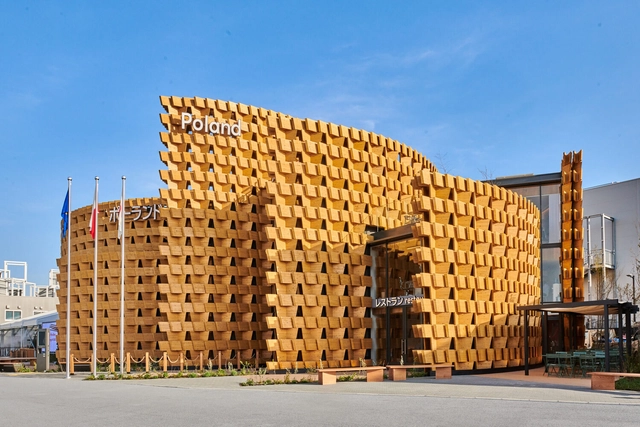
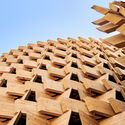
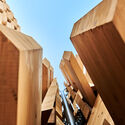
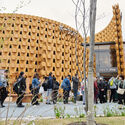
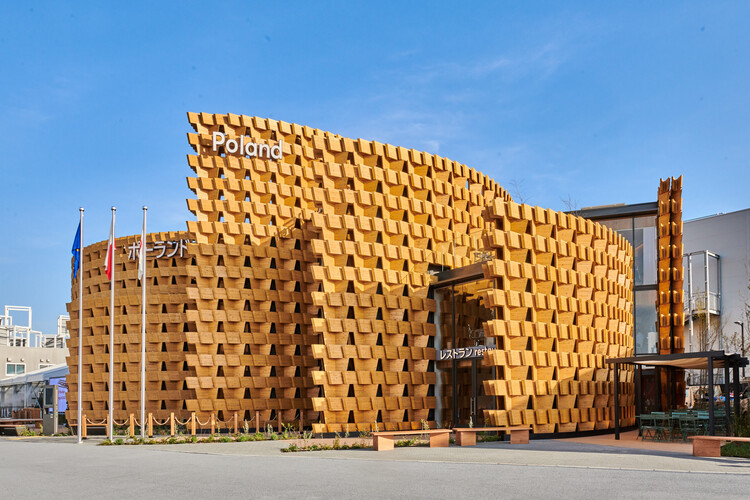
The Polish Pavilion at Expo Osaka 2025. Image Courtesy of Polish Pavilion Expo 2025
Commissioned by the Polish Investment and Trading Agency, Poland's Pavilion at the World Expo in Osaka is designed by Interplay The project is responding to the theme of the upcoming Expo, "Designing Future Society for Our Lives" and was born from the Interplay's fascination with spirals, specifically the shape's use in different scales, from "protein molecules to the structure of galaxies." Serving as a symbol of Polish ingenuity, the geometric-patterned pavilion aims to extend its influence beyond national boundaries.
Amidst the current wave of architectural globalization, the art of crafting designs attuned to specific contexts is fading. This concern is especially significant in countries in crisis, such as Ukraine, where the built environment's history is being eroded by war. In these conditions, the contribution of local architects with an innate grasp of the country's cultural nuances becomes imperative. Leading the charge in the rebuilding of Ukraine is prototype, a pioneering practice that challenges architectural conventions to push the country towards a promising future.
Recognizing their forward-looking vision, ArchDaily has featured prototype as part of the 2023 New Practices, a global annual survey. prototype's outlook on the future of architecture aligns with responsible design that addresses the environmental impact of construction and marries contextual and specific considerations for each project. Their recent accomplishments include the bookstore Readellion, and Ukrainian-Danish Youth House, epitomizing prototype's recurring design principles of mobility, adaptability, dynamic levels, and change of scenarios.
There are many building materials that have experienced minimal changes since their initial inception in the field of architecture. However, this does not imply that they are outdated, but rather that their qualities and simplicity make them highly versatile materials also demonstrate the resilience and durability of materials that withstand the test of time. An example of this is brick, a timeless material that has been able to adapt over the years, serving functions such as walls, cladding, and flooring, among others. Under this premise, Louis Khan referred to the expressive possibilities of brick, stating, "Even a brick wants to be something. It aspires."
Thanks to the progress of new technologies applied to materials, disruptive proposals have arisen that converge in new construction systems. On many occasions, these new technologies are combined with materials considered "traditional," generating new concepts in which materials such as brick find new applications and possibilities. One of these new concepts is Flexbrick, a ceramic textile with an industrialized system that combines flexible sheets to wrap architectural spaces. This opens up new possibilities for applications at the forefront of the parametric architecture revolution, using a flexible, adaptable, and sustainable material.
https://www.archdaily.com/1003807/algorithm-based-architecture-flexible-bricks-to-wrap-architectural-spacesEnrique Tovar
ArchDaily and VELUX have joined forces to provide you with an exclusive coverage of the highly anticipated UIA World Congress of Architects 2023. Watch Ambra Gugletti from KOMPAS VC and Lucas Carstens from Modulize explain how data-driven offsite construction can help reduce construction waste up to 90%
The weather across the northern hemisphere is getting warmer, and with rising temperatures comes the urgent need for many of us to spend as much time outside as possible. While a variety of outdoor activities bring with them their own sense of accomplishment and relaxation, one in particular combines feelings of leisure, indulgence and community: outdoor cooking. But how did this tradition start? And what has it evolved into?
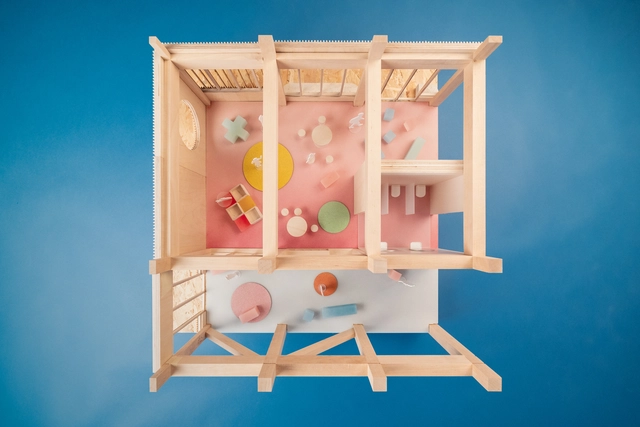
As part of the Circlewood consortium, OMA’s David Gianotten and Michel den Otter have developed a modular system to build schools that can adapt and transform throughout their lifecycle. The system was selected by the City of Amsterdam to be employed to build multiple schools in the coming ten years, as part of the Innovation Partnership School Buildings program. The citywide initiative aims to build nine to thirty “high-quality, flexible, and sustainable” schools as a way to contribute to the city’s goal of becoming fully circular by 2050.
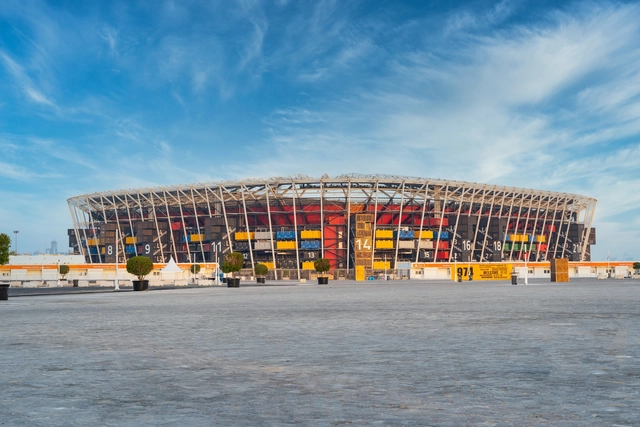
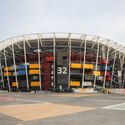
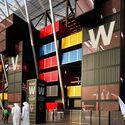
Reports show that authorities have begun dismantling Stadium 974 after it hosted seven matches during FIFA World Cup, with six group games and one Round of 16 knockout matches. It was also the only stadium built for the World Cup without air conditioning, so it only hosted evening matches. According to the BBC, construction workers moved on the site on 9 December to “take the stadium out of tournament mode.” The structure was designed to be the first FIFA-compliant stadium that can be fully dismantled and re-purposed after the tournament ends. While Qatar called this a “beacon of sustainability,” experts warn that the real sustainability of the scheme depends on several factors, including when and where the stadium will be reused.
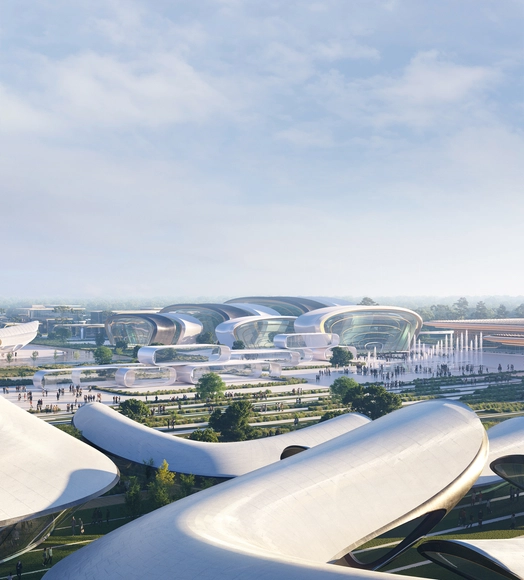
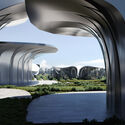
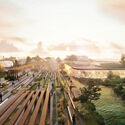
Zaha Hadid Architects has joined Ukrainian authorities to present the OdesaExpo 2030 bid proposal, an event planned to become the first Expo to be hosted in Eastern Europe. The masterplan is designed with legacy and sustainability in mind. The central pavilions are configured to be transformed into Ukraine’s first fair exhibition hub after the closing of the Expo, while the national pavilions are designed to be dismantled and redeployed as new civic buildings throughout Ukraine.
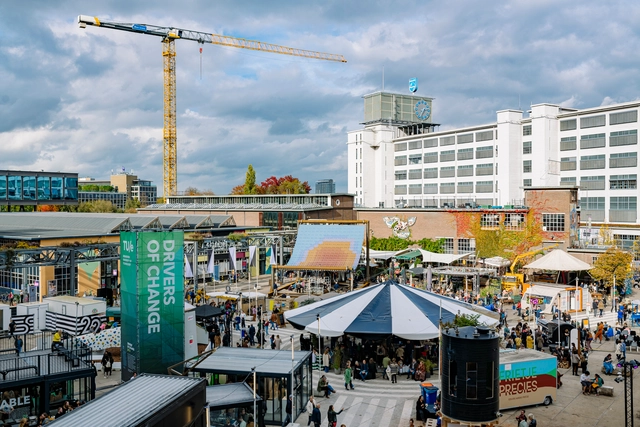
Under the motto "Get Set," the 2022 DDW exhibited more than 50 art and architectural installations to call out designers and communities for a shift from preparation to action facing the challenges of our time. Led by Miriam van der Lubbe, Creative Head of DDW, with Marjan van Aube and Formafantasma as ambassadors, the 21st edition of the Dutch Design Week took place the last week of October in Eindhoven, the Netherlands closing with a Graduation Show of over 200 students of the Design Academy Eindhoven.
Inspiring designers to incorporate innovation and sustainability and familiarize the public with all the technology has to offer, ArchDaily has selected 9 relevant works focused on bio-materials and modular systems. Highlighting ongoing design research, the list underlines projects that reinvent how we deal with nature and the space we live in.
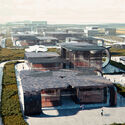
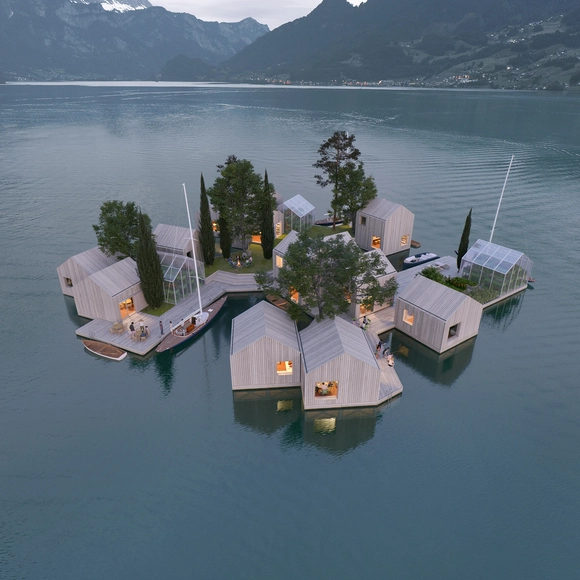
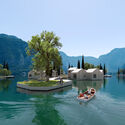
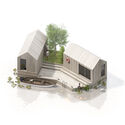
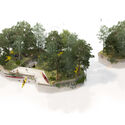
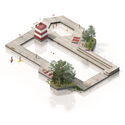
Danish Maritime Architecture Studio MAST has developed the “Land on Water” project, a system that provides an adaptable solution to building almost anything on the water: floating homes, campsites, even small parks, and community centers. The project represents a response to the acknowledgment of raising sea levels and increased risks of urban flooding, which has led to a growing interest in adapting architecture to be built on water. The “Land on Water” proposes a flexible and sustainable solution, a departure point from previous solutions, which are proven to be difficult to adapt, transport and are often using unsustainable materials such as polystyrene-filled concrete foundations or plastic pontoons. The project is developed with the support of Hubert Rhomberg & venture studio FRAGILE.