Meet 2022 Pritzker Architecture Prize winner, Francis Kéré, Burkina Faso-born black architect, in an interview about his architectural philosophy, with Louisiana Channel. As the official statement of the Pritzker Architecture Prize notes, “Through buildings that demonstrate beauty, modesty, and invention, and by the integrity of his architecture and geste, Kéré gracefully upholds the mission of this Prize”, continually “empowering and transforming communities through the process of architecture.”
“If you’re a painter, you need a canvas. If you’re a sculptor, you need marble or plaster. And if you build a house, you need a piece of land.” Welcome to the wonderful world of Not Vital, where the Swiss multi-faceted artist shows us his sculpture park, foundation, and castle in this video.
Louisiana Channel meets Not Vital in his studio in Sent, the town in Switzerland where he grew up and one of the places where he still lives. Building places to live have been with him since childhood: “My first work was more related to trying to build a house or a habitat. The first one was when I was only three years old in 1951. There was so much snow that my brother and I built a tunnel,” he says and continues: “I think that it was the first time I realized that I like to build my own habitat. Even though it was much more comfortable to live in the house, I spent the day in the tunnel. I remember the light, the smell of the snow. I just felt great.”
‘’We’re in a seismic area. Beirut has been buried seven times, so it has to resist any earthquake, and that’s why it also resisted the explosion in the port,’’ expresses Lina Ghotmeh in conversation with Louisiana Channel, in regards to the Stone Garden. A building constructed with resilience in mind, in a city that has been buried within rubble and rebuilt multiple times.
Lina Ghotmeh was interviewed by Marc-Christoph Wagner at her studio in Paris in November 2021. Renowned for her Humanist approach to Architecture, the Stone Garden offers a very personal relationship as the first building to be constructed in Ghotmeh’s hometown of Beirut. Positioned on the edge of the city center, it is very much a form of vernacular architecture echoing the lives of the people who reside here.
''A Building that Should Address our own Fragility'' says Dorte Mandrup in conversation with Louisiana Channel, in regards to her recent work, the Ilulissat Icefjord Center, in Greenland. An exhibition house in its own right, this powerful filmography explores the surrounding environment, offering insight into the changes seen on the ice and the harmonious relationship between the structure itself and the glacial landscape.
Dorte Mandrup was interviewed by Marc-Christopher Wagner in her studio in the Spring of 2021. Regarded as Humanist, Mandrup has been heavily influenced by medicine, sculpture and ceramics, creating engaging and evocative architectural form. As part of her philanthropic work the center is set to tell a narrative of evolution, human history and the secrets of the ice.
‘’The delight I get out of doing buildings is to say: Screw you, it can be built’’ says Architect Peter Cook in conversation with Louisiana Channel, where he discusses his determination to communicate ideas through vivid Architectural drawings and the skepticism he has faced in regards to his ambitious design proposals and their outlandish appearance.
"Architecture encompassed my interest in reality and societal issues," says architect Dorte Mandrup, in an extensive conversation with Louisiana Channel, in which the founder and creative director of Dorte Mandrup Arkitekter reflects on formative years and the values of her architecture practice. Four years in the making, the film takes viewers on a journey through Dorte Mandrup's architecture, with compelling footage telling the story of designs such as the Ilulissat Icefjord Centre, Jaegersborg Water tower, or Ama'r Children's Culture House. Through the portrait film, the architect touches on numerous topics such as sustainability and climate change, the relationship of the built environment with the landscape, and as well as the profession itself and its present transformations and challenges.
In a recent interview with Louisiana Channel, graphic designer-turned-architect Bruce Mau explains how design is a mindset "of optimism and action". The designer talks about how architecture and design can influence and give form to the world we are sharing, and explains how we are the ones who design the outcomes of life, leaving no room for cynicism.
"We all have to change our way of thinking now. I want to change my architecture to be even more kind to nature," says Kengo Kuma in this Louisiana Channel interview, where he shares his thoughts on the pandemic's impact on architecture and the environment. The architect discusses the collective responsibility towards nature and the importance of designing buildings and cities that allow for and encourage outdoor activities.
Talking to the Louisiana Channel, Danish professor, sculptor, and artist Bjørn Nørgaard outlines the philosophy that underpins his work and reflects upon his architectural projects. Nørgaard describes in the film, a co-production with Munkeruphus, the strong influence of his mentor in the 1960s - German artist Joseph Beuys - whose theories formed a key part of Nørgaard's evolution and ethos as an artist. The concept of "die soziale Plastik", or social sculpture, would go on to shape Nørgaard's approach to architecture and other forms of art - its main philosophy being that every part of life can be approached creatively.
In Louisiana Channel's latest interview, Indian architect Anupama Kundoo shares her thoughts on the importance of balancing between traveling and being in solitude with oneself. "I think travel is important, but if you're not rooted yourself, you will go to a hundred places and not see anything", explained the architect, "traveling helps you step back from what you take for granted".
Talking to the Louisiana Channel, German architect Anna Heringer outlines the way she works and her multi-disciplinary approach to architectural practice. Growing up in a small town at the Austrian-Bavarian border close to Salzburg - Heringer spent a year living and working in Bangladesh at the age of 19, a place that is now home to a majority of her office's projects. Heringer describes herself as a mix of things in addition to being an architect, describing herself as an activist and a development worker - using her creativity to explore ideas in a variety of forms and media.
In a recent interview with Louisiana Channel, Copenhagen-based architects Søren Johansen and Sebastian Skovsted share insights into their design process - stating the importance of creating architecture that seamlessly blends into the landscape yet stands out on its own right. Discussing the minimalist nature of their projects, the architects are careful not to put themselves in a box, saying, "When you ask about minimalism in our work, or any other ism, we are not interested in simplicity for simplicity’s sake.”
As a platform for the Louisiana Museum of Modern Art, Louisiana Channel has been stimulating conversations around architecture, art, and the creative world at large. The architecture series provides fascinating insights into the thought process of distinguished architects and their work. Discover seven of the most inspiring interviews created over the past year, discussing a wide array of subjects from exemplary projects, to cities, to architects' design philosophy.
In Louisiana Channel's latest interview, Indian architect Anupama Kundoo shares her thoughts on the importance of observing the surroundings from the perspective of time and its imprint on matter. "Before humans, there was an architecture that life itself creates," says the architect discussing the natural world as a source of inspiration, pointing out that one "can see the same question already solved by nature".
In a recent interview by Louisiana Channel, German architect Anna Heringer talks about the recently inaugurated Anandaloy centre in Bangladesh, a social space which became a catalyst for local development. The architect shares her commitment to sustainability and touches on the importance of the transfer of know-how to local communities through participatory building processes.
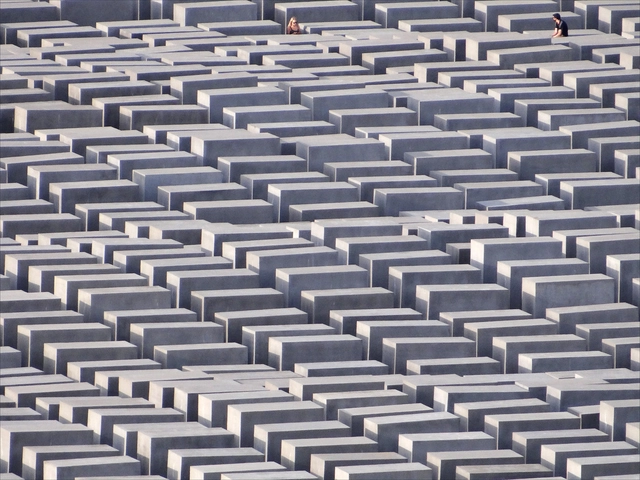
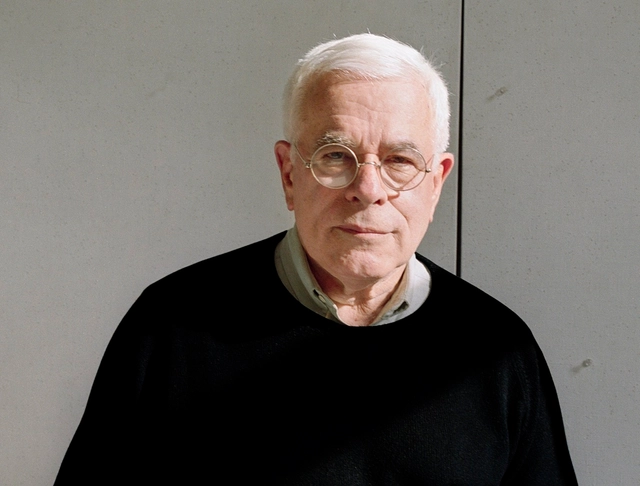
The Louisiana Channel recently released a new interview with Peter Eisenman on the Memorial to the Murdered Jews of Europe in Berlin. Sharing his thoughts on what went into building the memorial, he touches on the desire to move away from Jewish symbolism. The video explores the larger idea and feeling of being lost in space and time, a concept that Eisenman describes as a "field of otherness."
This January, Peter Eisenman was interviewed by Marc-Christoph Wagner at his studio in New York City. Featured by the Louisiana Museum of Modern Art, the video “Learn the language” explores how Eisenman stresses the importance of communication and of knowing the language of the field you’re interested in.