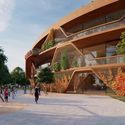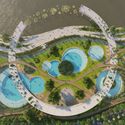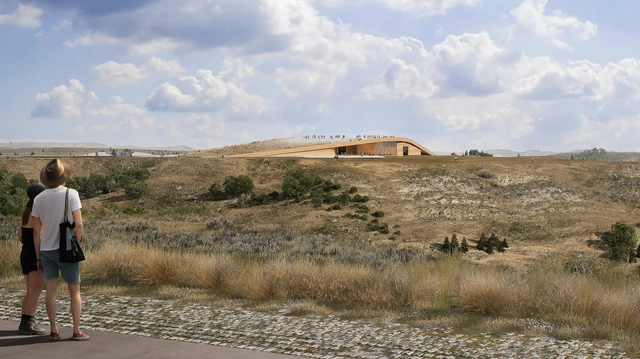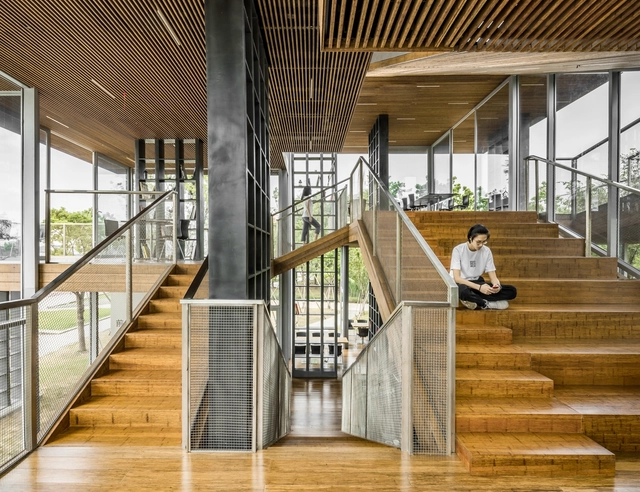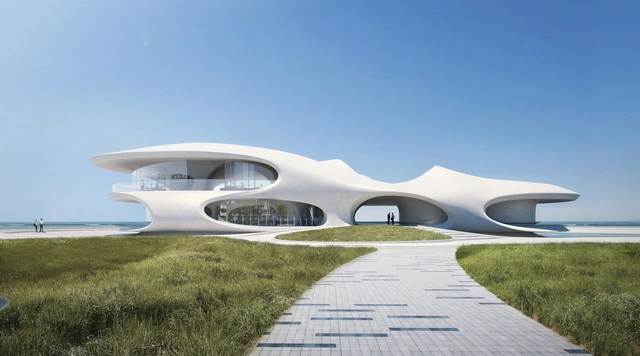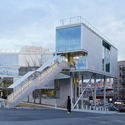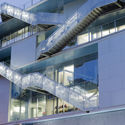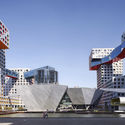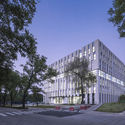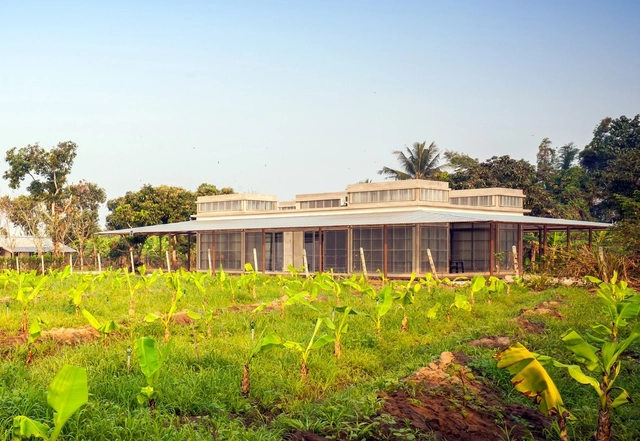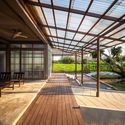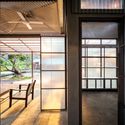
MAD Architects has just released its design for the Wormhole Library, a curved structure that serves as a multi-functional building, allowing visitors to read, enjoy the sea views and attend open-air performances. Located on the coast in Haikou, Hainan Province in China, the “wormhole” pavilion is now under construction and is expected to be completed in 2021.
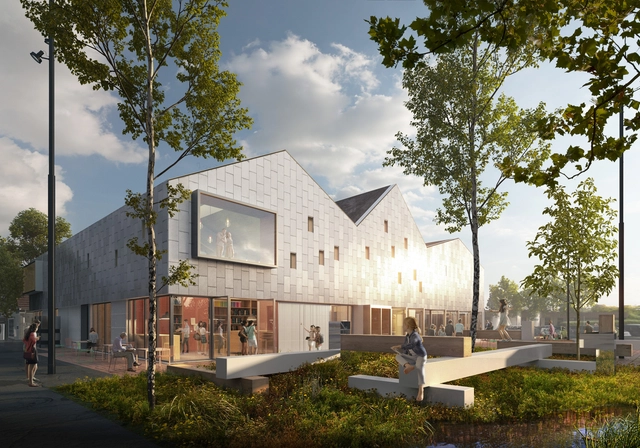
Courtesy of Christensen & Co Architects with Primus Architects and STED cph
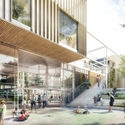
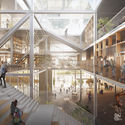
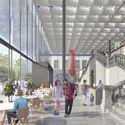
Christensen & Co. Architects has designed a brand new culture house and library for the small town of Viby, in Denmark. Conceived as a sort of living room for the city, the project will be a “place for lingering and staying”, introducing social zones and an open architecture to the urban space.
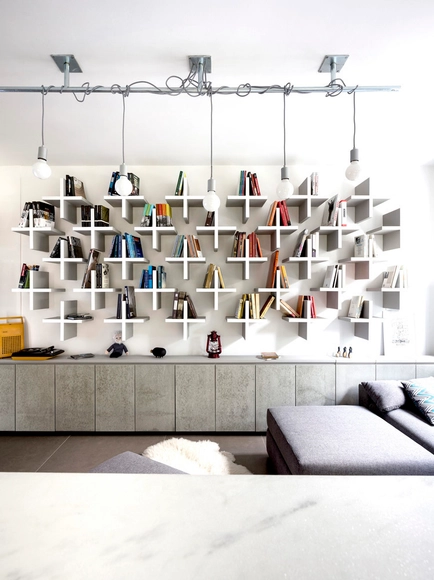
Sharing your shelf is, in a way, sharing yourself. Every element —from the titles you choose to the way you organize them— says something about your personality and your interests.
https://www.archdaily.com/897991/home-library-architecture-smart-and-creative-bookcase-designsArchDaily Team
Throughout human history, the movement of populations–in search of food, shelter, or better economic opportunities–has been the norm rather than the exception. Today, however, the world is witnessing unprecedented levels of displacement. The United Nations reports that 68.5 million people are currently displaced from their homes; this includes nearly 25.4 million refugees, over half of whom are under the age of eighteen. With conflicts raging on in countries like Syria and Myanmar, and climate change set to lead to increased sea levels and crop failures, the crisis is increasingly being recognised as one of the foundational challenges of the twenty-first century.
While emergency housing has dominated the discourse surrounding displacement in the architecture industry, it is critical for architects and planners to study and respond to the socio-cultural ramifications of population movements. How do we build cities that are adaptive to the holistic needs of fluid populations? How do we ensure that our communities absorb refugees and migrants into their local social fabric?
This World Refugee Day, let’s take a look at 5 shining examples of social infrastructure from around the world–schools, hospitals, and community spaces–that are specifically directed at serving displaced populations.
Focusing on competition entries, this week’s curated selection of the best-unbuilt architecture from our readers' submissions, highlights projects from across the globe, presented part of international contests. Some are winners, some are not but all of the featured schemes have an intriguing conceptual approach, and a different story to tell.
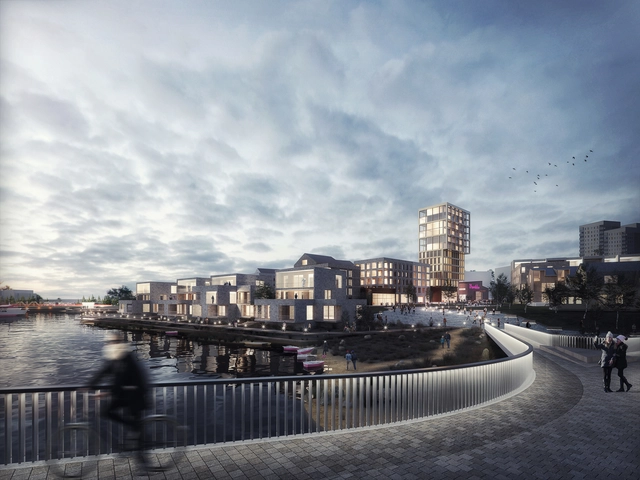
Tackling diverse programming, the entries include an urban public housing proposal in South Korea, the Dianju Village Library in China and a new Future-Oriented Neighborhood in Finland combining urban and sustainable living. Moreover, the article showcases rare and unconventional functions like a hospital for psychiatry & neurological diseases in Turkey and an intervention on a famed Oscar Niemeyer site.
This week’s curated selection from our readers’ submissions focuses on some of the essential components of our present-day cities.
Featuring the best-unbuilt architecture, the article highlights adaptive reuse projects that transformed abandoned warehouses and factories, a street design in Luxembourg, a regenerative master plan in Seoul, and an emergency family accommodation to temporarily house those in need. Moreover, the roundup distinguishes a library in South Korea and an extension of a museum in Helsinki, because the cultural aspect is an integral part of our urban environment.
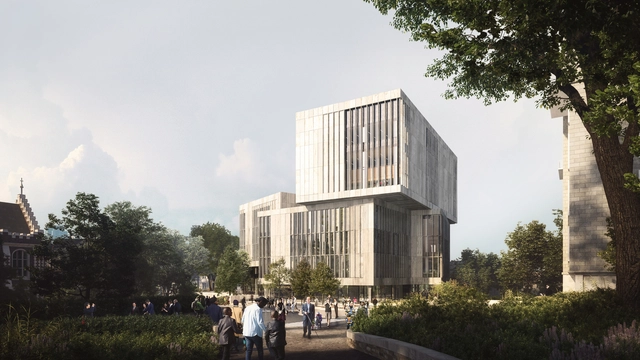
Planning application has just been submitted for a new landmark library, for the University of Bristol. The latest addition, designed by a collaborative team formed by Schmidt Hammer Lassen, Hawkins\Brown and BuroHappold, is set to transform the heart of the campus.
1.City Main Library Gwangju: This competition is aimed to search for designs of a public library, which will serve as a main Library in Gwangju, Republic of Korea.
2.Schedule and Eligibility: The competition will be conducted for 74 working days from November 25, 2019 to February 5, 2020, and Korean and international architects can participate in it. 1)Preliminary Announcement: November 14, 2019 2)Announcement :November 25, 2019 3)Registration: November 25, 2019 to December 11, 2019 4)Entry Submission:February 7, 2020 5)Main Jury: February 12, 2020
3.Winners: 4 winning proposals will be selected. Competition winners will be a warded as follows: 1)1st Prize- Design Development and Construction Document priority rights
Tiny Library 2019, is to rethink and re imagine the idea of Library as a 21st century self-learning and educational incubation space.
As the world is continuously transforming and expanding, the amount of data and information created every day is also increasing constantly. Human intellect today is expected to evolve at the same rate as our world to continue our journey into the future. Despite all the information, reading and self-learning remain the most powerful tools available to mankind to consume knowledge. Learning bolsters awareness, exposure and productivity, which in turn results into development.
Despite its importance, education is still inaccessible to many communities in remote locations around the world. Self-learning, especially through reading, is crucial for the society’s development.
Designed by Snøhetta in collaboration with Clark Nexsen, the new Main Library of Charlotte Mecklenburg Library reinterprets the space through a technologically-advanced approach and highlights the importance of this function in the community's daily life.
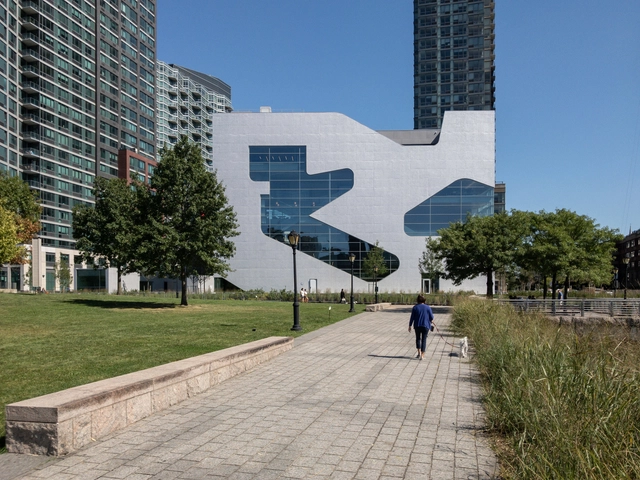
New York City now has three buildings by Steven Holl – Higgins Hall Insertion at Pratt Institute in Brooklyn (2005), Campbell Sports Center for Columbia University in Upper Manhattan (2013), and Hunters Point Community Library in Long Island City, Queens that will open its doors to the public on September 24th. The event coincides with publishing Holl’s new book Compression with the Library’s abstracted image on its cover; it is the fifth volume of the architect’s written manifesto, 30-years-in-the-making series by Princeton Architectural Press. The new building, the size of the nearby landmarked Pepsi-Cola red neon sign, is a robust concrete parallelogram distinguished by softly outlined multi-story glazed cut-outs. It sits prominently on a new public promenade just feet away from the East River, directly across the United Nations complex in Midtown Manhattan and the southern tip of the Roosevelt Island with its Franklin D. Roosevelt Four Freedoms Park memorial by Louis Kahn. The new building is at once an iconic reference point, visible from Manhattan’s East Side and the ferries, and although it took nine years to finish, its completion is a positive sign of New York’s commitment to public projects being designed by our best architects.
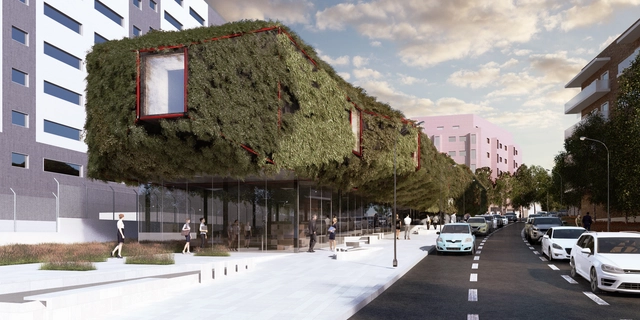
A Green Spaceship appears to have landed in Villaverde, Madrid, in design firm 3GATTI’s proposal for the new municipal library. The design for the landmark building employs the public’s curiosity to draw visitors in and create an iconic presence in the city. The library is split between two floors, both architecturally and conceptually. The ground level is transparent and open, meant to house the noisy, public aspects of the program; the upper floor is the architectural showpiece, floating above the ground and containing the more private, quiet study spaces.
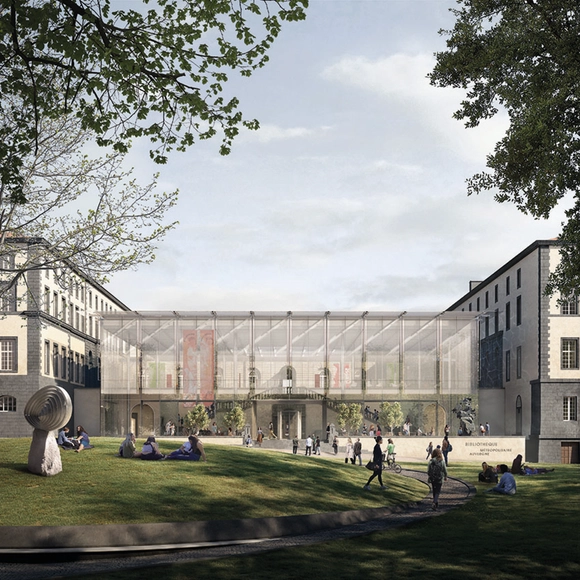
Learning Center of Université Lumière Lyon II. Image Courtesy of ALA Architects
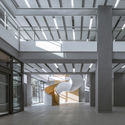
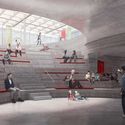
Finnish practice ALA Architects has won the competition to design the new Learning Center of Université Lumière Lyon II in France. The project will be the second major library building by the office behind the recently opened Helsinki Central Library Oodi, and it will be ALA's first French commission. The building will replace the existing library and showcase sustainable construction alongside new teaching and study methods.