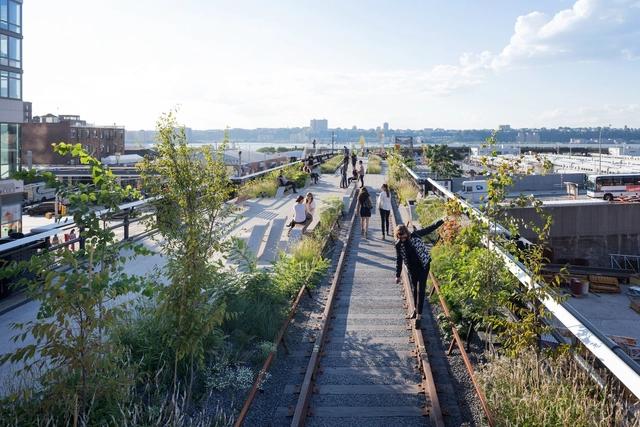
MKPL Architects Recent Winning Proposal for the Singapore Rail Corridor Revitalization. Image Courtesy of Norm Li for MKPL Architects
The President's Design Award, which honours Singapore designs and designers, has named its three Designers of the Year for 2015. Dr. Colin K. Okashimo (sculptor and landscape architect), Mr. Franklin Po (Principal of landscape architecture practice Tierra Design) and Mr. Siew Man Kok (co-founder of MKPL Architects) were selected from 111 nominations by a 14-member panel, which included British architect Richard Rogers.
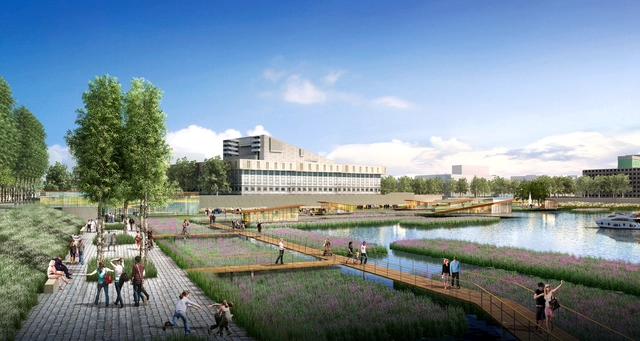
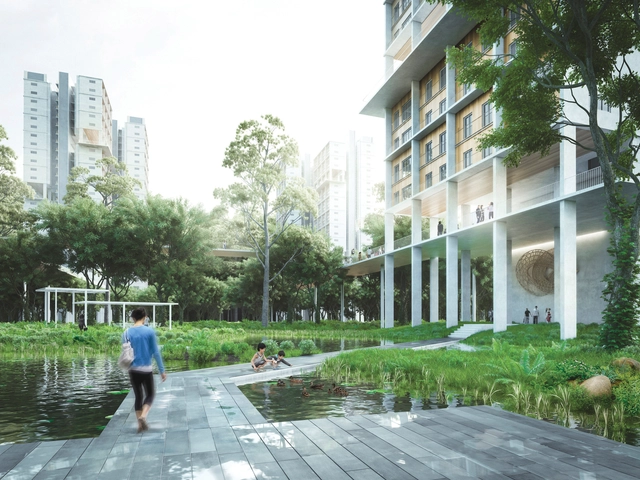
The waterscape in the precinct is one of its distinct characteristics, where residents are able to get in close proximity with different habitants.. Image Courtesy of Norm Li for MKPL/Turenscape Team
Korea Racing Authority (KRA) launches an international competition for the design of a Horse Park in Yeongcheon, Korea.
This one stage project competition in accordance with the UNESCO-UIA regulations has been approved by the UIA.
KRA intends to develop on a 1,474,883㎡ site "LetsRun Park Yeongcheon", a theme park about horses incorporating a racetrack that will hopefully become a local attraction. Its goal and purpose is to improve the overall image of horse racing and contribute to the horse industry, become tourist destination and attraction that enriches the local economy, and bearing a profit, provide an exemplary model for theme park development.
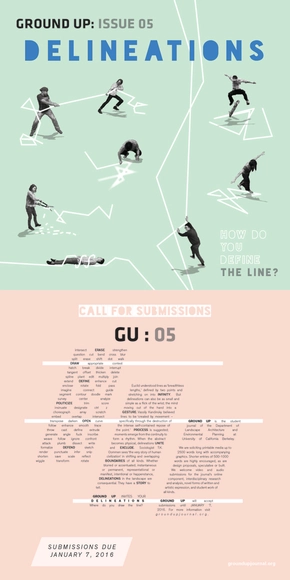
Euclid understood lines as ‘breadthless lengths,’ defined by two points and stretching on into infinity. But delineations can also be as small and simple as a flick of the wrist; the mind moving out of the hand into a gesture. Vassily Kandinsky believed lines to be ‘created by movement – specifically through the destruction of the intense self-contained repose of the point.’ Process is suggested; moments emerge from the continuity to form a rhythm. When the abstract becomes physical, delineations unite and exclude. Sociologist T.K. Oommen sees ‘the very story of human civilization’ in shifting and overlapping boundaries of all kinds. Whether blurred or accentuated, instantaneous or permanent, representational or manifest, intentional or happenstance, DELINEATIONS in the landscape are consequential. They have a story to tell.
Landscape architect Cornelia Hahn Oberlander has won the 2015 Margolese National Design for Living Prize for her impact on Canadian cities. The School of Architecture and Landscape Architecture at the University of British Columbia, who awards the annual $50,000 prize, chose Oberlander for her "breathtaking, poetic, unforgettable, charged with meaning, and above all, Modernist" designs that have made "outstanding contributions to the development or improvement of living environments for Canadians of all economic classes."
A 1,200 square-meter "test lab" of what aims to be the world's first underground park has opened its doors to New Yorkers. View a sneak peek above, shared with ArchDaily by The Spaces, to see just how the Lowline (as the project's known) plans to "plumb" sunlight into an abandoned trolley terminal beneath the city's Delancey Street in an attempt to transform the forgotten space into a sun-lit, subterranean public garden.
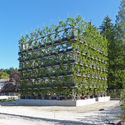
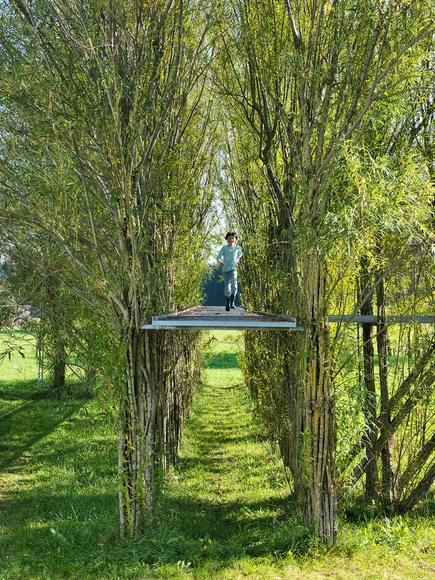
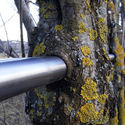
Timber buildings are regularly praised for their sustainability, as carbon dioxide removed from the atmosphere by the trees remains locked in the structure of the building. But what if you could go one better, to design buildings that not only lock in carbon, but actively absorb carbon dioxide to strengthen their structure? In this article, originally published by the International Federation of Landscape Architects as "Baubotanik: Botanically Inspired Biodesign," Ansel Oommen explores the theory and techniques of Baubotanik, a system of building with live trees that attempts to do just that.
Trees are the tall, quiet guardians of our human narrative. They spend their entire lives breathing for the planet, supporting vast ecosystems, all while providing key services in the form of food, shelter, and medicine. Their resilient boughs lift both the sky and our spirits. Their moss-aged grandeur stands testament to the shifting times, so much so, that to imagine a world without trees is to imagine a world without life.
To move forward then, mankind must not only coexist with nature, but also be its active benefactor. In Germany, this alliance is found through Baubotanik, or Living Plant Constructions. Coined by architect, Dr. Ferdinand Ludwig, the practice was inspired by the ancient art of tree shaping.
Meet the challenge – take part in the International Student Competition of the LE:NOTRE Institute Landscape Forum! The competition aims to support integrated and holistic approaches to the Akamas landscape through multidisciplinary student teams elaborating planning and design proposals at various scales.
Poster: 'Flower of Life' International Student Competition for Garden Design
Imagine future cities full of gardens with flower carpets, full of playing children, humming bees and fluttering butterflies. Gardens that help to create a healthy environment, cool cities, collect rainwater and are adapted to the local climate.
Russian-Chinese consortium Turenscape and MAP architects was announced as winners of a major competition to redevelop the Kaban lake system embankments in Kazan, Russia. Their winning concept, “Elastic band: The Immortal Treasure of Kazan” aims to establish a "continuous system of landscapes along the bank line, which will preserve the cultural and historical memory and become a basement for future stage-by-stage development."
"The water is turning into a real living treasure and heritage of Kazan," said the competition's organizer.
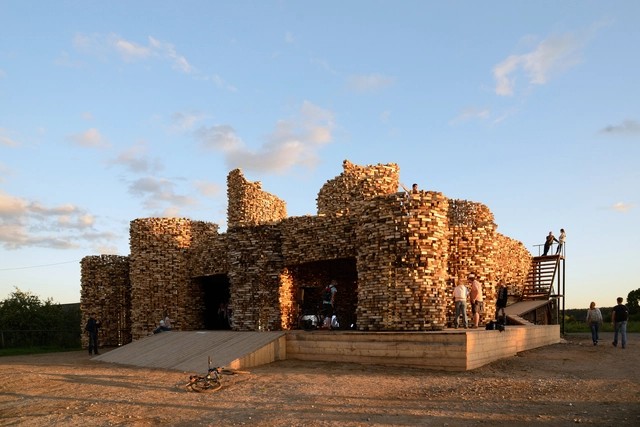
Russian artist Nikolay Polissky has completed yet another of his impressive, handcrafted installations. Located in Zvizzhi Village, in the Ugra National Park in Russia, Polissky’s newest creation—called SELPO, which stands for The Rural Consumer Association, in Russian—wraps around an abandoned soviet building, which used to house the village shop.
The project utilizes off-cut materials from Polissky’s previous work, which has ranged “from temporary pieces of landscape proportions, collectively created […] to public art works in city parks or sculpture parks […] in Europe and in Russia, as well as museum installations.”
Courtesy of HAEAHN Architecture and H Architecture
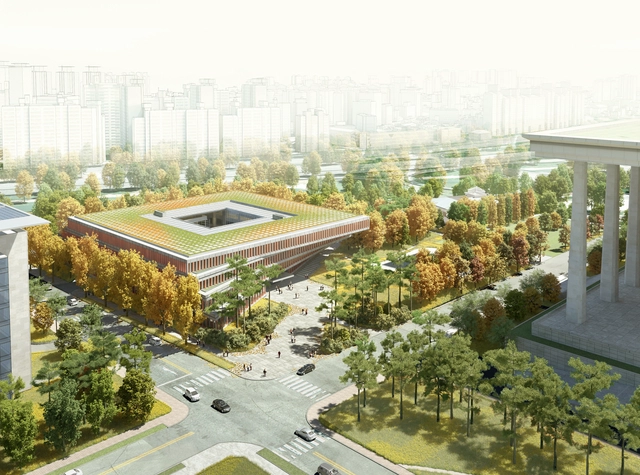
South KoreanHaeahn Architecture, in collaboration with New-York-based H Architecture, has won a competition to design the Smart Work Center and Press Center at the historic site of the National Assembly Complex in Yeoido, which is the largest island in the Han River in Seoul.
The 23,750-square-meter building will be flexible in its uses and support "legislative functions of the National Assembly." Overall it will “house five distinctive programs: a press center with a briefing room alongside a small broadcast facility with a workplace for reporters; a highly-equipped smart work center which serves as a remote workplace for commuting officers and Ministers for the government; supplementary office spaces; underground parking; and welfare facilities which will include a restaurant, a banquet hall, and a retail component that will be accessible to both government workers and the general public.”
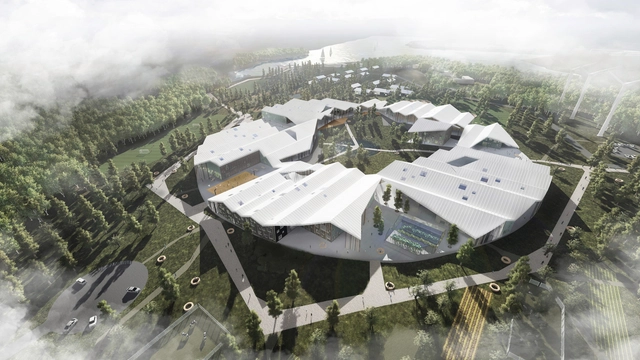
Denmark-based architectsCEBRA have won a competition to design a Smart School educational complex in Irkutsk, Russia. Their winning design, dubbed Smart School Meadow, fulfills the competition’s call for a new typology of school that combines architecture and landscaping into a learning environment and local community center.
The design integrates buildings and landscape together through a ring of individual structures connected by a large, ridged rooftop. With this roof, spaces between the buildings can be used as multifunctional, semi-covered learning spaces, activity zones, and flow areas, all of which diffuse into the central and outer landscaped areas.
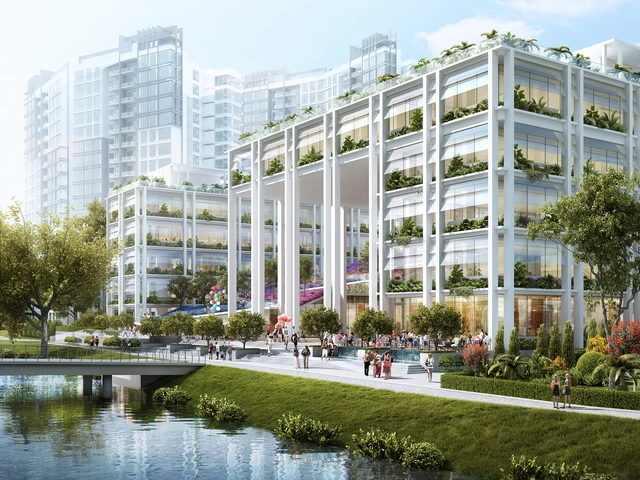
London-based Serie Architects, in collaboration with Multiply Architects of Singapore, has unveiled its winning design for a Neighbourhood Centre and Polyclinic in Punggol, Singapore. Called Oasis Terrace, the project will become the new center for public amenities for Singapore’s Housing & Development Board in Punggol.
The design spans 27,400 square meters, of which 9,400 square meters will be comprised of healthcare facilities, while the rest will include “communal gardens, play spaces, gyms, retail spaces, dining, [and] learning spaces,” all of which is expected to come together into “a new generation of integrated development.”
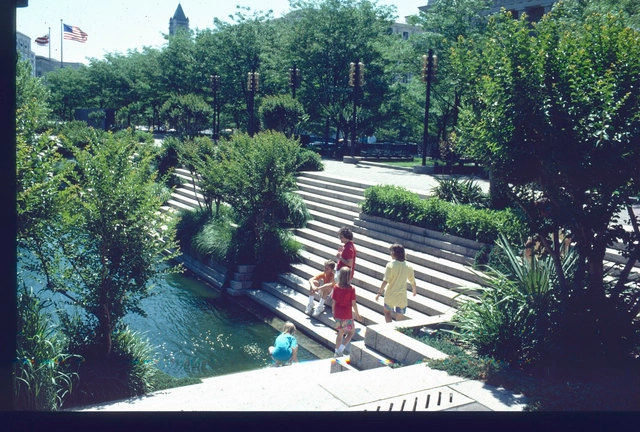
The competition, hosted by the United States Federation for the Commemoration of the World Wars and sponsored by the World War I Centennial Commission, received over 350 entries. While these entries did generally follow the guidelines they were given, most of the designs incorporated the complete demolition of the park.
Now, because the park is one of the most significant works of Modernist landscape architect M. Paul Friedberg, with planting plan designs by Oehme, van Sweden & Associates, landscape architecture organizations like The Cultural Landscape Foundation are speaking up against the possibility of demolition.
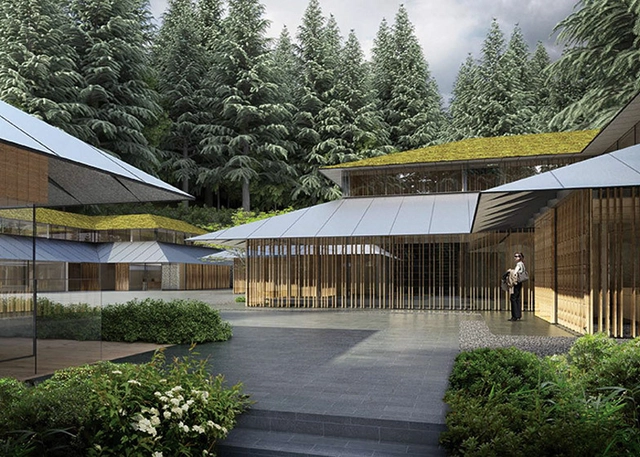
Plans have been unveiled for Kengo Kuma's first public commission in the US. The Portland Japanese Garden has commissioned Kuma to design a new "Cultural Village" to accommodate the garden's growing popularity.
Based off the Japanese tradition of monzenmachi (gate-front towns), where activity exists just outside the gates of shrines and cultural sites, the village will provide a "free-flowing" courtyard space for events and educational activities, as well as multi-purpose classrooms, galleries, a library, tea cafe, and more. In addition to this, a new visitor entrance will be built on an existing site at the bottom of the hillside site on Kingston Avenue, just on the outskirts of downtown Portland.
"The Portland Japanese Garden's careful growth is a very important cultural effort, not only for Portland but also for the US and Japan," said Kuma in a press release.
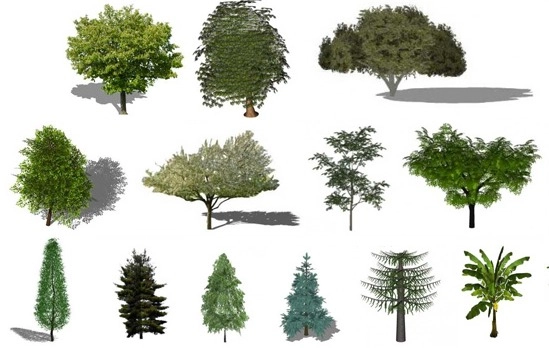
Are your animated shrubs looking a little tired? Has your digital flora dried up? Are you looking to remedy perennial render problems? Look no further: we've found a solution that will truly make your renders bloom. With the help of a botanist, OneCommunity, an open source software website, has released a list of the most realistic plants optimized for SketchUp. The archive includes everything from palm trees to an array of water and bog plants, bamboo shoots, and tropical evergreen trees. The best part? It's free.
It's time to breathe new life into your wilted renders. Find out how to make yours blossom after the break!
For most people, spending time outdoors in well-designed public spaces is one of the highlights to city life. Why, then, do we spend comparatively little time and money on designing them? In this article, originally posted on Metropolis magazine as "Designing Outdoor Public Spaces is Vital to the Future of our Cities" Kirt Martin, the vice-president of design and marketing at outdoor furniture designer Landscape Forms, makes the case that landscape architects and industrial designers working in the public realm are key for our cities' health and happiness.
All of us treasure our time in outdoor spaces. So why do we devote so little of our attention to their design?
As a designer in the site-furniture industry, I am always curious about the value people place on the outdoors. I like to ask people I meet to describe a great city like New York, Chicago, or Paris and what they most remember about being there. Or I ask them, if they won $25,000 to spend on a dream vacation, where they would go and what they would do. Their fond memories of a celebrated city or an escape into the wild often have little in common, except for one thing: Their most memorable and meaningful experiences almost always revolve around the outdoors.
https://www.archdaily.com/771035/why-landscape-designers-will-be-key-to-the-future-of-our-citiesKirt Martin



.jpg?1445550937 "Test field with inosculations. Image © foto chira moro")