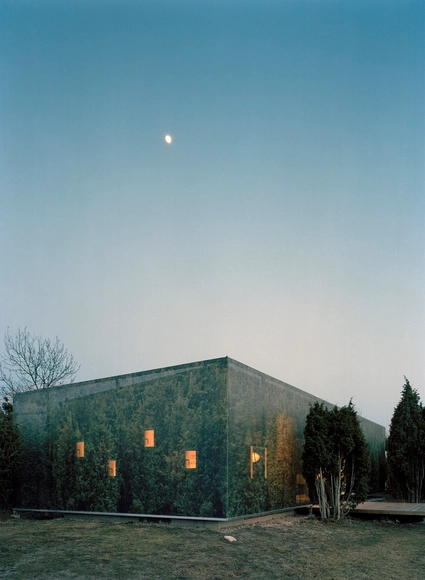
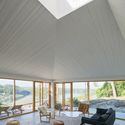
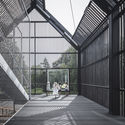
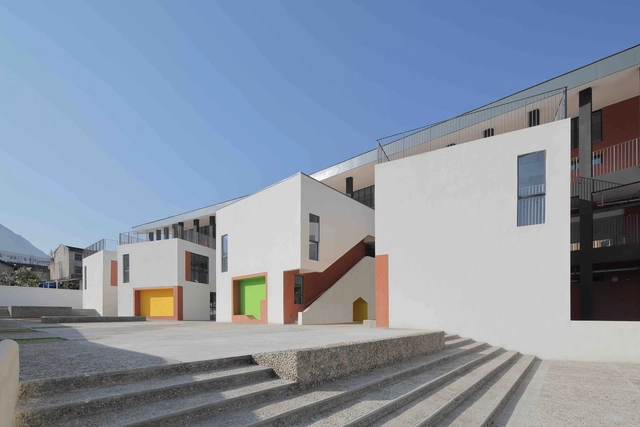
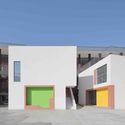
Often informed by its harsh climate and stunning landscapes, Nordic design, specifically architecture, has a unique relationship with nature. Photographers of Nordic architecture have benefitted from studying this close connection in their photos that experiment with capturing light, innovative materials, and landscape to create a compelling composition. Below is a selection of images of both public and private architecture by prominent photographers such as Pasi Aalto, Bert Leandersson, Mika Huisman and Åke E: Lindman.
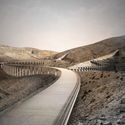
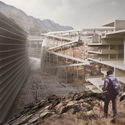
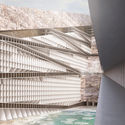
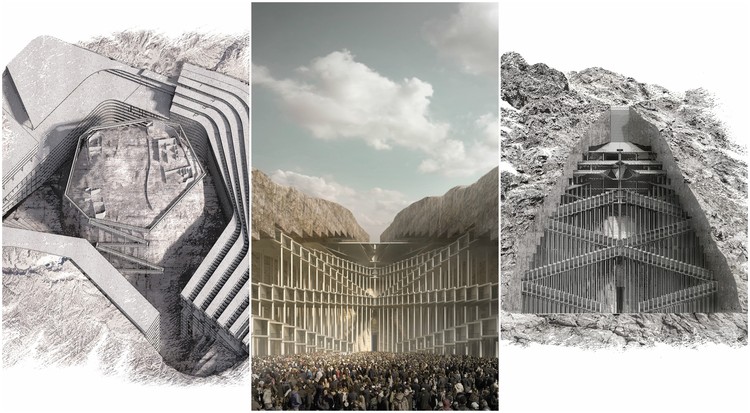
In a time of what seems to be ever-increasing religious and political conflict, Bartlett students Akarachai Padlom, Eleftherios Sergios, and Nasser Alamadi instead chose to focus on collaboration between religions in their thesis project entitled “Faith Estates,” which outlines a new method of mass religious tourism. In an area around the Dead Sea characterized by disputed boundaries and conflicting ownership claims, the group aims to reimagine the relationship between the world’s three monotheistic religions, but also to rethink the relationship between religion, tourism, and the landscape. The design consists of large-scale excavation sites which form tourist resorts along a pilgrimage route with the goal of forming a mutually beneficial relationship.
Now in its 20th year, Berlin-based firm TOPOTEK 1 has been an enterprising player in the field of landscape architecture and public design, with a portfolio of projects that emphasize the social and formal roles that landscape assumes within built work. Largely responsible for the firm’s success this far is the man at the helm, Martin Rein-Cano, who has served as one of the founding partners since 1996.
https://www.archdaily.com/873883/martin-rein-cano-explains-the-importance-of-dynamism-in-landscape-architectureOsman Bari
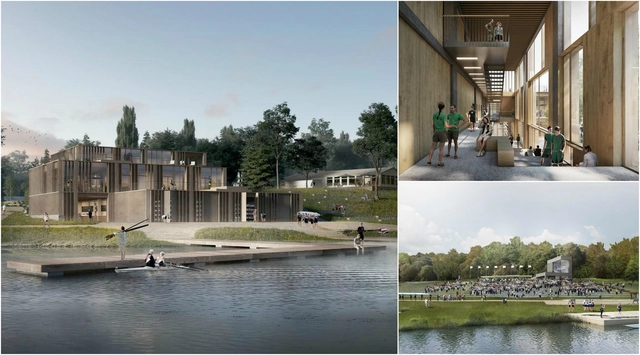
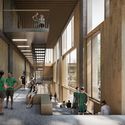
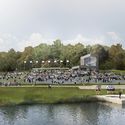
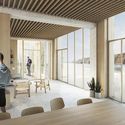
Denmark-based AART architects have been selected to design the country’s national rowing stadium, seeing off strong competition from prominent firms such as BIG and Kengo Kuma. Situated upon Bagsværd Lake on the outskirts of Copenhagen, the scheme seeks to allow the sporting elite and broader public to form a close interaction with picturesque natural surroundings.
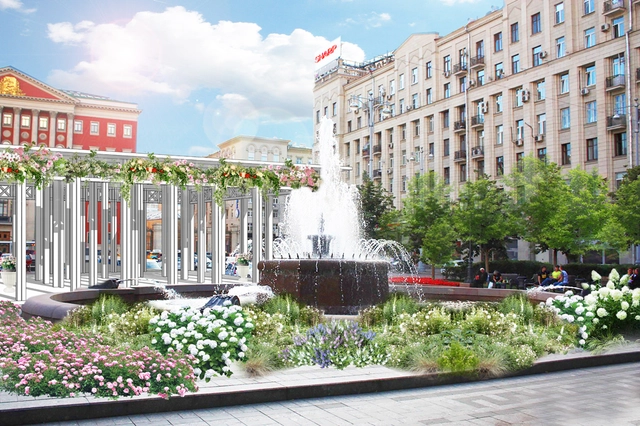
The Open International Urban Landscaping and Design Competition is a part of the “Moscow.Flowers.Sweets” Festival. Participants are offered to suggest solutions for landscape and floral compositions to improve Moscow urban spaces in the city centre and its outskirts.
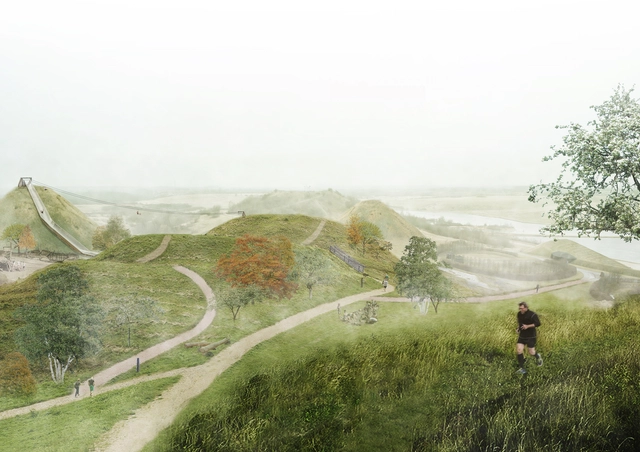
Danish-based landscape architects SLA have won a competition to develop The New Hedeland Nature Park – a 1,500-hectare cultural landscape near the historical city of Roskilde, Denmark. The winning proposal challenges the common idea of the conventional “culture house” as it is moved out in the open without walls and roofs, making participating accessible for everyone. The winning design also seeks to complement the area's unique nature and 10,000 years of cultural history into one coherent concept, creating new space for co-creation, interaction, and awareness.
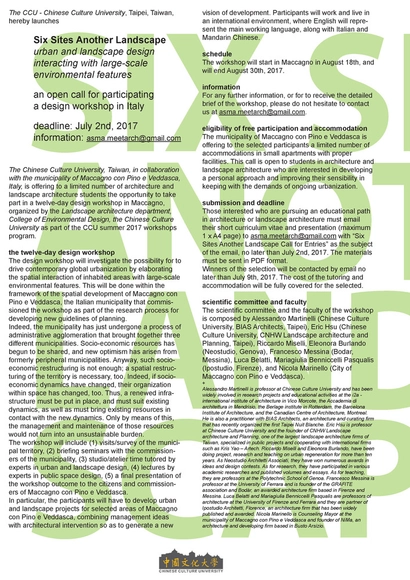
The Chinese Culture University, Taiwan, in collaboration with the municipality of Maccagno con Pino e Veddasca, Italy, is offering to a limited number of architecture and landscape architecture students the opportunity to take part in a twelve-day design workshop in Maccagno, organized by the Landscape Architecture Department, College of Environmental Design, the Chinese Culture University as part of the CCU summer 2017 workshops program.
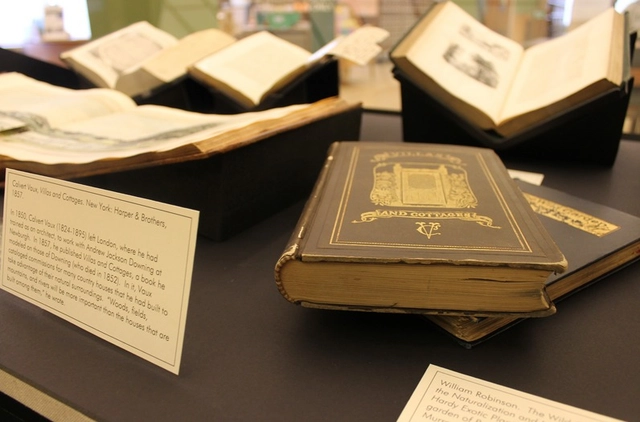
Buffalo and Erie County Public Library of Buffalo, New York, has recently opened a new exhibit at their Central Library titled Building Buffalo: Buildings From Books, Books From Buildings. The exhibit will feature a large selection of rare, illustrated architectural books from the Library’s collection dating from the fifteenth century to the mid-twentieth century. The bonus for those who are geographically distant from Buffalo is that, as part of the exhibit, the Library has also made dozens of historical architecture books available online, completely digitized and free to the public.
The design of OMA and Mia Lehrer+Associates’ park at First and Broadway (FAB) in Los Angeles has received a green update, reports LA Downtown News, following a community feedback session in which residents voiced their desire to add additional plantings to the scheme.
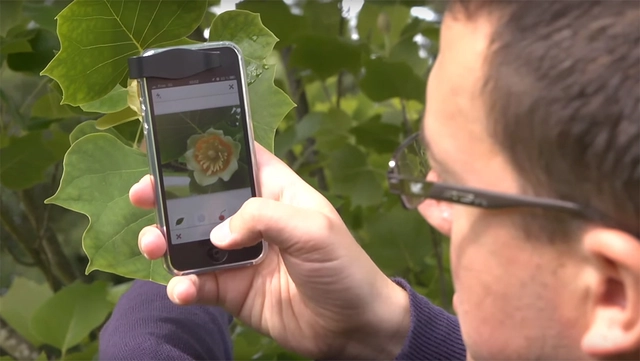
You've probably used or heard of the app Shazam, used by millions of people to identify songs and song lyrics. A team of researchers from Cirad, IRA, Inria / IRD and Tela Botanica Network - had the idea of developing a similar application, but instead of identifying songs, the application identifies plant species.
Pl@ntNet is a new tool that helps identify plants using pictures. Collecting data from a large social network that constantly uploads images and information about plant species, Pl@ntNet has a visualization software that recognizes the plant photographed and links it to its plant library.
The Waste Architecture is a new and relatively unexplored conceptual and design topic focused on the architecture for the environment and, more specifically, the architecture of major works related to Waste Management.
Videos
Graphic design: Delcan & Co Studio. Photo: Liz Ligon. Courtesy of the Design Trust for Public Space
Since our founding in 1995, the Design Trust for Public Space has solicited project proposals from government agencies, nonprofit organizations, community groups, and individuals through an open Request for Proposals (RFP). After three years since our last RFP—"The Energetic City"—and four projects later, we have now unveiled "Public for All: Rethinking Shared Space in NYC," an open call for project ideas to ensure New York City’s public realm remains truly public.
Founded in 1996 by Buenos Aires-born Martin Rein-Cano, TOPOTEK 1 has quickly developed a reputation as a multidisciplinary landscape architecture firm, focussing on the re-contextualization of objects and spaces and the interdisciplinary approaches to design, framed within contemporary cultural and societal discourse.
The award-winning Berlin-based firm has completed a range of public spaces, from sports complexes and gardens to public squares and international installations. Significant projects include the green rooftop Railway Cover in Munich, Zurich’s hybrid Heerenschürli Sports Complex and the German Embassy in Warsaw. The firm has also recently completed the Schöningen Spears Research and Recreation Centre near Hannover, working with contrasting typologies of the open meadow and the dense forest on a historic site.
https://www.archdaily.com/871052/topotek-1-s-martin-rein-cano-on-superkilens-translation-of-cultural-objectsOsman Bari
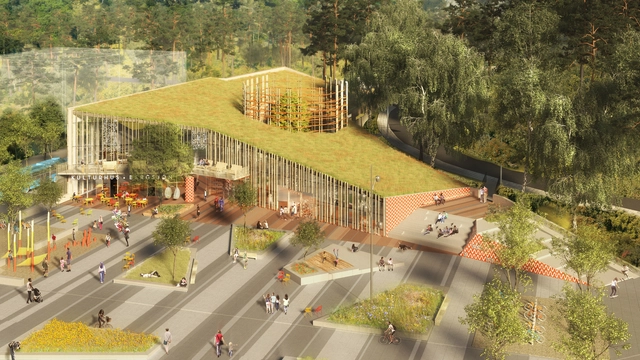
The Kulturkorgen emerges as an outcrop from the hills of Gothenburg. Image Courtesy of Sweco
Growing like an outcrop amongst the hills of Gothenburg, the Kulturkorgen by Swedish firm Sweco Architects offers the public an opportunity to watch, engage, and perform. The scheme is a result of an architectural competition for a new Culture House in the city, run in collaboration with Architects Sweden. The winning proposal, who’s name translates to ‘Basket of Culture’, acts as both a building and a square – a social arena where flexible interior spaces act in tandem with a generous public green landscape for recreation and gathering.
Enter LILA - Landezine International Landscape Award 2017 by May 26th
Landezine is calling professionals from the field of landscape architecture to submit entries for the second edition of LILA – Landezine International Landscape Award by May 26th, 2017.
Videos
Copenhagen Architecture Festival Summer School 2017
After the great success of last year’s Summer School in Aarhus, we are hosting another summer camp this year in Lemvig under the title “Landscape as Character.”
The CAFx Summer School 2017 will focus on the temporal nature and character of the Danish landscape. With reference to the 17 UN goals for a better world, we will shed light on the future, present, and past of the magnificent sceneries that make up Western Jutland.
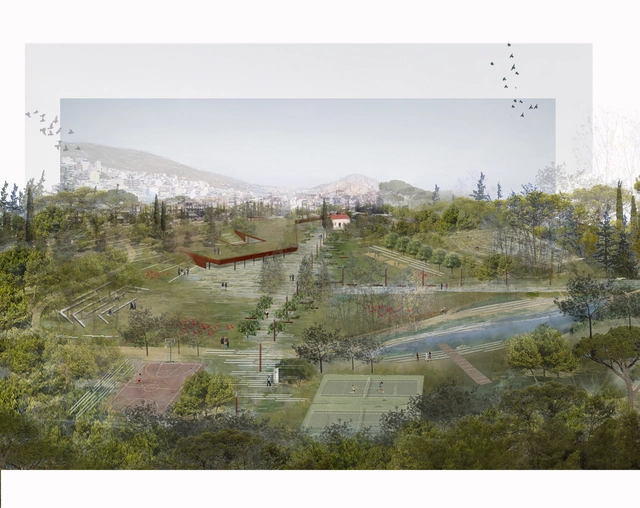
A competition for the transformation of a former cemetery in Nikea, just west of central Athens, has been won by Greek firm Topio7, with a proposal that creates a revitalized public park as a result of “a mutual osmosis between the park and the city”. A number of green buffer zones – “the elastic limit” – are utilized to frame a procession-like journey from the bustle of the city to the calm of the park’slandscape.
Highlighting the importance of the site’s previous use, the architects explain that the “main objective of the project is the creation of an open, accessible public space, a contemporary urban park with ecological-bioclimatic character, with special emphasis on the social dimension and the site’s memory.”