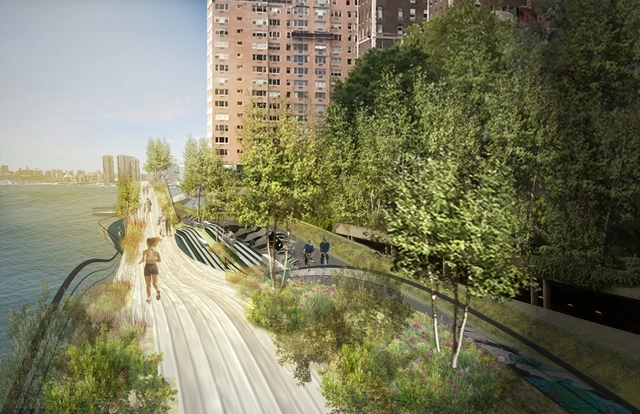
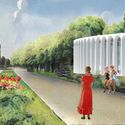
The city of New York is connecting all 32-miles of coastline with public amenities, piece by piece. To link the East River’s greenways, the interdisciplinary practice, wHY has submitted an RFP to the New York City Economic Development Corporation for the 1.1-mile long coastal stretch.
The landscape and urban design workshop as part of wHY -- wHY GROUNDS, has tackled the linear site, stretching from 53rd to 61st street, encompassing 1.72-acres of public space. The site is exceptional with its views to Roosevelt Island, the Queensborough Bridge, the Queens/Brooklyn waterfront and down to Lower Manhattan.
London Mayor Sadiq Khan proposed the challenge -- how does London become a designated National Park City-- and WATG, London-based landscape team, headed by Demet Karaoglu, accepted the challenge. In addressing the Mayor’s challenge, the team worked with Daniel Raven-Ellison, Guerrilla Geographer and Creative Explorer leading London’s campaign to become the world’s first National Park City.
Global Design Firm, Hart Howerton Announces 2018 Travel Fellowship Program
Global design firm, Hart Howerton, is now accepting applications for its 2018 Travel Fellowship Program. Open to undergraduate and graduate students in planning, architecture, landscape architecture or urban design, Hart Howerton’s Fellowship program offers students the advantages of professional office experience, collaborative interdisciplinary design and global travel and research. Fellows receive a competitive salary during their internship and a generous stipend for housing assistance along with living and travel support.
reTH!NKING team is delighted to introduce the new competition Sahara Eco House, The competition consists of the realization of a project that provides a new concept of housing in the existing environment based on the concepts of use of passive techniques that will provide a home with comfort and sufficient architectural quality.
European Urban Green Infrastructure Conference 2017
EUGIC 2017 Budapest—interactive, dynamic, exciting—urban green infrastructure leaders share nature-based solutions for cities. Global practitioners, local experts, projects from Europe and around the world.
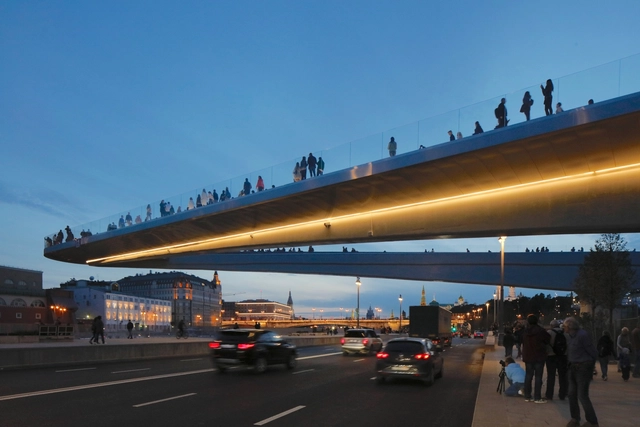
As part of the series of new urban developments sprawling up in Moscow, Zaryadye Park is the latest to open this month in a bid to improve the city’s green space. Commissioned by Moscow Chief Architect, Sergey Kuznetsov, an international consortium led by Diller Scofidio + Renfro in collaboration with Hargreaves Associates and Citymakers has designed this new public space that encourages integration and celebrates the amplitude of regions across Russia by artificially emulating each of their climates: the steppe, the forest, the wetlands and the tundra.
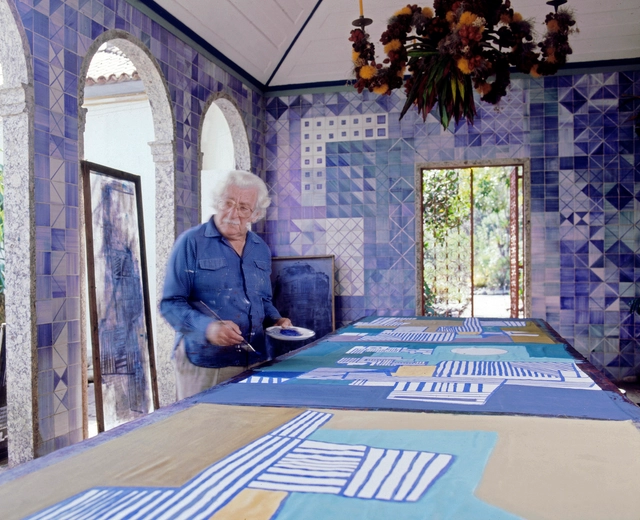
There wasn’t much in the way of art that Roberto Burle Marx couldn’t do. He was a painter, print-maker, sculptor, stage designer, jeweler, musician, tapestry-maker and one of the leading landscape architects in the 20th century. Marx’s passion for art, in all forms, strengthened his ability to design landscapes.
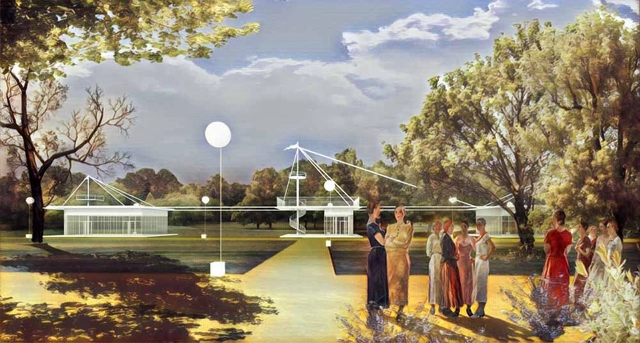
Kleinewelt Architekten in partnership with Citizenstudio / Gorozhane Group, created a re-design proposal for the Northern River Boat Station Park, also known as the Park of Five Seas, in Moscow. Built in the 1930’s, the current park is supposed to act as the city’s gateway to the five seas: the White, Baltic, Black, Azov, and Caspian Sea. However, the park is removed from city life and separates Moscow from it’s historic waterways.
Adding a plant makes any space instantly cozier. No need to have a large balcony to grow them, there are many species that develop well in living rooms, kitchens, and even bathrooms, with little maintenance as well as space efficient. The vases used also add to the composition of well-decorated environments. Flowers add color and diversity to all environments, but it is worth mentioning that species that do not produce flowers do less photosynthesis and therefore require smaller amounts of sunshine and are therefore more suitable for indoor cultivation. It is also important to note that popular names can be quite different, so you should always pay attention to its scientific names when choosing your species.
Below, we selected 12 ornamental plants ideal for indoor cultivation.
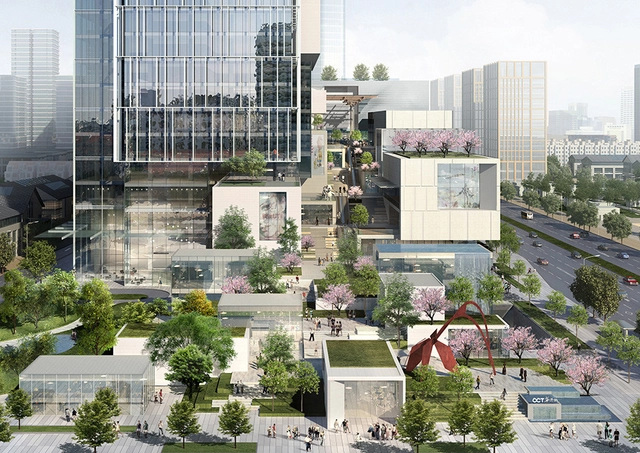
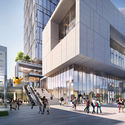
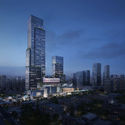
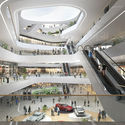
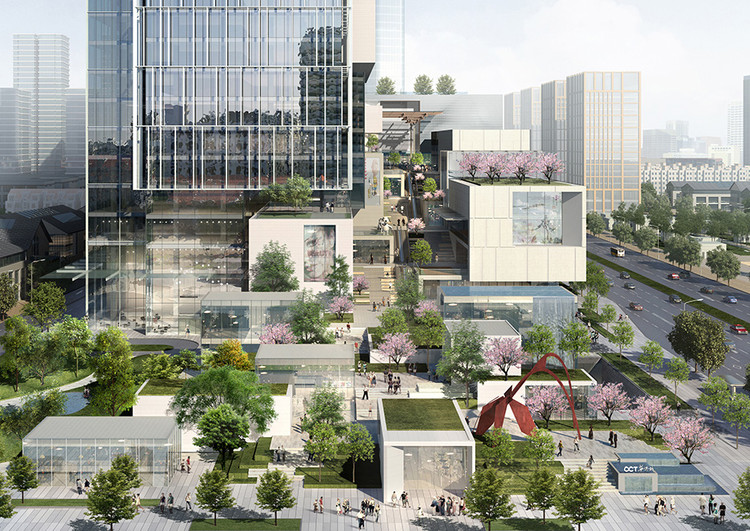
After winning a recent international design competition, EID Architecture out of Shanghai aims to redefine high-density mixed-use development in Asia through their design for the OCT Xi’an International Center (OXIC) in Xi’an, China. The architects consider their approach an exploration of vertical urbanism; the project consists of a 320-meter tall tower for offices and a boutique hotel, a 220-meter tall apartment tower, and a 12-floor podium full of retail and entertainment spaces. Visualized as an icon and cultural landmark, the design is strategically organized horizontally and vertically to create a vibrant, permeable urban center.
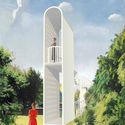
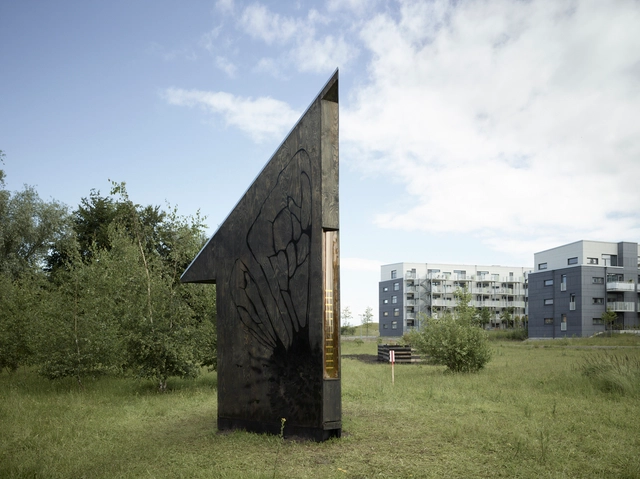
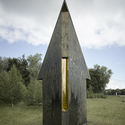
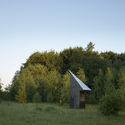
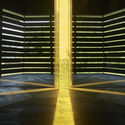
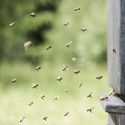
Constructed as part of Agrikultura—a triennial of public artworks and urban interventions in Malmö, Sweden—this installation, described by the designers a "maquette of a monument to the honeybee", is in fact home to an entire colony. It references—by design—the mysterious elements of 'bee orientation': verticality (gravity), geometry (the cell structure of the beehive), and the position of the sun relative to the hive. The project is, on the one hand, "a potential memorial for the bees" while, on the other, "a celebration of the sun on which all life depends."
Be seen by 1,000,000 A|N readers and Members of the A/E/C Design Community! Our Fifth Annual Best Of Design Awards is a unique project-based awards program that showcases great buildings and building elements.
At times, Landscape design lacks proper consideration or its overlooked within architecture, as a result of current but preconceived notions within architectural practice and education that privilege building over site, or the constructed over the existing. While at face value, landscape is treated as an abject and constant entity of sorts, the reality is that it possesses a layered complexity of patterns and ecosystems, much of which is increasingly impacted by our own actions, more significantly than what meets the eye.
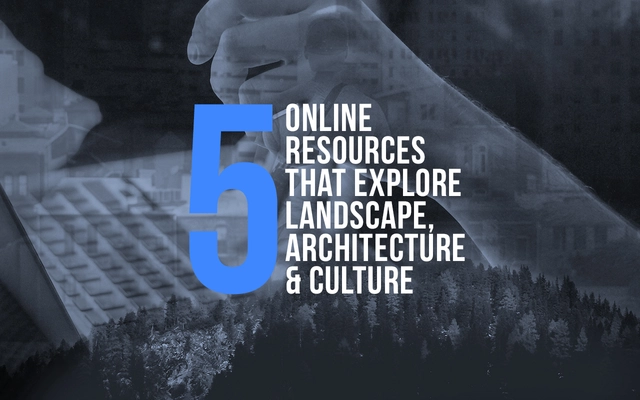
At the same time, the definition of landscape is constantly evolving to encompass a greater number of influences and factors. We have cultural, built and ecological landscapes, which influence one another and come about as a result of the intersection between the architecture and the environment that we are presented with. As a result, it is important to view terrain in a more holistic light, acknowledging its ecological underpinnings and well as the anthropological effects it is subject to, both physically and theoretically. Here is a list of five online resources, which investigate the interdisciplinary nature of landscape design and its relation to architecture and culture.
https://www.archdaily.com/875853/5-online-resources-that-explore-the-intersection-between-landscape-architecture-and-cultureOsman Bari
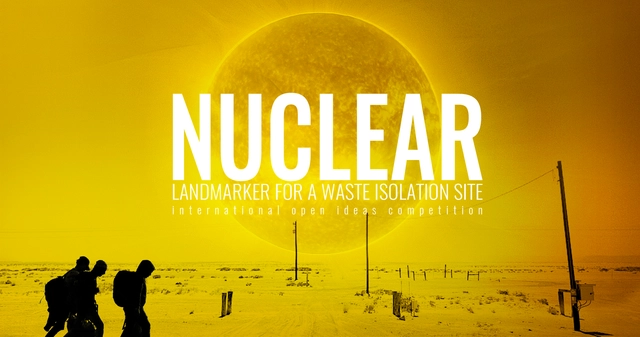
How do we design architecture with a message that could endure for millennia ?
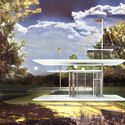
Since the Cold War, one of the most challenging and urgent tasks facing governments around the world has been the disposal of transuranic nuclear waste. As a by-product from nuclear weaponry production, transuranic waste is not only harmful, but also boasts a formidable decay process lasting thousands of years. To address this issue, millions of barrels of highly radioactive waste have been buried in repositories deep beneath the earth’s surface. One such disposal site is the Waste Isolation Pilot Plant (WIPP) in New Mexico, United States. To ensure public safety, it is imperative that the site remain undisturbed for the duration of the waste’s decay process.
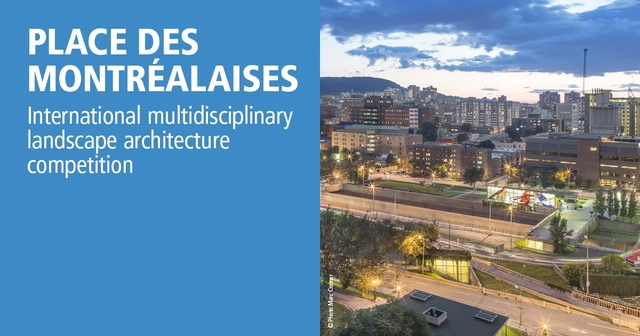
International Multidisciplinary Landscape Architecture Competition - Photo credit: Marc Cramer
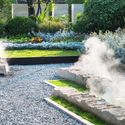
The Ville de Montréal (city of Montreal) wishes to source the most innovative and creative ideas for the permanent construction of Place des Montréalaises, a new public space adjacent to Champ-de-Mars métro station, including a pedestrian overpass.
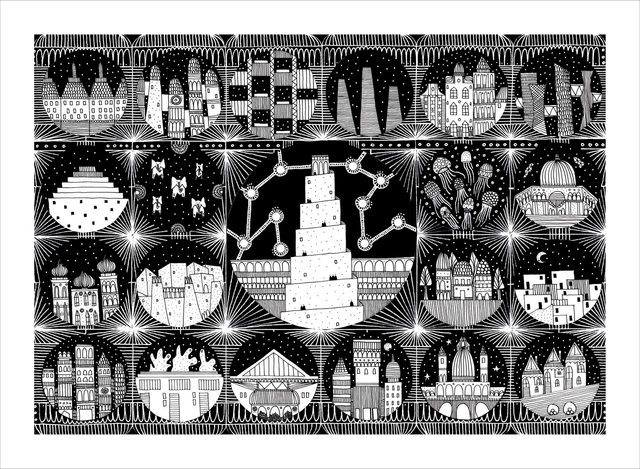
Ah, Invisible Cities. For many of us, Italo Calvino’s 1972 novel reserves a dear place in our libraries, architectural or otherwise, for its vivid recollections of cities and their curiosities, courtesy of a certain Marco Polo as he narrates to Kublai Khan. And while the book doesn’t specifically fit the bill in terms of conventional architectural writing, it resists an overall categorisation at all, instead superseding the distillation of the cities it contains into distinct boundaries and purposes.
For though there is a certain kind of sensory appeal that is captured in the details of places, the real beauty of Invisible Cities lies in the masking of underlying notions of time, identity and language within these details – a feat that is skillfully accomplished by both Marco and Calvino. With this in mind, here are three of many such principles, as revealed by the layered narrative of Invisible Cities.
https://www.archdaily.com/875409/three-principles-of-architecture-as-revealed-by-italo-calvinos-invisible-citiesOsman Bari