Courtesy of Jen Lewin, Photo by Brendan Burkett / The Pool
In the world of interior design, light serves as an essential medium, but light can also create immersive public spaces. While James Turrell, Olafur Eliasson, and Dan Flavin are celebrated for their transformative mastery of color, reflections, and luminous contrasts, it's crucial to note that the realm of light art isn't exclusively male-dominated. In response to the underrepresentation of female light artists, a refreshing and enlightening perspective emerges from the British lighting designers Sharon Stammers and Martin Lupton of Light Collective.
After founding the platform "Women in Lighting" their book "Women Light Artists," takes a bold step in introducing us to 40 creative women whose work radiates with responsive ingenuity and brilliance. The book offers a captivating spectrum of projects from interactive pools to the play of colorful daylight shadows dancing across a bridge in London, from the peaceful projection onto an iconic Berlin landmark to the vivid rainbow arching above Manhattan's skyline, each work embodies a unique dialogue between light and space. The luminous journey offers a valuable tribute to the power of female artists who, for far too long, have remained in the shadows.
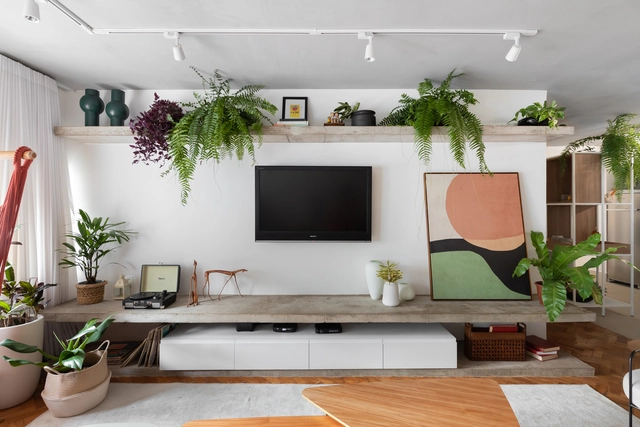
There are a series of multiple factors to take into account when deciding where to place a TV, including —but not limited to— the dimensions of both the furniture and the TV, image resolution, height, design, and so on.
In this article, we share some recommendations to achieve the comfort and well-being of the users avoiding possible problems of visual fatigue or unfortunate body postures.
VAIA - Brushed Durabrass (23kt Gold). Image Courtesy of Dornbracht
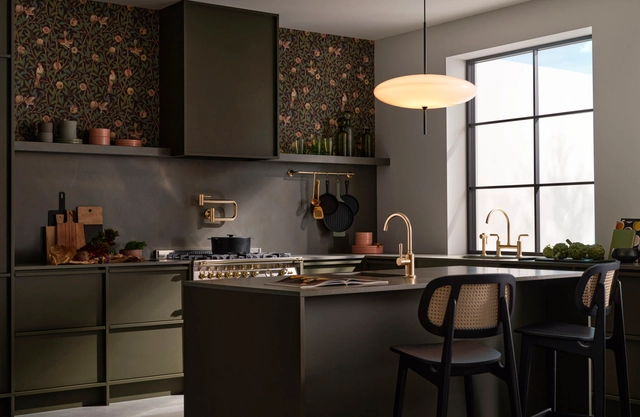
Arguably, kitchens are spaces in which the interplay of elements establishes a delicate balance in their composition; design, materials, and fittings, all of which collaboratively shape the interior environment. It is, therefore, not surprising that they often become the focus of ongoing discussions. The cultural and utilitarian role of kitchens in our lives is so important that their influence transcends mere architecture, becoming an object of artistic and historical exploration. In this way, both kitchens and the elements that comprise them have evolved and changed in style—from the robust kitchens of the 19th century to the innovations that originated in the Frankfurt kitchen in the 20th century.
The domestic landscape can transform on a daily basis, and fittings are no exception as they adapt to changing stylistic influences and needs. Today, kitchens incorporate both, traditional and contemporary elements within the same space, creating a language that connects and seamlessly transitions between these influences, thereby enhancing one another. In this context, Dornbracht has conceived VAIA, a series of fittings developed by Sieger Design, which fuses tradition and modernity in contemporary kitchens through fine lines, stylized silhouettes, and flowing transitions.
https://www.archdaily.com/1006333/classic-and-avant-garde-kitchen-fittings-that-balance-tradition-and-modernityEnrique Tovar
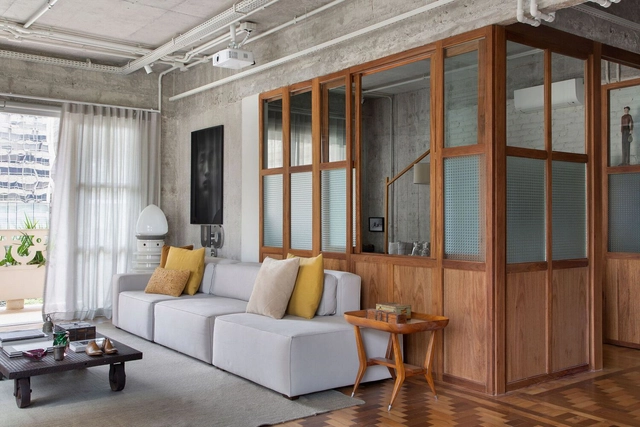
Today, we are increasingly aware of the environmental harm caused by building with concrete. One approach to using it more sustainably is to repurpose existing buildings, exposing their structural elements and integrating concrete into the surface. While concrete can sometimes give off an austere or overly cold vibe for a residential space, wood provides an alternative to soften this impression, transforming what might seem industrial into a warm and inviting home environment. By doing so, they can impart distinct qualities to the same space through the interplay of their textures and colors, evoking different sensations in occupants. There are various ways to explore the interaction between these materials, and we illustrate some of these possibilities through six Brazilian apartment examples.
Whether it’s a guilt-driven effort to reduce one’s own carbon footprint, an economy-inspired reduction in energy bills or simply taking advantage of a government incentive scheme, sustainable construction, and design choices are not only being made by the most eco-aware amongst us, but now by anyone with an eye on both the current cost of energy and the future cost of its obsolescence.
Whatever the motivation, as we desperately attempt to reduce our self-destructive reliance on fossil fuels, our homes and buildings are gradually turning their backs on gas – one of the final hurdles standing between us and a carbon-neutral home. These alternative systems and appliances run on renewable electricity instead, breaking our reliance on emission-causing gas-dependant products and using innovative electrical technology to improve them too.
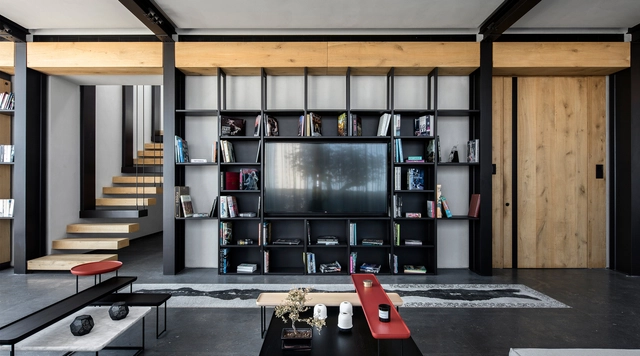
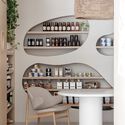
Shelves are incredibly versatile furniture items that are vital in organizing, decorating, and maximizing efficiency in various spaces, including homes, businesses, and industries. Crafted from a wide range of materials and available in numerous designs, shelves enhance compact environments by adding flexibility and easy access. With this in mind, we've compiled suggestions to elevate these ubiquitous solutions — temporary additions or integrated architectural features — into prominent elements within interior design.
In the realm of architectural design and interior furnishings, achieving a balance between form and function is a daily challenge that designers encounter. This interplay between utility and aesthetics has not only evolved over time but also involves a constant exchange of styles and production methods. Frequently, this interchange leads to standardization and generic designs, potentially causing a depletion of authenticity in the design process.
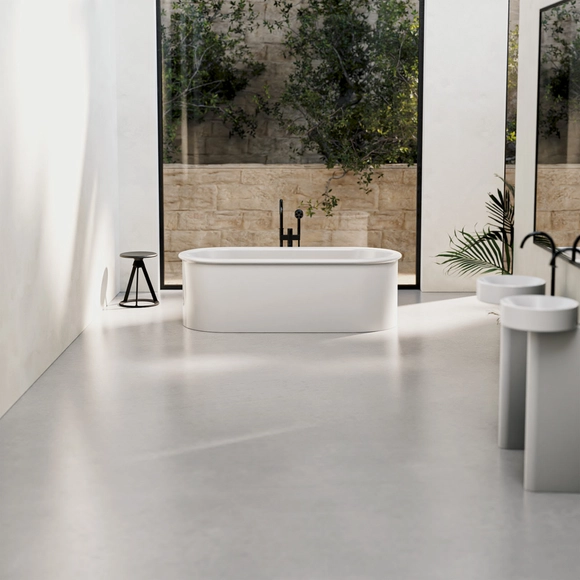
For this reason, in the contemporary era, designers are revisiting the fundamentals, rediscovering manual design processes that range from sketching to model making, all while embracing pure forms. Designers and manufacturers alike are embracing conscientious approaches to develop proposals that maintain simplicity in design while retaining a distinctive identity. In response to this, Bette, in collaboration with the British design studio Barber Osgerby, proposes the creation of minimalist-style bathrooms through the BetteSuno bathroom collection, stripping away complex shapes and seeking a light visual design.
https://www.archdaily.com/1005100/handcrafted-design-for-minimalist-washbasins-and-bathsEnrique Tovar
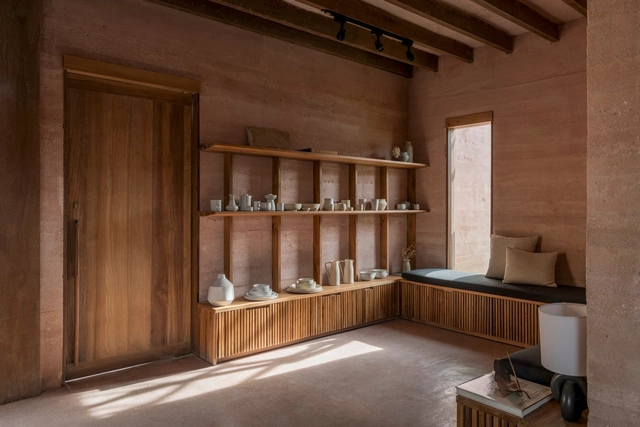
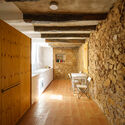
Earthy tones, from those used in traditional vernacular constructions to contemporary interior design trends, are instrumental in crafting inviting, organic, and harmonious environments. These tones encompass a spectrum of shades reminiscent of natural elements such as earth, clay, sand, and stone, fostering a deep connection with nature. They are readily available in various construction materials, paints, and coatings, allowing for captivating texture combinations. In the following section, you'll find inspiring projects that exemplify the potential of these color palettes.
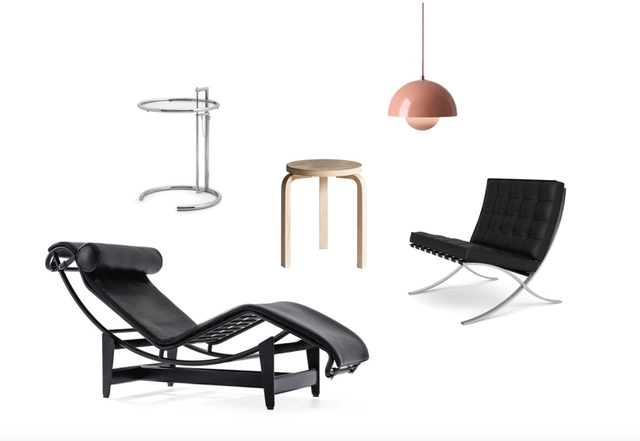
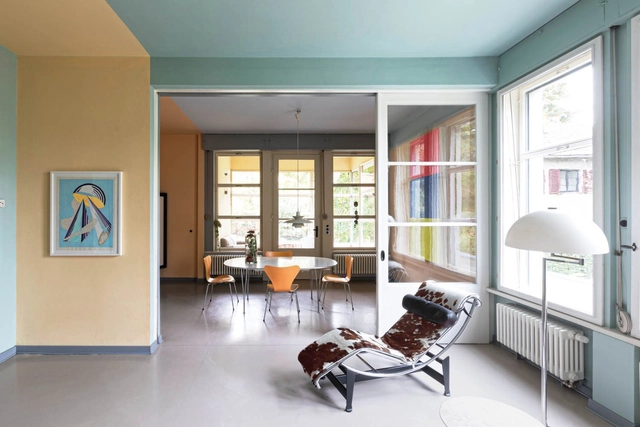
Big meeting: Le Corbusier's LC4 Chaise Longue meets Eileen Gray's Adjustable table, Alvar Aalto's Stool 60, Verner Panton's Flowerpot pendant and Mies van der Rohe's Barcelona chair
The 20th century is almost certainly the most important period when it comes to interior design icons. The list of protagonists who have contributed to making this era of design such a great one is certainly too long to truly do justice to all of them and their classic furniture designs. For this reason, here we present just a small selection of architects and designers such as Eileen Gray, Le Corbusier and Verner Panton, who have written design history over the past century, and which still continue to make an impression to this day – all of whom can be found on the Architonic Platform. Our journey includes extraordinary talents from all corners of the world: A look back at the furniture world of yesterday, which was then of tomorrow, and today still shines as brightly and timelessly as ever.
Circles, as a fundamental geometric shape, possess a captivating and harmonious quality that has been seamlessly integrated into architecture and design across various eras and styles. From subtle accents to bold focal points, the use of circles in interior design transcends mere ornamentation, often symbolizing continuity, connection, and a soothing visual rhythm. With their endless and unbroken curves, they offer a sense of unity, movement, and balance that can transform spaces into inviting and aesthetically pleasing environments – an effect especially useful for interior design. In this article, we take a look at 27 projects from our ArchDaily database that illustrate circular forms in interiors across the globe.
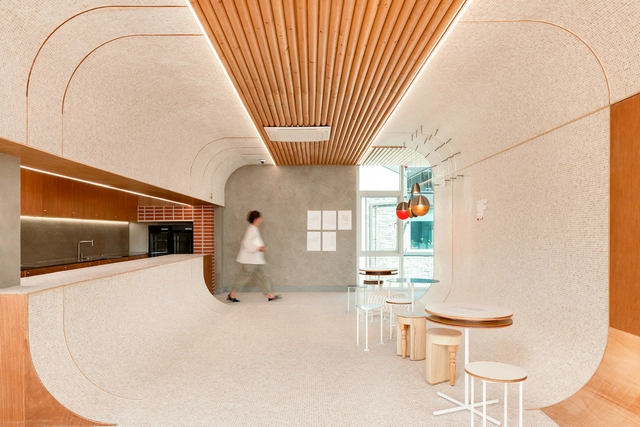
After years of dominance, orthogonal lines and right angles are giving way to organic designs and rounded shapes within interior design projects. This profound shift in formal language has led to the infiltration of gentle curves and amorphous volumes into design pieces, furniture, and decorative elements, a transformation that's becoming increasingly evident. Some argue that this change may be indirectly linked to the growing interest in sustainability and the pursuit of strategies that reconnect people with nature, as seen in the consistent presence of biophilia across projects of various scales. The period of social isolation during the COVID-19 pandemic further heightened this inclination, prompting individuals to devise ways to incorporate nature into their living spaces, thereby enhancing well-being in day-to-day life.
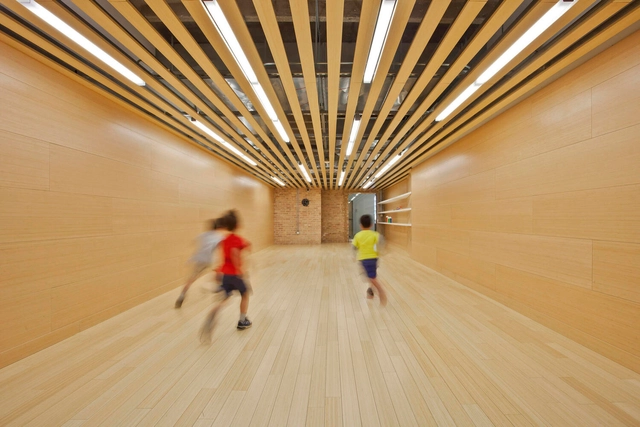
If you find yourself baffled by the confusing world of baffle paneling, don’t be concerned. That’s what they’re there for. The purpose of baffles of any kind – and where they take their name – is to confuse matter. In other industries, baffles are used to direct water flow, to control airflow and heat exchange, and to stop traffic from traveling too quickly.
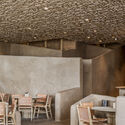
When used in the scientific world of acoustics, baffles are positioned to disrupt sound waves by projecting out into our busiest environments, to catch, absorb and soften the sound, either in naturally noisy or specifically quiet areas or to selectively filter sounds from making a return journey. That doesn’t mean, however, that the slatted sight of regimental baffles can’t give an aesthetic advantage to interiors, providing often much-needed visual activity to an otherwise bare ceiling.
Art has always been a means for people to connect with space, and art movements have served as a platform for exploring new relationships with architecture. By incorporating art into buildings and interior spaces, they have been transformed, resulting in a fusion that creates beautiful, inspiring, and spiritually uplifting environments. Throughout history, various art movements, such as the Renaissance in the 17th century, Baroque in the 18th century, and Art Nouveau, Art Déco, and Bauhaus in the early 20th century, have had a significant impact on architecture. Architects drew inspiration from the ideals, concepts, stylistic approaches, and techniques of these movements, using them to create large-scale habitable structures. As the home is a fundamental expression of an architectural movement and the simplest canvas to exhibit the artistic ethos of any particular era, studying the interior spaces of houses provides a detailed picture of art's influence on spatial organization, furniture design, product patterns, and user interaction.
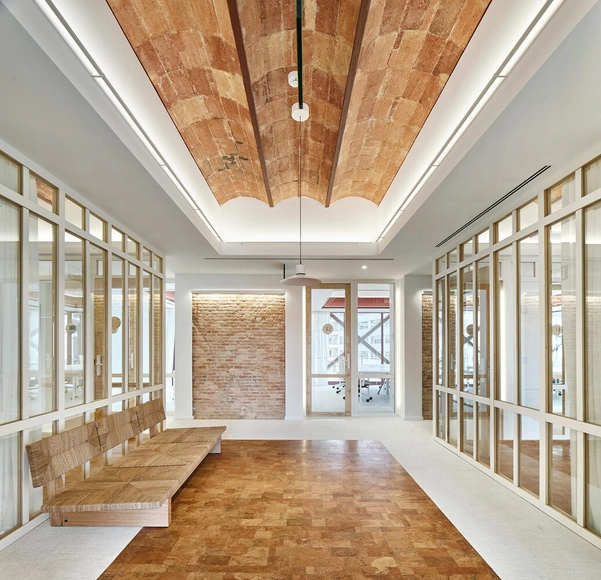
Designers and architects have a mountain of modern, high-performance flooring options at their disposal. From standard choices like wood, carpet, ceramic tiles, or natural stone; to heavy-duty commercial favorites like terrazzo, concrete, or poured epoxy. Add less well-tread options like cork and leather and then multiply them all with imitation solutions like laminate and luxury vinyl, and it’s easy for decision-makers to get lost in indecision.
Despite the size of the marketplace, however, we tend to just make our choices and stick with them, using just one type of floor for each room. Not so in the case of the following four projects, which select and arrange various flooring types together in the same room, adding functionality to the floor and helping to improve how we interact with the spaces above.
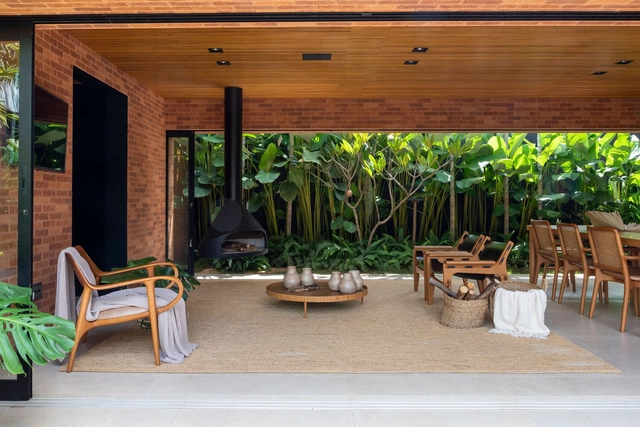
A residential architectural project almost always seeks to integrate interior and exterior to get closer to nature and improve comfort or aesthetics. Considering living spaces, this dialogue between open and closed environments becomes even more relevant. After all, it makes the room more flexible and suggests various ways of occupying it, regardless of the number of people or the time of year.
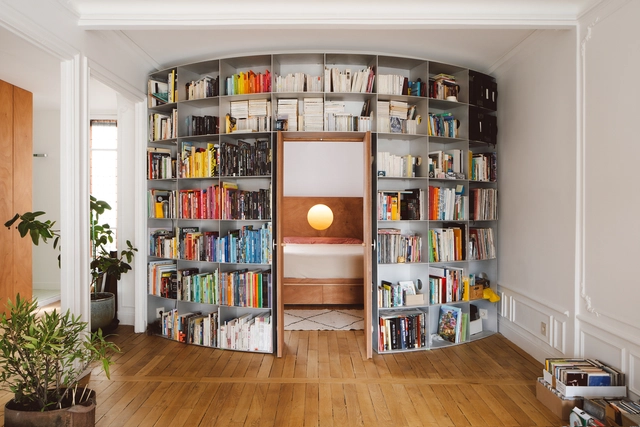
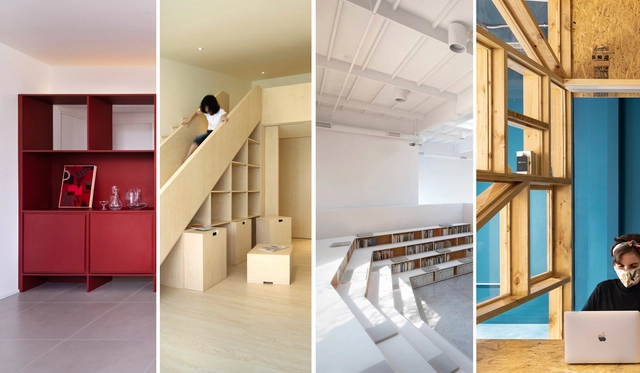
With the rise of small houses and dense cities, we were forced to sacrifice a good amount of storage space. Ironically, we did not compromise our purchasing habits, so with a few square meters to work with, architects and designers had to come up with efficient storage solutions and make the best of the limited space they have. However, if you were lucky enough to be occupying a large, unobscured space with a generous budget, your storage design possibilities are endless. In this article, we look at how architects and designers found creative ways to store their belongings in spaces with different functions, scales, and spatial constraints, ranging from completely invisible units to sculptural centerpieces.
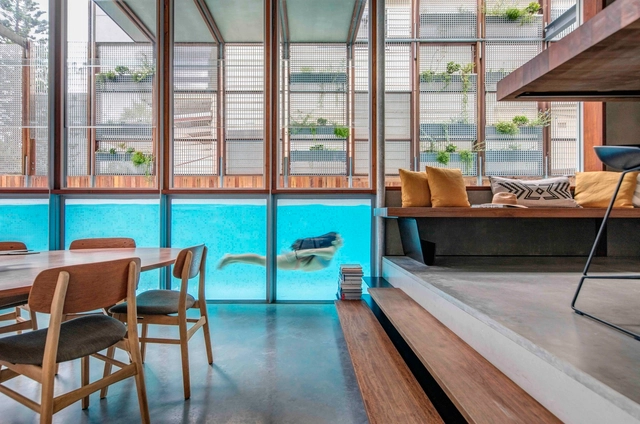
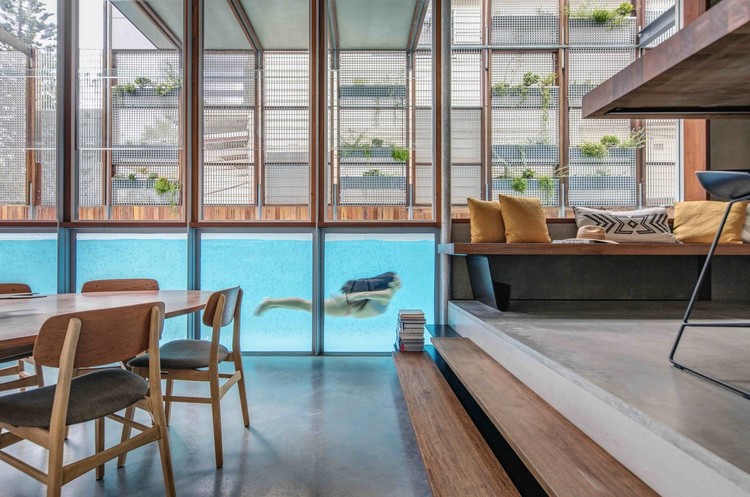
Within architecture, water evokes sentiments of calmness and wellbeing. The element has influenced design through its dynamic and fluid nature. With recent technological advances, architects have created some of the most strategic, innovative, and unexpected intersections of design and H2O.
Below, we have provided a roundup of indoor pools that highlight the application of water in different spaces, showing its relationship to materiality and use.
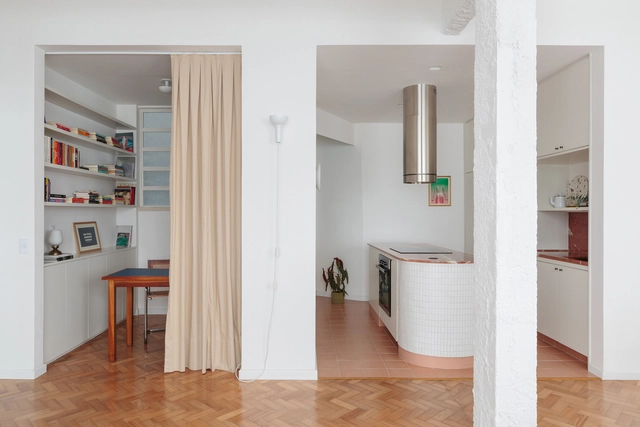
Nowadays, homes are built in increasingly smaller spaces in densely populated cities. The kitchens, which today serve not only to prepare meals but also as meeting spaces where we receive guests, are the places that have undergone the most transformations in recent decades. Whether by integrating with other living areas or by the super functional design of a single counter, there is an increasing search for innovation in this fundamental part of a home.
























.jpg?1627408898 "© Anna Positano")