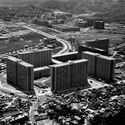
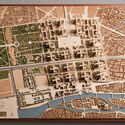
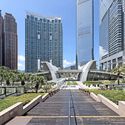
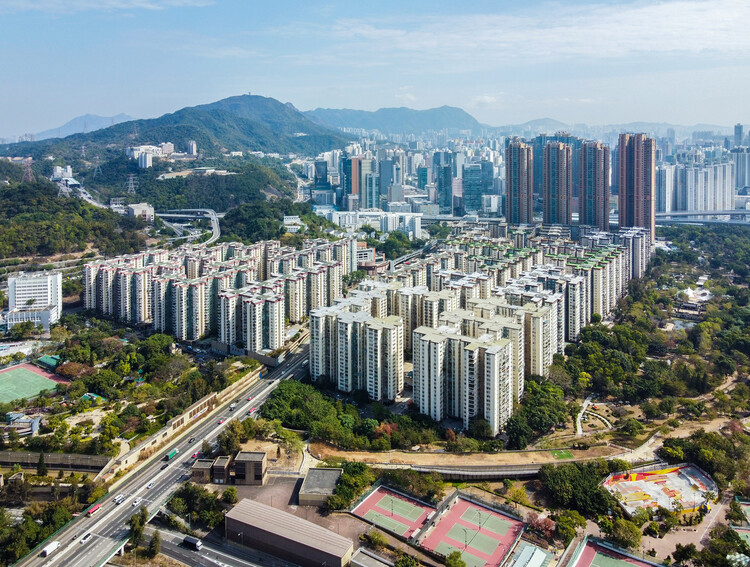
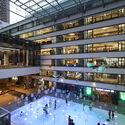
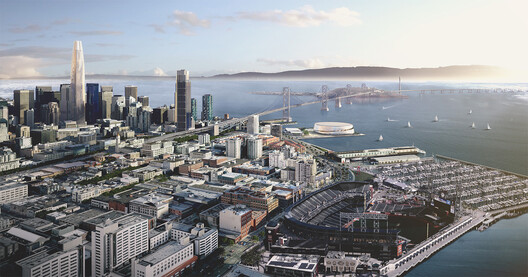
Southeast Asia is often narrated as a kind of architectural playground—an arena where modern and contemporary ideals have been tested at full scale through singular, iconic buildings. One can trace an easy lineage through names that have helped shape the region's skyline imagination: Paul Rudolph's Lippo Centre in Hong Kong and The Concourse in Singapore, I.M. Pei's OCBC Centre and Hong Kong's Bank of China Tower, Norman Foster's Supreme Court of Singapore and the HSBC Main Building in Hong Kong, Ron Phillips' Hong Kong City Hall, Moshe Safdie's Marina Bay Sands. Yet this familiar history—told through objects, colonialism, authorship, and signature forms—risks missing a deeper, more consequential layer of influence: the planning logics and infrastructural frameworks that have quietly structured how these cities expand, densify, and distribute everyday life.
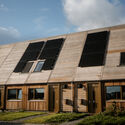
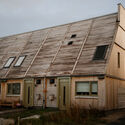
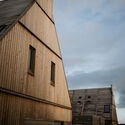
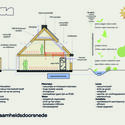
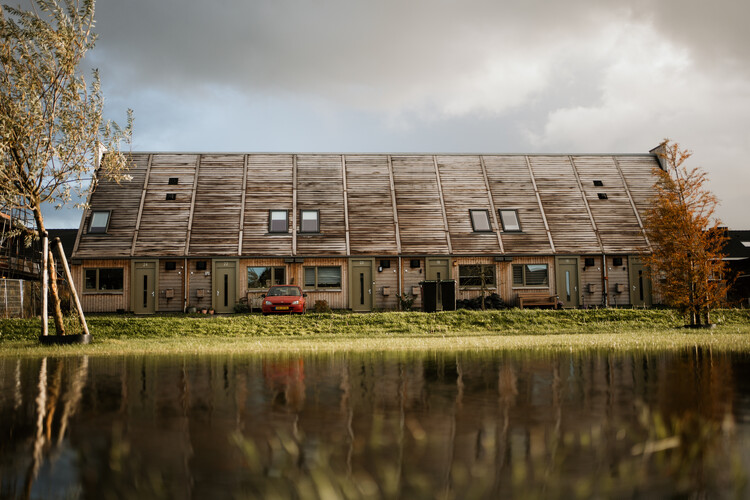
Netherlands-based, nature-inspired architecture practice ORGA has completed the design of a carbon-negative neighborhood in Marknesse, a village in the Dutch province of Flevoland. The project comprises 12 affordable rental homes built with a high percentage of biobased materials. Its main objective is to develop scalable housing solutions that minimize CO₂ emissions and reduce reliance on fossil resources. The design reinterprets the traditional Dutch brick house, known as the "Delft Red" typology, characterized by red brick facades and orange-red roof tiles, while introducing wooden chimneys that double as habitats for bats. Commissioned by housing association Mercatus, the prototype was built in the first half of 2025 and is intended for first-time buyers and low-income households.
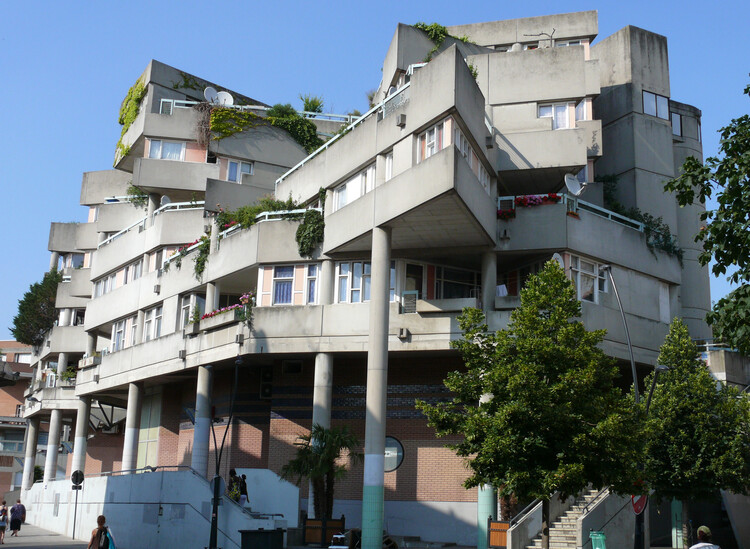
Saint-Denis is a commune in the northern suburbs of Paris, France, known for the Gothic Basilica of Saint-Denis and the Stade de France. At one corner of Place Jean-Jaurès in its historic center, adjacent to the Basilica, stands the Îlot 8 housing complex, a Brutalist landmark designed by architect Renée Gailhoustet. Built between 1975 and 1986 to provide workers' housing in the city center, countering the trend of relegating social housing to peripheral areas, the project is now at the center of a controversial redevelopment plan. Often referred to as "residentialization" and restructuring, the proposal involves the demolition of significant parts of its original design. This reconversion is part of the French Nouveau Programme National de Renouvellement Urbain (NPNRU) and is justified by concerns over structural deficiencies, safety, and maintenance.
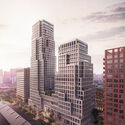
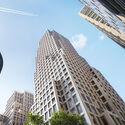
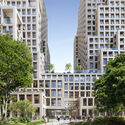
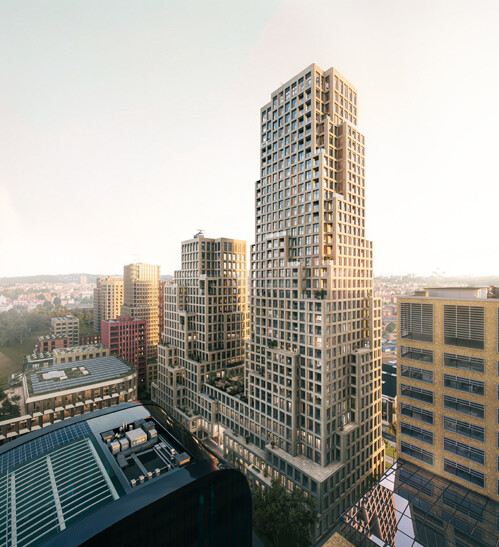
Rotterdam-based firm MVRDV has announced a new milestone in the development of its Tour & Taxis Towers, a mixed-use project in Brussels, Belgium. The design was commissioned by real estate investor and developer Nextensa in 2021, within the framework of a site-specific land use masterplan also designed by MVRDV. The two-tower project combines offices, housing, and public amenities across 58,000 m², forming a landmark in the neighbourhood and reaching 126 metres at its highest point. Recently granted construction permission, the project is designed to reduce embodied carbon through the use of a hybrid structure and lightweight façade elements, aiming to minimize the use of concrete in both the structure and foundations. From the early stages, the firm has employed its CarbonSpace software to guide these decisions.
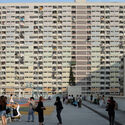
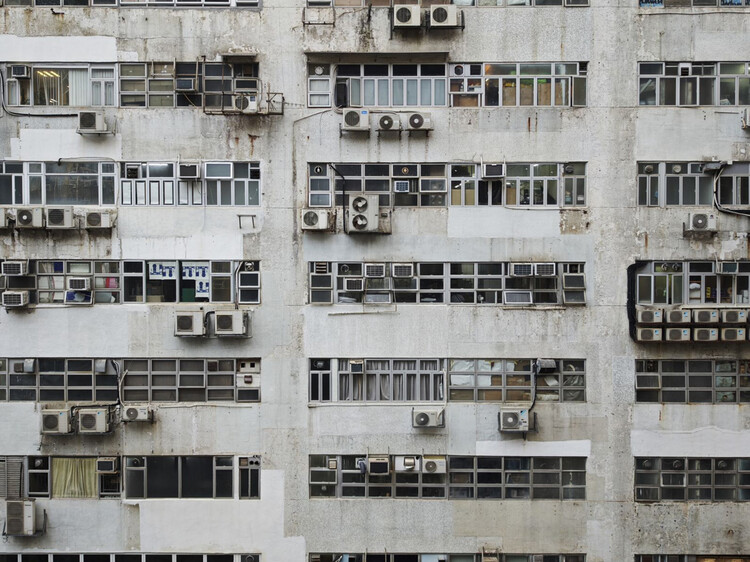
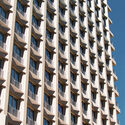
Establishing thermal comfort once demanded a far more deliberate and calibrated architectural intelligence—an interplay of orientation, massing, material behavior, ventilation potential, shading, and the ways daylight and surfaces absorb and release heat. This was not simply a matter of taste, but of necessity. When many of Hong Kong's post-war modernist buildings were constructed in the late 1960s and 1970s, forming a substantial portion of the city's public housing and broader residential stock, air-conditioning was not yet a ubiquitous, default service. Cooling, where present at all, was limited and unevenly distributed; comfort had to be negotiated through passive means, through section, façade depth, operable openings, and climatic detailing. It was only later, particularly through the 1970s and 1980s, as air-conditioning became increasingly standardized across the region, that mechanical cooling began to displace this earlier matrix of architectural decision-making.
Did air conditioning negatively affect architectural space, particularly in Hong Kong and the nearby region? The more precise claim is that widespread reliance on AC has profoundly rearranged the incentive structure of building design.
Today's housing crisis is a global phenomenon that can be broadly divided into two major problems: a shortage of residential buildings and barriers to accessing those that already exist. The deficit is real and concrete when it comes to what the UN calls "adequate housing for all." According to UN-Habitat, an estimated 96,000 new housing units would need to be built per day to meet population needs by 2030. Climate change and forced migration are broadening the gap. But 2.8 billion people worldwide, representing nearly 40% of the global population, lack access to stable shelter, secure land, and basic sanitation services not only because of underproduction, but also due to an economic barrier: an affordability crisis. As demand grows and prices rise, housing, now increasingly functioning as a form of social security, becomes a target for rental income and real estate speculation. As adequate housing is a human right, pressure on governments and private entities is increasing worldwide to limit speculation and ensure fair access to existing dwellings. Below, we present four examples of initiatives in Spain, Australia, France, and the United States that aim to urgently expand housing access while limiting speculation.
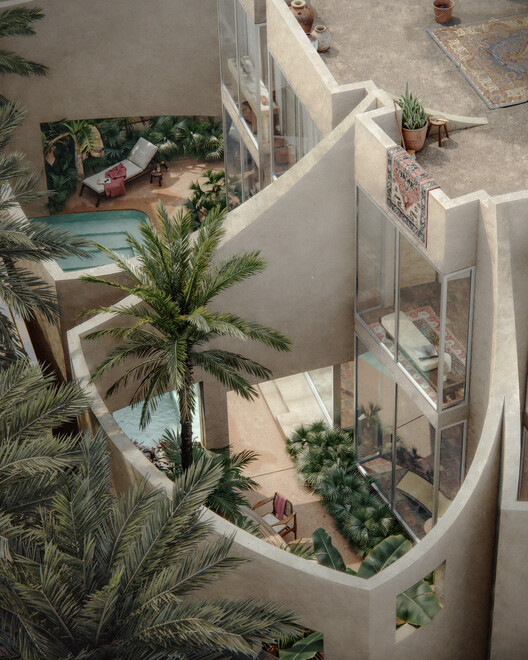
House with Seven Gardens / Civil Architecture. Image Courtesy of Civil Architecture
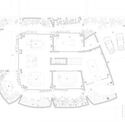
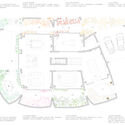
For centuries, domestic architecture throughout the Gulf has been organized around the courtyard. Houses presented thick exterior walls and limited openings to the street, turning inward toward a shaded garden that structured everyday life. This spatial arrangement responded to both climate and culture. The courtyard brought daylight into deep plans, enabled cross-ventilation, and provided a protected outdoor environment within dense urban fabrics. In the House with Seven Gardens, in Diyar Al Muharraq, Bahrain, the Bahrain-based practice Civil Architecture, one of the winners of the ArchDaily 2025 Next Practices Awards, revisits this spatial tradition through the conditions of contemporary suburban housing. Rather than reproducing the courtyard house as a historical model, the project reinterprets its environmental logic within the regulatory frameworks and spatial conditions that shape much of today's urban development in the Gulf.
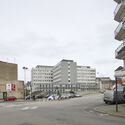
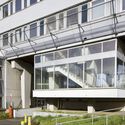
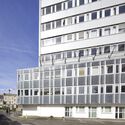
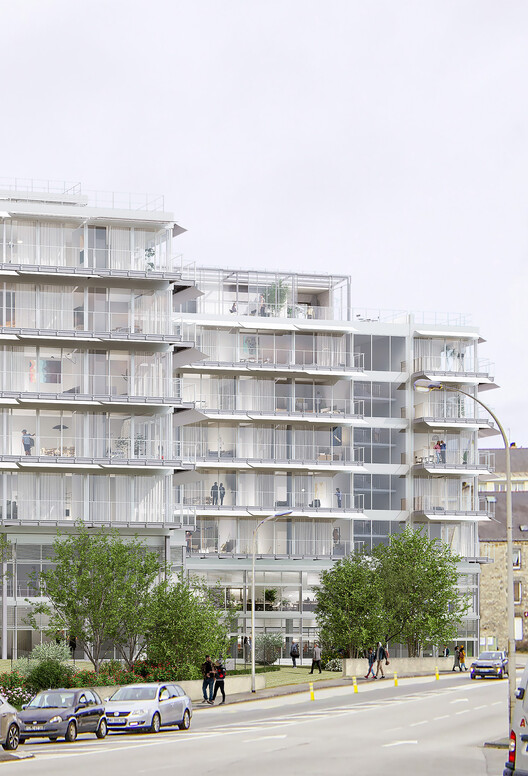
Lacaton & Vassal have announced the transformation of a former administrative center into a mixed-use residential and office building in Vannes, a medieval town in Brittany, northwest France. The project is part of a State policy to mobilize state-owned land for housing. In 2023, the French State launched a call for expressions of interest for a project on the former administrative complex, which housed several State services, in consultation with the City of Vannes. The winning proposal is a partnership between GReeStone Immobilier and Grand Ouest Immobilier, with an architectural team formed by the office of Anne Lacaton and Jean-Philippe Vassal, winners of the 2021 Pritzker Prize, in partnership with Emmanuelle Delage Architecte. According to the city government, the proposal was chosen with the aim of promoting resilience and limiting the carbon footprint by renovating rather than demolishing.
This week began with the World Day of Social Justice, foregrounding urgent questions of labor rights, spatial equity, and resource governance, and framing architecture as both a product of and a response to the social systems that shape access to land, housing, and opportunity. The announcement of the 15 winning projects of the 2026 ArchDaily Building of the Year Awards highlighted a global cross-section of built works recognized for their architectural quality, innovation, and social impact, offering a snapshot of contemporary practice across scales and geographies. This week's news prompts a broader reflection on architecture's civic responsibility, with heritage and community-building through cultural architecture emerging as central themes. Housing, meanwhile, anchors another critical strand of the discussion with three highlighted initiatives: a manifesto reframing housing not as a market commodity but as a civic right and collective project grounded in care; a large-scale waterfront regeneration masterplan responding to regional housing demand through coastal transformation; and a timber residential project that explores the potential of wood in medium-density housing.
Today, 20 February, the United Nations marks World Day of Social Justice under the theme "Renewed Commitment to Social Development and Social Justice." This year's observance takes place in the aftermath of the Second World Summit for Social Development in Doha and the adoption of the Doha Political Declaration, renewing the commitments first articulated in the 1995 Copenhagen Declaration: poverty eradication, full and productive employment, decent work for all, and social inclusion as interdependent pillars of development. At a moment defined by widening inequalities and accelerating environmental and technological transitions, the 2026 commemoration calls for translating political affirmation into measurable, cross-sectoral implementation.
The magic of Indian architecture lies in an invisible order amidst visceral chaos. When an uncertain future knocks on the doors of local practitioners, one might begin to look within the four walls they occupy to discover an opportunity for reinterpretation.
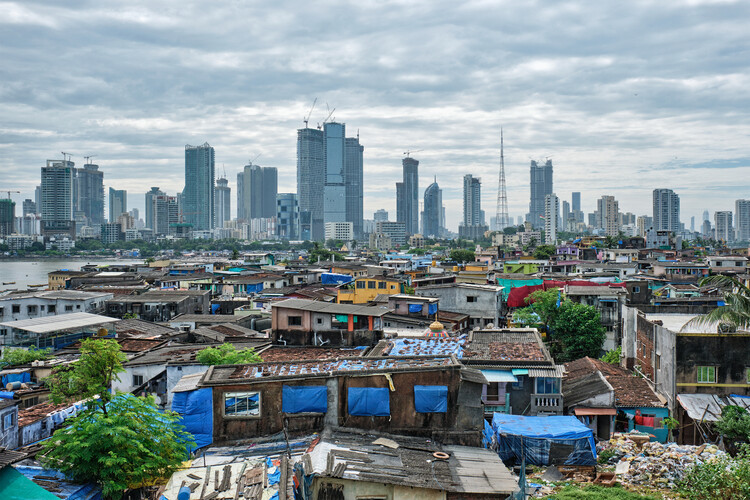
Mumbai, Delhi, Bengaluru, and other major metropolises are described as needing massive housing solutions for millions. The instinctive answer is predictable — masterplans, dense towers, and standardized units smeared over haphazard developments. The lexicon misses a deeper truth about how the people already live, work, and build in India. The shorthand used in policy and planning — slum, informal settlement, unauthorized colony — implies a temporary state to be corrected. A designer's eye views these places as layered urban histories, formed through necessity.
The potential of existing buildings to shape cities and communities in flux through reuse and adaptation is the key focus of HouseEurope! and their activism: addressing the pressing challenge across much of Europe, where it is often easier, cheaper, and faster to demolish buildings than to renovate. For decades, construction policies, industrial practices, and market systems have favored new development, often undervaluing the cultural, social, and environmental significance of existing structures. For their work advocating systemic change in architecture, HouseEurope! received the 2025 OBEL Award under the theme "Ready Made." In a conversation with ArchDaily, collective members of HouseEurope! Alina Kolar and Olaf Grawert discussed the organization's approach to architecture, policy, and collective action.
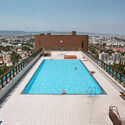
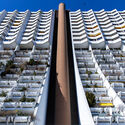
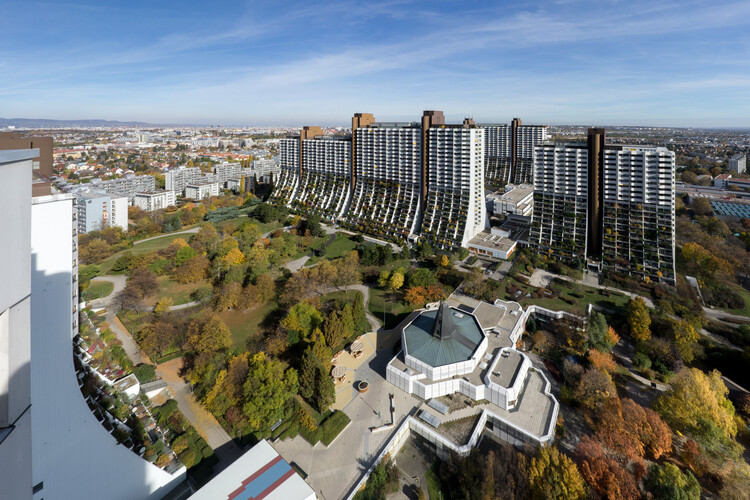
On the southern edge of Vienna, a cluster of monumental terraces rises above the cityscape, their stepped balconies cascading with greenery and their rooftops crowned with swimming pools. This is the Wohnpark Alterlaa, one of the most ambitious social housing projects in postwar Europe. Designed by Austrian architect Harry Glück and built between 1973 and 1985, the complex was founded on a provocative principle: municipal housing should not only provide affordable shelter but also offer the pleasures and amenities usually reserved for the wealthy.
With more than 3,000 apartments housing nearly 9,000 residents, Alterlaa was conceived as a city within the city. Alongside its residential towers, it incorporates shops, schools, medical services, and cultural facilities, ensuring that daily life can unfold entirely within its boundaries. The project reflects a moment of optimism in Vienna's urban policy, when housing was understood as infrastructure for collective well-being rather than as a commodity.
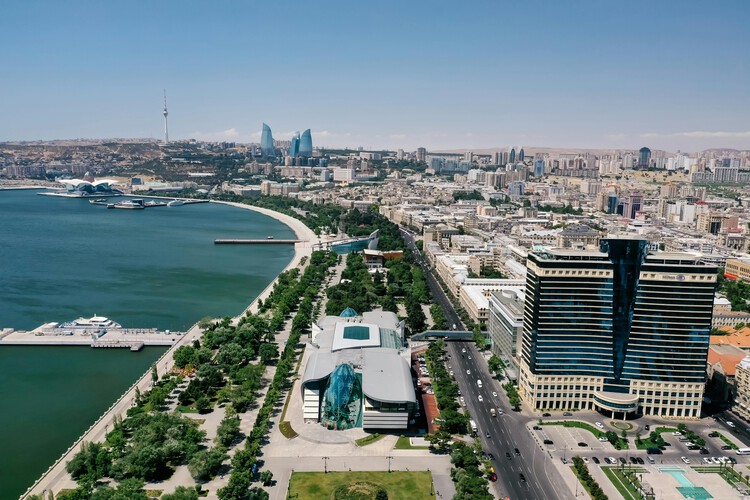
President Ilham Aliyev has signed an order declaring 2026 the "Year of Urban Planning and Architecture" in the Republic of Azerbaijan. The decision establishes a national framework focused on urban planningpolicy, architectural culture, and sustainable development, aligning with Azerbaijan's preparations to host the 13th World Urban Forum (WUF13) in Baku in May 2026. According to the order, the designation aims to preserve Azerbaijan's centuries-old traditions while integrating contemporary approaches that respond to current social, environmental, and spatial challenges. The President's Administration will now prepare and submit a comprehensive action plan for the year within one month.
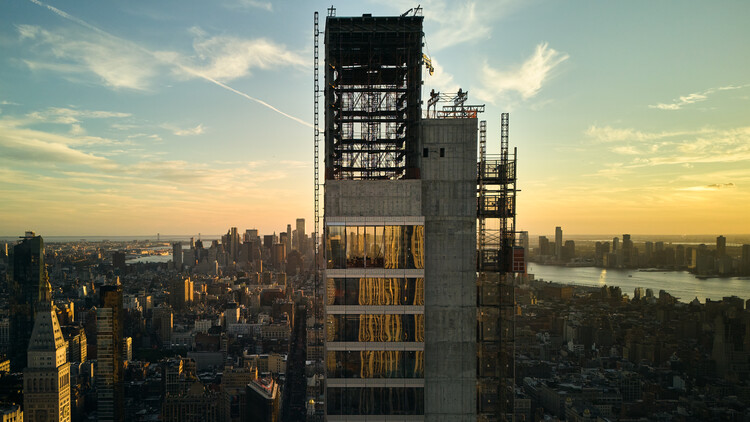
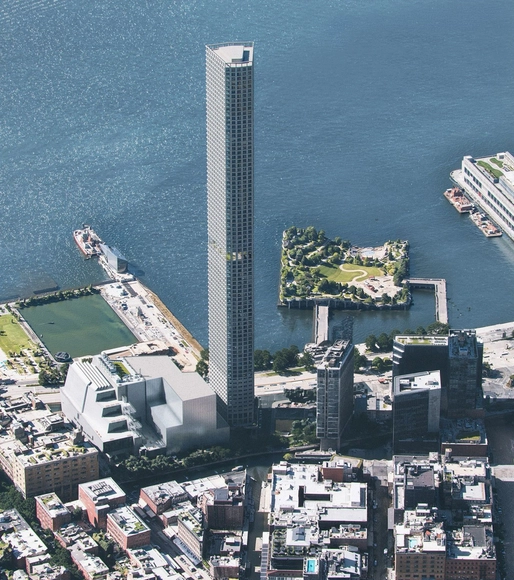
Moscow-based architecture, urban design, and research practice Meganom is nearing completion of its residential skyscraper at 262 Fifth Avenue in Manhattan, New York City. Designed for client Five Points Development, the project dates back to 2015 and brings together an international team that includes Norm Architects as interior architect, SLCE Architects as architect of record, and untitled architecture overseeing architectural supervision and project management. Rising 860 feet over 52 stories, the tower contains 26 residential units within approximately 140,000 square feet and draws conceptual inspiration from aeronautics, envisioning apartments as elevated "shelves" that frame expansive views of the city.
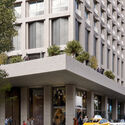
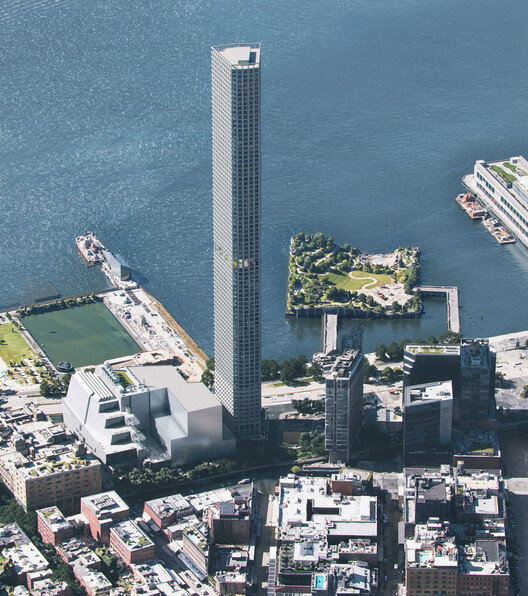
5050 Gansevoort mixed use building. Project render. Image Courtesy of Powerhouse Company
In January 2025, New York City Mayor and the New York City Economic Development Corporation (NYCEDC) announced new steps in the reimagining of Gansevoort Square, a 66,000-square-foot site located on Little West 12th Street between Washington Street and 10th Avenue in Manhattan's Meatpacking District. The redevelopment of the site aims to integrate a mix of affordable housing for New Yorkers, new retail space for residents and visitors, and opportunities to expand the Whitney Museum of American Art and the High Line. The Request for Proposals outlined a vision for up to 600 units of mixed-income housing, with a goal of 50 percent of the total units being permanently affordable, along with ground-floor commercial space. International architectural practice Powerhouse Company recently revealed its competition proposal, exceeding these demands with 1,000 rental homes in a supertall tower, half affordable and half market-rate, mixed equally throughout the building's full height.