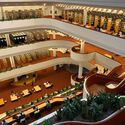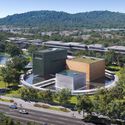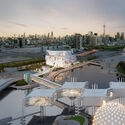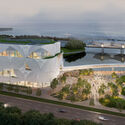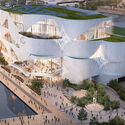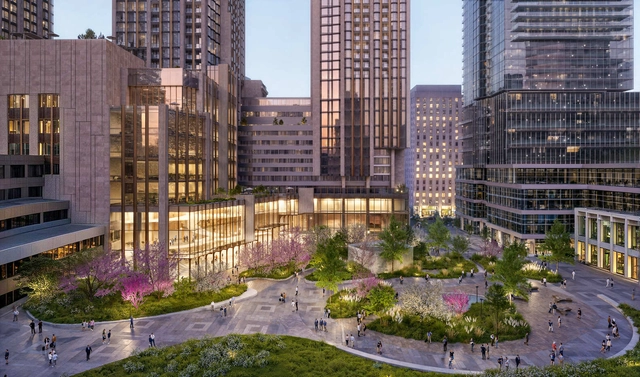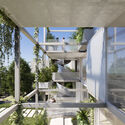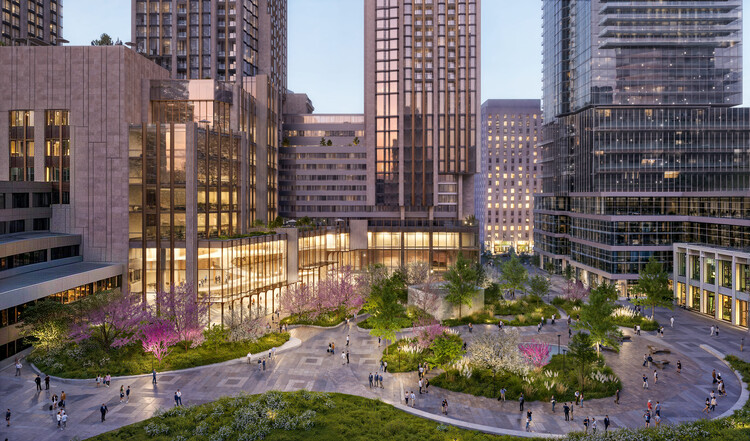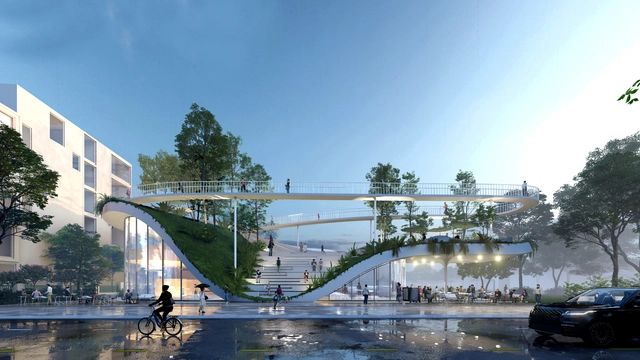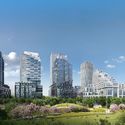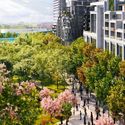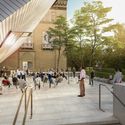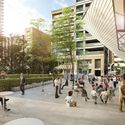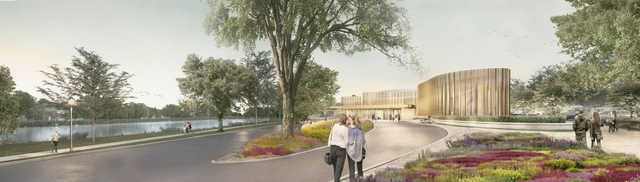
College Park. Image Courtesy of Hariri Pontarini Architects
As cities around the world respond to shifting environmental, cultural, and social dynamics, new architectural proposals are reshaping how we think about public life, community engagement, and the built environment. From Aldar's coastal wellness destination on Fahid Island in Abu Dhabi, to a flexible scaffolding-based office concept in Athens by Georges Batzios Architects, this edition of Architecture Now features diverse projects that reinterpret architecture as both infrastructure and interface. In Seoul, Heatherwick Studio is leading a resident-initiated redevelopment model for a housing complex near the Han River, while Toronto's College Park is set for a major transformation balancing heritage restoration with vertical intensification. In Oklahoma City, MANICA and TVS are designing a new sports arena that anchors an emerging entertainment district through material, landscape, and civic gestures. Together, these diverse yet interconnected efforts signal a broader shift toward integrated, future-oriented urban design.
Concert halls, music, and performance venues stand as iconic symbols of cultural vitality within urban landscapes. Through these structures, which often become landmarks of the city, the residents are invited to take part and experience artistic expression, fostering a sense of community and connection. For architects, this program poses the intricate challenge of balancing form and function, creating spaces that enhance the acoustic experience, allow for the flow of audience and performers, and create visual spectacles in their own right.
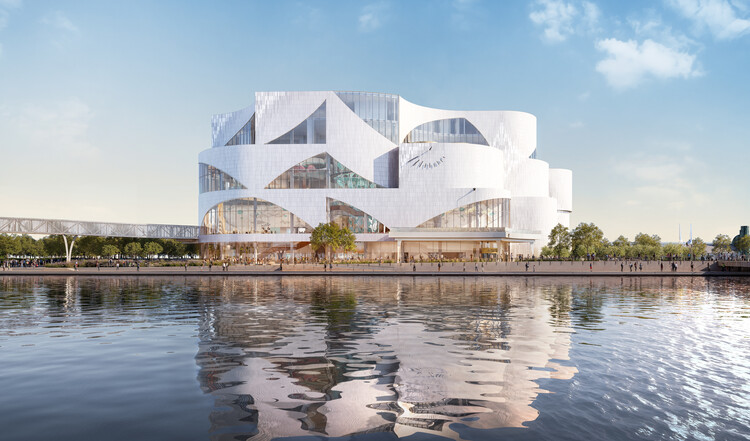
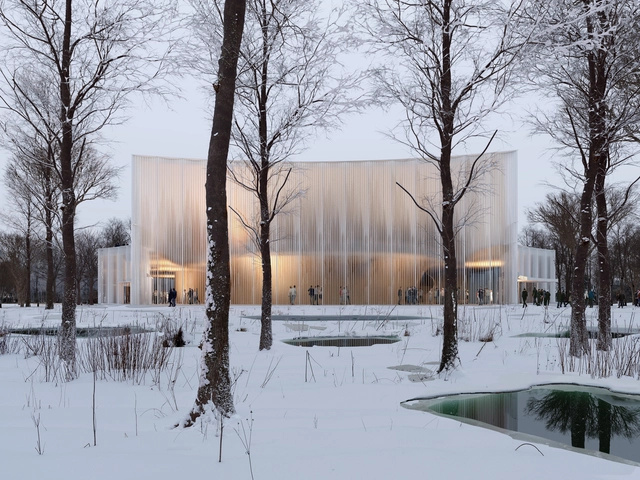
Featuring both emerging and internationally recognized offices, this week’s curated selection showcases music and performance venues, from mixed arts and cultural centers to opera and ballet halls. Including proposals for international competitions such as David Chipperfield Architects or SHL and PAX architects’ designs for the Polish Royal Opera in Warsaw or Hariri Pontarini Architects’ design for an integrated center for the arts in Canada, the selection explores the program of music venues across scales and programs.
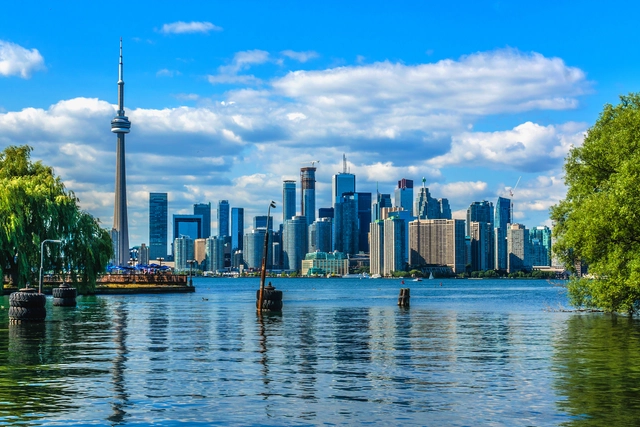
Whether rain or shine, Toronto is a yearlong bustling city, the largest in Canada and the fourth largest in North America. It’s become a cosmopolitan center with its renowned business district and cultural venues/ events that come alive during the summer and early fall nights. Toronto suggests a beautifully diverse urban setting between shimmering high rises and smaller brick houses, intertwining residential and vibrant commercial areas, public parks, and even beaches. All become part of the city's striking skyline, crowned by the iconic CN tower.
Toronto’s ongoing sprawl and constant urban development are noticeable as new projects spread through the city, weaving themselves into the existing buildings, from 19th-century landmarks such as the Gooderham Building to modern and contemporary major works like the Aga Khan Museum. These new constructions include increasing adaptive reuse and retrofitted projects throughout the city as more efforts and incentives are provided to reduce carbon emissions.
As repositories of knowledge and catalysts for innovation, museums represent an architectural typology filled with opportunities. They act as an intermediary between the general public and artists, historians, and researchers, creating the medium for the display of cultures and creativity while also striving to make knowledge accessible to all. Through careful curation and exhibition design, they provide a platform for education and research, fostering an understanding and appreciation of diverse cultures, histories, and ideas. For architects, they also present an opportunity to conceive spaces aligned with the exhibits on display to create an immersive experience for the visitors.
This week's curated selection of Best Unbuilt Architecture highlights projects submitted by the ArchDaily community that showcase art, technology, and innovation through the program of museums and cultural centers. Featuring projects from emerging and established architectural offices such as Hariri Pontarini Architects, Beyer Blinder Belle, Studio Saheb, RAMSA, and Ho Khue Architects, the selection includes a variety of scales and programs, from a museum dedicated to the commemoration of the Holocaust to a private sportscar museum in Austria or an intricately-shaped art gallery in Vietnam.
As Canada’s most populous location, Toronto has developed into a global powerhouse, both as an economic and cultural hub. This extends to the significant museums and arts facilities across Queen City. With one of the most unique landscapes and ground conditions in the country, Toronto was built on a large ravine system running throughout its urban fabric. Today, the city’s educational, arts, and cultural buildings are thriving.
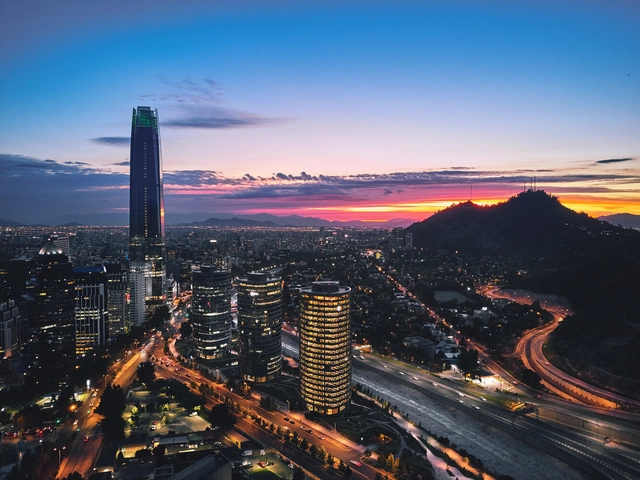
Founded in 1541 by the Spanish conquistador Pedro de Valdivia on indigenous settlements in the valley of the Mapocho River, Santiago is the capital and most populated city of Chile. This South American city is enframed by the Andes Mountains to the east and the Chilean Coast Range to the west, in addition to 26 island hills (cerros islas) scattered throughout the city. Some of these island hills have been converted into urban parks, such as Santa Lucía and San Cristóbal, while Chena, Calán, and Renca are in the process of expansion.
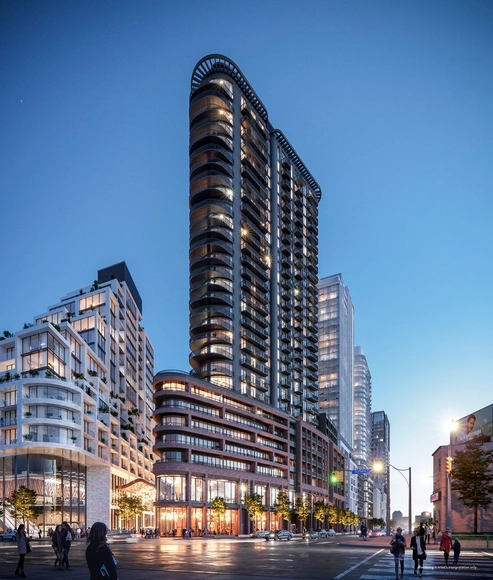
Real estate development firm ELAD Canada has unveiled Galleria III, Toronto’s tallest flatiron building designed by Hariri Pontarini Architects and DesignAgency. Made to be a gateway to Galleria on the Park, the development will include 426 residences ranging from studios to three-bedroom units. The tower will part of the next phase in the master-planned community and the transformation of Toronto’s West End.
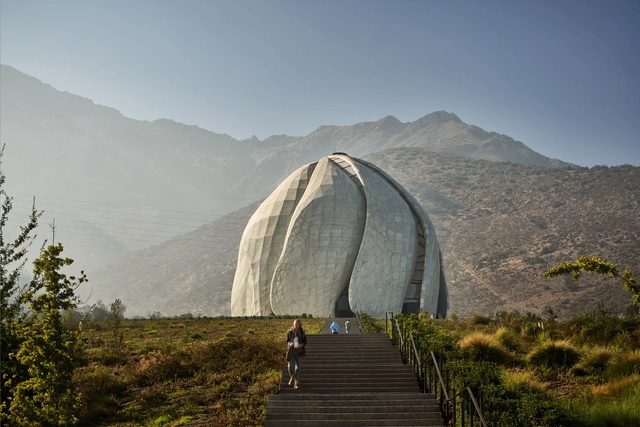
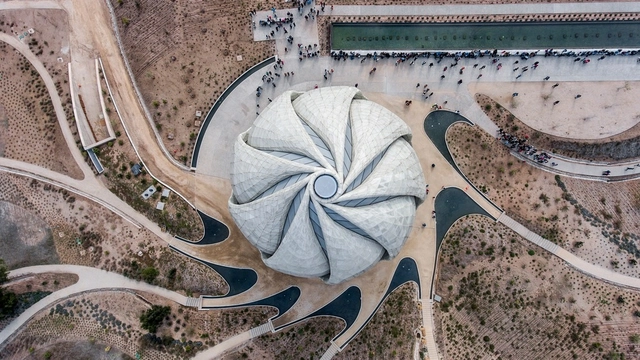
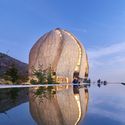
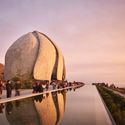
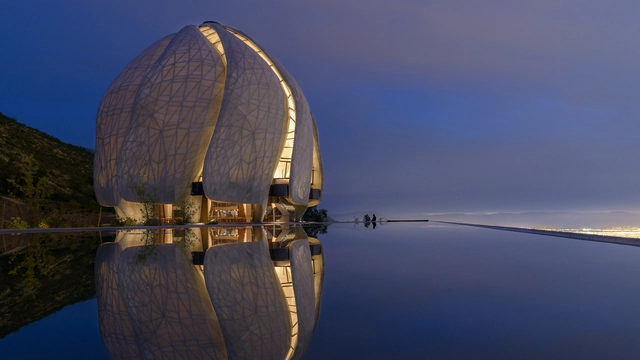
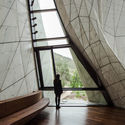
This year, the Bahá’í Temple of South America in Santiago, Chile, designed by Hariri Pontarini Architects of Toronto was selected as the winner of the 2019 RAIC International Prize, by the Royal Architectural Institute of Canada (RAIC). The prize celebrates a “single work of architecture that is judged to be transformative within its societal context and expressive of the humanistic values of justice, respect, equality, and inclusiveness”.
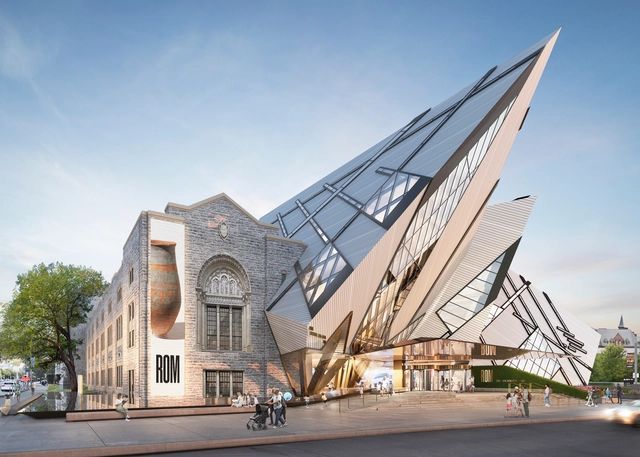
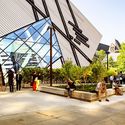
The ROM Welcome Project aerial render. Image Courtesy of Hariri Pontarini Architects
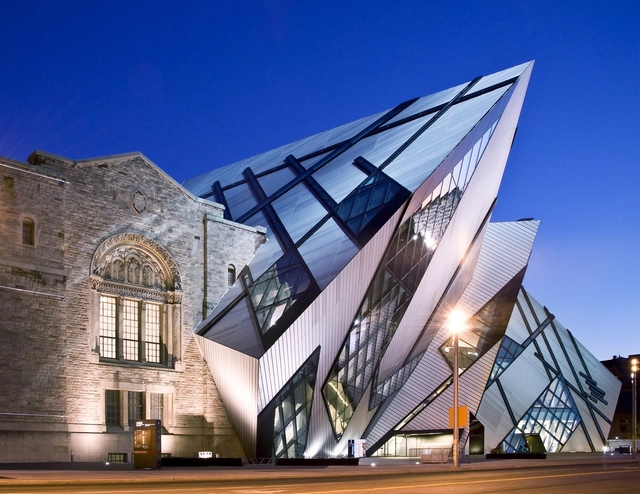
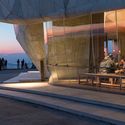
The ROM or The Royal OntarioMuseum, an art, world culture and natural history gallery in Canada, inaugurated its newest additions, the Helga and Mike Schmidt Performance Terrace and the Reed Family Plaza. Designed by Siamak Hariri of Hariri Pontarini Architects (HPA), the latest add-ons create a lively space on the street level.
The American Institute of Architects has selected nine projects for its 2019 Institute Honor Awards for Architecture. The award program celebrates the best contemporary architecture and highlights the many ways buildings and spaces can improve lives. AIA’s five-member jury selects submissions that demonstrate design achievement, including a sense of place and purpose, ecology, environmental sustainability and history.
The American Institute of Architects’ (AIA) Technology in Architectural Practice (TAP) Knowledge Community has announced the winners of their 2017 Innovation Awards, honoring “new practices and technologies that will further enable project delivery and enhance data-centric methodologies in the management of buildings for their entire lifecycle, from design, to construction and through operations.”
Hariri Pontarini Architects and Pinnacle International have unveiled the design of three glassy skyscrapers that will make up a new development on the Toronto waterfront.
Known as One Yonge, the complex will consist of over 4 million square feet of mixed-use space spread across five new buildings and a total renovation of the existing Toronto Star building.
North America’s largest classical repertory theatre company, the Stratford Festival revealed Hariri Pontarini Architects’ design for their new Tom Patterson Theatre at a town hall meeting last month. According to Antoni Cimolino, the Stratford Festival’s Artistic Director, the company desires a new facility that compares to distinguished theatres worldwide.
In a recent TED Talk, architect Siamak Hariri takes the audience inside his design process for the Bahá'í Temple of South America. Responding to an open call in 2003 to design the last of the faith's continental temples in Santiago, Chile, Hariri recalls a moment as a student at Yale when he learned about the transcendent power of architecture, a moment he tried to recreate in the twelve-year project.
Located in the foothills of the Andes Mountains outside Santiago, Chile, the domed building was designed and built using computer modeling, measuring, and fabrication software, as well as custom glass, all of which culminated in nine monumental veils that frame an open worship space for up to 600 visitors. Completed in 2016, the project took 14 years to realize.
This year's theme was “Visioning and Re-Visioning," which focused on "the ways in which pedagogical innovation and cutting-edge design impact and influence each other." The AIA also notes that education facility design may now be more important than ever, as recent studies have indicated that a positive learning environment can affect a child’s academic progress over a year by as much as 25%.
Find out which projects received awards, after the break.