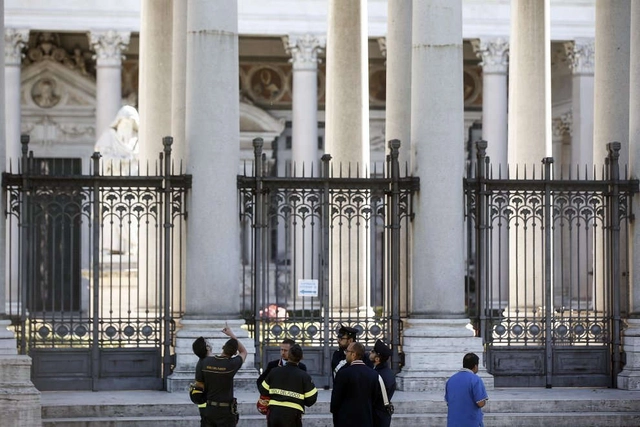
Inspections underway in Rome. Image via La Repubblica (Roma)
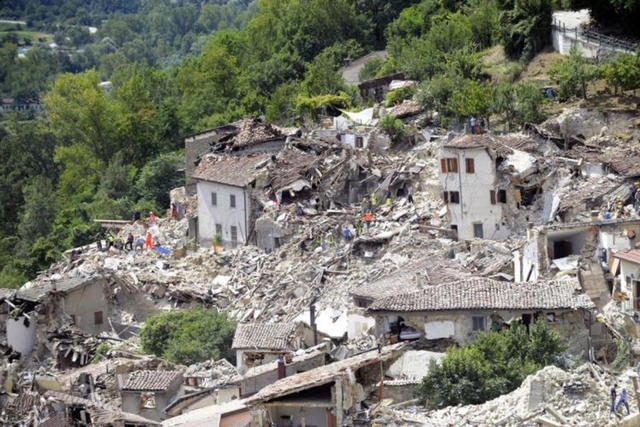
Following an earthquake measuring 6.6 on the Richter Scale that struck central Italy this morning at 7:40 a.m. local time—the fourth to hit this part of the country in three months—a number of structures have collapsed entirely or been severely damaged. While no deaths have been reported at this time, the BBC suggests that twenty people have been injured.
181 Fremont—which will become the third tallest structure in San Francisco and the most resilient tall building on the West Coast of the U.S.—has been awarded the REDi™ Gold Rating, a new earthquake resilience rating. The building was designed by San Francisco-based Heller Manus Architects.
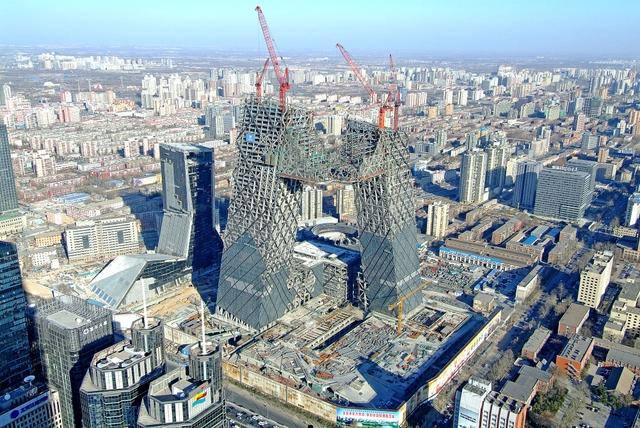
The 56-story mixed-use tower, built above five basement levels, is being constructed in compliance with a new set of holistic design and planning guidelines—the Resilience-based Earthquake Design Initiative (REDi Rating System)—that allow it to withstand the impact of a 475-year seismic event (roughly a M7.5-M8.0 earthquake on the San Andreas Fault) with minimal disruption.
Developed by Arup with contributions from external collaborators, the REDi™ system outlines design and planning criteria within a resilience-based framework, creating a system that not only considers occupant safety but also takes into account the future of the building after an earthquake.
Italian Prime Minister Matteo Renzi has asked architect Renzo Piano to lead in the reconstruction of the central Italian towns devastated by last week’s magnitude 6.2 earthquake that claimed the lives of at least 290 people. Renzi announced a national action plan for recovery and risk prevention on Monday after meeting with Piano to discuss strategies for housing the over 3,000 displaced survivors and rebuilding the historic towns in a manner that would mitigate damage caused by future seismic activity.
“We have to act quickly, with the utmost urgency,” said Piano in a telephone interview with The Guardian. “Anti-seismic requirements must be inserted in the laws of the country to make our homes safe, just as it’s compulsory for a car to have brakes that work.”
After yesterday’s devastating magnitude 6.2 earthquake in central Italy, art historians fear that numerous historic Italian buildings and their contents may be permanently lost. The affected region is dotted with hilltowns containing beautiful churches, monuments and museums, many of which have been rendered completely unrecognizable.
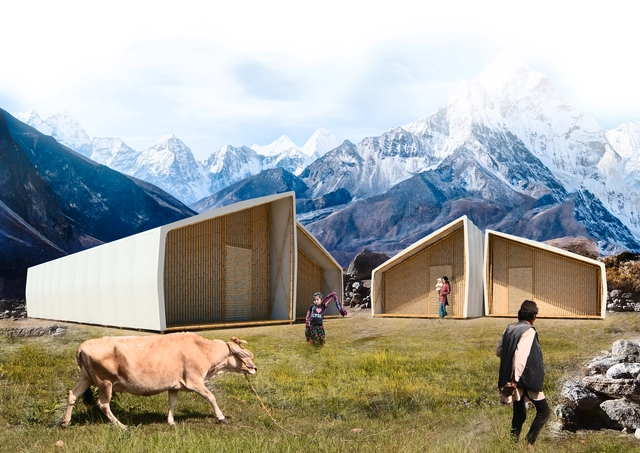
Disaster can strike a community at any minute. Following the most costly earthquake in their history in April, hundreds of thousands of Nepalese residents were rendered instantly homeless. To help these people reorganize and get back to a familiar way of life, Barberio Colella ARC has designed a temporary structure using local materials “to make a house that can be built quickly, lightweight and compactly, durably and economically.”
On March 11, 2011, a massive earthquake and tsunami hit the coast of Japan at Sendai, damaging the Fukushima nuclear power plant, and taking over 10,000 lives. Over the past three years, only temporary memorial observances have been utilized to honor these victims in Sendai. To address this deficiency, MIT graduate student Beomki Lee has created a concept design for an innovative new memorial space called [ME]morial.
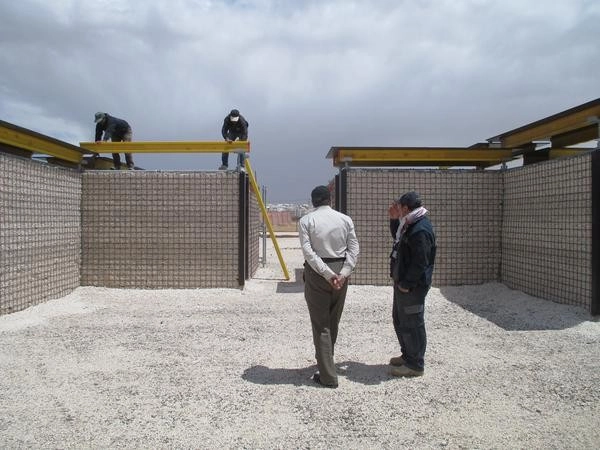
Designed and developed by Pilosio Building Peace, RE:BUILD is a construction system for building refugee camps and facilities for emergency assistance. The temporary modular structures can be used as houses, schools, clinics, dining areas or any other space that is urgently needed.
Videos
Proposals such as Vincent Callebaut's "Hydrogenase" have always been science fiction as much as they are architecture - but with Arx Pax's MFA technology, is it time to think more carefully about how to design levitating buildings?. Image Courtesy of Vincent Callebaut Architectures
Could Hovering Buildings be the Future of Sustainability?
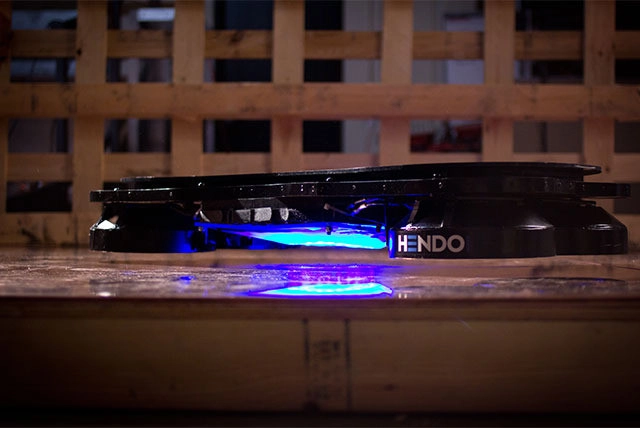
If Arx Pax, a cutting-edge technology firm led by Greg and Jill Henderson, has its way, levitating objects could become a common sight. The team is developing what they call Magnetic Field Architecture (MFA), a technology which controls electromagnetic energy to make objects hover, and at the several months ago, they used it to produce Hendo Hover, a hoverboard capable of carrying a person. While the fact that Arx Pax was able to produce a hoverboard is fascinating, the technology could have much more serious applications: as an architect, Greg Henderson envisions that one day MFA technology could be used in buildings to produce sustainable structures which can better survive earthquakes and other natural disasters. Is this goal realistic?
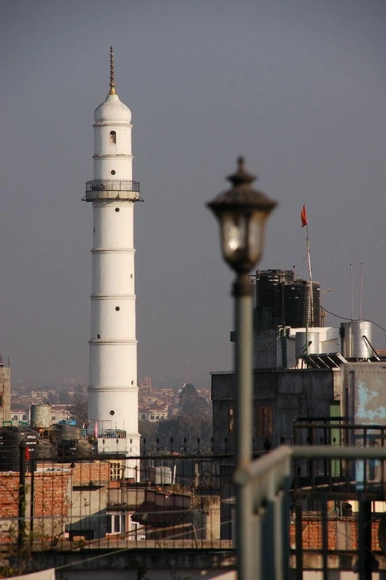
Just one of the many tragedies involved in the devastating magnitude 7.8 earthquake that struck Nepal on Saturday - which as of this morning is known to have claimed the lives of over 3,500 people - is its effect on the historic architecture of the region. Home to seven UNESCO World Heritage Sites in the affected regions of Kathmandu, Patan and Bhaktapur, news outlets from the BBC to The Washington Post are reporting extensive damage to some of the country's most significant monuments.
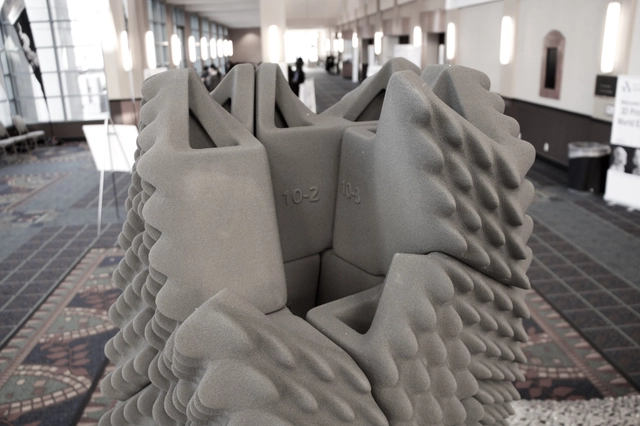
A team of California-based designers have invented an earthquake-proof column built of 3D printed sand, assembled without bricks and mortar to withstand the harshest seismic activity. The 'Quake Column' is comprised of a pre-determined formation of stackable hollow bricks which combine to create a twisting structure, optimized for intense vibrations in zones of earthquake activity. Created by design firm Emerging Objects, the column's sand-based composition is one of many in a series of experimental structures devised by the team using new materials for 3D Printing, including salt, nylon, and chocolate. The column can be easily assembled and disassembled for use in temporary and permanent structures, and was designed purposefully with a simple assembly procedure for novice builders.
Find out how the Quake Column works after the break
In 1989, California's central coast was rocked by a 6.9 magnitude earthquake, destroying infrastructure and buildings in San Francisco, Oakland, and a host of coastal cities. The Loma Prieta Earthquake caused an estimated $6 trillion in damage, prompting researchers to develop techniques for management of severe seismic activity in urban centres. Twenty five years later, a team of engineers at Stanford University have invented a cost-effective foundation for residential buildings capable of withstanding three times the magnitude of the catastrophic 1989 earthquake.
Find out more on Stanford's earthquake-resistant technology after the break
Architects can do far more than design buildings. In fact, some of history’s most acclaimed innovators were not only architects, but also inventors. Leonardo da Vinci himself, the epitome of the Renaissance man, sketched buildings alongside ideas for flying machines. Buckminster Fuller was the ultimate futurist and invented the geodesic dome in addition to his Dymaxion Car, an automobile that was far ahead of its time. Now, an architect has developed “the world’s first hoverboard,” and the technology has far-reaching implications for not only transportation, but also buildings themselves. Read on after to break to learn more about what this technology could mean for the future.
Winning Entry: Architecture Renovation Award. Image Courtesy of AIM
Architects in Mission(AIM) recently announced the winners for their 2013 competition with the topic, Post Earthquake Reconstruction, Ya’an Sichuan - Rebuild Panda’s Hometown from the Earthquake. The Ya'an Earthquake occurred at 08:02 Beijing Time on the 20th April 2013. The epicenter was located in Lushan County, Ya'an, Sichuan, about 116km (or 72 miles) from Chengdu (along the Longmenshan Fault) in the same province that was hit heavily by the 2008 Sichuan earthquake. For this year's competition, AIM asked participants to pay particular attention to the master planning of the Snow Mountain Village, whilst developing new business models to encourage economic growth for local villagers. See the four winning entries after the break.
In a symposium at the AIA New York Chapter, seismologists, earthquake engineers, seismic code experts, emergency response managers, and architects conversant in seismic design will assemble for a conversation on available technologies and testing capabilities that, surprisingly, are located in New York State. They will "clarify the evolving role of design professionals, the building industry, and municipal and federal agencies in safeguarding our local communities", as well as "educate the audience about the earthquakes, subsurface conditions, and construction approaches."
First Place / Caterina Spadoni, Valentina Brunetti. Image Courtesy of YAC
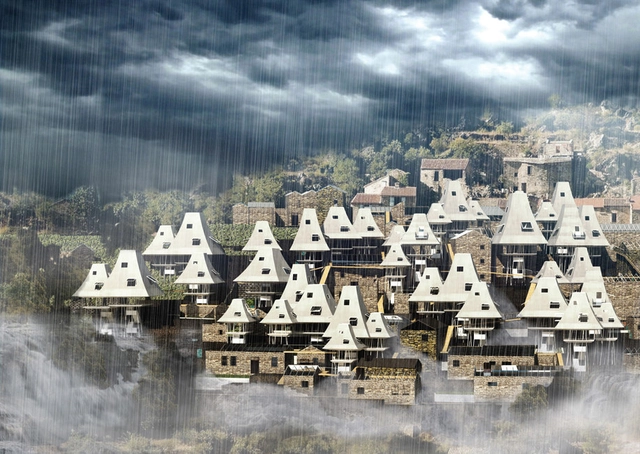
The results for the latest Young Architects Competition (YAC), Post-Quake Visions, have been announced. The competition aimed to discover innovative ways to overcome the effects of a seismic catastrophe over a medieval Mediterranean town. Participants were encouraged to rethink and redesign the quake-inflicted gaps left inside ancient urban tissues. With 356 enrolled teams comprising of 808 designers, see the winning results and Gold Mentions after the break.
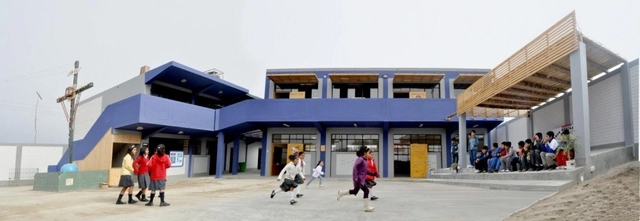
Maria Auxiliadora School / Architecture for Humanity
Why is it that the Bay Area can suffer a 6.9 earthquake and lose just 63 people, while Haiti suffers a slightly stronger quake and loses about 100,000? The answer: shoddy construction. As Bryan Walsh of TIME points out, “We tend to focus on the size of an earthquake, but death toll has more to do with the quality of buildings. [...] Poverty — and even more, poor governance and corruption — is the multiplier of natural disasters. [...] That’s why one of the most vulnerable places in the world is south-central Asia.” Learn more about the dangers of poorly constructed buildings here and see what the "true value" of architecture is here.



![[ME]morial Thesis Honors 2011 Japan Earthquake Victims - Community](https://snoopy.archdaily.com/images/archdaily/media/images/55d2/f541/e58e/cebd/6200/0139/slideshow/03__ME_morial_Air-1.jpg?1439888700&format=webp&width=640&height=580)
![[ME]morial Thesis Honors 2011 Japan Earthquake Victims - Community](https://images.adsttc.com/media/images/55d2/f572/e58e/cebd/6200/013c/thumb_jpg/09__ME_morial_Earth-3.jpg?1439888749 "[ME]morial #2: Earth. Image Courtesy of Beomki Lee")
![[ME]morial Thesis Honors 2011 Japan Earthquake Victims - Community , Garden](https://images.adsttc.com/media/images/55d2/f596/e58e/ceab/8c00/0152/thumb_jpg/13__ME_morial_Water-3.jpg?1439888785 "[ME]morial #3: Water. Image Courtesy of Beomki Lee")
![[ME]morial Thesis Honors 2011 Japan Earthquake Victims - Community](https://images.adsttc.com/media/images/55d2/f582/e58e/cebd/6200/013d/thumb_jpg/11__ME_morial_Water-1.jpg?1439888765 "[ME]morial #3: Water. Image Courtesy of Beomki Lee")
![[ME]morial Thesis Honors 2011 Japan Earthquake Victims - Community , Stairs, Facade, Handrail](https://images.adsttc.com/media/images/55d2/f551/e58e/cebd/6200/013a/thumb_jpg/05__ME_morial_Air-3.jpg?1439888716 "[ME]morial #1: Air. Image Courtesy of Beomki Lee")
![[ME]morial Thesis Honors 2011 Japan Earthquake Victims - More Images](https://images.adsttc.com/media/images/55d2/f541/e58e/cebd/6200/0139/newsletter/03__ME_morial_Air-1.jpg?1439888700)