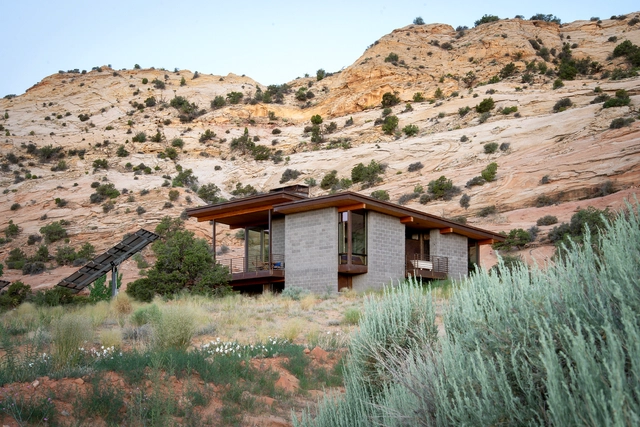
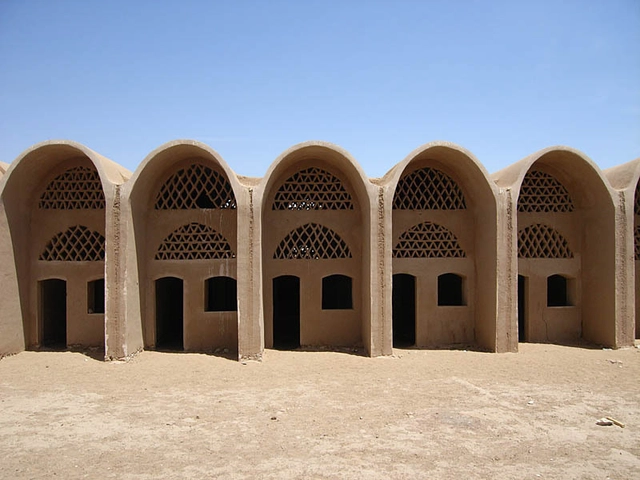
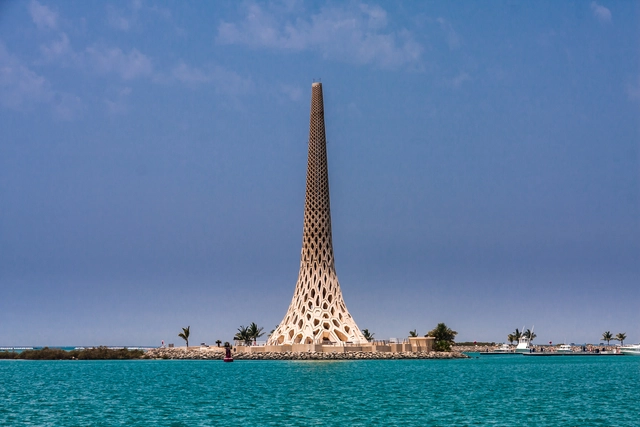
Thermal mass is the ability of a material to absorb, store, and release heat. Used to moderate building temperatures by reducing fluctuations, the concept is crucial in improving energy efficiency. Materials with relatively high thermal mass, such as stone, concrete, rammed earth, and brick, can absorb significant heat during the day and release it slowly when temperatures drop at night, reducing the need for heating and cooling systems. Properties like heat capacity, thermal conductivity, and density are all considered when assessing the thermal mass property of a material.
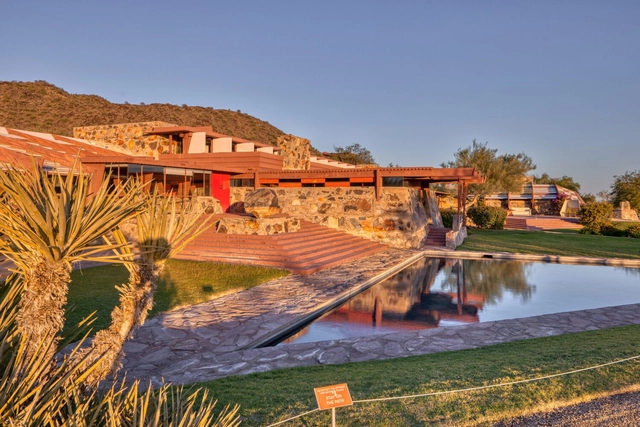
Courtesy of Frank Lloyd Wright Foundation | Taliesin West by Andrew Pielage
The renowned Frank Lloyd Wright Foundation has entrusted Sasaki with the task of designing a comprehensive design for Taliesin West in Scottsdale, Arizona, United States. Deemed a world heritage site, the location is a testament to the cultural and architectural legacy of the famed architect Frank Lloyd Wright, serving as his winter retreat and experimentation hub. The design seeks to pay homage to the heritage of Taliesin West while ensuring its longevity and relevance for generations to come.
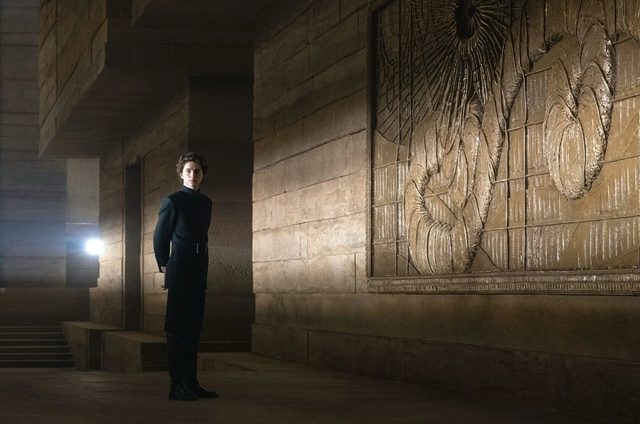
Imagine a world thousands of years into the future, one where humanity has conquered planets from galaxies away, only to default to a neofeudalistic social order in a constant power struggle, all built upon an intricate tapestry of cultures and religions and set in a harsh yet vivid landscape that becomes a character in and of itself. This was the challenge faced by director Denis Villeneuve and production designer Patrice Vermette in creating the cinematic adaptation of Frank Herbert's 1965 novel. The two Dune movies, released in 2021 and 2024, were conceived as a whole and therefore share a coherent style and cinematic expression. Beyond aesthetics, the environment and architecture of Dune present a lived-in, believable world, one that anchors the action and characters, silently offering invaluable insights into the values and mythology of each civilization.
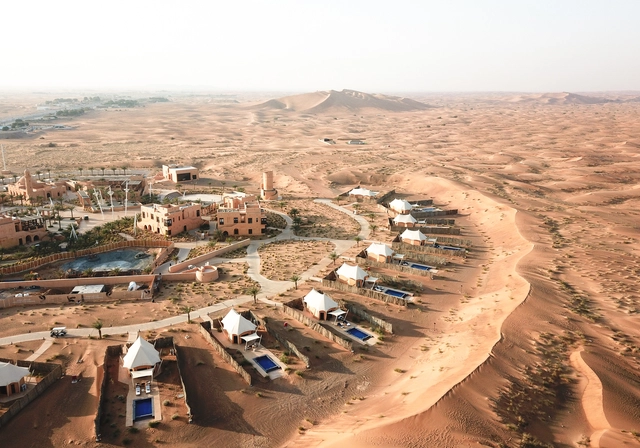
The Mysk Al Badayer Retreat in the desert outside Dubai, United Arab Emirates. Image Courtesy of Mysk Al Badayer Retreat
Set deep within some of the most isolated desert landscapes across the Middle East and further afield, these desert camp hotels offer a way to connect with their surroundings through the solitary experience of open and expansive scenery.
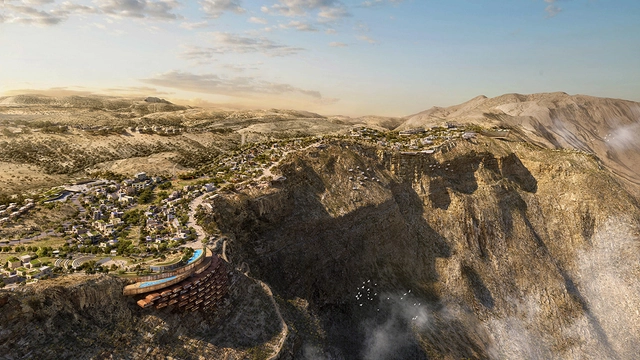
Oman has just announced plans for a $2.4 billion mixed-use project, the new Omani Mountain Destination on Jabal al Akhdar. Masterplanned by AtkinsRéalis, the scheme aims to attract sustainable development opportunities, hoping to "operate as Net Zero Carbon and striving to use 100% renewable energy." The project is in alignment with Oman Vision 2040, seeking a developed, diversified, and sustainable economy;, featuring residences, hotels, and a health village.
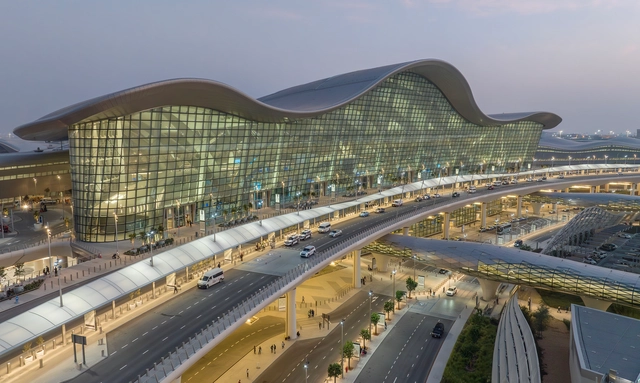
The Abu Dhabi International Airport has been officially renamed Zayed International Airport, Terminal A. Designed and executed by KPF, the revamped complex will accommodate up to 45 million passengers annually, doubling the airport’s capacity. Informed by the desert's natural landscape and Islamic culture's geometric motifs, the terminal was designed considering the Emirate’s surrounding context.
NEOM - or "new life" in a blend of Greek and Arabic- is a new urban development planned by the Kingdom of Saudi Arabia. Imagined as a cross-border city located in the northwest of the country, it aims to diversify the economy and reduce its dependence on oil. With promises of sustainability and innovation, the mega development has grabbed global attention with its 10 distinct regions.
It is conceptualized as a cutting-edge metropolis, aspiring to emerge as a worldwide epicenter for groundbreaking advancements and an exemplar of eco-friendly lifestyles. Since its announcement in 2017, NEOM has revealed the plans for 10 central regions, featuring a 170km long skyscraper, a futuristic ski resort, an upside coastal hotel, a tourism destination in a mountainous valley, and many more.
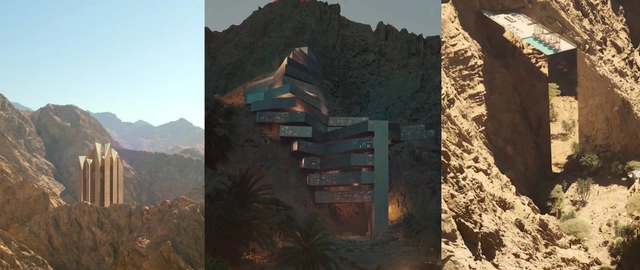
NEOM has just unveiled “Leyja” as a new tourism destination in Northwest Saudi Arabia. Featuring three different hotels by world-renowned architects, the Leyja region is located in an ancient valley overhung by mountains 400 m tall. The project includes a staggering hotel by Chris van Duijn, a mirrored hotel by Shaun Killa, and a vertical rock hotel by Mario Cucinella. In an attempt to support sustainable tourism, the destination is part of the Saudi Vision 2030.
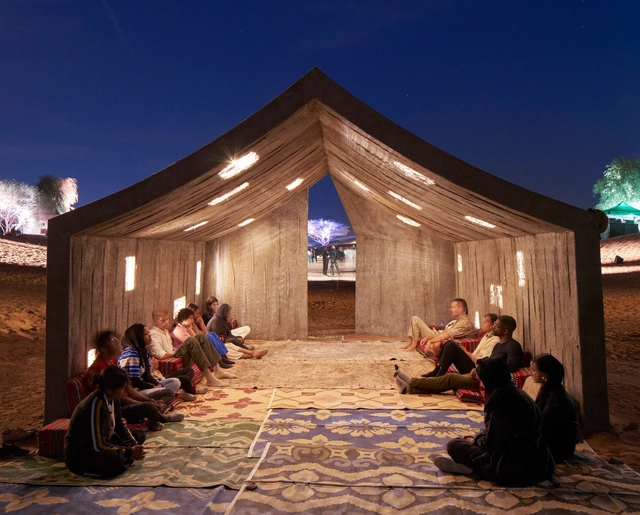
The Sharjah Triennial debuted on November 11th, 2023, with the theme of The Beauty of Impermanence: An Architecture of Adaptability. At the center of the abandoned 1970s “Al Madam,” in the eastern desert of Sharjah, the “Concrete Tent”, created by DAAR, an experimental Palestinian and Swedish Studio, combines elements of a mobile tent and a concrete house. Overall, the tent explores the notion of “permanent temporariness.”
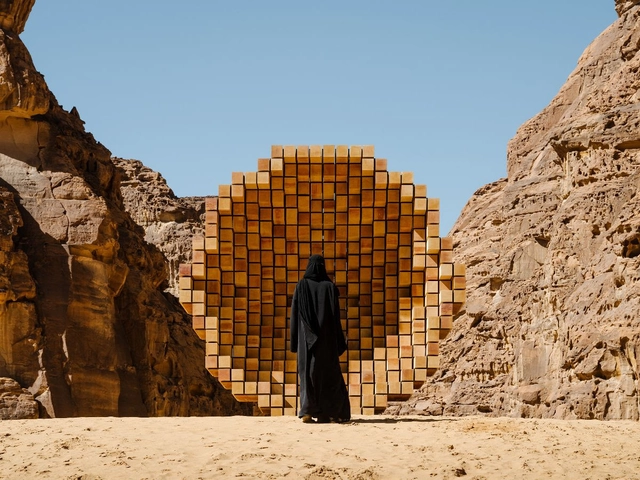
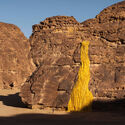
Dana Awartani, Where The Dwellers Lay, Desert X AlUla 2022, photo by Lance Gerber,. Image Courtesy of Royal Commission of AlUla
Desert XAlUla has just announced its return in 2024 in the Saudi Arabian Peninsula. Marking the significant highlight of the AlUla Arts Festival, Desert X AlUla is a transient, site-responsive, and inclusive open-air art exhibit that takes place bi-yearly in the desert region of the country. Launching on February 9th and continuing until March 23rd, 2024, this edition is curated by Maya El Khalil, renowned for her art advisory and MENA-focused curation, and Marcello Dantas, an award-winning curator known for his interdisciplinary practices.
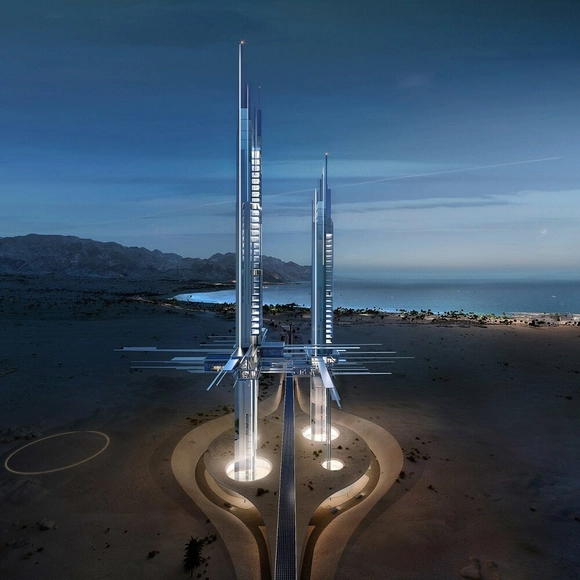
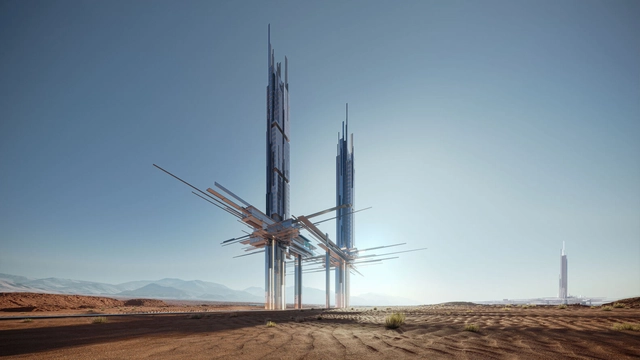
NEOM, Saudi Arabia’s Mega Project, has just announced a new upscale coastal destination within the sustainable regional development in northwest Saudi Arabia. Positioned along the Gulf of Aqaba, Epicon aims to redefine hospitality and architecture standards. Featuring two pointed skyscrapers, it features a prominent hotel and luxury apartments.
The scheme compromises two towers at 225 meters and 275 meters, respectively, housing a premium 41-key hotel and 14 suites and apartments. Nearby, the Epicon resort includes 120 rooms and 45 beach villas, blending coastal living with luxury amenities. Epicon is designed to be a haven from everyday life, providing experiences varying from high-end cuisine to water sports.
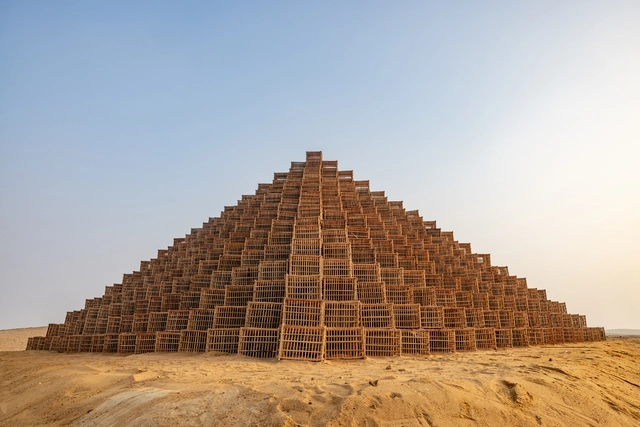
Last week in Cairo, CulturVator – Art D’Egypte launched its third edition of the annual international exhibition “Forever is Now.” Set by the backdrop of the Great Pyramids of Giza, the display features the work of 14 international artists. In essence, the exhibition “underscores the significance of cultural exchange among artists at the core of history and ancient Egyptian civilization.”
The third installment "Forever Is Now," running from October 26th to November 18th, presents a diverse ensemble of artists hailing from various corners of the globe. Among them are Egyptian artist Mohamed Banawy and Saudi Arabian talent Rashed Al Shashai, as well as American visual artist Carol A. Feuerman and Belgian creative Arne Quinze. Collectively, these artists have come together to creatively interact with one of the world's most iconic historical sites, crafting immersive visual narratives that seamlessly fuse contemporary elements with the past, weaving tales of the land and its inhabitants.
As we understand it today, the sustainable architecture movement began to take shape at the end of the 20th century. Essentially, it responds to growing concerns about environmental degradation, energy consumption, and resource scarcity. In this global discourse on sustainable architecture, wood has long been celebrated as a symbol of environmental consciousness and decarbonization. As one of the most widespread building materials, it has gained popularity with the rise of this movement. This is because trees absorb carbon dioxide during their growth, which stays in the wood during its construction use, keeping it out of the atmosphere.
Burning Man, the annual festival taking place in Nevada’s Black Rock Desert, has opened on August 27th, with thousands of festivalgoers gathering to create the Black Rock City, a ‘temporary metropolis’ complete with numerous installations, artworks, and pavilions that celebrate “community, art, self-expression, and self-reliance.” This year, however, the festival experience has been different, as heavy rains inundated the desert and festival site, creating thick, ankle-deep mud. The roads to and from the festival have been closed as large vehicles risk remaining stuck in the mud. While some people have left the site by walking out, the majority of the 70,000 campers remain stranded, as reported by CNN.
An arid environment refers to specific regions characterized by a severe lack of available water and extremely dry weather conditions. More specifically, arid regions by definition, receive less than 25 centimeters of rain per year. In the immense vastness of arid environments, where extreme climates present significant challenges, the role of water in architecture takes on a new dimension.
For centuries, architects and designers dealing with harsh desert landscapes and the vital necessity of water have invented techniques, technologies, and new structures. Moreover, many creative approaches have been created to harness, collect, and cool water in arid environments.
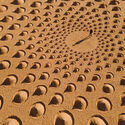
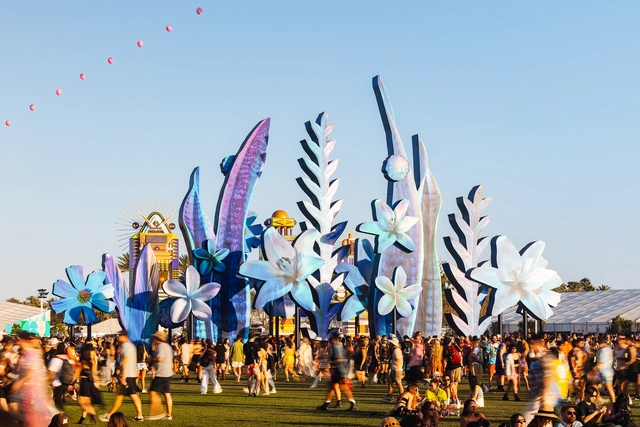
The Coachella Valley Music Festival, an annual music and arts festival held in the Colorado desert, opened on April 14th, 2023. Over the two weekends, April 14–16 and April 21–23, 2023, four emerging designers and artists worldwide will leave their stamp on the famous landscape. The festival will feature art installations made by a total of nine international designers, artists, and collectives. The newly-commissioned sculptural works by Kumkum Fernando, Vincent Leroy, Güvenç Özel, and Maggie West lend color, light, and alternate perspectives to the charged atmosphere and act as fresh, colorful, and architectural beacons that transform the iconic Coachella landscape at various times of day and night.
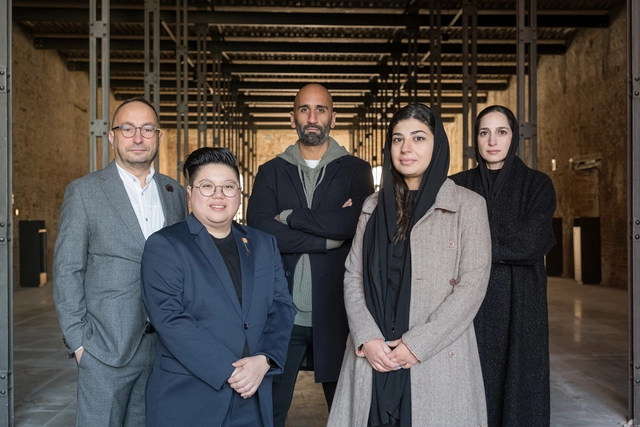
Saudi Arabia announced its participation at the 18th International Architecture Exhibition – La Biennale di Venezia, with an exhibition titled IRTH إرث,legacy in Arabic, exploring qualities of materials in relation to the Saudi landscape. The third round of participation the Saudi Pavilion will have at the International Architecture Exhibition, this year's edition is represented by architect AlBara Saimaldahar and curated by the duo Basma and Noura Bouzo. The Pavilion will be on display at the Arsenale – Sale d’Armi 2023.
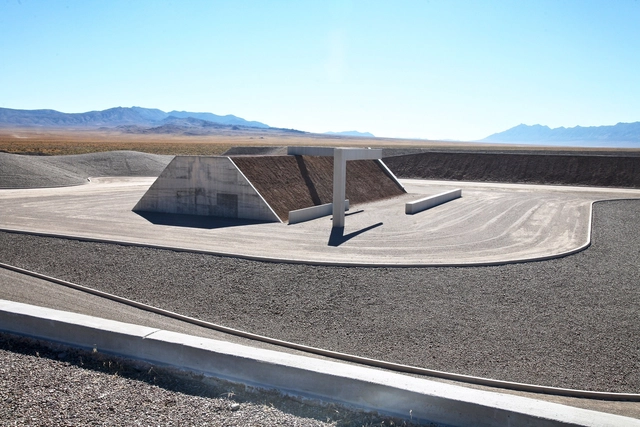
Artists are frequently inspired by land — be it painter Robert S. Duncanson’s renditions of American landscapes, or William Kentridge’s subversions of colonial-era British paintings depicting African vistas. Some artists, though, have preferred to work directly with the land, creating structures that sit on landscapes, or carving into the land itself. This art style — formally termed as Land Art — gained prominence in 1960s and 70s United States, in the context of the rise of the environmental movement amidst civil rights and antiwar protests, and as artists looked to separate themselves from the art market.