
1. ArchDaily
  2. Desert

Desert: The Latest Architecture and News

The One Redeeming Feature That Brings Humanity to the Sameness of Suburban Sprawl

This article was originally published by Common Edge as "The Work of Architecture in the Age of Mechanical Reproduction."

I attended graduate school, in geography, in Tucson, Arizona, in the late 1990s. Tucson draws fame from a number of things, including its Mexican-American heritage, its chimichangas, its sky islands, and its abundant population of saguaro cacti.

Plenty of things about Tucson, though, are perfectly, achingly ordinary.

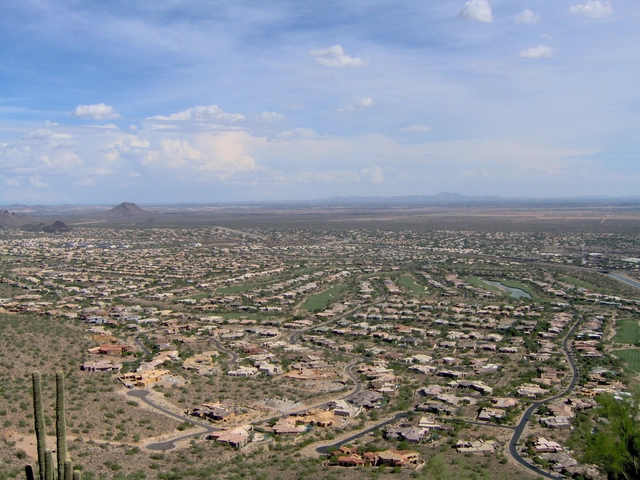
Perhaps the most ordinary thing about Tucson led me to develop something halfway between a hobby and an academic pursuit. On occasion, whether for sport or research, friends and I used to go “sprawl-watching.” We were not exactly, say, Walter Benjamin strolling through the arcades, embracing the human pageantry of Paris. But we did our best to plumb Tucson’s depths.

International Competition: Landmarker for a Nuclear Waste Site

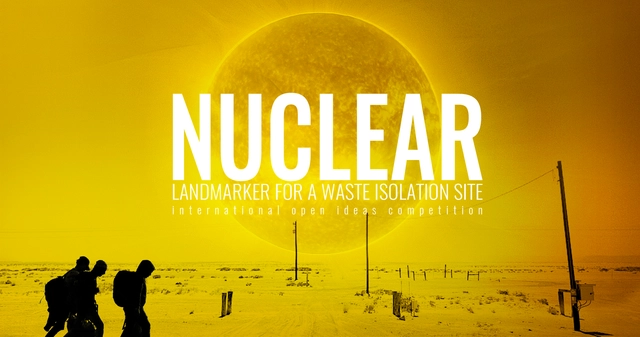
How do we design architecture with a message that could endure for millennia ?

Since the Cold War, one of the most challenging and urgent tasks facing governments around the world has been the disposal of transuranic nuclear waste. As a by-product from nuclear weaponry production, transuranic waste is not only harmful, but also boasts a formidable decay process lasting thousands of years. To address this issue, millions of barrels of highly radioactive waste have been buried in repositories deep beneath the earth’s surface. One such disposal site is the Waste Isolation Pilot Plant (WIPP) in New Mexico, United States. To ensure public safety, it is imperative that the site remain undisturbed for the duration of the waste’s decay process.

XTU Architects Imagine Self-Building Wall City

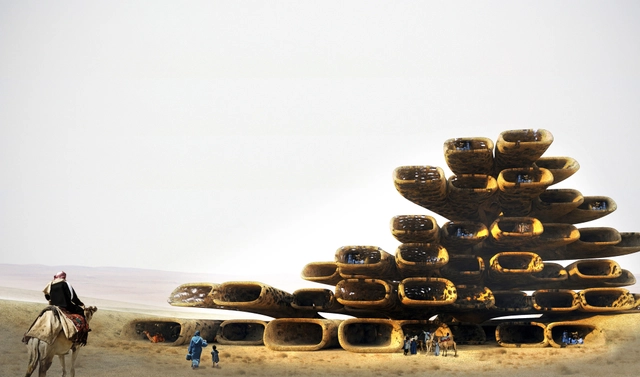
Flohara by XTU Architects envisions an inhabitable desert wall that constructs itself from the natural processes of its environment. Featured at the Venice Biennale's Morocco Pavilion exhibition entitled “Fundamental(ism)s,” this ecological phenomenon defies the conventions of housing, offering shelter from varying climatic conditions and supporting both human and plant life in the harsh desert.

XTU Architects Imagine Self-Building Wall City - Cultural ArchitectureXTU Architects Imagine Self-Building Wall City - Cultural Architecture, CoastXTU Architects Imagine Self-Building Wall City - Cultural ArchitectureXTU Architects Imagine Self-Building Wall City - Cultural Architecture, CoastXTU Architects Imagine Self-Building Wall City - More Images+ 2

Las Vegas vs The Landscape: Photographer Michael Light Exposes the Terraforming of the American Dream

Subscriber Access | 
Las Vegas vs The Landscape: Photographer Michael Light Exposes the Terraforming of the American Dream - Image 5 of 4
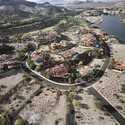
“Barcelona” Homes and the Edge of Lake Mead Recreation Area, Lake Las Vegas, Henderson, NV; 2011. Image © Michael Light, Lake Las Vegas/Black Mountain

“Nestled into the desert landscape that defines Nevada’s visage,
Ascaya feels as if it were shaped by the elements.
[...]
Where stone rises up to meet the sky, there is a place called Ascaya.”
- The Ascaya promotional website

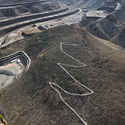
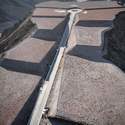
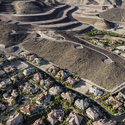
Not quite, according to Michael Light’s soon-to-be released book, Lake Las Vegas/Black Mountain. Covering the advance of suburban Nevada into the desert, this two-part book looks at Lake Las Vegas, a then-abandoned victim of the 2008 real estate crash which has since emerged from the other side of bankruptcy, and nearby Ascaya, a high end housing estate that is still in the process of being carved into Black Mountain. Light’s photography doesn’t so much question the developers’ summary as it does, say, blast it, scar it, terrace it and then build a large housing development on the remains. Featuring beautifully composed aerial shots of the construction sites and golf courses covering the desert, the book is a clear condemnation of the destructive and unsustainable development in Nevada. Much more than that, though, Light is highlighting a wider philosophy behind developments like Ascaya and Lake Las Vegas that fundamentally fail to connect American society with the American landscape in a non-destructive way.

Las Vegas vs The Landscape: Photographer Michael Light Exposes the Terraforming of the American Dream - Image 1 of 4Las Vegas vs The Landscape: Photographer Michael Light Exposes the Terraforming of the American Dream - Image 2 of 4Las Vegas vs The Landscape: Photographer Michael Light Exposes the Terraforming of the American Dream - Image 3 of 4Las Vegas vs The Landscape: Photographer Michael Light Exposes the Terraforming of the American Dream - Image 4 of 4Las Vegas vs The Landscape: Photographer Michael Light Exposes the Terraforming of the American Dream - More Images+ 8

From the Desert to the City: An Interview with Wendell Burnette

Subscriber Access | 

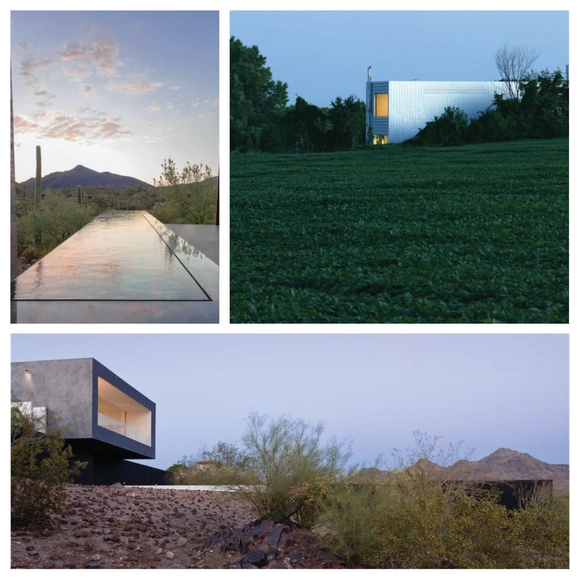
Since childhood, growing up on a farm outside of Nashville, Wendell Burnette has been inspired by nature; indeed, the amplification of the natural site has highlighted his body of work. In the following question and answer by Guy Horton of Metropolis Magazine, the Pheonix-based architect speaks about memories, inspiration and experience.

Wendell Burnette’s journey through architecture has taken him from Frank Lloyd Wright’s Taliesin to some of the most beautiful landscapes in the world, where he has designed a type of architecture that resonates with the power of natural surroundings. It has also taken him to one of the world’s fastest growing cities, Phoenix, Arizona, where his practice, Wendell Burnette Architects, is based and where he calls home. More recently it has brought him to Los Angeles where he is the current Nancy M. & Edward D. Fox Urban Design Critic at the USC School of Architecture. He is also Professor of Practice at The Design School at Arizona State University's Herberger Institute of Design and the Arts.

I spoke with Burnette about his approach to architecture, the importance of direct experience, and the meaning behind his current USC studio, “Earth Curvature”.