Developed by WERK Arkitekter and Snøhetta, the new maritime center on the coast of Esbjerg, Denmark, opens to the public. The wooden structure is conceived as a gathering space for watersports clubs and other visitors to the harbor, providing the coastal town with a maritime social hub. The circular structure protects the visitors from harsh weather conditions, while the large windows and amphitheater stairs open up views of the sea. Dubbed “The Lantern,” the project represents the winning design of a competition organized in 2019.
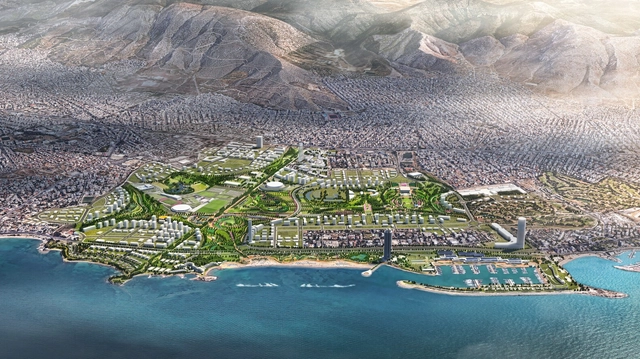
The Athens International Airport was decommissioned in 2001, leading to two decades of work for the local government to establish funding and a governance mechanism to transform the 600 acres of unused space into Europe's largest coastal park. The site has a layered history, from prehistoric settlements to the construction of the airport in the 20th century and the site being used for as an Olympic venue in 2004. Architecture office Sasaki is leading the design to transform the site again and create the Ellinikon Metropolitan Park, a restorative landscape and climate-positive design that will serve as a park, playground, and cultural center for the city of Athens. Developers are planning to break ground early next year.
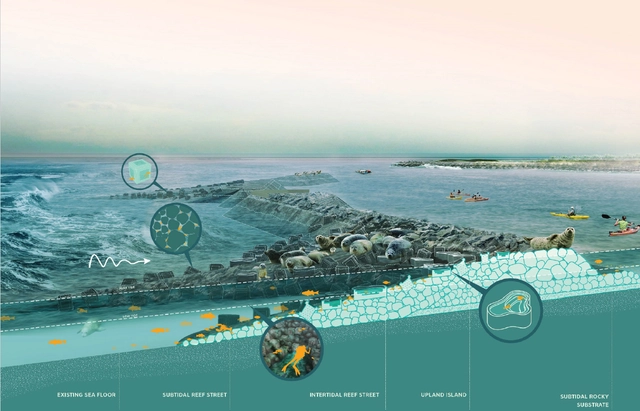
Living Breakwaters, Staten Island, NYC. Image Courtesy of SCRAPE
“Superstorm Sandy in 2012 was a wake-up call for NYC and made the city realize it needed to better prepare for climate change,” said Adrian Smith, FASLA, vice president at ASLA and team leader of Staten Island capital projects with NYC Parks. Due to storm surges from Sandy, “several people in Staten Island perished, and millions in property damage were sustained.”
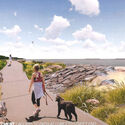
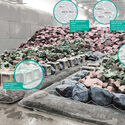
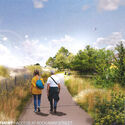
On the 10th anniversary of Sandy, Smith, along with Pippa Brashear, ASLA, principal at SCAPE, and Donna Walcavage, FASLA, principal at Stantec, explained how designing with nature can lead to more resilient shoreline communities. During Climate Week NYC, they walked an online crowd of hundreds through two interconnected projects on the southwestern end of the island: Living Breakwaters and its companion on land — the Tottenville Shoreline Protection Project.
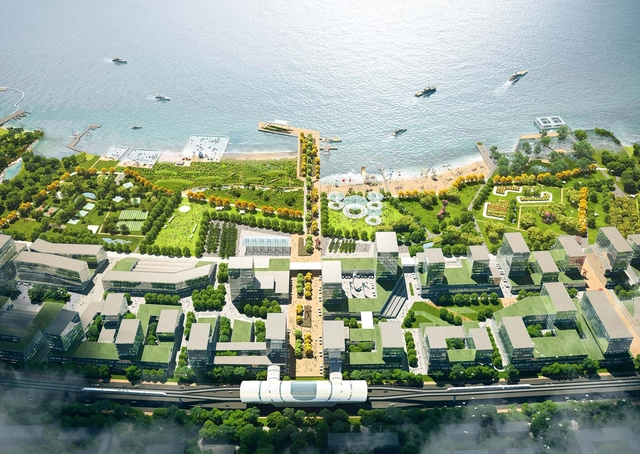
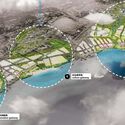
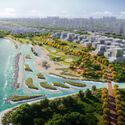
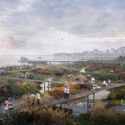
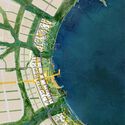
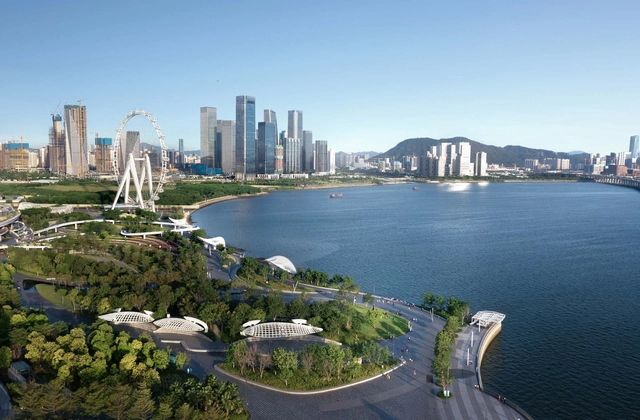
KCAP won the design competition for the Coastline of Yantai, Shandong Province, south of Beijing. As one of China's top 10 ports and a gateway city for communication between Japan and South Korea, Yantai Seafront Garden will transform the underused coastal area into an influential economic and technological development zone in Northeast China. The conceptual proposal was selected by its vision of 4 stages along the 95km of waterfront, including water conservation zones, a "sponge city" community, and a resident tidal shoreline.
At the onset of the coronavirus pandemic in March 2020, affluent Parisians flocked to second homes on France’s Atlantic coast as a nationwide lockdown came down on the country. In June 2020, as the lockdown was eased in England, residents headed to seaside towns like Bournemouth to soak in sunny weather. The former scenario reflects the widening gap between France’s wealthy and the poor, whilst the latter is a reflection of the democratizing power of public-access beaches.
In both situations, what is sought out is the ecological calmness usually found on beaches. Globally, however, there’s an unsettling phenomenon, where intertwined with climate change and policy decisions, beaches are increasingly becoming private, inaccessible spaces.
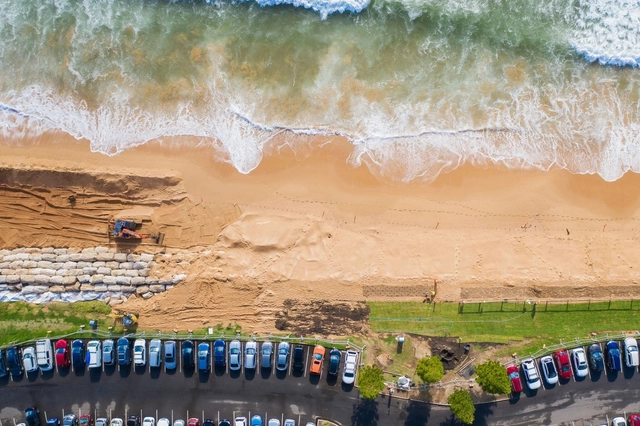
Coastal cities have always been a point of attraction for residents, tourists, and businesses. Alongside the aesthetic features, their proximity to the sea has made these cities a focal point for maritime transportation with the construction of ports, as well as hotspots for recreational and aquacultural activities. However, the past decades saw these particular regions threatened with a shortened lifespan; rising water levels, floods, and recurring cyclones, along with other natural disasters, have endangered coastal communities, putting their population, ecosystem, and built environment at risk.
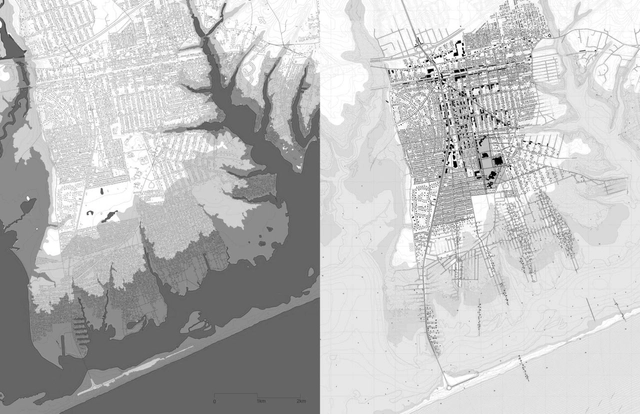
A future flood map of Mastic, New York. Right: A plan for densifying the town’s high, dry ground and retreating from the shoreline. . Image Courtesy of Rafi Segal And Susannah Drake
A lot can happen in the space between a book’s title and subtitle, as A Blueprint for Coastal Adaptation: Uniting Design, Economics, and Policy (Island Press, 2021) demonstrates. Here, in a reversal from the norm, the subtitle assumes the more evocative bent by elevating design to the same status as economics and policy. To some, this might seem a spurious move, but the volume lives its creed: Its editors include two design academics and a business school professor, to say nothing about the myriad backgrounds of its contributors.
Blueprint goes deep into the policy decisions that have shaped the brittle condition of coastal infrastructure. It coalesces into a convincing picture of the wider context in which design operates, with the aim of making the built environment more equitable for those caught on the front lines of certain climate change cataclysm.
ACF has released a new series of images demonstrating the recently completed TAG Art Museum, designed by Ateliers Jean Nouvel, as part of the Artists’ Garden project collaborated with Shandong International Coastal Cultural Industry. The museum is located in the West Sea Bay in Qingdao, China. Strung along a covered promenade that weaves through planted gardens and woodland, running along the coastline towards a new marina, the structures consist of 12 interconnected exhibition halls.
Heatherwick Studio has designed the Cove, a new waterfront experience for San Francisco. Seeking to activate and improve the beachfront, “while future-proofing the historic district and the City against the risks of earthquakes and climate change”, the Cove will put in place a next-generation, high-performance waterfront community that uniquely identifies with San Francisco.
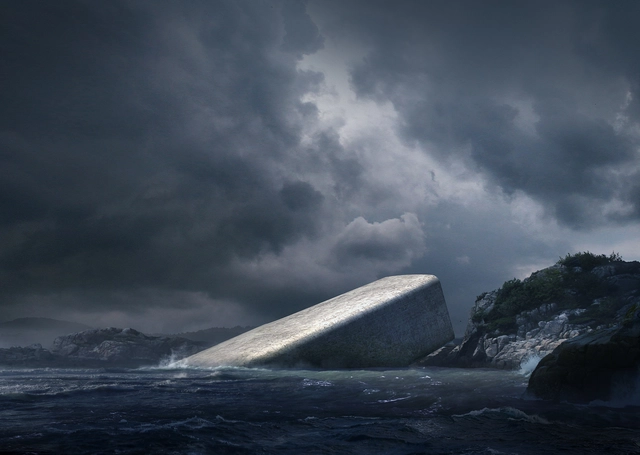
Snøhetta have revealed designs for Europe's first underwater restaurant in the coastal village of Båly, in Norway. The structure, which also houses a marine life research center, teeters over the edge of a rocky outcrop, semi-submerged in the ocean. Built from concrete, the monolithic structure will come to rest on the sea bed five meters below the water's surface; here, it will "fuse" with the ecosystem of the concealed shoreline. Below the waterline, the restaurant’s enormous acrylic windows will frame a view of the seabed.
https://www.archdaily.com/882130/snohetta-unveils-designs-for-europes-first-underwater-restaurantAD Editorial Team
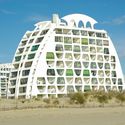
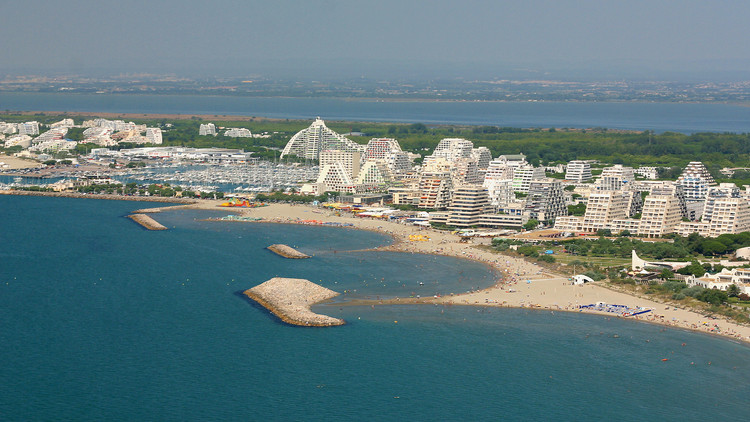
Given a chance to realize the architect’s dream of creating his own utopian city from a blank slate, French architect Jean Balladur was inspired by lost civilizations of the past. His designs recall the architecture of grand Mayan ruins with some added flair from the 1960s, all in the form of a seaside resort village in southern France, La Grande Motte. Balladur devoted nearly 30 years to his life’s work, which today welcomes over 2 million tourists annually.
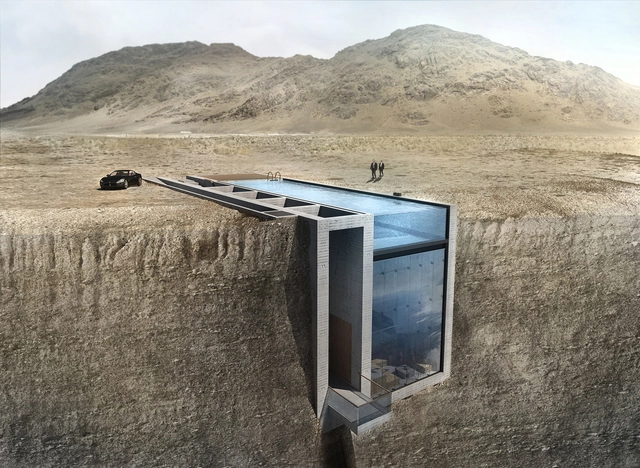
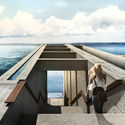
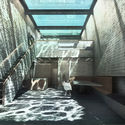
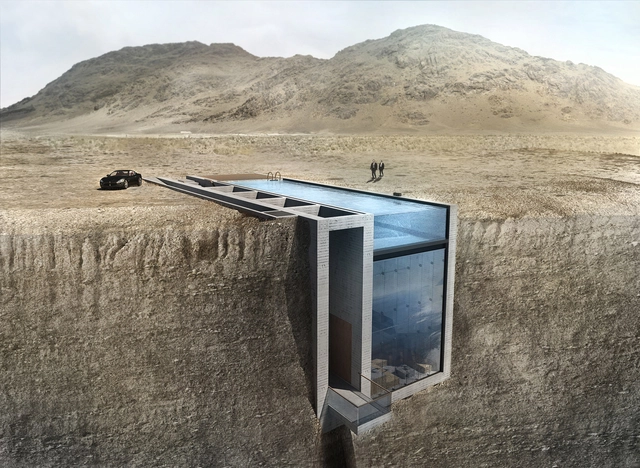
When ArchDaily published “Live on the Edge with OPA’s Casa Brutale” in July of last year, we expected it to be popular on our site, but few anticipated exactly how much attention the project would receive—enough to secure a position in the top 10 most read articles on the site in 2015. But what happened next was perhaps more astounding. By the end of the week, the project had been picked up by the gamut of non-architecture news outlets ranging from Slate to Yahoo to CNET to CNBC. For a few short days, it became difficult to traverse the wild expanses of the internet without a sighting of the project’s lead image, typically accompanied by a hyperbolic headline along the lines of “This Beautiful, Terrifying House is Literally Inside a Cliff.”
But despite the enormous traction, with seemingly impossible features like a clifftop, glass-bottomed swimming pool, the project still seemed to be destined for "paper architecture" status. Yet fast forward to today and the house has (incredibly) found a willing client, and is about to break ground on construction. How did this happen, and what takes architecture from viral sensation to real-life construction project?
In our article for this cliff-hanging project by Modscape published last year, we said that all it really needed was James Bond and an invisible Aston Martin in the garage. Well, the images presented by OPA (Open Platform for Architecture) for their new project offer us James Bond and a (sadly visible) Ferrari. Perhaps it's not quite what we expected, but either way it's a big step forward for the super-villains lair market: Casa Brutale gives us wall-to-wall water and concrete set into cliffs above the Aegean Sea in what OPA promises will be a literally ground-breaking development.
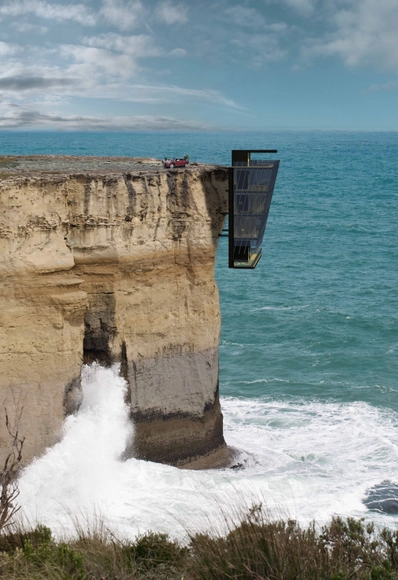
Picture yourself waking up daily to a 180-degree view of the ocean without leaving the comfort of your living room. The owners of the as-yet-unbuilt Cliff House have teamed up with Modscape of Australia to design their compact dream home, delicately perched above open water, hanging off the cliff's edge. Cliff House redefines "living dangerously" with its vast floor to ceiling windows and slender steel supports acting as the only separation between watching Jaws and actually being in Jaws.
Dive into Cliff House with images, plans and more info after the break.
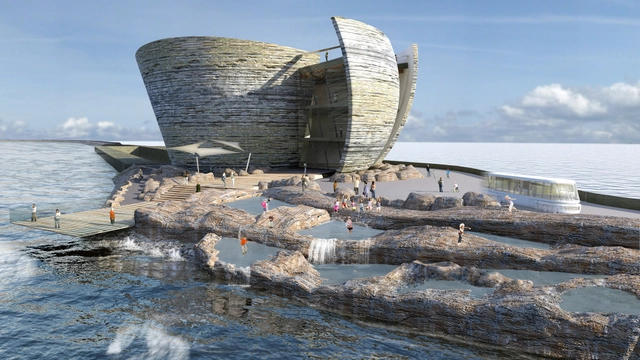
London based practice Juice Architects has unveiled designs for an offshore visitor centre as part of the proposed tidal lagoon for Swansea Bay, Wales. A series of overlapping shells are sculpted to form a bowl like structure, providing shelter from the wind and waves of the Welsh coast. Sat on a manmade island platform at the end of a collection of land piers, the building will act as a cultural and educational base housing public galleries, a café, a lecture theatre and exhibition space with working turbine propellors visible through the the ground floor gallery. As an entirely self sufficient building all energy will be captured from renewable sources.

















.jpg?1600849698&format=webp&width=640&height=580)


.jpg?1600849698)